


As investors reassess relative value across the housing spectrum, seniors housing is drawing increasing attention. KKR, for one, has made it a centerpiece of its real estate equity strategy, drawn by a demand base that is growing on a predictable demographic timeline.
“Our highest conviction area over the past three years has been in seniors housing. It's the area where we have deployed over a billion dollars of equity across our strategies. That has been an area that we think has very strong long-term demand trends.”
Partner and President of KKR Real Estate, on the Walker Webcast ("What's Next for CRE?")
Executive summary
Seniors housing has moved beyond recovery. In 2026 through 2027, strengthening operating fundamentals, exceptionally limited new supply, and growing competition for high-quality assets are reshaping the investment landscape.
National occupancy reached 90.1 percent in the second quarter of 2026, up from 88.4 percent one year earlier. Yet rolling four-quarter starts totaled only approximately 5,100 units, roughly one-third of the long-term average of 15,600 units.1 This widening imbalance between demand and new supply is supporting pricing power and NOI growth while increasing the scarcity value of existing communities.
NEW STARTS ARE FAR BELOW LONG-TERM NORMS
Capital is following the fundamentals. Institutional investors and REITs are competing aggressively for high-quality assets, transaction liquidity has increased, and debt is available from a broad range of capital sources. Development is also beginning to return selectively as rising acquisition values and favorable supply-demand fundamentals change the economics of building versus buying.
The opportunity, however, extends beyond favorable market conditions. Seniors housing remains an operating business as well as a real estate investment. As competition increases, operator quality, local market knowledge, access to capital, and disciplined underwriting will be critical to converting sector-level growth into investment performance.
This report provides an in-depth look at the forces shaping the seniors housing market in 2026 and into 2027, from strengthening operating fundamentals and constrained supply to increasing capital availability and investment activity. It also explores evolving development trends, capital markets dynamics, and the opportunities emerging as the sector moves from recovery to a scarcity-driven cycle.

What this outlook covers
Market fundamentals including occupancy gains, rent growth, and limited supply
Investment activity driven by institutional demand for quality assets
Financing conditions supported by expanding debt liquidity
Development trends shaped by shifting build-versus-buy economics
Market considerations including interest rates, affordability, and operating expenses
Investment opportunities across operating assets, development, and value-add strategies

Market fundamentals
Operating fundamentals are driving NOI growth
Sustained rent growth and occupancy gains are supporting revenue growth and creating greater operating leverage across the sector.
Recent results from publicly traded seniors housing owners show how revenue growth can translate into stronger NOI. Welltower, Ventas, Janus Living, and American Healthcare REIT each reported double-digit same-store seniors housing NOI growth in the second quarter of 2026.
PUBLIC REITS SHOW OPERATING LEVERAGE HAS ARRIVED
Source: Welltower, Ventas, Janus Living, AHR Q2 2026 earnings releases and supplementals; Walker & Dunlop Market Intelligence Group. Same-store SHOP, YoY.2
Seniors housing combines the dynamics of real estate investment with the demands of an operating business. Revenue management, labor, resident acquisition and retention, and day-to-day execution can materially influence asset performance.
Operator selection is central to asset performance and investment strategy. Walker & Dunlop continues to see buyers place significant value on proven operators, particularly when entering new markets or acquiring newer, institutional-quality communities. In some transactions, new owners are retaining strong incumbent operators rather than introducing additional execution risk through a management change.
Interest rates remain a near-term consideration
The recent rise in interest rates is creating renewed pressure on financing costs and debt sizing,
even as the broader outlook for seniors housing remains positive. Higher borrowing costs may
result in lower loan proceeds for some transactions and could influence buyer expectations
around asset values and required returns. While these dynamics may create some near-term
friction in transaction activity, strong operating fundamentals, improving occupancy, and growing
investor interest continue to support the sector’s longer-term outlook.

Limited supply is strengthening existing asset economics
Only 23,700 units were under construction across primary and secondary markets in the second quarter of 2026, the lowest level since 2012.3
Limited deliveries are reducing competitive new inventory as demand strengthens. In markets with favorable local fundamentals, constrained supply can support occupancy, rate growth, and operating leverage.
CONSTRUCTION IS FALLING AS OCCUPANCY RECOVERS
For owners and investors, stronger demand paired with limited near-term supply can enhance the growth potential of well-positioned existing communities.
Asset quality is only part of the equation
Competition remains especially strong for newer, well-located independent living, assisted living, and memory care communities. At Walker & Dunlop, we are seeing particularly aggressive bidding for institutional-quality assets, including communities built during or after the 2010s.
Competitive advantages extend beyond asset quality. Owners with strong operating platforms, established operator relationships, substantial liquidity, and an advantaged cost of capital can compete differently for opportunities. These advantages can influence both acquisition pricing and the ability to execute the business plan.
PROJECT OAKS & GROVES
The Situation
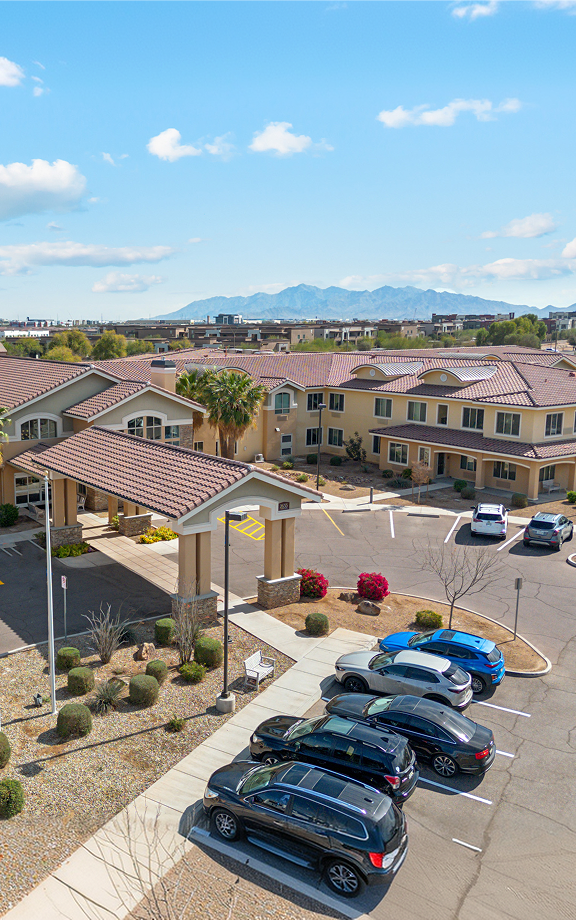
In Q1 2025, an institutional private equity firm engaged Walker & Dunlop to sell two 2014-vintage communities in Gilbert and Goodyear, Arizona, totaling 268 independent living, assisted living, and memory care units. After years of lagging occupancy, the owners brought in Stellar Senior Living roughly one year before launch. Occupancy had since climbed from 61% to 85% and from 64% to 78%, respectively, and memory care from 39% to 68%, but census was not yet stabilized, limiting the buyer pool and financing options.
The Solution
W&D built the offering around the performance trajectory under Stellar, the communities’ newer vintage and recent common-area refresh, their geographic concentration and operating synergies, strong submarket occupancy, and a discount to replacement cost, along with the opportunity to partner with a best-in-class operator focused on regional expansion. When the initially selected buyer withdrew before signing a purchase agreement after an uncharacteristic month of move-outs, W&D quickly pivoted to a backup buyer relatively new to the sector.
The Result
W&D received seven written offers at or above guidance, and four groups toured and submitted best-and-final bids after another month of improving performance. The backup buyer held the same sales price, at a trailing three-month cap rate of 5.6% and a Year 1 budgeted cap rate of more than 9.0%.

Stay updated on market insights
Subscribe to Walker & Dunlop’s latest Insights and Outlooks—practical analysis delivered to your inbox to support smarter capital and investment decisions.


Capital markets overview
Institutional capital is driving liquidity
Transaction volume totaled $6.8 billion in the second quarter of 2026, up 44 percent year over year. Rolling four-quarter volume reached $32.2 billion, an increase of 74 percent year over year. REITs accounted for 36 percent of transaction volume, compared with 15 percent in 2023.
The shift is also visible in transaction processes. Value-add, middle-market opportunities are generating five to ten offers, while institutional-quality assets can, and often do, attract ten or more. That represents a significant shift from several years ago, when even a small number of credible bids could require a more intensive process.
Deeper bidding is influencing pricing. Buyers are showing greater willingness to compete for newer communities in desirable markets where they are confident in current cash flow and future NOI growth. Resistance to historically high price-per-unit levels is also diminishing when asset quality, market position, and operating upside support the investment thesis. Elevated construction costs are a key factor: with new development difficult to justify, buyers can still acquire high-quality, cash-flowing communities below replacement cost in most markets nationally. That same supply constraint is supporting the rent growth underpinning buyers' NOI projections.
RIVER GLEN OF
ST. CHARLES
The Situation
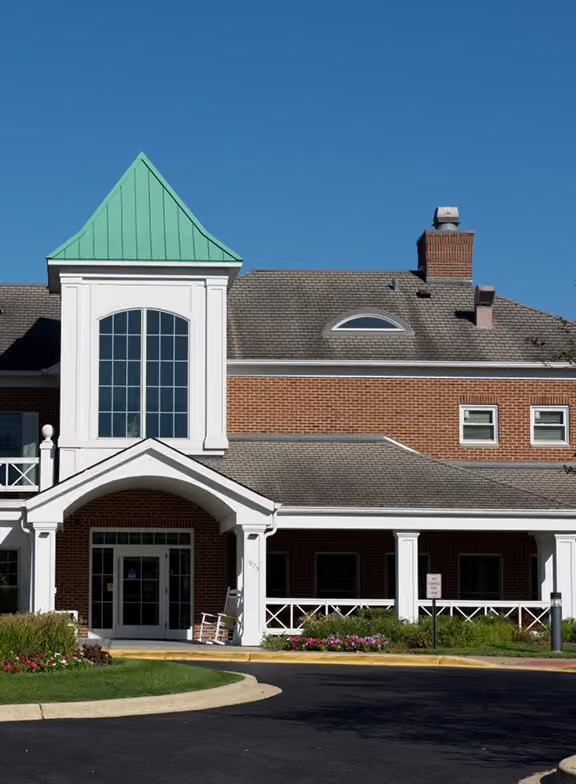
Citrine Investment Group acquired River Glen of St. Charles, a full-continuum community in a strong Chicagoland suburb with 28 independent living, 63 assisted living, and 15 memory care units, in 2023 as a value-add investment opportunity.
The Solution
Citrine implemented an operational overhaul and a series of capital improvement initiatives. With the business plan executed, Walker & Dunlop represented Citrine on the investment sale of the repositioned community.
The Result
At the time of sale, the community was more than 95% occupied and generating NOI of more than $3 million. A publicly traded REIT acquired the asset and brought in a large national operator partner to assume day-to-day management.
Cost of capital is becoming a competitive advantage
Some of the most active public investors have substantial liquidity and relatively low leverage. Welltower reported approximately $15.5 billion of investments closed or under contract and approximately $9.5 billion of liquidity. Ventas reported $4.5 billion of 2026 investment guidance focused on senior housing and $4.9 billion of liquidity. Janus Living reported $1.8 billion of year-to-date acquisitions.
For well-capitalized buyers, that position can translate into speed, execution certainty, and the ability to accept a lower initial yield when future NOI growth supports the investment case. Increasingly, buyers are accepting tighter going-in cap rates with confidence that strong sector rent growth will push their year-one stabilized yield meaningfully higher within the first 12 months. Underwriting places significant emphasis on that year-one performance while also assuming continued improvement into year two through occupancy gains, rate growth, or other operating initiatives.
PARK LANE SENIOR LIVING
The Situation
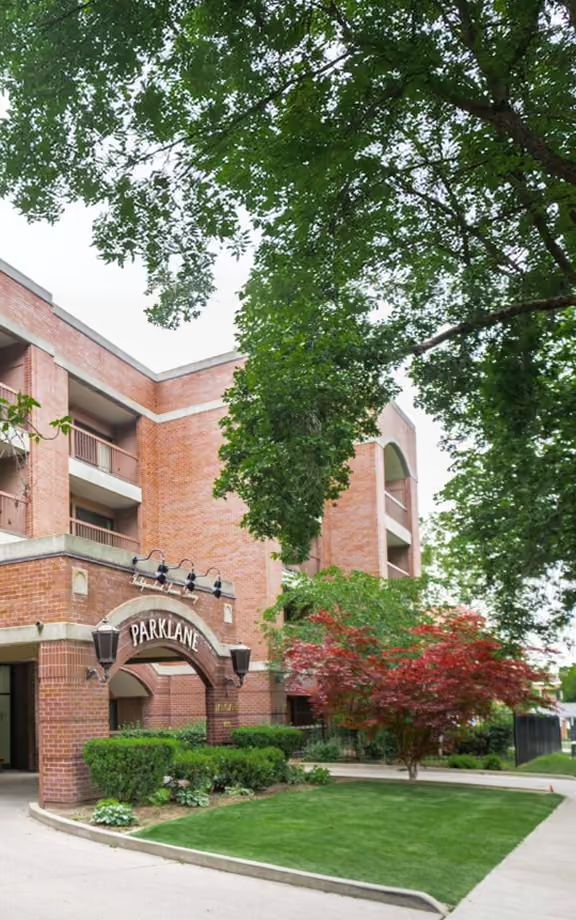
Walker & Dunlop was exclusively engaged to advise a local owner-operator on the sale of a 94-unit independent living community in Salt Lake City. With a debt maturity approaching in early 2026, the owners had recently completed a multiyear business plan, including $1.5 million in common area and unit renovations, and the community was producing the highest operating margin of any IL asset in their portfolio. The key buyer objection was the community’s 1987 vintage.
The Solution
Through email campaigns, personalized outreach, and direct calls, W&D brought 66 buyers under NDA and into the data room during a four-week marketing period, positioning the community’s strong performance and attractive basis relative to replacement cost. Occupancy grew from 95% to 98% during the process. W&D hosted tours for three finalists alongside the seller’s Regional VP of Operations and supplied staffing data, a buyer questionnaire, updated financials, and debt quotes.
The Result
Five written and two verbal offers were received, and all three best-and-final bidders increased their bids. The selected buyer raised its offer by more than 20% after best-and-final and agreed to begin diligence upon LOI execution. The sale closed at $21.5 million, 7.5% above market guidance.

Debt liquidity is expanding
A deeper pool of debt capital, including banks, life insurance companies, agency lenders, alternative asset managers, and other capital providers, is competing for quality opportunities. Life insurance companies have become especially competitive for stabilized assets, pressuring debt funds that had filled more of the market during periods of reduced traditional-lender activity.
Leverage is also working in buyers' favor. Unlike conventional multifamily, where borrowing costs have often exceeded going-in yields, seniors housing frequently still offers positive leverage, making debt accretive to returns from day one. That return profile, combined with a below-replacement-cost basis and near-term yield expansion, is a meaningful factor in drawing institutional capital to the sector.
Capital strategies are also becoming more varied. Some institutional investors pursuing transitional or heavy value-add opportunities are acquiring assets with cash and introducing debt later, while smaller owner-operators may continue to rely more heavily on local banking relationships.
The breadth of available capital gives clients more financing options, increasing the importance of aligning the capital structure with asset performance, operator capabilities, execution requirements, investment horizon, and ownership objectives.


Development & supply pipeline trends
Seniors housing development is returning selectively
Seniors housing development is beginning to return, although a broad construction wave comparable with 2017 and 2018 appears unlikely in the near term. Several years of muted development, stronger operating fundamentals, returning capital, and rising acquisition values are improving the case for new construction in select markets.
As competition compresses acquisition yields and pushes pricing for newer assets higher, development may offer a more attractive basis for investors willing to accept construction, lease-up, and execution risk. This shift is creating opportunities for projects that can pair strong local demand with achievable rents and disciplined development costs.
Development activity is emerging in two distinct areas: high-end private-pay seniors housing in urban and other desirable markets where rents can support a higher development basis, and middle- to upper-middle-market projects in secondary and tertiary markets, where sponsors may be able to manage costs through more efficient design, finishes, and amenity packages.
There is substantial lender appetite for well-conceived development opportunities. Equity remains more selective, making sponsor quality, market selection, operator alignment, achievable rents, and project economics important factors in determining which projects move forward.
Acquisition pricing is changing the build-versus-buy equation
Rising acquisition values are changing the relative economics of buying versus building in some markets. Aggressive pricing for institutional-quality assets has narrowed the gap between acquiring an existing community and developing new product.
Existing communities still offer significant advantages, including immediate operations and the ability to avoid entitlement, construction, and lease-up risk. But as acquisition pricing rises, investors with development expertise may weigh those advantages against the potential basis and return premium available through new construction.
The result is likely to be a selective development response rather than a broad expansion cycle. New projects will still require a compelling local demand story, an appropriate basis, achievable rents, capable operating partners, and sufficient return potential to compensate investors for development and lease-up risk.
Even as development activity increases, new supply will take time to reach the market. With the existing pipeline still constrained, the near-term supply-demand imbalance continues to favor well-positioned operating assets while creating a more compelling case for selective development.


Policy, regulatory, and macro considerations
Interest rates continue to shape relative value
Financing costs continue to affect debt sizing, required investment returns, and the gap between buyer and seller expectations. These dynamics are particularly evident in age-restricted and active-adult housing, where investor interest is increasing but pricing and yield expectations remain sensitive to the cost of capital.
Interest rates also influence the relative attractiveness of different investment strategies. Acquisition, development, recapitalization, and refinancing can produce materially different outcomes depending on leverage, financing costs, execution timelines, and assumptions about future NOI. As capital becomes more widely available and competition for high-quality assets increases, aligning the capital structure with the investment strategy remains critical.
Affordability remains an important consideration
Sustained rent growth also brings affordability into sharper focus as the sector considers how to serve older adults across a wider range of income levels. High-end private-pay communities may be viable in markets with sufficient household wealth, while middle-income markets may require more efficient development and operating models.
Current development activity reflects this segmentation. Walker & Dunlop professionals are seeing interest in premium private-pay communities in urban and other desirable markets, as well as middle- to upper-middle-market projects in secondary and tertiary locations.
For developers and investors, these differences reinforce the importance of market-specific underwriting. Resident demographics, achievable rents, development basis, operating costs, and the competitive landscape all influence whether a project can meet both resident needs and investor return requirements.
Expense assumptions remain critical to underwriting
Revenue growth can create operating leverage, but labor and other property-level expenses remain important to margins and acquisition underwriting. Buyers need to balance assumptions for occupancy and rate growth against potential expense increases when evaluating year-one and year-two returns.
This is particularly important as competition for high-quality assets increases. Strong sector fundamentals may support an investment thesis, but asset-level performance ultimately depends on whether revenue growth, operating expenses, capital needs, and financing costs align with underwriting assumptions. Disciplined underwriting remains essential as investors compete for opportunities and evaluate the potential for future NOI growth.


Outlook and opportunities
Scarcity creates opportunity, but execution determines outcomes
Stronger demand, limited near-term supply, improving operations, and expanding capital availability are creating opportunities across multiple seniors housing strategies. At the same time, greater competition is raising the importance of asset selection, underwriting, and execution.
Existing operating assets remain central to investor demand, offering immediate cash flow and exposure to favorable supply-demand dynamics without the execution risk of development.
Selective development is becoming more viable as scarcity persists and acquisition pricing rises, although opportunities remain highly market-specific.
Value-add investments offer another path for investors with the capital and operating expertise to address physical or operational complexity.
Age-restricted and active-adult housing is attracting growing interest, including from investors with traditional multifamily experience, although buyer-seller expectations remain a constraint.
Credit and recapitalization strategies can provide solutions for owners seeking capital for improvements, repositioning, refinancing, or longer-term business plans.
Capital and operating expertise will define the next phase
Seniors housing requires the integration of real estate, capital, and operations. Investors need to understand what an asset is worth today, and how occupancy, rates, expenses, operator execution, capital improvements, and financing can influence its future value.
As acquisition competition increases, investors paying aggressively for high-quality assets need confidence in the operating plan required to grow into their basis. Value-add investors need operators who can execute change. Developers need operating partners that understand local demand well before the first resident arrives.
OWNED & LEASEHOLD PORTFOLIO DISPOSITION
The Situation
Walker & Dunlop was engaged to sell a portfolio of 44 skilled nursing facilities across Washington, Oregon, Nevada, Wyoming, South Dakota, and Montana. Thirty-seven of the facilities were leaseholds held under more than 10 landlords, and most of those leases offered no purchase option or other path to real estate ownership.
The Solution
W&D positioned the leaseholds as a capital-efficient path to scale: a buyer could step in as replacement lessee without acquiring the real estate, still capture significant revenue, add ancillary revenue sources, and become one of the largest operators, if not the largest, in each state. W&D took the offering to owners and operators through relationships at the highest levels of decision-making, and worked with the client and landlords on lease assumptions and restructurings that maximized leasehold value while giving landlords confidence in a creditworthy assignee.
The Result
W&D procured six competitive nine-figure offers within an abbreviated two-week bid window. The transaction closed in 2023.
The strongest opportunities in the next phase of the cycle are likely to favor investors that pair informed capital with disciplined operating execution.
Where capital wants to be in 2026 through 2027
Primary REIT / institutional target; immediate yield + occupancy / margin upside.
Attractive when premium yield compensates for time and construction risk.
Private-capital lane, especially sub-$25M and operational complexity.
Useful where capital structure or operator need creates control or downside protection.
Our Experts
Our seniors housing professionals combine senior-level involvement, local market knowledge, national capital relationships, and access to Walker & Dunlop's broader platform. This integrated approach allows clients to evaluate sales, acquisitions, financing, recapitalizations, and development opportunities in the context of both current market conditions and their long-term objectives.
In a market where asset quality, operator performance, and cost of capital increasingly influence outcomes, Walker & Dunlop helps clients evaluate their options and identify capital strategies aligned with their business plans.
View Full Team






Discover expert commentary on commercial real estate, leadership, capital markets, and emerging opportunities. Explore the research, analysis, and industry conversations helping investors and operators navigate change and identify what's next.
- Where commercial real estate opportunity is emerging across property types

- Key seniors housing takeaways from NIC Spring 2026
- 2026 Long-Term Care: Discipline, data, and the power of focus
Subscribe to receive the latest news, insights, and future Outlook releases from Walker & Dunlop

Hosted by Willy Walker, Chairman and CEO of Walker & Dunlop, the Walker Webcast features conversations with leaders shaping the global economy, spanning capital markets, real estate, and select asset classes influencing long-term growth.
- Walker Webcast with Chris Lee, Partner and President of KKR Real Estate
- Walker Webcast with Dr. Peter Linneman, Leading Economist, Professor Emeritus, The Wharton School of Business
- Walker Webcast with Ivy Zelman, Steven DeFrancis, Ryan Marshall, & Dallas Tanner