Willy Walker:
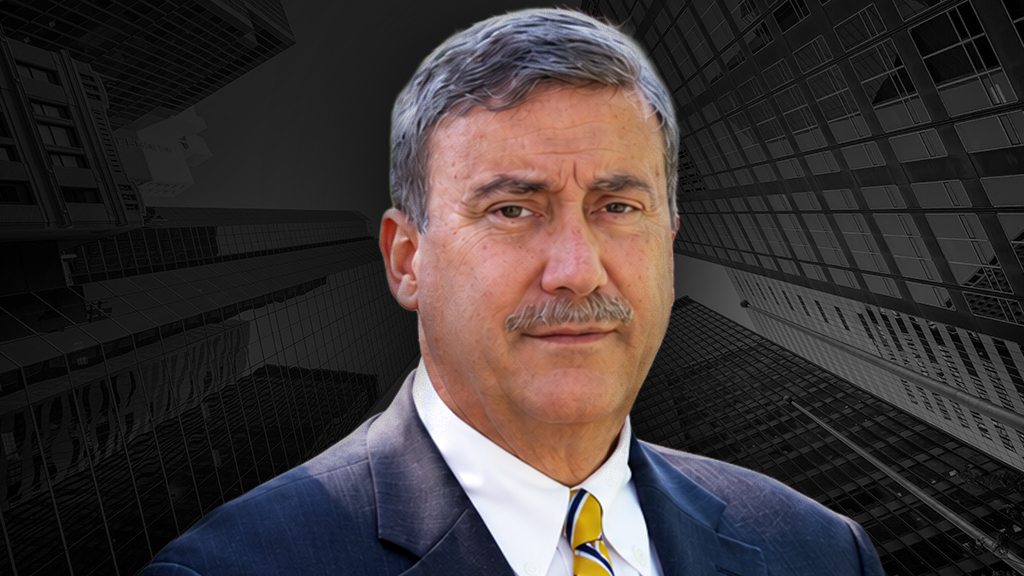
Good afternoon and welcome to another Walker Webcast. It is my great joy to have my long-term friend, Dr. Larry Sabato from the University of Virginia, join me to talk about the upcoming midterms. Larry, I am so thankful for your time, given how many people want to hear your insights on what we're going to see a little over a week from today. And so let's start here.
How unique are the midterms 2026 versus past midterm elections?
Dr. Larry Sabato:
I can truthfully say this, having been watching the first midterm I really watched was in 1962, in case you want to discuss that. I'm kidding. There are four people out there who remember it, but it was interesting right after the Cuban Missile Crisis. Every one of them has been unique, and it only makes sense. You have different candidates, different issues, different presidents, different controversies. So I would say anything that happens in Donald Trump's administration is from a parallel universe.
Willy Walker:
And so because it's from a parallel universe, is it a referendum? Everyone talks about midterms being a referendum on the sitting president. And typically those referendums are more to the downside than the upside in most.
Given that there is a, if you will, a suspension of reality, given what is happening in the West Wing of the White House, does the data we're seeing, Larry, tell us what might happen? Or is it so distinct that you really can't trust the data?
Dr. Larry Sabato:
Oh, no. Well, look, you never completely trust data in any form. And I think professionals know that no matter what data they're looking at. So you never want to do that, especially with polling. It's more of an art than a science. But what you do want to do is to look at trends. You can't necessarily count on the numbers being shown to you by the pollsters. But what you can count on is polling averages and the trends they reveal. Not the specific numbers, but the trends. Are Republicans moving up or moving down? Is Trump's approval moving up or moving down? That kind of thing. And it's obvious that President Trump right now is unpopular for lots of different reasons. And that's bound to be reflected in the midterms. The question is, to what degree is it reflected?
Willy Walker:
And on that, how good are prediction markets as it relates to Kalshi and other predictive markets in determining election outcomes today? Clearly, a lot of people hold out the fact that the prediction markets completely missed Brexit, thinking that the Brits would stay in the EU and ended up exiting. And I think everyone sat there since then and sort of said, you can't really depend on them.
But in ’24, Larry, the prediction markets were extremely accurate as it relates to not only the presidential race, but most of the Senate and House races. Do you look to the prediction markets today and put a lot of credence in the numbers that are coming back from them? Or do you put an asterisk next to them like you do most polling?
Dr. Larry Sabato:
Actually, we do look at them, but we look at everything. You can't give me information I don't consider, because at least at first, before it's considered, you need to ask yourself, will this affect the election? Will this reflect the election? Is it really reliable? And on some things, the prediction markets are accurate. And most of the time, I think they reflect the public opinion polls, to tell you the truth. And people from the prediction markets will tell you that. They're not doing this in isolation. It's not as though they put in isolation the people who participate in their markets, so they couldn't see any polling.
Rather, it's a reflection of what they have read, and they have seen. And as long as it's that, I don't have any problems with it. I do have problems, though, when you allow or permit people from the outside to come in and bank those markets. And they do it in obvious ways. We've heard about investing large sums to tilt the prediction toward their candidate. That is disturbing. And the George Santos example, I think everybody knows about, with his putting on Kalshi, not identifying himself, the question: will George Santos attend the State of the Union address? He has the right to do that, even while he was in prison. Technically, he had the right to do it, but he wouldn't have gotten a reprieve for that. But this was not while he was in prison.
And of course, some big bets, or mainly one big bet, was put on the fact that he would indeed attend. And he had announced that he would not. And so that tilted the markets in a certain direction. And as you know, he attended. And somebody made way over $400,000 on the markets. How did that happen?
George Santos was the bettor. So you know, you can criticize him for being a crook, which he is, but he's also smart. So you see, that's an example of how you can tilt the market. So don't believe any indicator alone, and be very careful which ones you select, and take them as a universe of indicators.
Willy Walker:
So if we dive into one of those, if you will, markets/races, that if you look at the prediction markets, you would say this is going to be a runaway for Talarico. Yet at the same time, you have the Texas Senate race as still a toss-up between Paxton and Talarico. And in my read of your take on it, it is, at the end of the day, still Texas. It's a state that Trump carried by 14 points. And as a result of it, any Democrat is going to run into significant headwinds. But here we are eight days before the midterms. And on the prediction markets, Talarico is at 61% or 62%. That would lead me to say that Talarico is going to have an easy day next Tuesday. But you're still saying there, hang on a second, there's other data to it than just the prediction markets. What are we missing from the prediction markets with that kind of a margin?
Dr. Larry Sabato:
Oh, it's a toss-up. That race is a toss-up. I don't know what tilts the prediction markets; I have no idea, don't know who's contributing to them or placing bets. But it is a toss-up. Anybody who doesn't think it's a toss-up is wrong.
Now, what the final percentage turns out to be, I don't know yet. And we're not going to, we call all races, we're wrong on some, we have to be. But we don't do what some other places do, which is take all the close ones and call them toss-ups and never call them. Well, gee, that's a formula for never being wrong.
But I don't think it's particularly helpful. So we will call it, but I can guarantee you, we will make a guess. And that's what it is, an educated guess until next Monday. So I don't know what's behind the Kalshi percentage, although they tend to say it has to be 70% or better before you can have real confidence in it, that 60%. He is not going to run away with that election, guaranteed.
Willy Walker:
So, and then if we stay in Texas for a moment, what about the governor's race and Abbott and whether he can hang on there? It feels like the concept that his challenger even is in the race and that that is in consideration is that trend you're talking about, Larry, as it relates to, there are just a lot of races that if you wind the clock back three months, you would have never predicted were actually going to be races. And now they're races, which would then lead to that comment you made previously, which is we're watching trends. The trends clearly are moving in the wrong direction for Republicans right now, correct?
Dr. Larry Sabato:
Oh, that's correct. And it's easy to see why. President Trump's approval rating has been dropping, not dramatically, but steadily. And he's down in the low 30s, which is terrible for an incumbent president in a midterm. They all lost seats, almost all lost seats, a couple of exceptions, Clinton in his second midterm, Bush in his first, but almost all of them lost seats. It's a question of how many seats and how unpopular they are.
Well, President Trump has broken the records. Some say at least since 1946, when Truman was having a rough patch, and he was a very unpopular president, but you know what? He won reelection in 1948. So strange things happen. I don't think that alone will determine the results. It certainly hurts Republicans. You do have the cost of living problem. And as long as people are paying the kind of prices they're paying for regular gas and diesel at the pump, and the higher prices for food, which have not dropped except in very specific cases, and Trump had promised they were all going to drop as of the first day in office, which was always absurd, but some people believe anything he says.
And so you look at the big picture, and you can see why things aren't going well for Republicans. And let's also mention the war in Iran, which was a dumb move. Really, really dumb from a political perspective; argue it from the nuclear perspective, all you want. I don't know how much of it I believe, but argue it that way if you wish. But politically, it was stupid.
Willy Walker:
And is that move, I mean, is he being abandoned by the party as it relates to that? I sit there and listen to much of the campaigning that's going on across the country. And there seems to be a push in some areas of the Republican Party to really double down on the: we can't allow Iran to have a nuclear weapon. And therefore, this is sort of the cost we pay for that type of global security. But I don't hear it that much, Larry, it seems like most are trying to distance themselves from that sort of saying that's a West Wing foreign policy issue. But then they move towards more domestic issues and get caught in exactly what you're talking about.
I was in California yesterday. And I know California has all sorts of taxes and surcharges on fuel costs. But I had to top up my car as I headed to the airport to return my rental car yesterday. And I think I put four gallons of gas in my car, and it was $30. It was $6.25 a gallon for regular gas in California yesterday. And I was just shocked at what it cost to just top up the car. And I sat there and thought, what if I'm somebody who is working every single day and commuting and having to pay $6.25 a gallon. And again, California is distinct, but those types of things really do wear on people as they sit there and say, do I need change? That's an easy change. And gas is one of those things that everyone sees every single day on those corners. So talk for a moment about where there is any strength on the Republican side of things, given how unpopular Trump is and then also people seemingly distancing themselves from him.
Dr. Larry Sabato:
Three strengths for Republicans. The money is overwhelmingly by hundreds and hundreds of millions in the GOP's favor. People often look too carefully at the candidate totals. The candidates on the Democratic side are doing terrifically. They're raising money, but they are so badly outspent when you add in the party money and independent money, which can't even really be traced until after the election. Even then it's tough.
The second factor which helps them is that this is a midterm election. And so the base will vote in both cases. Now, Democrats are more enthusiastic. I'm expecting them to turn out at a higher rate than Republicans, which should produce a Democratic House. But it could be much worse for the Republicans if they didn't have Trump stirring the base. Again, you have a third of the country that believes almost anything Trump says and takes it to heart. He knows how to make them angry. He knows how to get them hating on Democrats. That's what he's there for. And that's why he's campaigning in these deep red places. He can't salvage Republicans in purple competitive states and districts. He can't salvage Republicans in any of the blue places, but he can certainly do it in the red places. Not all of them. They're going to lose seats in both houses, but he can save some of those seats. And that's why no smart analyst is calling the Senate yet. And the ones who do are the ones who make bold predictions and get lots of attention, and then you don't hear from them for two years after this election.
Willy Walker:
So on those bold predictions, Larry, talk to me on the Senate side about any bold predictions you care to make at this point as it relates to whether it's the Michigan race, whether it's the Texas race, which you said you're not going to call until next Monday. But what are the ones where you're sitting there looking at both prediction markets, polling, money flows, all the things that you look at that would say to you that there's a surprise coming either on the Democratic side or on the Republican side?
Dr. Larry Sabato:
There's so much polling and so much punditry and so much speculation that I think we're surprised. I don't know that you're going to have too many surprises. Mississippi, to find Mississippi on Trump's travel map is jarring. And the Democrat there is going to do better than expected. But I will personally be shocked, understanding that there is a sleeper or two or three in every election. I'll be shocked if the Democrat manages to win Mississippi. Sorry.
There are certain things that are difficult to believe. It's difficult enough to believe Texas will finally vote statewide for a Democrat since they haven't done it in decades. And I hear this, by the way, every election from my friends who are Democrats down there. We've had some board members at your and my greatest place, the University of Virginia, who are from Texas. And they always write to me and tell me that we're way off base and betting on the Republicans and the Democrats are going to sweep. And then again, I never hear from them until the next race in Texas because they're always wrong.
But if there's an exception, it's got to be Talarico, the governor's race. Look, Abbott has been in for 12 years. Even Republicans or Democrats in some states get tired of the same party running everything all the time. And that usually doesn't change votes. They'll do their party duty and show up and vote. But some of them won't. Maybe it's 5% who say, enough already, and I'm paying too much in gas; I'm paying too much for eggs. That's one of the few things that's dropped, but substitute any foodstuff you want. And they just won't vote. They'll just skip it that year, saying, I'll get back to it in the presidential. That's the one that really matters. No, every election matters. Every election matters. You should participate in them all. And I think your viewers almost certainly do.
But look, there are races that you could call indicators for one side, and Michigan would be one. Now, if the Democrats had nominated Haley Stevens, we wouldn't be talking about Michigan. It would be 10 points in the Democrats' favor in a year like this. It's a Democratic year. But Abdul El-Sayed is so controversial for all the reasons we know. We don't need to eat up our time that way. Nonetheless, it's leaning his way. And I mean like this, not like this. It's this. So he has time to blow it. The Republican has time to win it, Mike Rogers. And Rogers has been through the middle of a lot in Michigan. He knows the statewide territory and votes. If he had had El-Sayed as his opponent two years ago, he'd be in the Senate now. But he didn't. He had a stronger Democrat, Elissa Slotkin. So we'll see. But I think that maybe is going to be a surprise to some who are just convinced that El-Sayed has too many negatives.
On the Republican side, I would say Democrats are counting on a little too much in some of these races. I get hundreds of emails a day. Unfortunately, in case some of them are out there that I haven't answered, there's no way. If my entire staff answered all these emails, we still wouldn't have enough hours to do it. So I can't get to them. But we do read them, and we see what people's opinions are. And the Democrats tend to think they're going to win races that are just way out there. And they're not going to do it. This is not going to happen. But I would say for the Democrats, I still think Alaska, to me, will be surprising if it goes Democratic. Although we bet on the Democrat in Alaska before anybody did because of her unique strengths, and because the Republican has some problems unique to Alaska in the way they elect people.
They're ranked-choice voting for Dan Sullivan. We've all read about that now. We've all heard about that now. So I would say people will say “Alaska voted for a Democrat?” Well, the last one they elected to the Senate was in 2008, and he was defeated after one term. So right, it's rare, but it can happen.
Willy Walker:
You mentioned Michigan and El-Sayed. It clearly felt like the Democratic Socialist Movement sort of, if you will, had its day in the primaries. And now many of those candidates are moving back a little bit more towards the center.
Is that a typical movement? Or because the Democratic Socialist Movement is so extreme, Larry, you've actually seen these candidates move more significantly on their positions over the last three to four months, depending on when they had their primaries.
Dr. Larry Sabato:
Politically, well, you know as well as I do, they would be wise to tiptoe back to the center. Most unmarked, because they're convinced they're going to win for good reason. They're in deeply blue territory, and the Republican is not going to carry that district or state. But in the office, we'll see. They'll probably throw the Democratic leadership a bone or two to begin with, but then they'll start complaining because Trump hasn't been impeached on 47 items. Pick that because he's the 45th, 47th president. And by the way, that's a stupid move. It's really dumb to do that. But we'll see whether the leadership has enough votes to stop it.
And that's the key to what he talks about. The key to this election and to governance after is how big the Democratic margin is in the House. Conservatives, actually, and Republicans ought to be hoping that the Democrats, Speaker Jeffries, has a margin over 230. That way, even if all the Democratic Socialists, and some of them won't, all of them demand impeachment and this and that more lefty kind of proposal, he'll be able to beat it because without being able to defeat that agenda, Democrats could easily be handing the House right back to the Republicans in 2028.
Willy Walker:
And so to that, as we think about policy in the first two years of Trump 2 versus policy in the back two years of Trump 2, does what happens in the House and the Senate make a difference to exactly the point you were just saying, Larry, in the sense that if the Democrats were to win by a large margin, that is going to be the agenda. And nothing gets done on Capitol Hill. Nothing actually has gone to Capitol Hill in the first two years of the Trump second presidency. So will things actually shift regardless of whether the Democrats take the House alone or the House and the Senate?
Dr. Larry Sabato:
Well, the House and the Senate passed big things for Trump, not every one of them, but most of them, because he had a majority. And in the end, it's the party that determines these things. Even when you have people on the far right, as the Republicans do, people on the far left, as the Democrats do, it's a party. Party, I tell people, always remember the two most powerful letters in the English language are D and R. They determine over 90% of the votes, 90% of the votes at the polls, 90% of the votes or more in the House and the Senate.
So look, I would say nothing much is going to happen one way or the other.
If the Democrats get at least one House, they're going to refuse to pass what the Senate passes on the floor. And if the Republicans still control the Senate, they're not going to pass anything the Democratic House passes. And if something goes through, Trump will veto it just on general principles, or the courts that are more conservative, the Supreme Court, 6-3 Republican, will toss it out.
So not a lot's going to be happening, and I don't find too many people crying in their towels about that. Maybe our best government is divided government, when the Republicans can stop the excesses of the Democrats and the Democrats can stop the excesses of the Republicans. Isn't that sad that we have to hope for that? But that may be what we're going to get. And you're right. Look, I'll tell you where it matters, and that's Supreme Court justices and other justice appointments, and maybe cabinet officers if there are vacancies, although Trump can easily appoint temporary. So I don't know if that matters, but the Supreme Court, you can't do that. And let's just go ahead and make a flat prediction. Trump has about a 1% chance of getting anybody on the Supreme Court. Anybody acceptable to his base will be unacceptable to a majority of the Democrats, or I would say virtually the entire Democratic caucus except for Fetterman in Pennsylvania. Now that's interesting. 51-49, with Fetterman being the choice that could make things 50-50 to be broken by Vice President Vance, that will be interesting if it turns out that way. But we're getting speculative here, Willy. You never want that from political analysts. I know you, you only want firm predictions and accurate ones. Okay, I'm doing my best.
Willy Walker:
So you mentioned Fetterman. Let's stay in Pennsylvania for a second. It makes me think about the fact that Governor Shapiro in Pennsylvania, as well as Governor Abbott in Texas, two states that had had open arms to data center investment, both due to the election cycle, peeled back on that wholehearted support of data centers. Your sense of whether, post-election, there is some type of round trip, if you will, on that political opposition or whether the political opposition to data centers has built up so much momentum that we will see continued resistance to data center development across the country?
Dr. Larry Sabato:
Well, probably the latter, because it's reached the grassroots. The mistake made by the promoters of data centers is that they did not prepare the public at all. And they didn't think about the logical, inevitable objections that would be made. And it can be dealt with. Those objections can be dealt with. Put them in rural places away from urban and suburban centers, so they're not affecting the way people live. And second, make sure that the local people are not subsidizing their electricity rates. I mean, there are things you can do.
We're at the point where I wonder if they can stop a moratorium. Maybe they can. And of course, if it's a piece of legislation, then Trump can stop it. But this is ongoing in most of the states now. I don't know what they do when you come up in a state like Virginia that has a Democratic governor and Democrats in control of both houses of the legislature. There's not going to be a federal bill that will save you, even if the Republicans keep control of everything. I don't think they can get that passed because Republicans have started to come out against data centers in some parts of the country. So that was a failure of imagination on the part of those in favor of data centers. And they have to admit it. And the AI community ought to learn from that. Because we're already at the point where if you ask somebody on the street about data centers, the first thing they say to you is, are they going to kill me? Is that going to kill me by the end of the decade? That's not the question you want people to be asking if you're in favor of AI. I'm just telling you the raw facts.
Willy Walker:
Two final things, and then I'm going to let you go. And I'm so appreciative of your time. The first one is that when I completed my ballot here in Colorado, it probably took me 20 to 25 minutes to actually fill it out, because there were so many ballot initiatives. And the first thing is that it is very complex. The writing of the ballot initiatives is so fundamental to the way that the issue is being pitched to voters. I found it to be very interesting that you have to almost have a PhD to understand what these initiatives are. And then you have to make a decision about whether you like one, and many times they're opposing ballot initiatives. And so you're sitting there saying, I just voted yes on—I voted down on 87 and up on 136 to use here in the state of Colorado, that is on repealing the tax rates, the TABOR, the Bill of Rights for Colorado voters.
But my question to you, Larry, is, are we seeing a consistent growth in ballot initiatives, because so little is happening either in Washington, or at the state level that people are going to the ballot to actually get, if you will, one-to-one voting on ballot initiatives, rather than waiting for your state legislature or the U.S. Congress to actually move this country forward?
Dr. Larry Sabato:
Not consistent, but it's a way that lobby groups on right and left and average citizens take their grievances. I should tell you, I'm, as you know, at Thomas Jefferson's university and Mr. Jefferson would have strongly opposed initiative and referendum, except maybe for state constitutional amendments and a few other exceptions. But mainly, that's the populist point of view left over from the beginning of the 20th century, which has persisted because how do you argue against the people in a democracy making that decision? And I always tell people, we have a republic. It's a representative democracy. But that's another argument.
I will tell you this much. The long ballots lead to bad decisions, because even good citizens who try to keep up with everything cannot keep up with everything. Some of these ballots are so long, and Colorado's has gotten long, but California is by far the worst. And I used to joke to my students, we could take a California ballot, which some of them got absentee, and we could stretch it all the way to the end of the auditorium. I mean, that's a day off, just to be able to vote, much less research all the items. This is not the way to make policy and law. But we'll never win. I'm telling you, Willy, we'll never win on that. It's not going to happen. So don't bother.
As far as what's actually on the ballots, the wording is so critical. And the people in control determine so much of this. And that's a real problem for democracy, that the democratic advocates of initiative and referendum never seem to focus on. That's a democratic question too.
Willy Walker:
So finally, a week from Tuesday to Wednesday a week, we will turn our focus directly to the presidential race of 2028. Literally a week from Wednesday, boom, off we go. And it's now handicapping on the 28th.
You have been extremely good in the past of not necessarily naming exactly who the candidates were going to be, but also by process of elimination, saying that person won't be the nominee. I'll use one example of Hillary Clinton in 2008. You were out there saying she will not be the nominee. You were also out there saying in that race, I believe that the former mayor of New York was not going to be the Republican candidate. And sure enough, you were right, that it was John McCain against Barack Obama. ’28, you want to handicap who's at the top of the ticket on the R and who's on the D side?
Dr. Larry Sabato:
No.
Willy Walker:
Come on, Larry, I thought we were going to make some news here.
Dr. Larry Sabato:
Willy, one election at a time, one election at a time, but I'm glad you gave me—
Willy Walker:
It's nine days away, nine days away when the entire focus shifts.
Dr. Larry Sabato:
Well, I said I'd start to look at it nine days away, but I'm not going to make predictions like that now. I appreciate a few seconds here to tell your viewers they really need to sign up for the free Crystal Ball, which has overall a terrific record better than a lot of others who charge for the information. You're paying an arm and a leg for things you can get for free from us.
Go to, just Google Sabato's Crystal Ball or just the Crystal Ball at the University of Virginia. OK, sign up for it. Just an email could be a junk email. We never, ever give out the email addresses and you will get in your inbox at least a couple of times a week our current analysis and a list of the races and which way they're going. And we'll have the final list coming out on Monday. So that's free. Did I mention that it's free? Well, I hope I stress that it was free.
Willy Walker:
So if that crystal ball is like one of those snowballs, Larry, where the flakes are still coming down and you can't quite see the ski scene that's at the bottom of it or the nice thing, if it's still got flakes and it's hard to see. But I mean, are the Democrats going to go hard left and have an AOC or somebody of that party? Or will they figure out that they need to have a more centrist candidate? And will the Republican nominee be one of the ones who comes out of MAGA land, or will the Republicans go back to a more traditional candidate?
Dr. Larry Sabato:
Well, it's easy to answer the second one. No. Now, in the general election, maybe the Republican nominee, say Vance or Rubio, will try to move a little bit past the Trump view. But the problem is Trump will still be president and Trump still sends out Truth Socials at 2 a.m. And they're going to have to deal with Trump every day. And if they differ this little much from the Trump position, they're going to hear from him. And then the MAGA folks, the super MAGA folks, get disillusioned and the candidate doesn't turn out. So they're between a rock and a hard place.
On the Democratic side, we counted just in terms of public and private statements that were responsibly reported, 38 possibilities for the Democrats, some flat out running and have been for years, but 38 of them, 38. Okay, now, they're not all going to run. Between 10 and 20 will. It's an open slot and they don't come around that often. People want to get the possibility of being in the White House.
And everybody in Washington and the state capitals gets up in the morning, goes to the mirror to brush their teeth, and they see a president. That's what they tell you. They see a president. So we'll have plenty to chew over for two years. And I don't want to spoil the surprise, Willy. And it's always fun. It's fun to be with you, as always.
Willy Walker:
Larry, thank you so much. I greatly appreciate your time. Have a very not too busy next week in getting ready for the midterms. And again, great to see you. And I'll see you again soon.
Dr. Larry Sabato:
Thanks, Willy. I look forward to it.
Willy Walker:
Thank you. Bye-bye.