Willy Walker:
Good afternoon and welcome to another Walker Webcast. It's my privilege and honor, given all that he has done, to have Dr. Tommy Wood join me today to talk about the brain and about future-proofing your brain. And as everyone who listens to the Walker Webcast on a weekly basis knows, we are a mix of lots of different topics, but most predominantly commercial real estate on one hand and wellness and taking care of yourself on the other hand. And that's not exactly a mix that most people sort of think of as two terms that are synonymous, but given I run Walker & Dunlop in commercial real estate, and I also spend a lot of time on fitness and taking care of myself, those two things somehow work themselves in. And I am the lucky recipient of having great guests like Dr. Wood join me to talk about these issues that are so important to our longevity, to our lives, to the happiness and engagement in our lives, et cetera, et cetera.
Dr. Wood, thank you for joining me. It's great to see you.
Dr. Tommy Wood:
Thanks so much for having me. I'm excited to be here with you. And I'll say that I am also one to enjoy an eclectic set of interests that sort of find their way into influencing one another. I appreciate the different things that you're bringing together here.
Willy Walker:
First of all, one thing, you're Tommy, I'm Willy. At what age do we get to the point where we drop the Y at the end of our names, and you become Tom, and I become Will?
Dr. Tommy Wood:
I think at this point, never.
Willy Walker:
And I'm older than you. I thought it was going to get there at some certain age. It was I.
Dr. Tommy Wood:
There have been, I don't know about you, but there have been times when it has been attempted. The reason I became Tommy was when I joined my kindergarten class in the UK, whatever it is, 40 years ago now, there was already a Tom and a Thomas. I volunteered to be Tommy. And then in school, a couple of times I tried, like in high school, I tried to go back. And then when I was working as a doctor, there were a couple of nurses I worked with who obviously thought it was very weird to call an adult man Tommy. This is in the UK. Tommy is a little bit more common in the US. But it never stuck. I'm pretty happy with it.
Except there is another famous Tommy Wood who people may find if they Google my name, but don't do that at work. Let's just say that.
Willy Walker:
I will tell you just really quick, and I won't spend a lot of time on this, but when I moved to the UK to run the European operations of a US company, I arrived, and about two weeks into being there, my assistant came into my office, and she said, I have a question for you, Willy. What would you like to be called? And I sat there and looked at her, and I could tell that she was kind of nervous.
And I said, well, my official title is President of European Operations. I'm an Executive Vice President of the company back in the US. I mean, you can call me President of Europe or whatever you want.
And she goes, oh, no, no, no, no. It's not your title. It's your name. I mean, Willy, I mean, what are you going to call the head of Europe with Willy? You know, over here it has a different connotation than what it has in the US. And I looked at her, and I said, Sarah, I've been Willy for 40 years, and it ain't going to change now. You've just got to keep with it and bear with me. Anyway.
Dr. Tommy Wood:
I bet they love that.
Willy Walker:
Neuroscientist, physician, professor, chief scientist, and author. You do a lot to keep your brain busy. Which one of those titles most describes Tommy Wood?
Dr. Tommy Wood:
That's a great question. Actually, for many reasons, I don't think there is one that fully or best describes me. Partly because I think there's something inherently beneficial to diversifying who you are in terms of your identity. Like, already we're getting into the psychology now. Mainly because you never know in the future if you might lose one of those identities, which has a lot of issues around your purpose and meaning in life, which you can buffer against if you have multiple identities that sort of form who you are. Like the job that you do, the hobbies you have, who you are with your family and friends.
If each of those forms separate, discrete, robust identities within you, then if you lose one—so this is very common when I work with athletes, when they retire, or they're injured, if their life is all about being an athlete, all of a sudden they start to question, like, who am I? Like, what am I doing here? What should I be doing with my life? I would choose not to pick one because I may never be an author again. Or there may be someday when I'm not a professor anymore. But hopefully I do enough things that there's still plenty that sort of like brings me joy and purpose.
Willy Walker:
But you and I both know that the great majority of people listening to this webcast, they have, if you will, likely two roles: a job, which is in any industry doing one thing, and they have their family life or their personal life. And so people can look at, if you're a lawyer and you're a parent, you've got two major jobs. Yes, you'd like to be a child taking care of your parents; you'd like to be a friend to other people; you might have your hobbies on the side. But as it relates to titles, very few people carry multiple titles there. Should they be carrying more? Is that part of longevity to make sure that you're adding titles to your resume?
Dr. Tommy Wood:
Informally, yes, I think so. And the reason why I say that informally is because, yes, I have a very long list of things that, like post-nominals and things that come at the end of my email signature, but I don't think that's necessarily what we have to strive for. It's just having these parts of us that we sort of feel are a really important part of our being and how we interact with the world and who we are in that world.
So, it could be I'm a musician, or I'm a linguist, or I'm an athlete. And that doesn't mean you have to compete or be the best in the world. It's just like that's something that you embody, and those things that you do as part of your sort of, like, day-to-day and like how you learn and interact with the world.
And then there are also things that, like I kind of alluded to already, if you lose one, there are other places where you can put your energies, where you feel like you're sort of doing something meaningful.
Yeah, and one of the reasons why we often struggle to build new habits, to change things about our environment or our lifestyle to support our health and well-being, despite wanting to, is that we don't believe that we ourselves are people who do that. People don't exercise because they don't believe that they're athletes. Whereas I would argue that anybody who moves their body is in one way or another an athlete. And as soon as you start to think about yourself as, oh, I am somebody who moves regularly, and I use that as one way to interact with the world, all of a sudden it becomes easier to commit to making changes in that arena. Just like if you're learning a musical instrument, start to think of yourself as, oh, I am a musician, rather than, oh, I could never learn that; it's too hard and like—
So yes, I think there is some benefit to starting to embody these different identities because then that also allows us to grow and learn in these other areas where maybe we had wanted to previously but hadn't really gained much ground.
Willy Walker:
When you think about future-proofing your brain and longevity, the screenshot we have of you right now, to those listening to the podcast, you can't see Dr. Wood, but he's in very good shape. I've seen plenty of pictures of him showing that he is physically fit. I'm assuming that during the day you'll do some type of brain work, and I want to hear what kind of brain work you do, but which is more important from a brain health standpoint, your physical fitness or your brain fitness?
Dr. Tommy Wood:
I'll start by saying that I don't think that they're separable quite in that way, but I will argue that there's a hierarchy of inputs that the brain receives in terms of what kind of drives its function. Maybe I'll start by outlining my model for that, because then you kind of understand how these different pieces fit together.
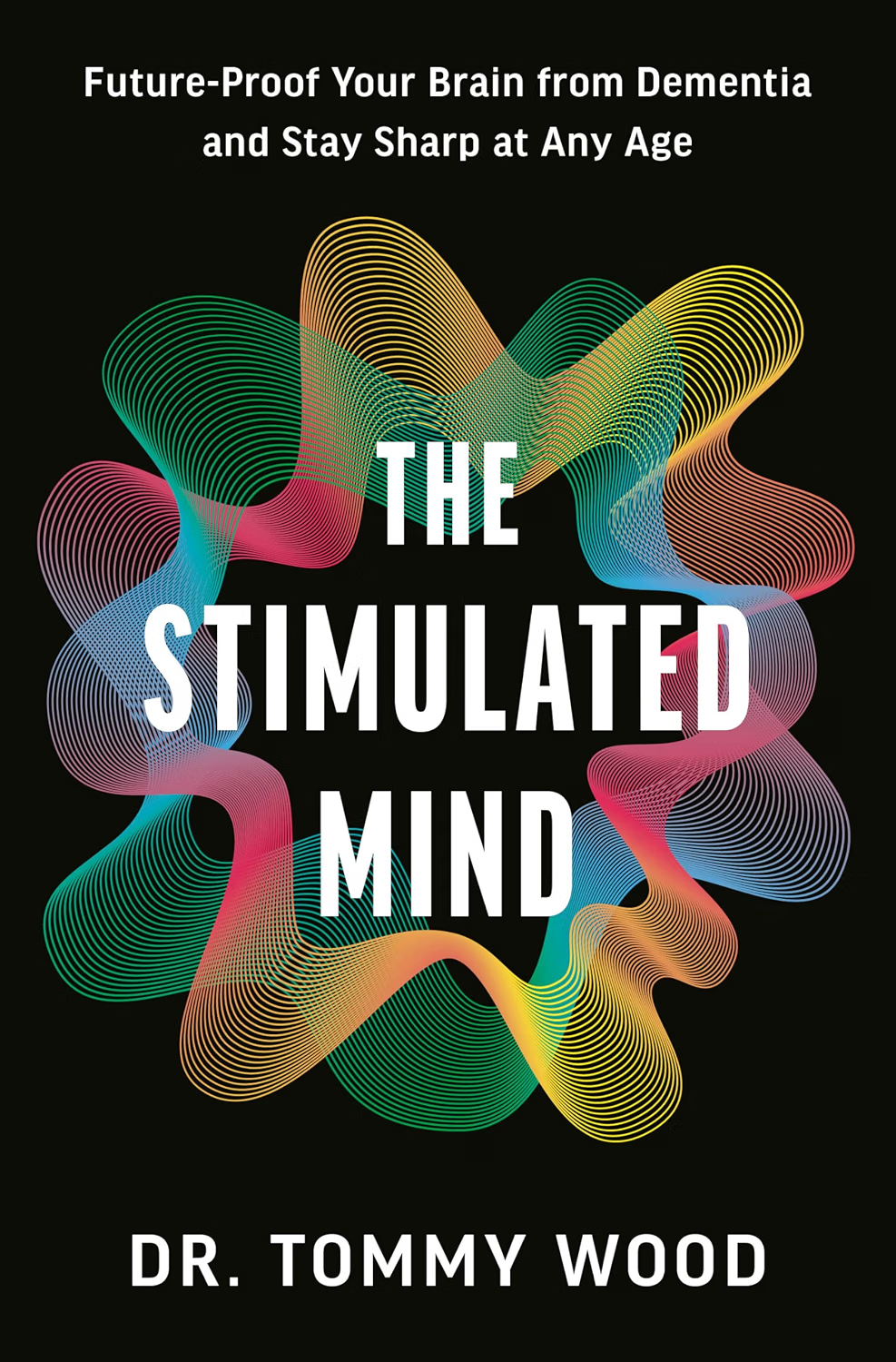
I have this idea of how all these different things that we know affect brain health, short-term and long-term. That's thinking about focus, energy, cognitive function in the short term, and thinking about long-term cognitive trajectory and hopefully avoiding significant cognitive decline as we get older. We know there are lots of things that kind of influence that. My model for how they come together, I call the 3S model. The 3S is stimulus, supply, and support. And I would argue that the most important one is stimulus. And I relate this very much, building brain function and brain health, brain fitness, to how we would do that for our physical bodies.
Partly because the mechanisms and all that kind of science, the biology, overlap a lot. And partly also because building physical fitness is something that we're kind of familiar with. Even if it's not something we actively engage in, we understand how that process works. If you want to be fitter, faster, stronger, physical training or exercise is the most important thing. The stimulus that you apply to your body. And most functions of the body are stimulated or stimulus-driven.
You apply some kind of challenge or demand to your body, and it responds, it adapts, it gets better so that you can do it better next time. That's kind of, we call this demand-function coupling. That's a fancy scientific term, but it basically just means that if you challenge your body, it responds and gets better in order to meet that challenge.
It's the same with like your liver gets better at metabolizing alcohol if you drink, and your immune system gets better at responding to an infection, either after it's had an infection and it's kind of had a chance to adapt, or you use a vaccine or something like that. This is our body responding to a stimulus.
The stimuli that your brain receives, I think, how we use our brains is the primary determinant of how our brains function. It's simply that if you want to be better at something with your brain, whatever that is, the most important thing is to actively engage in that and learn and fail and get better over time. That's where the other pieces come into play. We've stimulated our brains. Say you're learning a musical instrument. That's the stimulus; that's the skill that you're building. When you activate the parts of the brain involved in playing that instrument and learning that skill, you need the second S to respond to that stimulus. That's supply. You need a supply of blood to the brain. Like those parts of the brain that are becoming active, they ask for more blood flow.
There's this process called neurovascular coupling, which is just those cells that are active saying, hey, we need more blood flow here to kind of do what we're doing. In order to meet that, you need good heart health. In order to then kind of respond, you need what we call metabolic health. This is good energy supply and energy production. And you need a good supply of nutrients. There are certain nutrients that we know are critical to kind of building and maintaining brain tissue. Things like vitamin D, omega-3 fats, like you get from seafood, iron, B vitamins. And so that's kind of our supply bucket. But we've stimulated the brain; we've brought in a supply of these different things that we need to respond to that stimulus.
Then there's a period of adaptation afterwards where we kind of build function in response to the stimulus to get better. This is where we start to kind of learn or get better at the skill that we're learning. This is our, now we're in my support bucket. One of the most critical is sleep. Sleep is when kind of the brain actually builds the tissue that you've been stimulating, builds the function that you've been stimulating. It's the same with physical exercise.
Any good athlete knows you don't get stronger in the gym; you get stronger when you recover afterwards.
Then there are other things that kind of play a role here. For lots of these, the main reason they affect brain fitness is because they impair, or they can affect, the brain's ability to adapt. Chronic stress plays a role here, as do things like excessive alcohol, smoking, gum disease, and other poor aspects of physical health, because sort of inflammation and things like that can impair your brain's ability to properly rest and recover and kind of build in response to stimulus.
All that to say, I think the most important thing if you're trying to build brain fitness is to use your brain on the things that you want your brain to be good at. And then something like physical fitness plays a role in terms of improving metabolic health, cardiovascular health; some of these other things actually help improve sleep. Some of these things that can help respond to stimulus. But equally, it could be a stimulus in its own right. If you're learning to play tennis or a martial art or something that involves, like, learning a complex motor skill, that in itself is a direct stimulus to the brain too. And we know that these sort of coordinative type exercises are some of the best in terms of building cognitive function. Nothing is mutually exclusive, but for most of us, how we use our brains is sort of the main driver of how our brains function. And then for others, it may be that we're getting plenty of stimulus.
You may work a very demanding, problem-solving, people-focused job. You're building skills; you're using your brain. And then it could be elsewhere in your daily life where you may need to focus a bit more to make sure that you're actually making the most of the things that you're doing with your brain.
Willy Walker:
So much in there. Let's go with this, on the first S, stimulus. I think that I'm pretty knowledgeable in the real estate capital markets. I could bore you with details about all the different things that I know from having been in this industry for a quarter century. And I'm trying to get additional stimulus into my brain. Do I go deeper into real estate capital markets, or do I go and pick up a guitar and try and figure out how to play the guitar?
Dr. Tommy Wood:
I would argue probably that as much as you're going to, and probably as much as you need to, you've mastered the real estate market skills. You're as close to mastery probably as most people are ever going to get. There may be some interesting intellectual aspects and financial, business-related aspects of getting those marginal gains of being ever so slightly better. But in terms of broader brain health benefits, I would argue that going into a completely different skill set and starting as a beginner is going to give you an additional brand new stimulus where you might see greater benefit in terms of your time investment. And there are a few different reasons for that.
One is we know that you get these greater changes in the brain early on in the learning process. So they've done studies comparing, like, the function of brains of people who are masters of a skill compared to sort of beginners. And the masters you see across multiple sort of complex skills, they have better function of networks in the brain that are susceptible to the processes of aging. Now we're talking about learning complex skills to help maintain your brain function as you get older.
And so yes, the process of developing mastery is beneficial, but you see a greater kind of uptick in terms of the amount of time invested and the benefits from it earlier on in that learning process. It's not that you should try something for two weeks and then try something else, then try something else. You still have to invest in something from the beginning for a long period of time to kind of benefit from that.
But when you're doing that, I would argue that there are some things that you can gain that may transfer over to your other areas. One thing that we talk about a lot nowadays is being able to focus on something, being able to pay attention when we feel like distracted and kind of scatterbrained, and there are lots of things trying to kind of knock us off our game that prevent us from actually doing deep, high-quality work. But we know that spending time focusing on one thing actually helps us build the skill of focus that then translates to other areas as well.
If, when you're doing your day job, you kind of feel like you've lost a little bit of that ability to like really knuckle down and kind of get deep into a single piece of work, you might benefit from spending just some time playing the guitar where all you're doing is playing the guitar for 20, 30 minutes, maybe an hour. Because you're starting to relearn how to focus, and then you can translate that back over. Plus, it's nice; you have these other hobbies. We know that sort of stepping away from the work that we're doing into an activity that isn't challenging in the same way can sort of leave us refreshed and re-energized to go back to our work. I think for a few reasons, once you've already achieved mastery, especially if it's in the job that you're doing all day, investing some time in a new, completely different skill could have a number of benefits, both separately as well as that may even translate over to your work.
Willy Walker:
Talk for a moment about, let's stay on stimulus before we go to supply. On the stimulus side of things, the difference between stimulating your brain and exhausting your brain.
I flew from LA to New York yesterday and for six hours was on my phone, dealing with emails, working through things, and I got done, and there was a gentleman in the seat next to me watching Monday Night Football. And I sat there and said, man, I would have loved to have just watched Monday Night Football because I could have turned my brain off by watching Monday Night Football. Whereas I sat there and was constantly computing the entire time, and I was exhausted by the end of the six-hour flight across the country. Talk for a moment about social media and about when we're online watching social media: is our brain getting stimulated or is our brain getting exhausted?
Dr. Tommy Wood:
Yeah, again, like lots of super interesting and important pieces in here. The analogy that I've often used, I've actually borrowed from a colleague of mine, Dr. James Hewitt. We used to work together in Formula One. He used to be a professional cyclist. Again, the analogy is kind of coming from the physical world. But he talks about cognitive gears. Low, middle, and high gear. Also, I mean, he was a cyclist, so that's why he's talking about gears.
Willy Walker:
I like that. I can associate with that.
Dr. Tommy Wood:
Yeah. And so the really deep cognitive, sort of deep work popularized by people like Cal Newport, sort of like this, you're working on one thing, you're fully immersed in it, you're doing really kind of hard work, you're problem-solving, you're researching, you're writing, there are no distractions, you're just like doing one thing. That's high gear work. That's where we actually get stuff done. If you're a professional musician, this is when you're deep in your practice every day. It's kind of like you're actually doing the primary aspects of your job. For most people, it does depend on your work. But like a lot of people who do knowledge work will kind of identify, they'll know that there are things that they have to do and you kind of get down, you just, you do it.
High-gear work, most people can do for like 30 to 90 minutes at a time, maybe with a few-minute breaks in between. It kind of aligns quite well with something like the Pomodoro technique, where you do 25 minutes of focused work, you take a five-minute break, a true break, and you go back to it again. Some of this kind of comes from Anders Ericsson's study of developing expertise in professional violinists, professional musicians. This is where the 10,000 hours kind of thing comes from, which is kind of like a complete misinterpretation of his work, but that's a separate-
Willy Walker:
I was just going to say, Literally, one of my notes to you was, do you agree with the Malcolm Gladwell 10,000-hour theory?
Dr. Tommy Wood:
So, I'll tell you where that 10,000 hours came from. 10,000 hours comes from Anders Ericsson's studies of expert musicians, and 10,000 hours was the number of hours they had practiced by the time they reached 20 years old, on average. They weren't even experts at that point. No, I don't agree that 10,000 hours is some magic number.
Willy Walker:
Have you correlated that to sports? I mean, it would seem as if someone was a musician and they had 10,000 hours by the time they got to 20, you've worked with F1 drivers, you've worked with Olympians. It's about the same. To get up and be a world champion, you've got to probably have about the same amount of time in the cockpit or the same amount of time on the ski slopes.
Dr. Tommy Wood:
Yeah, like this is the amount where, if this is something you started, say early childhood, six, seven, eight years old, like that's the time when maybe Formula 1 drivers started driving go-karts. And then you do that a few hours a day, several days a week for 20 years. Yeah, that's about the number of hours that you're going to accumulate. It's not that it's not helpful; it's just that it's not like some magic number that you have to hit in order to achieve expertise. What I think is useful from some of this work is, when you look at the patterns of experts, so these are people who have built up the skill of practicing and doing the work that they're doing. They tend to work in like two 90-minute blocks per day. That's the amount of time that sort of like an expert can do really high-quality deep work per day, something like that. And maybe there are a few breaks in there. That's like maybe two to three hours of really high-quality deep work. Most people will know that there's some time in the day when they feel best to kind of really, for some people it's early in the morning, for some people it could be 10 p.m. at night, but like, that's when you might get that work done. That's your high gear work. And there's only so much that we can do in a day.
Just like there are only so many reps of heavy squats or sprints or whatever, right, that you can do. That's high gear.
What you would like is to have extended periods of time during the day where you're in low gear. That's when the brain can start—the equivalent of, like, going for a walk, you're reading, you're not really paying attention to something. You're just like letting your mind wander. That's when things start to click into place. That's why people have inspiration when they're in the shower because they can't take their Instagram in there with them. We want to have those periods, like you're watching Monday Night Football, but you're not really watching it and your brain's kind of wandering and things are kind of just like settling and you're kind of making, starting to kind of like understand other things that you've been working on. We want to have extended periods of time like that. Like, that's when we kind of start to recover during the day.
But where we spend most of our time, exactly to your point, is doing middle gear. Middle gear work is multitasking; it's emails, it's meetings, it's on a Zoom call while you're answering your emails, it's watching Netflix while you're also on Instagram, while you're also thinking about or doing something else, where you're inherently switching back and forth. We call it multitasking, but you're really task-switching because humans can't actually multitask. And what this does is because we're constantly jumping back and forth, because we're constantly being forced to think about different things, we never actually give ourselves a break during that period of time. It's very draining, whilst also not necessarily feeling that productive, especially if this is like, you're in your workday, and you're getting emails coming in, you're getting messages, there's Teams and Slack, and people are pulling you in different directions. You're never actually getting high-quality work done. We know that's stressful. We know you're more likely to make mistakes. We know you're going to feel less productive at the end of the day. We know that you're going to sleep less well because of that. It has these knock-on effects.
It's not that we shouldn't have meetings. It's not that we can't do emails, stuff like that. It's that we should try and compartmentalize that work so that it gives us the chance to do both high-quality, high-gear work, and then also have time when we actually allow our brain to truly switch off because that's when some of that hard work starts to pay off because we're actually recovering from it and sort of integrating it.
Willy Walker:
Can I just ask you one quick thing on that for a second, Tommy?
Dr. Tommy Wood:
Yes.
Willy Walker:
Do the algorithms on social media make it so that because it, before the algorithms were highly refined, you would be the pilot. One moment I'm looking at football, the next moment I'm looking at sailing, and the next moment I'm looking at literature. And I guide where I'm going in social media to get the inputs. And that, I hear you saying, is your middle gear, and it's not terribly productive, and you're not doing a whole lot to move the ball forward. But because the algorithms take you deeper and deeper into a refined issue, like I start looking at football scores and the next thing that scrolls up is an interview with a coach. And the thing after that is talking about whatever, and it goes all the way down to it. Is that actually more productive as it relates to, or does it actually put my brain to sleep?
Dr. Tommy Wood:
There's this interesting thing about social media, which is that we inherently think that it's bad. And I would argue that for some of those same reasons, it can actually be a chance for our brain to sort of switch off a little bit. And there were even studies, so like there was one study where they had people do complex cognitively demanding work, and then they tested different break periods to see like what makes people feel reinvigorated to like go back to their work and feel re-energized and like they can actually concentrate again. And one of the things that they had was five minutes of watching comedy clips on YouTube. Actually, after that, people felt much more willing to go back and actually focus and kind of get stuff done. Social media obviously becomes a problem if it's driving like feelings of like low self-worth because everybody—
Willy Walker:
Or isolation and things like that.
Dr. Tommy Wood:
Exactly, right. That you're not actually interacting with people in real life. All you're seeing is people who are like hotter, richer, more jacked than you are.
Willy Walker:
Which is all you see on social media.
Dr. Tommy Wood:
Yeah, so like that certainly has its downsides, so I would try and curate my algorithm to minimize that stuff if it's having that effect on me. And that's something that we can do to an extent. But if you're going on social media and it allows you, you just watch a few videos on football scores or like mine, my Instagram feed is half, like, dogs doing stupid stuff. It gives my brain a break for five minutes, and then I can go back and do work. Actually, that's not necessarily a bad thing. You've had a break, you've switched off from your work, you're a little bit more energized, and you can go back. I think issues come up with some of those sorts of things. If it's showing you politics that makes you mad, if you're exposed to opinions where people tell you you're an idiot, or you're again exposed to all these things that kind of make you feel less than, that's problematic. If you're using Instagram while you're also doing several other things at the same time, we know that that kind of multimedia multitasking can make people a bit more distractible. They sort of lose their ability to focus because they're constantly trying to jump back and forth between multiple things. But if you're using it as a true, defined short period of cognitive break, doing something that doesn't really take much cognitive engagement, but it's a little bit enjoyable, that might actually be okay.
Willy Walker:
On the supply side, I was walking into our office here in New York today, walking down Park Avenue, and there's a guy, he's middle-aged, he's overweight, he's smoking a cigarette. And I kind of looked at him, and I was just like, wow, he's just kind of—he's throwing in the towel. It's just like doing things that we all know aren't good for us. And I was sitting there thinking about it and thinking about your research and your comment as it relates to blood flow. It really excites me in the following way.
I think as someone who deeply believes in physical fitness as it relates to longevity and taking care of myself, and I talk to lots and lots and lots of people about what I do to stay physically fit and take care of myself. And my WHOOP age has reversed itself quite a bit this year where at the beginning of my 59th year, I was 54 years old in my WHOOP age. Today, I'm 48.5 years old, and I'm gunning to be into my 30s by the time I turn 60 in April of next year. And that's from a lot of different factors, Tommy, as you well know.
But one of the things that I'm constantly thinking about is that, as you say, if you've got good blood flow, first of all, one of the things that a lot of people forget about is that a huge number of people take the little blue pill for ED, okay? And at the end of the day, ED is all about blood flow. And men sit there, and they're like, "Oh, I've got to take this blue pill, and I don't really like taking this blue pill." Get on the treadmill. Get your circulatory system working. But the double factor that you just pointed out is there's someone sitting there saying, I don't want to go to the gym because I don't care about my body shape, and I'm just going to hang out. But if they want to continue to have an enjoyable sex life and they want to continue to expand their brain, those two things, from your point, require you to have good circulation and to have good cardiovascular health. And when you said that, I was like, wow, this is a topic I sort of didn't want to specifically talk about as it relates to just blood flow on the ED side of things. But if you can add to that, like, I want to have a healthy brain when I turn 70 years old; it's like, go to the gym.
Dr. Tommy Wood:
Yeah, I mean, I completely agree. And this has actually come up in some work that we're doing right now. You mentioned I'm the chief science officer of Better Brain, which does brain health and cognitive function and dementia prevention-focused health coaching covered by health insurance. And we've been working on putting together brain health-focused programs for retired athletes in various sort of like professional sports. And often you get people saying, it's just like selling brain health to the average 50-year-old guy is difficult. It's impossible. But if I can sell you better erections, then you're interested.
And the best part is if I can help you get better erections, I'm helping your brain even if you don't realize it. Yes, I completely agree.
Willy Walker:
Let's dive in on that one for two seconds. I was biking in, this is just about mental health and mental health being seen versus not seen. You and I can talk about someone going to the gym; they start doing bicep curls and three months later, they're going to have more developed biceps, and you can see the impact of that. You tell someone to go and read Chaucer every afternoon for three months, and it's going to help your brain health, and you don't get done with three months and say, I'm smarter, okay?
I was biking back in May and had a really bad accident. Got a bad concussion.
And I was in a fog for almost a month, and I could feel that I wasn't back, but you know, like if in that bike accident I'd broken my arm, I'm going to be in a sling for six weeks and all of a sudden after six weeks, my arm's back working and I can see that I've actually gone through the recovery period. But my WHOOP score during the month of May, you can see literally on the graph, I was actually thinking about pulling it up for this. You can see my recovery scores go down, and I didn't change my lifestyle whatsoever. In other words, I still wasn't drinking, I was eating early, I was sleeping in the same bed, I was doing all the things that got me great recovery scores previously, more consistently than not. And all of a sudden the accident happens, and my recovery score steps down to red and, at best, yellow for the full month after the accident. And it sat there and gave me, if you will, some type of data that showed me that my brain was still recovering. My question to you is: you focus on trying to convince that 50-year-old to do things. How do you show them things like my WHOOP score, showing me that I hadn't actually recovered from my concussion? Because by the way, a month later, all of a sudden I started to feel better from a cognitive standpoint, and I lost the headaches; boom, my WHOOP score recovered back into the green.
Dr. Tommy Wood:
Yeah, it's a great question. And my guess is some of what you saw, yes, there are obviously the widespread effects of concussions that have a sort of like neurophysiology and even beyond. The head and the body are connected. We didn't realize that in science and medicine for a long period of time, but obviously they directly influence one another.
But it could be other things like some of the inflammatory processes going on because your arm is broken; that's going to be influencing that too. I guess the whole recovery process is being picked up there. But this is really where a lot of issues come up around behavior change, which is that unless you see very early changes or benefits, like humans are terrible at investing in something now for some like unknown reward in 20 years' time. Like, because you just don't really know if it's worth your time. What you would often see in this kind of scenario is, right, so even if we went in and we're thinking about erectile function, there are ways to quantify that that have gotten a little bit of press online recently; you can have a little thing that you put around your dick while you're asleep and it will show you nighttime erections and that kind of stuff.
Maybe somebody is going to be interested in that. It's hard to do that at scale, though.
But often what you'll start to see is, and this is where actually a big part of this as well becomes the partners. Because the partners—
Willy Walker:
I was going to say, ask your partner. Your partner's going to give you feedback.
Dr. Tommy Wood:
They're going to give you feedback, but they're often also more invested in this process too. And they can sort of like help and it's something you can do together. It's probably going to benefit both of you. Feedback from the partner.
Often, a lot of these people might—their body composition maybe isn't what it used to be. Often they'll start to notice changes there. They'll start to notice subjective changes in their energy, their ability to focus. Of course, this is now because we're starting to see benefits in the brain. But as soon as you get some of this momentum, even if you went in focused on one area, it's some of those things, even some of those subjective things. Plus, oh yeah, my belt is looser.
That's an objective thing you can tell. And then people start to gain a little bit of motivation.
It might take a little bit of tinkering to figure out what one person is going to respond to. Some people respond to blood tests. We're looking at your blood sugar. We're looking at your blood pressure. We know that this is really important for erectile function. Now we're seeing that improve. You're like, "Great, those numbers are moving.” I understand that. For some people, it's going to be some of the more subjective stuff, like how they feel during the day, how their partners may be responding, that kind of stuff. It's going to be a little bit of, everybody's motivated by different things, but usually somewhere in there is an early signal that then will allow people to keep engaging in the process.
Willy Walker:
Final piece, on the S, support. You mentioned omega fats. You mentioned vitamin D. From a supplement standpoint versus getting support just naturally. Like when you said omega fats, I sat there and said, I don't take omega supplements, but I eat a lot of fish. How much do you counsel people to supplement into the supply side of things versus just getting it naturally through exercise, engaging with friends, having a good social network, doing the things that typically are associated with a healthy lifestyle?
Dr. Tommy Wood:
Yeah, the ideal scenario is that everybody could do all of this just by the natural food that they eat and the things they're doing with their friends and like all that kind of stuff. That's not going to be the case for everybody. When we think about diet, I call nutrients the great leveler because all I care about is that you get enough of them. I don't care about where they come from. And very specifically, that means that that gives you a lot of latitude to figure out the foods that you enjoy, that are sustainable for you, that kind of help support this whole process. But if needed, you can supplement.
And the best way to do that is to test and then figure out whether you need to supplement or not. Vitamin D, B vitamins, B vitamin status, particularly B12 and folate, which is B9, but also B6 and B2, riboflavin, can be important. You can measure B12 and folate, but I would also measure the level of something called homocysteine, which goes up when you don't have enough of those B vitamins that are involved in methylation. And we have very good evidence that if you have elevated homocysteine and you bring that down, then you slow the rate of cognitive decline and brain atrophy. But that is also in the setting of good omega-3 status. You can test your omega-3 status with an omega-3 index.
If you're eating seafood several times a week, you're probably fine, but ideally you want your omega-3 index level above 5%; probably best if it's above 8%, but the greatest improvement is getting above 5%. Homocysteine, at least below 13. That's where you get the biggest benefit, but ideally below 10. Vitamin D, at least above 30. Ideally, if you can get it over 40, that's great. Iron status, super important. Measure hemoglobin, measure ferritin, make sure you don't have low iron. It's very common. And so low B12 and low iron are very common in women in midlife, and that's associated with cognitive changes in that sort of, like, perimenopause period, menopausal transition.
In men, you might often see the opposite. You might see high hemoglobin or high ferritin. One of the reasons, so hemoglobin, just as an aside, it's the molecule that carries oxygen around in your blood. High hemoglobin: the most common cause is obstructive sleep apnea, which is a very common issue with sleep. And it's treatable. It's a risk factor for dementia because you're not sleeping properly, and that is reversible if you treat your obstructive sleep apnea. It's another reason to kind of get that measured. But that's essentially how I would do it. I would, if you can, get some tests. Most of those, your doctor will just do. Omega-3 index, you can get an at-home test, but they should measure your iron levels. They should measure vitamin D. They can measure homocysteine, even as part of an annual physical.
Willy Walker:
You know more than anyone I've met and more than most people on the face of the planet about the brain, about brain health, and about future-proofing your brain. As you think about stimulus, supply, and support, what do you personally do on a daily basis from a stimulus, supply, and support standpoint that others ought to think about following?
As I hear you run through all the different supplements, do you take supplements? When I hear you talk about exercise and health, I'm assuming you work out every single day. When I hear about stimulus, is there something that you do as it relates to reading, putting down electronics, and reading a book or playing guitar? What does Tommy do on a daily basis to make it so that you are future-proofing your brain and we can learn from what your habits are?
Dr. Tommy Wood:
Sure, so my approach is basically a slightly aggressive and consistent commitment to the basics. Like, that's the best way that I can put it. And I think we have some pretty good evidence for this.
I'll detour slightly, and then I will come back to me, I promise. There's been a recent interest in this idea of a type of person that we call super-agers. Super-agers are people, by definition, who maintain the cognitive function they had in their 50s, at least into their 80s. There are actually studies going back like five or six decades that suggest that most people should be super-agers, like the majority of people, at least if we have the right environment. But something that you see consistently across super-agers is they remain cognitively engaged, they remain physically active, they sleep well, they're socially connected, and they avoid significant chronic disease. Or if they have pre-diabetes, diabetes, or high blood pressure, they treat it. That's it. That basically forms the foundation of what I think is most important.
I stimulate my brain every day by doing eight different jobs, where I have to learn a lot of skills, and I'm wrong a lot, and I'm constantly learning, problem-solving, and engaging with people. I try and learn some skills myself. One, probably the primary focus of my skills most recently has been learning how to code in various coding languages. I know that we're now reaching a state where nobody needs to learn how to code because you can vibe code everything, but at least in science, even if I start by vibe coding something, I want to then be able to look at the code and understand all the things that are behind there and know the output is real, because we know that LLMs hallucinate, so they could just be making stuff up when you're vibe coding. And there are some nice studies showing that learning a coding language is very similar to learning an actual language, and that has several benefits in terms of executive function, decision-making, that kind of stuff. Then I also try and learn skills on the physical front, so I compete in strongman; that's my sport. And so that involves learning how to lift and manipulate certain objects. There are some relatively basic skills. It's not like learning a martial art, but there are still some skills in there.
But yeah, so I train every day. I do strength training three or four times a week. I do cardio two or three times a week.
Willy Walker:
One question on the strength training, if I can. In Peter Attia's book, Outlive, he talks about the cognitive benefits of weightlifting, but is very specific in saying, unless you're weightlifting 75% or more of your max weight, you don't get any cognitive benefit from weightlifting. I don't lift 75% of my max weight. I lift on my dumbbells, on my arms. I'm doing 25 to 30 pounds for between 20 and 30 reps on each arm, okay? I'm doing high volume and lower weight just to remain toned and get the strengthening of it, but not necessarily trying to build up the bulk.
But if I listen to what Attia says, I'm not getting the cognitive benefit of what weightlifting does when you're going to 75% of your max or higher and only doing six or eight reps on it. Where are you on that? And is that interpretation of what Peter wrote correct?
Dr. Tommy Wood:
I'll admit that I haven't read his book since it came out, so I can't remember exactly if he wrote that. There's a ton of super interesting information that shows that different types of exercise have different effects on the brain. That's known. Resistance training most specifically benefits the white matter of the brain, which makes up about 60% of the human brain. It kind of sits in the middle, and it's where all the fat is. And it's responsible for the fast connections between different parts of the brain and the brain and the body.
Humans have more white matter than any other species. It's one of the reasons why we have the complex cognitive functions that we do.
White matter structure tends to drop off as we get older. And that's actually one of the best predictors of decreases in cognitive function. Other things that are important for white matter include, like, iron status. We talked about that already.
Really important for white matter.
Willy Walker:
Can you do MRIs to find out how much white matter you have?
Dr. Tommy Wood:
Absolutely. Yeah, yeah.
Willy Walker:
And you can track it.
Dr. Tommy Wood:
And you can track it. No, that's fine. There are two different types of imaging that can be done. Some are more like research-related. If you just get like a standard MRI of the brain, they can sort of estimate white matter volume in different parts of the brain. There's another type of MRI called diffusion tensor imaging that looks specifically at white matter and kind of its structure. And you can kind of look at all the different connections and how connected and consistent the fibers are. But yes, so lots on white matter that you can track on imaging.
The best studies that we have do suggest that resistance training is good for the white matter, good for things like executive function. Rapid decision-making processes, like information processing. And those studies did do that kind of very typical bodybuilding-type rep structure. Three sets of 8 to 12 reps. And at that point, you are sort of 70 to 80% of your one-rep max, something like that.
One of the reasons for this, we think, is because resistance training specifically releases IGF-1 as a signaling molecule. And IGF-1, we know, is really critical for the structure and function of white matter. There's a whole bunch of other stuff going on at the same time, but that's like one of the reasons. Now, you will still get a lot of that signal at higher rep ranges, provided that you are sort of getting close to what we call like, voluntary muscular failure. Like you're getting to the point where you can't do another good rep. I think that arbitrarily saying it needs to be 75%, it needs to be X reps, like most of what we've learned about resistance training is that's not really true. However, that's mostly when it comes to gaining muscle.
As long as you're approaching failure, it doesn't matter the weight, as long as you're working hard for you. You can do lighter weight for more reps or heavier weight for fewer reps. You specifically, though, mentioned that you wanted to build and maintain strength rather than muscle mass. We do know that lower reps at higher weight is better for strength, whereas for muscle mass, it matters less. I might argue that we have more evidence on resistance training at that sort of, like, slightly higher weight, more typical kind of bodybuilding rep scheme for the brain. That's just because those are the studies that have been done. That's not like absence of evidence isn't evidence of absence, you know what I mean?
I think that the training you're doing probably is going to give you some of those similar brain benefits just because of what we know about those pathways. But if you were specifically interested in maintaining kind of strength or building strength, I would argue that we have some evidence that maybe you should spend a little time with the heavier weights as well. Absolutely based on your goals, your abilities, stay safe, all that kind of stuff. But that little bit of extra load does seem to be beneficial for strength specifically.
Willy Walker:
Sauna, cold plunge. There are studies on sauna helping brain health in the long term, a number of studies out of Finland and Sweden, Scandinavian countries where people have over consistent periods of time done it. True or false, you're a big believer in heat therapy.
Dr. Tommy Wood:
I do have a sauna that I use regularly, mainly because I am of Nordic heritage. I'm half Icelandic. It's something I've sort of like always grown up with. I think that the evidence for sauna as it pertains to brain health and dementia prevention is not nothing, but it's probably not as much as it's kind of been sold. Most of the studies on sauna come from one particular population: the Finnish businessman study. And they've looked at a whole bunch of things. But basically what they did is they were like, those who sauna three or four times a week had a lower dementia risk than those who sauna like once or twice a week. And that was lower again than those who, like, didn't sauna at all.
And they've even done these studies where they're like, it has to be this exact temperature range because that's the range that the people with the lowest dementia risk sort of use their sauna for. I would argue that most of this is probably nonsense. Like we're majoring in the minors here. Like the minute that somebody says that sauna three, like four times a week decreases your dementia risk by 66%, which is what they say.
Willy Walker:
Which is what they said. Yeah.
Dr. Tommy Wood:
Yeah, right. That immediately, as somebody who has been a statistician for large clinical studies, this is what we call residual confounding. There is something else about businessmen who have the time to go to the sauna four times a week.
Willy Walker:
The time. Yeah. The money, the friendships, all the other things that play into it, actually.
Dr. Tommy Wood:
100%. Yeah. I believe that sauna has physical benefits. Like, we have some nice studies on it. It has some of the same cardiovascular benefits as exercise. It kind of overlaps a lot with that sort of like aerobic exercise benefit. There are some cool kind of case studies of people who should, there was one that was published a couple of years ago. There was a paper in Nature, like one of the biggest scientific journals in the world. There was a guy who had a genetic mutation, which meant that he should have gotten early-onset Alzheimer's disease. And he didn't.
And so they did a whole paper about him and why he didn't get Alzheimer's disease when, genetically, he should have gotten early-onset Alzheimer's. And he had been the chief engineer on a Navy boat, shoveling coal into the engine all day, every day for years. And basically he got so hot every day that they hosed him down. And then when they looked at his brain, it was full of heat shock proteins, which you sort of like develop in response to sauna or in response to heat.
One case isn't enough to say, yes, right, this is definitely the mechanism. But I think there is some benefit to sauna. But like, if you do sauna four times a week, you aren't going to get rid of two-thirds of your dementia risk. It's very interesting. We understand the pathways, some of the benefits there, but I think it's been oversold.
Willy Walker:
Just to clean out quickly on you, because I think people want to hear as it relates to, do you get brain scans for white matter? Do you get a DXA scan for bone density? Do you take supplements? Just a couple of those other sort of, everyone's looking for sort of a hack. I actually had a friend of mine who was at some wellness conference down in Florida last week and got a note saying how engaging it was. And I sort of sat there and said-
Dr. Tommy Wood:
Was that Eudēmonia?
Willy Walker:
I think it was.
Dr. Tommy Wood:
Yeah, I was there too.
Willy Walker:
I shouldn't throw too many darts at it, Tom. But I was just sitting there thinking about all these people in the room, and I'm just sort of like, go to the gym. Just go get some exercise. There's no great pill or supplement you're going to take to like, all of a sudden take care of your body for some longevity thing. But anyway, with my little dart throwing there.
Dr. Tommy Wood:
No, no, no. Do you know what? It's actually great. And it's a very important point because, like, as a conference, it has the full spectrum, from legit scientists to grifter nightmare. It's a bit of everything. I understand the darts you're throwing. I basically completely agree with you. No, I don't have brain scans tracking white matter. I've never had a DXA scan. I do get regular blood tests for things that I know are modifiable.
Willy Walker:
Annual or biannual?
Dr. Tommy Wood:
At least every six months. If I've made a change, say in my supplementation, I'll then try to do it within three months. And I do most of this through Better Brain because they measure the things that we know we can act on that then impact brain health.
I'll give you an example. Historically, when I lived in the UK, I regularly donated blood. When I moved to the US, I wasn't allowed to donate blood because they thought that everybody who lived in the UK had mad cow disease. They changed that rule like two or three years ago. And then I was excited. I could go and donate blood again. I think it's like, I'm just doing good for other people, like all that kind of stuff. I had basically donated blood as regularly as I could every two months for nearly three years. And I gave myself an iron deficiency.
And I only noticed this because I was tracking this in my blood test. Then I started supplementing with iron so I could keep donating blood, but I'm going to redo my blood tests earlier than I would have done otherwise just to make sure that my supplementation strategy is working. I do blood tests either every three or six months, like all the things we talked about, but like also blood sugar, blood pressure, lipids, nutrient status, all that kind of stuff.
Willy Walker:
Just one quick question on that. Someone who's listening to this who gets their annual physical, and as you and I both know, lots of people don't even get an annual physical, but who go to their doctor for their annual physical, they get their blood work, but the doctor comes back and says, "You look great.” How much further testing should people be getting on their blood work that a typical physician won't give you feedback on? In other words, like, do you take the results and send them off? Do you go get an additional test done outside of your typical visit to your GP?
Dr. Tommy Wood:
Yes. Most of the things that you should get on your annual physical are most of what I would recommend. So hopefully you'll get a vitamin D level. Hopefully they'll measure some iron stuff. At least they're going to measure; they're going to give you a CBC. You'll know your hemoglobin level. Maybe it's worth looking at iron. Maybe it's worth looking at omega-3s, but, like, getting a homocysteine, I think is beneficial for the B vitamin side because we have very good evidence there. Like many of these things, you can now just get direct-to-consumer. You can order them online. It costs you a hundred bucks. You go to your local lab. There are some things where the levels that I would target personally, again, based on scientific evidence, aren't necessarily the normal range. Homocysteine is a good example. The normal range for homocysteine normally goes up to 15 or 16, but we know that once you're at 15 or 16, you're at significantly elevated risk for cardiovascular disease and dementia. And some of that is modifiable by just improving B vitamin status.
I would consider either asking your doctor for some of these additional tests, like nothing major, but like homocysteine, check my iron status, like all that kind of stuff. If you get your results back and you think that you would like additional interpretation, there are some things out there. Like, I don't want to like just promote my own stuff, but like BetterBrain has a free tool that includes all the evidence of all the things that we've talked about. You could upload your—you don't have to pay anything. You could upload your blood tests and be like, what should I be thinking about in terms of my blood test results? And maybe that's helpful. Or if you can go and spend an additional $100 for any service that provides some of these additional tests, hopefully you might get a bit more information.
Willy Walker:
I'm running tight on time, and you've been so generous with your time. And as you can tell, I could keep talking to you for hours on end. If you look at high-functioning people, and most of the people who listen to the Walker Webcast, I would probably put into high-functioning people, and they're living their lives. Look at someone like me who is in good health, eats well, what have you.
What's the one thing that I ought to be thinking about that's going to help protect my brain health between now and when I turn 80 years old in 20 years. If there's, I'm flying 9,000 miles over the next 10 days, okay? I'm on airplanes every single day. I'm changing bedrooms, but I try and sleep in hotels where I can get some good sleep. I'm focused on sleep. You can keep on going down the list of all the things. I do look at social media, and my friend Arthur Brooks said at our summer conference in Sun Valley to everyone there, which I thought was a great takeaway, that if you can not look at your phone for the first hour of the day and not look at your phone for the last hour of the day, it will allow you to live a much more engaged and more beneficial life by just not going straight to the phone when you wake up and at the end of the day. And of all the things that you can take away from his talk as it relates to longevity and living a full life, that's a good one.
And I've tried to do that, by the way, Tommy, and have a tough time doing it. But when I do, I do feel better by not doing that. What's the hack, if you will, for highly active, engaged people as it relates to future-proofing your brain?
Dr. Tommy Wood:
Anybody who knows me knows that I'm like, I try never to be drawn into absolutes. Just like I could make an argument that there are some people—my wife is an example—who, the way that she can, she's department chair of chemical engineering at the University of Washington, like a very highly decorated scientist and academic, as well as running her department and doing a whole bunch of stuff at the university administrative level. The reason that she can show up and spend multiple hours a day with her students, with her staff, all that kind of stuff is because the first thing she does when she wakes up is she clears out her inbox. It's just like off, it's done. No longer has to worry about it.
I understand the premise, but it's just all about how you find a way to build the ability to show up and be present and do the hard work that you need to do during the day. And like, for some people that's avoiding your phone entirely, for some people that may be checking your email. And like, both of those are okay, as long as it means that you get your actual work done. Sorry to argue with Arthur Brooks, but like, we should have options, just to know that it's all about building our own kind of schedule within the day that allows us to get what we need to get done.
What I would say is in like high performers, regardless of their field, when you're in that kind of midlife period, right, maybe 35 to, or 40 to 60-ish. Hopefully there's more time on either side as we get better at staying healthier for longer.
Willy Walker:
I'm certainly banking on that.
Dr. Tommy Wood:
Yeah, and I absolutely imagine you will achieve that. But I think that we're getting plenty of stimulus. Your job, we know, is cognitively demanding; it's socially engaging. If you had time to go and learn the guitar, that's great. But I think that what really falls by the wayside in that group, one is physical health starts to slip during that period of time. We're stressed, we're busy, we don't sleep, et cetera.
One thing is check your blood pressure, check your blood sugar, get a basic set of blood tests, address anything that comes up, because that's the period of life when that starts to happen. And we've talked about that. The other is, if we think about my three S's, support and sleep and rest and recovery are probably the most critical thing at this point in life. It's, are you giving yourself time to take a break cognitively during the day? Avoid your phone, maybe it's first thing in the morning, maybe it's some period during the day. Are you actually giving yourself some downtime between hard periods of work? Not just opening up your email, not just multitasking the whole time, watching Monday Night Football, allowing your mind to wander, going for a walk and just, like, not listening to a podcast or trying to get something done at the same time. Are you giving yourself that opportunity? Plus, are you giving yourself the opportunity to sleep as much as you're able to? Or, of course, travel complicates that. But in that group, those are the two things that I see fall by the wayside in that kind of midlife period. Like, that's where I would focus.
Check the various aspects of your physical health, give your brain the chance to kind of take a break and recover and you will be better for it. You'll get more done in less time. Genuinely, I've seen it again and again and again.
And we don't really appreciate it until we actually experience that ourselves.
Willy Walker:
Well, I started by saying with all the titles you have and jobs you have, your brain is always very busy. I love engaging with you on this stuff, and my brain is running. I could run it for another hour talking to you about all this stuff, but I've got to be mindful of your time. Super appreciative of it. Thank you for spending time with me talking about all these issues that are so important. Thanks for all your research. Thanks for all you do. We didn't even talk about F1 drivers, which I thought we'd talk to you about because I go to F1 races, and I actually got to meet Max Verstappen last June at the Red Bull Ring in Austria. And I was sitting there looking at him, talking to him about his physical health.
And I was wondering how much of Max being the brilliant driver is: is it 70% mind and 30% physical, or is it 50-50? Or is it the inverse of what I thought it was? You've done that, but we don't have time to get to that this time. I'm going to have to ask you to come back and talk to me about F1 drivers at some point.
Dr. Tommy Wood:
Sure, I would love to.
Willy Walker:
But thank you, Tommy. It's a real pleasure. Thank you, everyone, for listening today. And I hope you have a great one. And I didn't think we were going to get to ED on this call. The fact that we ended up spending a lot of time on men's health and ED was not on my bingo card for this hour. I appreciate that.
Dr. Tommy Wood:
Well, this was a huge pleasure. I really enjoyed it. Even the sexual detours, I think it's important to talk about. I'm glad that we ended up there. But thanks so much for having me. I really, really enjoyed it.
Willy Walker:
I appreciate it. Have a great day. Thank you, Tommy.
Dr. Tommy Wood:
You too, cheers.