Willy Walker:
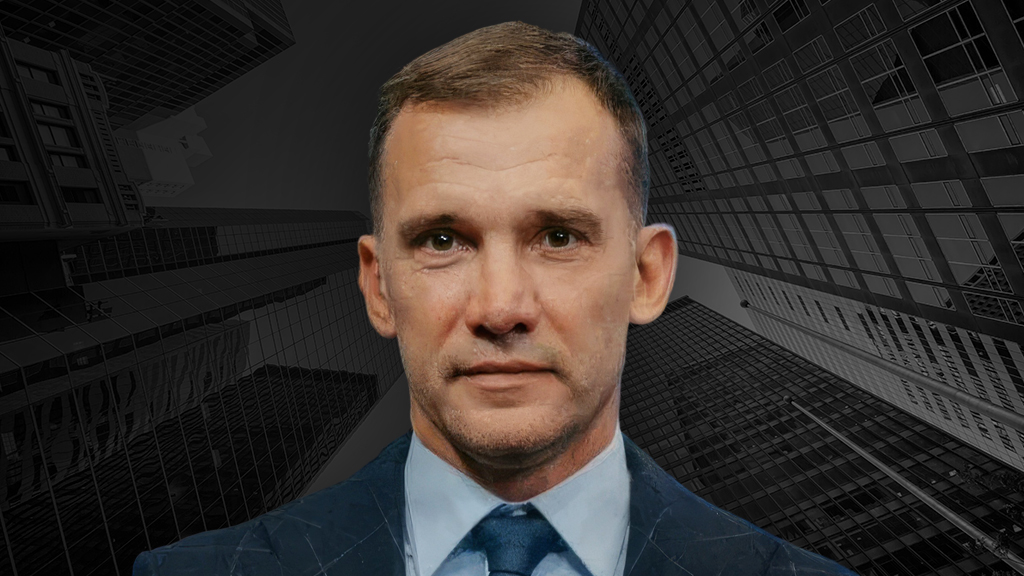
Good afternoon, and welcome to another Walker Webcast. It is my honor, pleasure, and privilege to have Andriy Shevchenko join me today to talk about soccer, to talk about Ukraine, and to talk about his role as, clearly one of the most significant sports figures in Ukrainian history, as well as someone who played a very large role in European soccer, mostly in the decade from 2000 to 2010. And then his role subsequently running both the Ukrainian national football team, as well as the Ukrainian football federation, which he now chairs.
Andriy, first of all, welcome, and it's very nice to see you and have you.
Andriy Shevchenko:
Thank you so much. It's great to meet you too, Willy.
Willy Walker:
Just fantastic, and I'm very thankful of our mutual friend, Colin Coleman, who works with me at Walker & Dunlop for introducing us and making this conversation happen. Let me do a quick bio, Andriy, so that people know who you are. Clearly, football fans around the world, soccer fans around the world know exactly who you are, but many of our listeners here in the United States who might be in the commercial real estate world and might not be the follower of football that many are, might not exactly know how significant a figure you are in the world of football.
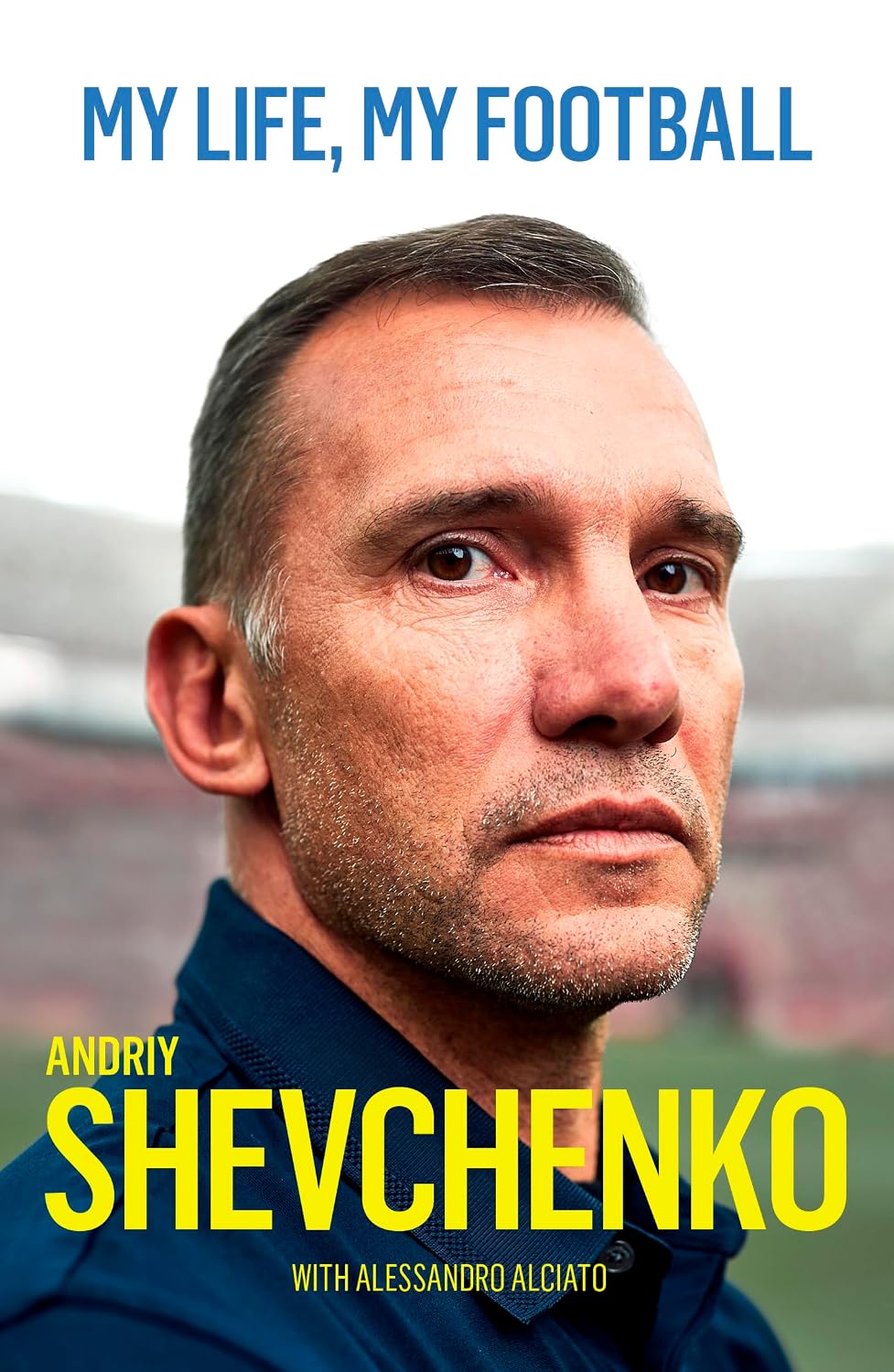
Andriy Shevchenko is one of the most accomplished figures in Ukrainian sports history. A former striker for Dynamo Kyiv, AC Milan, and Chelsea, he won the 2004 Ballon d'Or and remains Ukraine's all-time leading international goal scorer. Following his playing career, he became head coach of the Ukrainian national team, later serving as a humanitarian ambassador for Ukraine, and in 2024 was elected president of the Ukrainian Association of Football (UAF). Widely regarded as one of the greatest strikers of his generation, Shevchenko scored more than 300 career goals and became an icon at AC Milan, where he won the UEFA Champions League, Series A title, and numerous individual honors. He is a member of the AC Milan Hall of Fame and author of My Life, My Football.
Andriy, let's start with the World Cup 2026, because you and I just both watched the number one seed, France, fall to Spain. Doing this call very late at night over in Europe after watching the game. First of all, thank you for staying up so late.
But the lion of France falls to Spain. What was your take on the game this evening?
Andriy Shevchenko:
Really, first of all, thank you so much for a nice introduction, and I feel very proud about my career, and about the game tonight, I think that Spain played some unbelievable football. And obviously, France has very strong individual players, but in a way how Spain played like a team today, it's incredible against such a strong opponent like France. And then obviously I expected something more from France, and better reaction after the first half, but it didn't come very well. And something was missing during the game. And I think we have to give the credit to the Spanish team, and the coach, he prepared the game very well against France. And the spirit inside of the team started from the first minute.
And at the end of the match, I saw how much they were preparing and ready for the game. And then apart they have such strong individual players but they played an incredible game today like a team.
Willy Walker:
And did you think that that kick that turned into the first penalty shot, that turned in the first Spain goal was actually a foul that was worthy of the penalty shot?
Andriy Shevchenko:
Definitely, because it's a clear touch. I think this moment has happened during the games when a defender lost a little bit, he lost the orientation. And then he didn't see where exactly the striker was behind him and then decided to clear the ball with the kick. And it was a good anticipation from the striker. And then for me it's a 100% penalty. I think it's a good decision from the referee.
Willy Walker:
And at the end of the game, when France had the free kick from just outside of the zone with four or five minutes left. It was sort of a must goal to potentially get to being able to score another one to tie it. Mbappé, his shot went sailing over the top of the crossbar.
And as I looked at that shot, I thought the equivalent to my uneducated view was that that was like having a putt at the end of the Masters that you leave short. In other words, because he sailed it over the crossbar, there was no ability to either force the goalie to make a save or get a rebound off of a potential save. And that if you're going to do that kind of a shot, you must keep it down.
Even if the goalie saves it outright, you at least have a chance for a second shot. Is that a fair way of looking at that? Or is that unfair because there are people in front of him and he's got to lift the ball, et cetera. I mean, you've done this shot a thousand times. The question there is, is it too much to say he should have kept it, if you will, in play, like a putt going back past the hole? Or was the way he shot it, he had to go to try and make it in the corner, and it might fly high by a foot?
Andriy Shevchenko:
No, you're actually right, because I think that football depends on all the sport, depends on momentum. And then this is the last chance for the France team to come back, maybe try to come back. And then I think at that point, in my point, I will always try to make the target, because if you put the ball in the target, anything could happen.
The goalkeeper can make mistakes, some reflection it could be, but I don't think it's the night of France. Since the first minute started, Spain was always ahead with any component in the game. They better play like a team. There was, I think for sure, they won more individual battles. They control the ball better. They have a midfielder position today, way better than France. They play between the lines much better. And I think Spain today deserves to win in the way they play. Of course, during the matches, France has a chance to come back. And this is one of the chances because we know that individual players make a huge difference during the games. And Mbappé is a world-class player, is a leader of the team, and is a captain. But I think it's not his time. I think the moment has been lost during the game.
Willy Walker:
And when you talk about momentum, let's rewind the clock for a moment. We'll kind of, if it's okay with you, we'll go kind of back and forth between this year's World Cup and some of your memories from when you played. But in the Champions League final in 2005, AC Milan was up against Liverpool, 3-0 after the first half.
And then in the second half, the momentum changed significantly, as you just said. And I've heard you talk about going back and watching the tapes of that game over and over and over again, almost to punish yourself.
You played enough. Everyone kind of wants to know, what's that moment? What's that spark? What makes it so the momentum changes? Because if you could identify it, everyone would do it, no? And so we all sit there and say, what's that moment where it starts to go? Is there anything in that second half against Liverpool that something happened that allowed them to turn the momentum in the game? Or was it just sort of a cumulative effect that played out for the second half to allow them to tie it and then take it to penalty kicks afterwards?
Andriy Shevchenko:
I think it's exactly what happened in that game. It was six minutes, but we lost a little bit of control of the game. And I think the big part of this during that game, the play defense, because Liverpool fans, even if the team was 3-nil down, still believed. They were cheering, they were encouraging the team, they were supporting.
And I think at that moment, you know the famous phrase, “You’ll Never Walk Alone in Anfield.” It's something that really helped the players to believe that they will come back somehow. And then I think that we lost control of the game for six minutes, and then Liverpool came back from 3-nil down to 3-3, and then another game started from there.
And then again, momentum we were talking about. AC Milan created so many chances that we could score 2-3 goals and then finish the game winning. But this momentum, it clearly showed that whatever we've been trying, something clicked; it's quite difficult to explain it. But I remember in the last second, I had a clear chance to score the goal. And then it was a double save from Dudek. And then, of course, after the game, even right now when I see that moment, I could still think about what I can do better in that moment, and what I will change.
Willy Walker:
I find that to be really interesting, Andriy, in the sense that you are the star of the team. You were given the ball for the last kick, and everyone knew that the coach was giving you the fifth shot because you were the best player. And yet I've heard you in other interviews say that you still replay that all the time, that you still wish you'd done better.
And I can understand the core feeling of saying, I mean, I wish I'd done a better job. Yet at the same time, it feels to some degree as if it haunts you, if it's something that you wish you didn't have to remember about. And as someone who is a leader of a company, if we do well, I clearly feel great that we've done well. If we do poorly, I have to take responsibility for us doing poorly. And yet at the same time, that's the responsibility I take as the leader of the company.
And I think about you asking for the ball in 2003 when you won the Champions League, and the coach wanted you to shoot second. And you said, no, I want to go fifth. And that's you stepping in and saying, I want the final shot. And you made the final shot, and you won the Champions League, and what an incredible exuberant moment. But I find it interesting that you still think back on 2005 with this; the word in Spanish is vergüenza. But this feeling of you wish you'd done better. I understand you wish you'd done better, but not to the point of you were given the opportunity. You earned the opportunity.
Andriy Shevchenko:
It's true. In that moment, you always think about what the best solution could be for you. Because penalty shooting is a quite difficult moment. It's very unusual for football because free kick or something, it's okay. But the penalty shot, the ball is firm, it's not moving. And then it's only you and the goalkeeper.
And then, of course, theoretically, you have a lot more chances to score that goalkeeper save that ball. But in reality, we actually come in 50-50 chances. And it's kind of the psychological moment between the goalkeeper and you or yourself mostly, I'd say. Because when you go to take the penalty, that 50-yard, 70-yard walk from center to the penalty shoot, so many thoughts going on in your head. How can I shoot? Do I go right or go left? Do I wait for the goalkeeper?
Willy Walker:
Do you hear the fans during that period of time, Andriy, or is that all blocked out?
Andriy Shevchenko:
No, it's all blocked. It's something that we are used to dealing with when you play on a big stage like that. I think fans do not affect you. We are professional, we know our job. It's mostly because we try to bring the memory from the information; what we know. For example, if I were a penalty shooter for AC Milan, and I always ask before the game, some tips from goalkeepers, how what he does during the penalty is moving or what move he does to understand better what the decision I have to make. And look, the beauty of this sport, because it's not the numbers, like we talk about the business, okay?
Business is practical. It's 90%, of course, the right decision you have to make. You have to hire the right people around you. You have to keep the company going with a good atmosphere with some positive energy. But 90% of your success is in numbers. Football is also important because now new technology brings a lot of information. But the beauty of the sport, because anything could happen in the last second, is emotional, we can control that emotion. And then I don't know any football players in the world who never miss the penalty.
Willy Walker:
Sure, sure. And on that, one of the things that I heard you say that I thought was very interesting was in the 2003 penalty shot, you had in your mind what you were going to do when you stuck to it, whereas in the 2005 penalty shot, you had something in your mind and you changed your mind as you went to take the shot.
Andriy Shevchenko:
Exactly.
Willy Walker:
And so, I think about that as it relates to sort of being disciplined about the thought of, you looked at the keeper in 2005, and you switched your strategy rather than in 2003, you said, I'm going lower right, and the goalie jumps to the left and boom, you win the Champions League.
Andriy Shevchenko:
It's true, that was my first Champions League what I won, that was a clear decision from that because it's actually that walk what we talk about, I was all that 50 yards what I walked and I always repeat one thing, don't change your decision, don't change your decision, just clear your mind, you know what you have to do. Very similar situation in 2005, I was going there, I know how I want to kick but it's something click in my head because I remember a couple of years ago or a year ago, I missed the penalty, I hit the post and then just because I opened a little bit too much my right feet and then in that moment I was thinking about just make sure you don't open too much, and I actually closed and then ball was going in the middle and then goalkeeper was moving right, I have a chance to stop his feet and then just save the penalty.
I mean, it depends, we're all different. In my mind I need information, I like to work with information, more information coming in my head, I like imagination, I like to figure out what is the best for me at that moment, what I should do. I kind of go through every time to my games, I was like to game finish, come back to my home, just take the tapes, sit and then look how team plays, what I can do better for the team in my movement, what I can do better in my movement individual, what strengths I should work to get better, it's kind of stuff what I loved to do it.
Willy Walker:
And you've played in all the great stadiums of the world, you mentioned a moment ago that the Liverpool fans that day in the Champions League final were a huge part of Liverpool coming back, what's the memory you have of walking into a stadium either your own playing at AC Milan or Chelsea or in Kyiv or playing in an opposing stadium where all of a sudden you said, whoa, this is the feeling is so overwhelming of either supporting you or for the other team that you said, I mean, in Bernabéu, I can only imagine that that stadium is an incredible stadium to play in, but what was the stadium that you sort of said, this is a totally different experience?
Andriy Shevchenko:
I've said San Siro is very special stadium because it's some crazy history been happened and then it's crazy history work always well for the Milan, because the fans when they go into the stadium, they always believe that this is special atmosphere, is a special stadium and then they have a social belief in the players and in the team. San Siro is one of the tougher stadiums to play in. 100% I will put it there at Anfield. Anfield is special. I'll say Santiago Bernabéu, Nou Camp, probably Old Trafford, probably Wembley. I had the chance to play in Old Wembley before the reconstruction.
Willy Walker:
What's it like to play in front of 110,000 fans? I just can't imagine what it's like to be on a field with 110,000 people around you.
Andriy Shevchenko:
No, it's special because in some stadiums, when you go in, you can even hear your partners because it's so loud, and then it's extra motivation for me. Some players get a little bit, I'm not saying scared, they don't feel comfortable, but some players, big players, they need this atmosphere to, okay, this is my home, this belongs to me.
Willy Walker:
But that's different from your personality on a day-to-day basis. Your personality is actually quite something and not necessarily shy, but you don't step into a room and take up the room. You have a more reserved personality, yet you get on the football pitch, and you become this lion. Why are there two sides to Andriy?
Andriy Shevchenko:
Because it's opportunity. I can see it's something. When I was very young, I was always dreaming to play in front of big stage because back to Ukraine, Ukraine is a big football country and I grew up watching Dynamo Kyiv as my local team, but a very, very big team in international level too. And then I became a big fan of Dynamo Kyiv at a very young age and then going to the stadium with 80,000 people. And then I was dreaming to have a chance to one day become a professional football player in front of a whole crowd.
I think it's, we're talking about leadership and personality. I know some quiet leaders and some loud leaders. Loud leaders like to talk, loud leaders love to lead teams with some speeches or some emotional driving speech to the teams, but also it’s quiet leaders who come and do the work on the pitch. And then it's very important that the team recognize these leaders.
Willy Walker:
And when you were at AC Milan, the team was obviously owned by Silvio Berlusconi, and while you were there, he was also the prime minister of the country. What was it like to have the prime minister as the owner of your football team?
Andriy Shevchenko:
It's awesome. To be honest with you, football in Italy is more than religion.
Willy Walker:
Just one quick thing, if I can, I was with a friend of mine from Argentina on Sunday watching the game. And I turned to him, and I said, so tell me your feelings about Messi versus Maradona. And he goes, oh, facile. And he goes, Messi, Dios, and Maradona. And I thought it was so great that he put Maradona above God. It was just a wonderful moment. But anyway, sorry, I jumped in there. But you were saying the Italians take soccer so personally.
Andriy Shevchenko:
Italians live for the game, for the football game. It's something very special. And to have Berlusconi, of course, he's a charismatic leader, he loves football.
He did so many great things for Milan. And then I think the success of Milan is because Berlusconi looked after the team. He really wants the best player playing for AC Milan.
And it was not an issue for AC Milan to buy the best player in the world. Milan is always competing with the best teams. It was one of the best teams that time. And then I think Berlusconi did everything that Milan was at the top of the world club.
Willy Walker:
In your first year at AC Milan, the then prime minister and owner of the team, Berlusconi, made a bet with you that if you could score 24 goals in the season, that he would send you out on a large yacht. First of all, was it his yacht that he was saying he would send you out on, or was he just going to send you out on a yacht?
Andriy Shevchenko:
No, it was his yacht. They are actually offering him his house, which is a Villa Certosa, I think. He's in Sardinia, is very beautiful home. And we have a bet with him. And I scored 23 goals.
Willy Walker:
And I was curious, you think he would have sent you out on a bigger yacht had you gotten 24? Because he sent you out with 23. I was just wondering if maybe he would.
Andriy Shevchenko:
No, I scored 23 goals. I scored the most goals in that season. And he was very generous. He said, even if you score 23, the bet was 24, but you can have everything. And when I stayed for a week in his Villa, I took my teammates, and he's just a very generous person. He loves football. He loves athletes. He loves individuals and it makes him a very special owner.
Willy Walker:
And in your second year at AC Milan, Real Madrid came knocking on the door and tried to pull you across to Real Madrid. You decided not to go and to stay at AC Milan, but then a number of years later, you were transferred to Chelsea for, at that time, the highest transfer fee ever paid in professional football. I guess, first, any regrets about not going to Real Madrid? And then second, on the transfer to Chelsea and what that was like?
Andriy Shevchenko:
I don't have any regrets about not going to Real Madrid because at that time, I felt like when the offer came to move, I felt I didn't finish my story in AC Milan. And I was attached to the fans, and I feel like I really want to stay there and win the Champions League or make the history of the club. And then, of course, Real Madrid is a special club. It's a history of football. And at that time, it's big rivalry between Spain and Italy, still Real Madrid, Milan. And it's one of the clubs with everyone dreaming to play.
And also, when I was growing up, I saw Real Madrid, the best team, but I didn't think too much because I feel like I want to make history in AC Milan. And then my move to Chelsea, it's one of the periods where I started to figure it out that I was at the end of my, not in the end of my career, but it was a period where I had to make the move or stay. And I decided to move to Chelsea because I want to have a different experience.
But the history being done, we won the Champions League, we won the league in Italy. It's something that I left, something I'm very proud about. And my relationship with the fans and with the club has always been great. My personal decision was to try something different. And I joined Chelsea.
Willy Walker:
And in 2004, you won the Ballon d'Or to those listeners who aren't big soccer fans. That's the MVP trophy for European soccer. He's the best soccer player in the world.
That year, Thierry Henry and Ronaldinho, two household names along with yourself, had great seasons and were in the running for it. And you won the Ballon d'Or. When you actually win that, Andriy, is there a ceremony or do they just call you one day and say you won it? How does that work? When we give out things like the MVP for the Super Bowl or a Heisman trophy, which we give out for college football, they have a big award ceremony. Do they have an award ceremony, or do they just call you up and say you won it?
Andriy Shevchenko:
No, it's an award ceremony in Paris. It's a special day. And that was very cool. I mean, again, that was my dream come true. When I grew up in Ukraine, I had two Ukrainian players who won the Ballon d'Or before the meet. It was Igor Belanov and Oleg Blokhin. They're both from Ukraine. And then I was the third one. And I was very proud. I'm proud of my country. I'm proud of myself because the boy born in Ukraine came to play for AC Milan. And I really want to thank you again, my teammates and coaches, who were playing and leading the team.
Carlo Ancelotti was coach. And then my great teammates, they helped me a lot, first of all, to believe in myself. I think AC Milan, that was my second club. And they're really, that was a great group of the people, not just great football players. They were great people. They’re great human beings, very intelligent, all very successful people, and have great leadership. Anyone could be a great leader on the pitch. And important leaders like Paolo Maldini, are an example for many generations.
And for me, it was a significant moment in my career, something that I have always dreamed of winning. And finally I have a chance. And I think the big success was my game for AC Milan, my performance for AC Milan, but also for the national team. And that year, we made a very good run in the group stage to qualify for the World Cup. And we qualified for the 2006 World Cup. It's only the World Cup with Ukraine that has qualified so far.
Willy Walker:
You went to the quarters.
Andriy Shevchenko:
Yeah, we went to the quarters. It was amazing. The first time we qualified, we did so well and it is history, but that was a good group of people, like real fighters. That was a good group. We stuck together, like we have a good game plan of what we have to do. And then I think the whole country was very proud. It’s one of the important moments in history, not only sport history, but something that the people united. Ukrainian people united around a big event.
Willy Walker:
And let's shift for a moment if we can to the Ukraine war against Russia today and get your thoughts on that. First of all, I want to be very clear that you are not engaged as a government official, and yet you're obviously a very, very noteworthy person and have access to both the president and others inside of Ukraine. And your mother still lives in Kyiv. Is that correct?
Andriy Shevchenko:
Yeah, my mother and sister are still there.
Willy Walker:
And I remember listening to a podcast you did right when the conflict broke out. And I think that at that time, it was very clear in your comments that the sense here is Russia with such a huge military and such a bigger potential rival that it was going to either be mass destruction or be over quite quickly. And there was a big question about pulling your mother and your sister out because the thought was that Kyiv would get leveled, quite honestly, and that there was going to be a mass destruction.
And here we are several years later, and the fight is still going on. And the fight is actually going on to a degree that many are not only surprised, but just amazed at the way that Ukraine has been able to respond to the Russian threat. Comment, Andriy, on sort of, as you look at what's happened up until now, what's been the key to that success? Has it been the technology? Has it been the leadership? Or has it been sort of the heart and soul of the Ukrainian people, or a combination of all?
Andriy Shevchenko:
I think it is mostly a combination of all. I think first of all, that Ukrainian people are incredible. And you're absolutely right because we're not only showing resilience, like in the beginning, we keep showing the world we can fight, but also, we're showing some significant progress in every aspect.
First of all, we develop some technology, drone technology that we can defend ourselves from any drone attack or Russian drone attack. Of course, we show all leaders in the world that we are able to defend ourselves. We are capable not only of defending, we are able to progress in any new innovation in the war. We are capable of resisting, but not only resisting. Now we start to show that we could not only defend, we can progress. And obviously the leadership of Zelensky is very important.
Willy Walker:
What's he like as a person? You obviously know him quite well. What's he like?
Andriy Shevchenko:
Look, I think it’s good leadership. It's showing that in the beginning, people didn't take him seriously, but during this war, he showed that he was able to handle incredible pressure. And then I think he made the right decision and especially in the crucial moment, he was able to bring the right people on board and then trust them. They can really shape this war in a different direction. And then obviously the main plan is to stop the war right now and sit at the table and have a negotiation. This is what, in the last couple of years, every leader in the world has tried to reach this agreement between the two countries.
But at that point, the country had to live during the war and the Ukrainian people showed incredible resilience, but also showing that not only we can survive, but we are able to have an economy inside which also helps feed our people and army. We are able to, during the sport events, during all this time, our athletes perform, our football teams regarding my work. We are also doing all the competition inside of the country.
We are able to send our young generation to compete in such difficult conditions. And all this, they really bring this situation, bring Ukrainian people together. And I don't know for how long this war is going to be, but I'm sure that all the time, I think they will show resilience, and we show there's some different aspect of our talented people to bring something interesting and different in the moment when we need it.
Willy Walker:
It's amazing. My understanding is that you all are launching about 10,000 drones a day, and you're making 8 million a year. And I guess, right now, the real focus seems to be on Crimea and that the attack that Ukraine is putting on Crimea right now to knock out both the electric grid as well as the gas supply.
If for whatever reason, Ukraine was able to take and dislodge Crimea because Crimea was the first move by Putin to expand back towards the former Soviet Union. A turn of that would be very, very symbolic to this conflict of sort of turning the tide back towards Ukraine and potentially getting Russia to the table. Is my reading on that, Andriy, correct?
Andriy Shevchenko:
You're absolutely correct because we need to show the Russian that we can not only defend, we could do some mission, and then the final touches, everything, like you said, it should be bringing Russia to the table to sit and talk about because it's a final mission to finish the peace talks. And then as quickly as possible that happens, it has to be a right condition for Ukraine to sit at the table and talk. And also, I think that it's very important that all the leaders in the world understand that Ukraine deserves that. That we have to be in the right condition to sit at the table.
Willy Walker:
And I would also add that President Trump is allowing the building of Patriot missiles in Ukraine. There are only two other countries in the world that have what I would call a licensing agreement for the technology. And that's Japan and Germany.
And so, giving Ukraine the ability to build Patriot missile systems is a big move that President Trump did last week. My understanding is it's going to take probably about two years to get that manufacturing capability up and going in Ukraine. But if Ukraine can get going towards that, and obviously you now have the right to do it, that could be a real game changer in your defense.
Andriy Shevchenko:
For sure, 100%. I don't know how long it will take to build all this factory, everything. But I think the more important fact is that President Trump has started to trust the Ukrainians, people are starting to believe that, and it's a very positive move for us that America starts to trust Ukraine.
And then because of this kind of technology, if you share it with someone, you have to really trust it because it's a very unique technology about the Patriot system. But only the Patriot system could shoot down the ballistic rockets.
Willy Walker:
Talk for a moment, Andriy, about both the World Cup seem to be saying that they were thinking about letting Russia play in the next World Cup, which was a topic that you jumped on immediately and went and met with the head of FIFA and put down your foot and said, hold it, you can't do that. But then the International Olympic Committee just ruled to basically allow Russia to come and participate in the 2028 Olympics. How important is the messaging of allowing Russia to come to the 2028 Olympics or play in the 2030 World Cup as it relates to them being the aggressor against Ukraine and these international sports leagues saying, well, we're not going to think about the geopolitical impact of it. We're just going to let them play sports.
Andriy Shevchenko:
I absolutely agree with you. I think it's the wrong decision from the Olympic Committee, but they made this decision. And I think the decision is every federation because there are so many different federations, they could decide what they should do probably.
And then I'm sure that football is not ready to integrate Russia. And then I'm sure the sport is not ready because Russia can use their sport to legalize this action. We know this sport, we don't like to speak about the political side, but in the end, sport is a big influence in the relationship of the people. If you let a country who invaded not just Ukraine, that country, and then this war is black and white, it's very understandable that the action that Russia did against Ukraine. And then they try to use the whole history to make a little joke with the card to make, but this war is very clear, black and white. And then, in my opinion, it’s the wrong decision.
We should put pressure on the Russian government and sit at the table and bring peace to the world. And after that, we can talk about reintegration of Russia, but it is the next step. And then obviously I'm going to walk up and then I'm sure we're going to have a conversation about this too. And I have all my cards to explain that it is not the time to reintegrate Russia back to football.
Willy Walker:
Are you going to the finals on Sunday in New York?
Andriy Shevchenko:
Yeah. I can't miss it. For me, that's one of the best teams already in the final and we're going to wait for a game for tomorrow and who's going to be the second one, England or Argentina.
Willy Walker:
Who do you think wins tomorrow, Argentina, England? And then whichever one of those you think is going to win, what happens on Sunday against Spain?
Andriy Shevchenko:
I can’t speak about that. Both games are going to be very close I think. I think England is very strong and Tuchel is a very good coach. He brought the squad, he left some very good talent out from the team, but he defended his selection. He defends his choice very well. He said he's going not for the talent, he's going for the team. He's going for the solid group of the players who are ready to make this work for the result. And then I think England has been a very pragmatic team. Maybe it's not the best-playing football team, but they got the right result. In the game against Norway, they defended very well. Especially in the last 20 minutes, they come out with some right substitutions. They bring some energy inside of the pitch. They close very well to the center and size is not allowed to Norway to cross that easily like normally they could create the chances for the goal.
In Argentina, we talked about the best player of all time, Leo Messi is something like, I never saw Pelé play, but I saw Maradona and Leo Messi.
It's as true idols. Absolutely, God is something that made him an incredibly special player.
Willy Walker:
That's so interesting and neat. I was looking at the value of the rosters between, the highest is France at 1.7 billion. And number two is England and I think about 1.6 billion, and then Spain at 1.4 billion. And then Argentina at 800 million, as it relates to the contract value of the players on the field. It would be interesting if it ends up being Argentina against Spain, that you've got the two less valuable rosters playing against one another. But I think either way, either England, Spain, or Spain, Argentina is going to really be one of the great.
I mean, it's going to be a classical. It's going to be really an incredible game, I would think.
Andriy Shevchenko:
Yeah, of course. But don't forget about Leo Messi, his market value, it's different now because of his age. If it's taken 10 years ago, his market value could be, what do you think? 1 billion probably?
Willy Walker:
Easy. It's unbelievable. It's quite something. And I will say one of the other things that I thought was interesting when I was trying to describe your career to an American audience, I sat there and said, okay, well, who would he be comparable to? And one of the American football players who you're somewhat comparable to in your achievements is someone named Troy Aikman, who was the quarterback for the Dallas Cowboys. He won 3 Super Bowls. You went to two Champions League finals and won one. And then he won the MVP once and you won the MVP once as well. I've seen it there. And one of the things that I think people forget is that in America, the Super Bowl last year was watched on a global basis by 150 million people on football Sunday. In the United States, everybody stops everything, and we watch television. And then a global audience comes on and watches it. But 150 million, we're going to get somewhere between 1.4 and 1.5 billion people, billion people watching the final on Sunday in New York. I mean, it is 10X, 10X the number of people who will watch the Super Bowl, which I just thought was a fascinating number.
While your career sits there with someone like Troy Aikman, your global brand as it relates to the people who watched you play and know who you are is just orders of magnitude that's very hard for people in the United States to sort of get their head around.
Andriy Shevchenko:
But let's go to the point because this World Cup could accelerate the, you call soccer, we call football. Let's call football. I think America is ready for the World Cup, but they have a strong league in the US. I think you're moving, MLS has been improving so much in the last 10 years. I think the impact of the World Cup is going to be incredible. Look, you have a great stadium. You have people coming from all over the world and then American people love football, soccer. They absolutely have a passion for that. I know in the young stage, you have so many American young players. I think the World Cup is really accelerating this integration of the young generation to soccer, to football. It only has to be well run programs started from the coaches because you have to bring the best coaches from the world and integrate inside of the US program. Coaches make a very big difference. And not only to the professional teams or MLS teams, you have to be in the early stages because coaches with a good program, with good methodology of the world can really change everything in the next 10 years. And then I'm sure football could be potentially on the top like basketball, American football, baseball, ice hockey.
Willy Walker:
Ice hockey, I mean, the other thing is what happened to F1 in the United States when they did the Drive to Survive series and sort of put a face to the sport. And I think that having someone like Messi playing in the United States, albeit he's Argentine, I think the American fans, and particularly obviously the Miami fans all really feel like he is part of this league. And so, as a result of it, to have the best player in the world playing here in the MLS rather than in the Premiership, rather than the Bundesliga, what have you, is a huge catalyst to exactly what you're talking about.
Andriy Shevchenko:
I agree with you, but you already have that in the World Cup, we can multiply it again. But after that, it has to be the right structure to come. If you want to make this league the really big one, and we talk about numbers, America loves the numbers. America loves good fans, good, solid sports. Football has a big chance, soccer to become a very important sport in America. And I wish it could happen in the next 10, 20 years.
Willy Walker:
Well, if it does, you and I will watch it happen. Andriy, I can't thank you enough. And it's just been a real joy. It's an honor to meet you and talk to you about your career. I hope that at some point, Colin, you and I can maybe go hit a golf ball together, which would be a real joy. Have a great time at the game on Sunday.
If it is Spain, Argentina, who are you rooting for?
Andriy Shevchenko:
Look, it's quite difficult.
Willy Walker:
If I ask you Spain, England, can you give me which one you'd be rooting for or not?
Andriy Shevchenko:
No, you know what? I think it could probably happen in Spain, England. It could happen in Spain, England, because I like the spirit of England right now. You know, of course, when you're playing against God, you never know what can happen.
Willy Walker:
To anyone who doesn't know what he's talking about, that's Maradona's hand of God goal in 1986 when Argentina beat England.
Andriy Shevchenko:
You know what? That World Cup was, I'm watching, I was 10 years old. And then I absolutely fell in love with England. I absolutely fell in love with Maradona. I mean, obviously not for the hand goal but in a way that the second goal was…
Willy Walker:
One of the most unbelievable goals ever.
Andriy Shevchenko:
It's something that I could never forget in my life. And then it's a great memory for him. Again, you never know what could happen. This is the beauty of football because any chances, any moment, the game can switch in different ways.
Willy Walker:
Very much so. Andriy, thank you so much. It's been a real pleasure. Thanks for joining.
Andriy Shevchenko:
Thank you.
Willy Walker:
And thank you everyone for tuning in. Have a great week.
Andriy Shevchenko:
Okay, take care. Nice to meet you.