
If you’ve followed the Walker Webcast over the years, you’ve likely heard host Willy Walker recommend a book or two. But in his first webcast of 2026, it was more than a recommendation.
It was a full-on leadership masterclass, grounded in the research and insights of McKinsey’s
Carolyn Dewar, coauthor of CEO Excellence: The Six Mindsets That Distinguish the Best Leaders from the Rest and the recently released CEO for All Seasons: Mastering the Cycles of Leadership.
Carolyn Dewar brought fascinating insights and a framework for how to lead at the highest level, through every season of a CEO’s journey.
Over the course of the hour, their discussion ranged from AI disruption to succession planning, but one theme anchored it all: great CEOs don’t just lead well; they think differently.
Six mindsets that define great CEOs
Carolyn’s book CEO Excellence, coauthored with Scott Keller and Vik Malhotra, distills the behaviors and philosophies of over 100 top-performing CEOs into six essential mindsets:
- Set the direction and be bold
- Align people and prioritize the soft stuff
- Mobilize through human psychology
- Engage the board to create value
- Connect with stakeholders on long-term purpose
- Enhance personal efficacy by prioritizing CEO-only tasks
“They're mindsets,” Willy emphasized during the webcast, “not characteristics, habits, or strategies.” Carolyn confirmed that distinction: “We were hoping for habits and tips… Well, it turns out leaders are really different… but the mindsets, the way they thought about their role versus those six responsibilities, were remarkably similar for those who do it really well.”


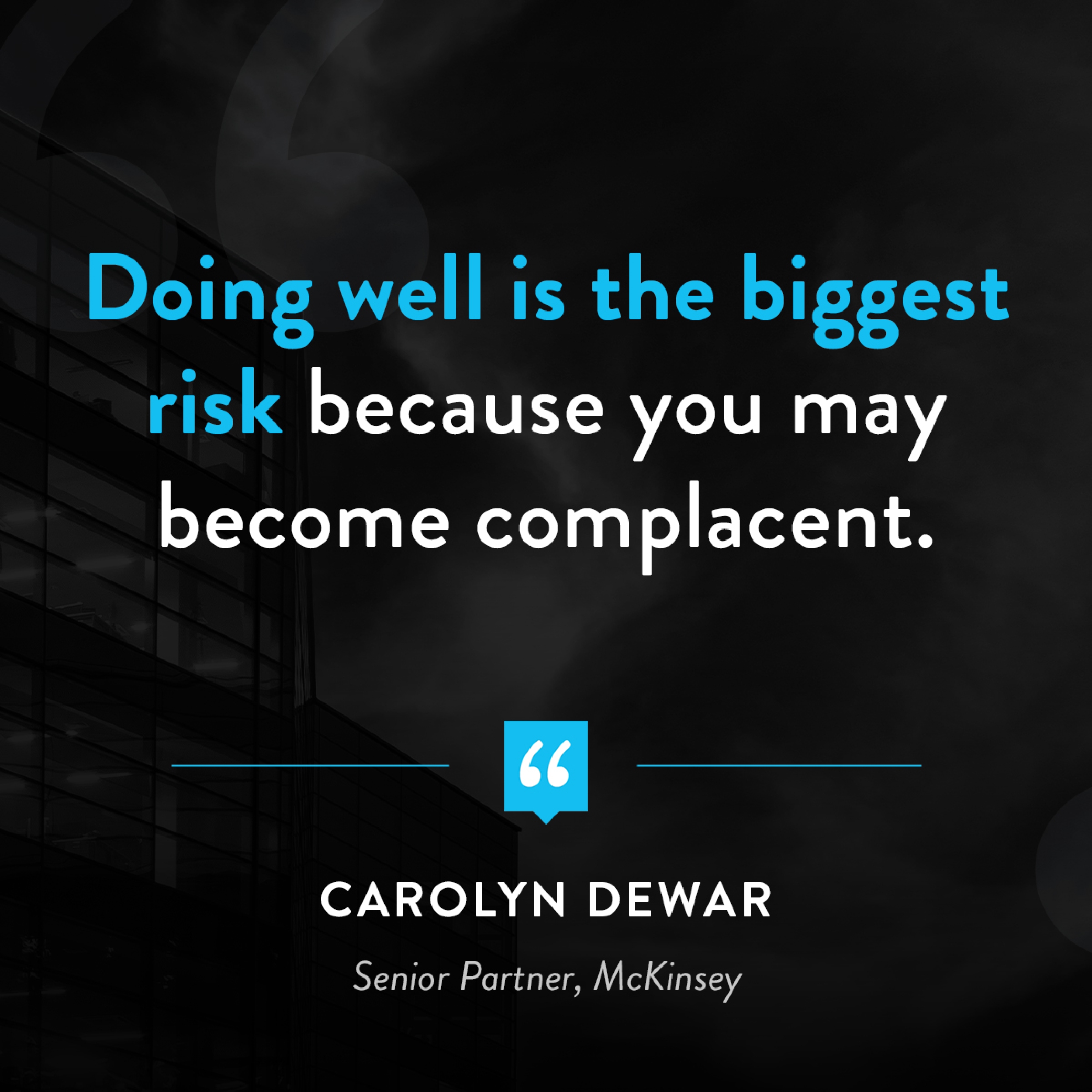


“Do what only you can do”
Of all the concepts in the book, the one that stood out most during the conversation was the idea of focusing exclusively on CEO-exclusive work.
“You're the firm's scarce resource,” Carolyn explained. “There's only one of you and 24 hours in a day. Thinking about the highest and best use of your next hour of time is a strategic resource-allocation decision. That’s not selfish.”
Willy reflected on how this principle had evolved in his own experience, contrasting his time running Walker & Dunlop as a private company versus a public one. “I could lead in the rear-view mirror as a private company,” he said. “Once we entered the public market… public shareholders only care about where you are going, not where you’ve been.”
The boldness imperative
One of the core lessons from CEO for All Seasons is that top-performing CEOs act boldly and early.
“Those people who achieve top-quintile performance in their industry could point to very specific, bold actions they took early,” Carolyn said. “You're also setting the tone in the first year or two, signaling, ‘Here is the kind of leader I am going to be.’”
Willy drew a parallel to a story in the book: “That Walmart anecdote is very similar to the Andy Grove anecdote,” he said, referencing how Grove transformed Intel by stepping back and asking, “If I were fired and someone new walked in, what would they do?” The key question: do leaders have the courage to make the bold pivot before they’re forced to?
Reinvention is not optional
Carolyn also introduced the concept of “S-curve leadership”—a cycle where great CEOs reinvent strategy, talent, and operations every few years before growth stalls.
“You cannot ride the same wave forever,” she said. “You need to be looking ahead… If you wait until growth is waning on your current trajectory to think ahead, you've waited too long.”
Willy called it “shocking the system,” citing Jamie Dimon’s use of strategic jolts to keep teams from getting complacent. Both agreed that the middle years of a CEO’s tenure, when performance is strong, can be the riskiest time to fall asleep at the wheel.
Strategy needs buy-in, not just brilliance
One of the most memorable moments from the webcast came when Carolyn described the “lottery ticket” experiment, a behavioral study that proves people value things more when they have a hand in creating them.
“When people get to pick their own lottery number, they demand five times more to sell it back, even though the odds haven’t changed,” she explained. “That’s the power of ownership.”
Willy was quick to apply it: “If you let people help shape a strategy… they’ll be more invested in making it succeed.”
The takeaway? Even when a CEO sets the direction, inviting others into the process creates alignment and energy.
The humility to step aside
While most business literature focuses on how to start strong, Carolyn emphasized the importance of ending well. “The fourth season we discuss is about finishing strong,” she said. “There is little guidance on how to finish strong and hand it over to be better.”
Willy admitted the section reshaped his own thinking. “After reading the book, I realized, ‘The day I say I am out, I have to get out,’” he said. “I probably have to bring in a new chairman of the board and allow the company to go to the next chapter.”
Carolyn agreed: “We’ve seen a bunch of boomerang CEOs. That should not be a badge of honor.”
Final reflections: leadership is a mindset
Toward the end of the webcast, Willy offered sincere appreciation for Carolyn’s insights, and for the book itself.
“I just want to thank you for writing such a great book,” he said. “As 15 years into my tenure as a public company CEO, I can tell you that it's an incredible, very insightful book that is something of a cheat sheet on where to spend your time and your efforts and your resources as it relates to being a great leader.”
It wasn’t a hyperbolic endorsement. It was the thoughtful perspective of a CEO who knows just how hard the job is, and how much clarity matters.
I highly recommend that you catch this engaging Walker Webcast and enjoy two people at the height of their careers discussing what it means to lead with purpose.
As an Amazon Associate, Walker & Dunlop earns a commission from qualifying purchases.
News & Events
Find out what we’re doing by regularly visiting our news & events page.
Walker Webcast
Gain insight on leadership, business, the economy, commercial real estate, and more.