
David Ignatius
American Journalist and Bestselling Novelist
Willy was joined by David Ignatius, renowned American journalist, associate editor and columnist at The Washington Post, and bestselling novelist.
With decades of experience covering global intelligence, diplomacy, and conflict, David brings a rare insider’s perspective on the dynamics shaping U.S. foreign policy.
Together, he and Willy examined ongoing international conflicts, how the U.S. is faring from a geopolitical standpoint, the global effects of the current administration, outcomes to expect over the next year, and David’s pulse on worldwide power shifts.
At a glance
1. Who is David Ignatius?
David Ignatius is a reporter, columnist, and editor at The Washington Post, where he writes a bi-weekly foreign affairs column focused on U.S. national security, geopolitics, and intelligence. He is also the author of twelve novels, several adapted into major films, and is widely known for his reporting and expertise on the Middle East, the CIA, and global power competition.
2. What are the top reasons to listen to this webcast?
- A balanced, real-world read on U.S. power right now
Ignatius walks through what’s working, what’s risky, and what’s being underestimated in U.S. foreign policy about a year into Trump’s term.
- A clear explanation of the shift from rules-based order to power-based competition
The discussion frames why today’s instability is less about any one event and more about a global transition where old rules are fading and new ones are not yet settled.
- Actionable context on the headlines everyone is watching
From Greenland and NATO to Ukraine, Gaza, Iran, Venezuela, China, and Taiwan, Ignatius connects the dots across regions and explains what to watch for next.
3. How does Ignatius assess U.S. foreign policy about a year into Trump’s term?
He describes Trump as disruptive and unusually aggressive in wielding power, sometimes more effectively than prior presidents, while warning that the cost could be a long-term erosion of America’s alliances, credibility, and the systems that sustain U.S. influence.
4. What is the “Trump doctrine,” as Ignatius describes it?
Ignatius frames it as the belief that the American superpower will not be challenged where U.S. interests are at stake. He also suggests Trump’s approach reflects a spheres-of-influence mindset that tests how far America will go in the Western Hemisphere while potentially conceding other regions to competitors.
5. Are we moving into a multipolar world and is this bigger than Trump?
Ignatius agrees the transition is real and unpredictable, and that the rules-based order has been weakening for years. The danger, as he frames it, is the shift toward a power-based system, because transitions between systems are historically the most unstable periods.
6. Is Trump the “right leader for these times,” given Biden’s consensus-driven approach?
Ignatius sees Trump as the opposite of “normal order” and believes some outcomes may be beneficial, but he is deeply concerned Trump is weakening an enduring U.S. advantage, a powerful country with strong allies who want to be on America’s team.
7. What does Ignatius mean by “air war, spy war, and algorithm war”?
He describes modern conflict as powered by data integration, precision targeting, and real-time coordination, where intelligence, signals, cyber, and strike capabilities converge. He points to the ability to hit leadership networks and key figures nearly simultaneously as an operational feat that reflects a new era of warfare.
8. Could alliance strain reduce intelligence sharing with the U.S.?
Ignatius says yes, and he senses some countries are beginning to protect their interests by treating the U.S. as a potential obstacle rather than a predictable partner. That shift can lead allies to hedge, hold back information, and quietly diversify relationships, including with China.
9. What future headline should leaders watch for over the next year?
Ignatius flags that the way the Ukraine war ends will shape global stability for decades, and he warns that America’s unpredictability could push Europe closer to China economically. In his view, many current trajectories create primary benefits for China, with secondary benefits for the U.S.
10. Are we safer or less safe a year from now?
Ignatius argues that increased risk-taking reduces safety, and he contrasts Biden’s tightly managed approach with Trump’s willingness to roll the dice. He believes some benefits come with renewed deterrence, but warns that thin staffing, reduced process, and limited outreach beyond an inner circle create gaps that could carry serious costs.
Watch or listen to the replay.
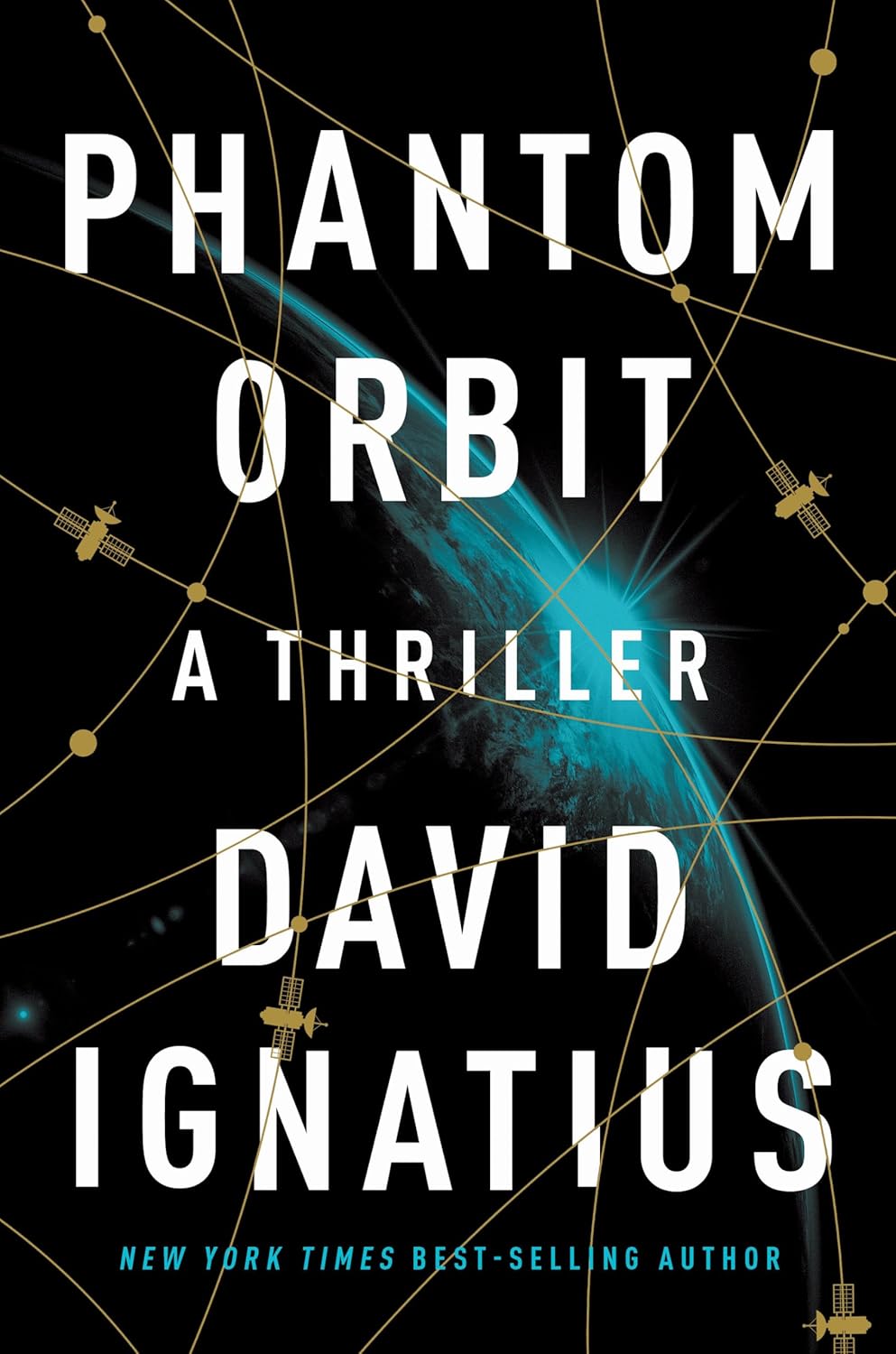
Phantom Orbit
Lorem ipsum dolor sit amet, consectetur adipiscing elit. Suspendisse varius enim in eros elementum tristique. Duis cursus, mi quis viverra ornare, eros dolor interdum nulla, ut commodo diam libero vitae erat. Aenean faucibus nibh et justo cursus id rutrum lorem imperdiet. Nunc ut sem vitae risus tristique posuere.
Lorem ipsum dolor sit amet, consectetur adipiscing elit. Suspendisse varius enim in eros elementum tristique. Duis cursus, mi quis viverra ornare, eros dolor interdum nulla, ut commodo diam libero vitae erat. Aenean faucibus nibh et justo cursus id rutrum lorem imperdiet. Nunc ut sem vitae risus tristique posuere.
David Ignatius has a knack for turning tomorrow’s headlines into compelling fiction, and Phantom Orbit is no exception. It’s a fast-moving, thought-provoking thriller that explores how space, technology, and national security are converging in ways that could reshape the future of global competition.
Related Walker Webcasts
2026 Midterm Elections: What’s at Stake? with Dr. Larry Sabato
Learn More
October 28, 2026
Government & Policy
Global Outlook: Markets, Policy & Leadership with Tom Nides & Steve Hills
Learn More
August 5, 2026
Government & Policy
Next Era of Aviation with Phillip A. Washington
Learn More
May 27, 2026
Government & Policy
Insights
Check out the latest relevant content from W&D
News & Events
Find out what we're doing by regulary visiting our News & Events pages
