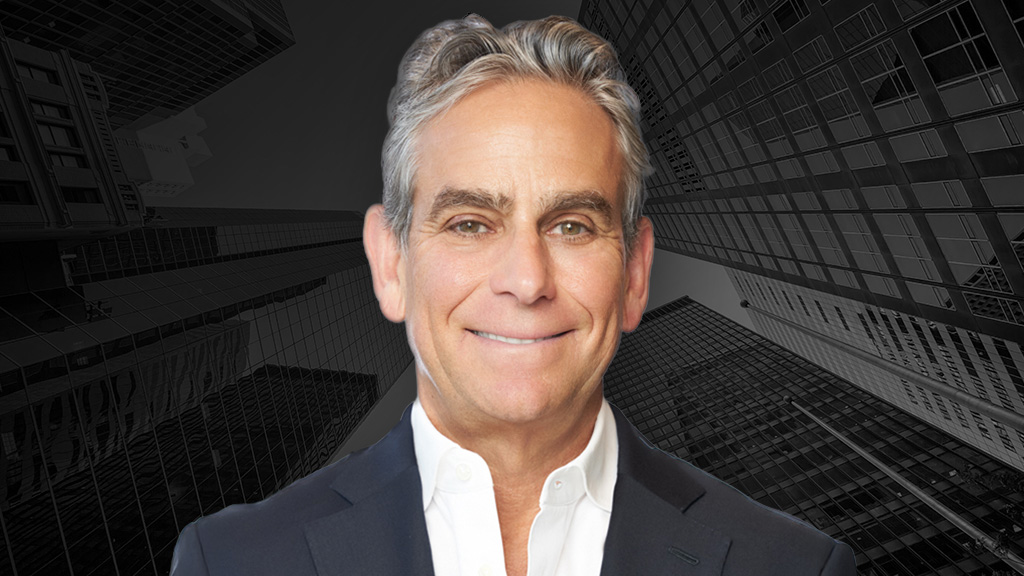
Michael Nierenberg
Chief Executive Officer of Rithm Capital
On the latest Walker Webcast, Willy was joined by Michael Nierenberg, Chief Executive Officer of Rithm Capital, a diversified global asset manager with a growing footprint across private credit and real estate assets.
Together, they discussed the evolution of Rithm Capital into a scaled asset management platform, the health of the U.S. consumer and asset-based lending markets, housing trends across single-family and multifamily, strategic shifts in the banking industry, and the macro outlook, including AI investment and today’s market risks.
At a glance
1. Who is Michael Nierenberg?
Michael Nierenberg is Chief Executive Officer of Rithm Capital. He has spent more than three decades across mortgage markets, securitized products, and global trading, with senior leadership roles at Bear Stearns, Lehman Brothers, JPMorgan, and Bank of America Merrill Lynch. At Rithm, he has built a scaled platform spanning mortgage servicing, asset-based finance, commercial real estate, and asset management.
2. What are the top reasons to listen to this webcast?
- A firsthand view on how Rithm evolves from a mortgage REIT into a diversified asset manager
Nierenberg explains how permanent capital, fee-related earnings, and scale shape the firm’s strategy and valuation. - A data-driven read on the U.S. consumer and credit quality
He shares what Rithm sees across millions of borrowers and why servicing control matters. - A seasoned take on AI, speculation, and late-cycle risk
He draws on prior cycles to explain where he is cautious and what he is watching most closely.
3. How does Nierenberg define what Rithm is today?
He describes Rithm as a scaled asset management business operating within a REIT structure. He highlights roughly $110 billion of assets under management, about $8.5 billion of permanent capital, and a strategy focused on generating durable, diversified earnings rather than relying on a single housing cycle.
4. Where does Nierenberg believe Rithm truly differentiates as a capital provider?
He points to asset-based finance as a core strength, driven by long-standing expertise, disciplined underwriting, and strong returns across cycles. He contrasts that with commercial real estate, which he views as more opportunistic and situational rather than the firm’s primary engine.
5. Why does Nierenberg emphasize servicing control in consumer and asset-based lending?
He argues that owning the servicing relationship materially improves performance. Using examples from mortgage servicing and consumer portfolios, he says outcomes are meaningfully better when the lender controls borrower communication rather than relying on third parties.
6. How does Nierenberg assess the health of the U.S. consumer entering 2026?
He says the consumer appears broadly healthy based on mortgage performance across more than four million borrowers. While he acknowledges pockets of stress and policy-driven noise, he views most weakness as isolated rather than systemic.
7. What is Nierenberg's view on housing across single-family and multifamily?
He believes the U.S. still faces a structural housing shortage but is cautious on near-term home price appreciation. He sees stable fundamentals in multifamily, stresses the importance of underwriting discipline, and notes that institutional single-family rental is a difficult business with tight margins today.
8. How does Nierenberg think about AI investment and the surge in capital spending?
He believes AI is real and here to stay but says the scale of capital investment feels heavy. He emphasizes counterparty risk, project size, and credit exposure, noting that the opportunity no longer feels early and requires caution.
9. What market signals does Nierenberg watch most closely for rising risk?
He says credit is the primary indicator. He closely tracks spreads, underwriting standards, and consumer performance data, warning that crowding into asset-based finance could compress returns and encourage poor decision-making.
10. How does Nierenberg position Rithm as 2026 unfolds?
He says the firm is leaning more defensive than in prior years. He prefers lending over owning assets, emphasizes disciplined underwriting, and remains cautious as spreads tighten and competition increases, even while continuing to grow the platform.
Watch or listen to the replay.
Related Walker Webcasts
CRE Market Outlook: Risks & Opportunities with Aaron Appel, Kris Mikkelsen, & Ivy Zelman
Learn More
October 21, 2026
Real Estate
What’s Next for CRE? with Chris Lee
Learn More
September 30, 2026
Real Estate
Housing’s Next Chapter with Sean Dobson
Learn More
September 23, 2026
Real Estate
Insights
Check out the latest relevant content from W&D
News & Events
Find out what we're doing by regulary visiting our News & Events pages
