Mysteries of the Mind with Dr. Theodore Schwartz, Neurosurgeon & Author
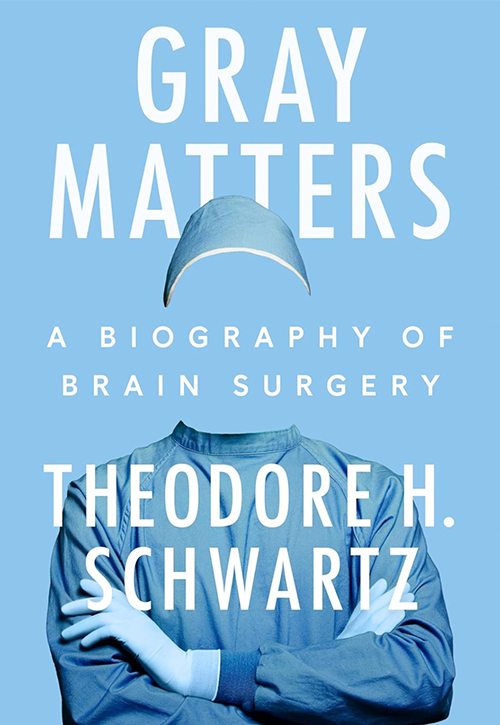
Willy Walker: A couple of years ago, I was asked to come and interview Evan Osnos, who happened to have gone to Harvard with Ted, and it was somewhat of a daunting task, but on a topic that I know a little bit about, which is politics and why the U.S. had sort of turned toward Trump. It was a high task, and I think I got through it. Then John Burnham Schwartz said, “Okay, you did pretty well with that. Let's throw Ezra Klein at him.” And so the next year I had Ezra Klein and talked about AI. Three years ago, AI was still reasonably nascent as it relates to a topic of discussion. I studied hard and still had a pretty tough time keeping up with Ezra Klein's mind and but thought I got through it. Then, last summer, John calls me up and he says, “I want you to interview Jeff Rosen.” Jeff Rosen, who happened to gone to Harvard College, went to Oxford for his master's and went to Yale law school. He is one of the biggest brains I've ever met. I sat in the room right next door to him and tried to talk to him about the Stoics' impact on the founding fathers of the United States of America. Now, as someone who didn't really study philosophy very carefully at St. Lawrence University, I felt way, way, way out of my depth, but I got through it. So I thought, “Man, I've gotten through Evan Osnos, I've got through Ezra Klein, I've gone through Jeff Rosen. This year, John's going to just throw me a softball. Let me have the year off.” So he calls me up and he says, “First of all, I'd like you to interview Dr. Ted Schwartz.” So I'm sitting there going, all right, “If he's an economist talking about the economy, I'm cool. I know a lot about macroeconomics. I run a finance company. I can do that.” He's like, “No, he's a medical doctor.” I said, “Uh-oh.’ And then I say, “What kind of medical doctor?” He goes, “He is a brain surgeon.” And I say, “Now I'm really getting into deep water.” And then, I look and see that Ted was a magna cum laude at Harvard undergrad. He was magna cum laude at Harvard Medical School. He did his internship at Mass General Hospital and is known as one of the very best neurosurgeons in the world. And I said, “I am so out of my depth this year, I'm going to really fail on this one.” Then I pick up his book and look at the picture of him. And I say to myself, “Oh no, this is a guy who's incredibly smart. He's got a little bit of that God image of he saves lives every single day and he looks like a GQ model. This is the hardest person in the world to interview.” So I want all of you to know that you should go out and buy tickets for next year's Writers Conference because John Burnham Schwartz has gotten the Holy Father to come and have me talk to him about the Bible. Because I've gotten to the end of my limit as it relates to these really qualified people that the Writers Conference throws at me. Before we dive in, Ted, I'd like to see a show of hands. The number of people in the room who have had a family member or a friend who has had a brain tumor. Hands up. The number of people in the room who have had a family or a friend who have dealt with blunt head trauma, a car accident that impacted their head, a concussion, something of that nature. Number of people in the room who have had a family member or a friend who's had an aneurysm. The number of people in the room who have had a family member or a friend who has had a stroke and then finally, the number of people in the room who have a family member or a friend who have suffered from either dementia or Alzheimer's. If you're in the front, you didn't see, but pretty much all the hands in the room went up for at least one of those. What I found so interesting, Ted, about your book is that it shows that what you do impacts all of us, that there isn't a person in this room who doesn't have something you write about in your book that hasn't somehow personally impacted them. One of the other things about you that is so great is you understand your personality, the way you deal with engaging with your clients, not those incredible hands you have that go into the brain, but the personal interaction that you have. There's a line in your book that says those hugs you get from those family members are the things that you live for. So I'd like for you for a second, if we can role play here, you've just done a biopsy on me. You've looked at the frozen and you've looked at the permanent, and I have a GBM and you need to tell me what my options are. Role play for a moment. I've just come out of it and you're telling me that I've got a GBM and you've gotten through the permanent.
Dr. Schwartz: This is a situation where the first interaction wouldn't be with you, right? It would be with whoever came with you to the hospital and is waiting in the waiting room because I've already seen you and your significant other or your family member beforehand. We had a conversation. At that first conversation, and it's one of the things I try to get to in the book is that the patient, when they first get diagnosed with a brain tumor, knows there's something in their head that shouldn't be there. They've been referred to a neurosurgeon, but they very often don't know what it is, you know? And the first question is like, what is this? Is it a malignant tumor? Is it a benign tumor? And when you've been doing it for a long time, and I'm sorry to back up the conversation because you sort of have to set the context, right? When you've done it for a long time, I can look at the image, the MRI scan, and I know exactly what it is because I've taken out. 500 of this type, and 500 of that type, and 500 of the other type. If it is a malignant brain tumor, what you're describing, there's this moment where you sort of see that person's future playing out in a way that they have no idea what's coming. So you have this crystal ball, and they're just sitting there sort of saying, “Hey, there is something in my brain. Maybe it's benign, maybe we can get rid of it.” They don't really know what's going for them. And you know that it's a disease that has a nearly uniform fatality rate, often within nine months or 18 months. There are some long-term survivors, obviously, and that conversation comes up later. But the first eerie moment that most people don't appreciate about seeing a doctor is that it's not just talking about the surgery, but emotionally, you have to deal with that patient knowing what their future is, but you can't hit them over the head with it. Right? You can't tell them. I've seen this happen before at other doctors. “Oh, this is a GBM. You're probably going to live about nine months.” You can't have that. You can't say that to someone. So at the first visit, the first office visit is one where you're trying to prepare them for what's coming, and really just get them through the surgery, because the most important thing at the first visit is looking. They have to have brain surgery, right? And that's the first hurdle they have overcome because most people are terrified when they come to a neurosurgeon and they're going to have brain surgery because they have a lot of fears in their mind about what it is to have brain surgery. Am I going to be awake? Am I going to feel anything? Am I going to wake up the same as when I went to sleep? A lot of patients ask that and worry about that. The first thing to do is just say, “Hey, I'm going to get you through this.” I talk about the analogy of a pilot on a flight. We're going to get through this flight, and I'm going to take off the plane, and we're going to land you safely on the back end. You're going to have a diagnosis, and then we'll take it from there. But the first step is just to get you through the surgery, and these are the expectations that you should have knowing what's coming so that you can get through it. The next interaction is sort of like you've done the surgery, and you have a biopsy, and you've gotten a preliminary result from the pathologist and the pathologist says, “Yeah, this looks like it's probably a glioblastoma.” They'll tell you that. I've had experiences where sometimes you're doing it, that you're talking to the pathologist, you're scrubbed in, you're operating on your patient. The pathologist is on the phone, looking at the slides in another room, and they're chiming in. Sometimes they put the phone to your ear, but sometimes it's loud. They'll be telling the whole room that it's a glioblastoma, and sometimes the patient's awake on the table, because we do some surgeries awake. So there are some instances where I have to be extremely careful about the conversation I even have with the pathologist. Sometimes the patients don't want to know or shouldn't know at that moment because they're still in surgery. They still have a lot of fears you have to get them through at that moment. Then you go out to the waiting room and talk to the family, and that's where you get the hug, right? Because the hug is about coming out and saying, “Hey, everything went great; surgery went great.” Because the first fear is, are they going to die on the table? Are they going to, is there going to be a complication in surgery? So you have get through that, and that's a beautiful moment where someone you barely know, who was sitting in the room next to the patient at your first visit and maybe asked two or three questions literally just breaks down in tears just when you say, “Hey, everything went great.” Their arms sort of reach out and they give you that hug. I also often have students who are shadowing me who may come into the room to see that moment because it's such an important moment. Then you have to tell the loved one, because they'll say, “Hey, what kind of tumor was it? What is it?” And you say, “Look, it looks like it may be one of the more tricky ones for us to treat. It looks more on the malignant side than on the benign side.” Again, it's important not to be too definitive initially because the early diagnosis is not always correct 100% of the time. It's mostly right 95%. I know with 100% certainty. That's what it is because I've seen the films, and I know what the pathologist told every once in a while. You have to know as a doctor; you have to be humble enough to know that sometimes the final pathology can change. So if I tell you have a malignant brain tumor and then you go through that emotional process, and then I tell you a week later, “Oh, it's benign, I'm sorry, I made a mistake.” You can't do that.
Willy Walker: You can't do it.
Dr. Schwartz: But you have to prepare them.
Willy Walker: You write about that in the book, right? But at the same time in your mind, you know it's over. I mean, in other words, you talk about leading them with hope. Is that false hope?
Dr. Schwartz: So the hope part starts there, and it's not false hope. We'll talk a little bit about hope in a second, because there's a great book by Jerome Groopman called The Anatomy of Hope. It's sort of the classic book on doctors and hope. He talks about how to create real hope, not false hope. The real hope is when you then have the final diagnosis and you say, “Hey, look, this is a glioblastoma. You can read about it. This is a tough tumor to treat. We can throw everything at it, and it often comes back. But there are long-term survivors, and I'm going to do everything I can in my power to make sure that you're one of those long-terms survivors. This is what we're going to do. I'm on this voyage with you. So we're going to get you in the hands of the best neuro-oncologist we can, and I am going to give you a couple of names. You don't have to stay at my institution. You can if you want, but if you want to go across the street, you want to go over there, I’ll give you names. And then if you come across clinical trials and you're not sure what to do, send them to me. I'll review them with you. We'll figure this out.” The most important thing that I can do for a patient is to do everything I can to take out as much of the tumor as I possibly can. That's the first challenge. When you're not just doing a biopsy, but you're actually doing surgery to remove the tumor, because often brain tumors can be in parts of the brain that are near important things. The part that moves your arm, for speech, for memory. So you have to be exquisitely aware of how the brain is organized and where all those things are, and sometimes we have to do surgeries awake so that we can map out the different parts of the brain to know what areas to avoid and how close we can get. That's why we sometimes do surgery awake. But the goal is to make that scan look clean and take the whole tumor out. We have dyes that patients can drink and make them fluoresce, which is a new technology I talk a little bit about. If I can get that post-op MRI scan to look clean, then I can say to them, “Look, you're in the best position possible going forward because of the surgery and how well it went to be one of those long-term survivors because we got your whole tumor out. Now you're not cured, but you're in the best place moving forward. Now let's talk about the next step.”
Willy Walker: Talk about that moment when you're in there and you're trying to determine how aggressive to go as far as getting, if you will, clean edges and the function of life versus length of life.
Dr. Schwartz: Quality of life is incredibly important because I can clean up that MRI scan and the patient can come out paralyzed and not able to talk. Sure, the MRI may look good, the scan may look, but the patient looks horrible and that's not a way that they're going to live the rest of their lives. It would be very difficult to live with myself. So there's that constant balancing act that neurosurgeons do. One of the things I try to bring across in the book is that when you do brain surgery, you're doing this four- or five-hour operation and you're often working under a microscope and you are doing very fine, delicate moves where you're picking tumors that can be anything from soft and suckable to like a firm rubber ball off of these tiny nerves and peeling it away from the brain and blood vessels that are bringing blood to important parts of the brain. During that surgery, you're literally making thousands and thousands of small decisions as to what to do and how aggressive to be. Can I go in this angle? If I can't, I'm going to have to move the nerves in the way. So maybe I have to go around this way. So let me try going around this way. There's this constant dance that you're doing where you're reevaluating the current situation and you're making on-the-spot decisions as to how to manage them so as not to damage the functional tissue. The big question is, how aggressive should you be? You're constantly asking that question to yourself. The answer is always the same, eventually, which is, if it were me lying on that table, what would I want the surgeon to do, right? So that's the question I always ask myself, is, what would I want done if it was me? That helps me; it's like a moral compass in the operating room, because part of a surgeon's bravado is to be able to get the whole tumor out because we then show those films. Our colleagues may see those films. The referring doctor will see the films. They may show them in a conference. Oh, did Dr. Schwartz get the whole tumor out or not? So part of your ego as a surgeon is to try to get the whole tumor out, but you don't want to do that at the expense of the patient. That's where there's sort of like a push-pull of what's best for my ego versus what's best for the patient.
Willy Walker: Talk about the mapping of the brain. Dr. Penfield is one of the pioneers as it relates to brain mapping. You've mentioned a number of times here about having people awake during the surgery. So I want to dive into that as it is related to why it is that you have to, if the tumor is sitting near the part of the brain that controls speech, having the only way to ensure that you're not going to break the speech functioning is to have them awake. I'm sure many people in the room who either have just heard that for the first time or read it for the time in the book like I did, sat there and said, “I can't imagine having someone awake on the table.” And I love the part, Ted, that you clamp, you turn those clamps down just a little bit tighter than most doctors do to make sure that that brain doesn't move when you wake them up. But dive in for a moment about the mapping and then I want to get to the comment about language.
Dr. Schwartz: There are a couple things you mentioned. I just want to talk a little bit about the first time you mentioned the name Wilder Penfield. So how many people in the audience have heard of Wilder Penfield? So that's pretty good. How many people have heard of Harvey Cushing? That's good. Walter Dandy? And the other one, probably nobody, Gazi Yaşargil, too. Great. So one of the reasons I wrote the book was I thought to myself, there are these huge icons in the field of neurosurgery that very few people have heard of, or some people have heard of, who have revolutionized the field or neurosurgery. When everybody raised their hands, who knows someone who had a brain tumor or had an aneurysm, these are individuals who have changed all of our lives, right? Because they taught us how to do. They were the first ones who were bold enough to do these crazy operations that at the time people thought were nuts, to do certain things. So telling their stories and making their stories public was really important to me, that people knew who they were because they're so important to us. But if you're not a neurosurgeon, you don't really know who they are. Yaşargil, who nobody knows, was the first neurosurgeon who really taught us how to do microsurgery. So every time a neurosurgeon is working under a microscope doing neurosurgery, we owe that credit to Gazi Yaşargil, who's the first one brave enough to do it. There's a whole history of the way you know, there were masters of neurosurgery and their apprentices and how the apprentices would overthrow the masters in the history of neurosurgeries.
Willy Walker: There's a lot of drama in there. Not a lot of love lost between a number of the people you just mentioned.
Dr. Schwartz: Yeah, there's a lotta drama there. No, no. As you can imagine, you know? Between the dogmatic heir professor, and the student who then goes on and has a chip on their shoulder, and we're talking about how chips on your shoulder drive you. They all had chips on their shoulders, to overturn someone who maybe didn't treat them very well along the way. So that was the first thing I wanted to say. So Penfield is an incredible character because he also trained with Cushing. That's the other thing, like everybody comes from Cushing, and so Cushing trained Penfield, who trained this guy, Arthur Ward, who trained George Ogerman, who trained me. So, I'm a descendant of Harvey Cushing and Wilder Penfield when I learned how to do brain mapping. All neurosurgeons know that. You sort of know your lineage because it all goes back to Harvey Cushing. And there are actually websites where you can put in any neurosurgeon's name, and it'll go back to like who trained them and who trained and boom, Harvey Cushing.
Willy Walker: Just quickly, before we jump to Penfield and you get into your answer, just for a second, why was it that Cushing is such the founder of neurosurgery?
Dr. Schwartz: I love talking a little bit about him. He's a remarkable human being. So there's a picture of someone doing a back flip there, ff you can see the picture on either side. So that's Harvey Cushing when he was at Yale. He's doing a backflip off the Yale library steps. It's a famous picture if you know neurosurgery. But if you interpret the picture, here's a kid who's standing in front of the Yale library. So it's this bastion of knowledge and like everything that came before him, and he's doing a backflip. He's sort of like thumbing his nose at everything that came before and overturning all his forefathers, right? It's just, so, it's such a symbolic picture.
Willy Walker: And one of 10 kids from Iowa. One of 10 from Iowa.
Dr. Schwartz: Grew up.
Willy Walker: Grew up. Growing up. In other words, he's got some real chutzpah being at Yale doing a back flip off of it, and it comes from a pretty humble beginning to get to that.
Dr. Schwartz: For sure, although his brother had gone to Harvard Medical School, his father was a doctor. There were physicians in his family. He also had a lot of self-doubt. One of the first operations he did, he was asked to give ether, to work as an anesthesiologist, to give ether to a patient under his care. Because there was no field of anesthesiology, so they'd be like, “Here's the med student. You give the ether.” So he put the ether over the patient's face, and the patient died. He had to deal with that, and he went into a deep depression. But then he came out of the depression, and he actually was credited with coming up with the meticulous records of blood pressure and heart rate that anesthesiologists take during surgeries. He came up with that, Harvey Cushing, when he was a med student because he said, “There's gotta be a better way. Like, this is crazy that this patient died.” He was a workaholic. He smoked cigarettes relentlessly. He was puritanical, not a nice guy in the operating room. A lot of people say he was very sarcastic and not a great husband. The classic story about Harvey Cushing, which is just remarkable, is that he had three daughters who were actually very famous and ended up marrying very wealthy men. If you ever saw the show The Swan, it was about one of his daughters, the swans, Truman Capote's swans. He had a surgery on a Saturday, because he operated on Saturdays, of course, and he was scrubbing for the operation. He got news that his second son, Bill, who was a junior at Yale, who was out partying, because he just finished his third year, was in a car and got into a car accident and died. So here's Harvey Cushing getting this information the morning before surgery, and instead of collapsing on the ground, or canceling his surgery, or calling his wife and saying, “Kate, like, how are we going to go on?” He goes into the OR and he does his operation, right? Then he finishes the operation, and he goes and claims the body. So like, the emotional armor that he had to erect to be able to do that is remarkable. Also, when Harvey Cushing started as a brain surgeon, there was no brain surgery. There was nobody who had dedicated full-time to brain surgery because the mortality rate of brain surgery was 50%. Half of the people who had surgery either died during the operation or died immediately after of an infection. He said, “Oh, I'm going to take this on.” Can you imagine doing a job and failing 50% of the time, right?
Willy Walker: When so much is on the line. That, just quickly, went from 50 to 10 during his career.
Dr. Schwartz: The number I give is 8%. It went down to about 10, 8%.
Willy Walker: And then where is it today?
Dr. Schwartz: Oh, it's, you know, well below 1%, far below point something percent. It's very low. It all depends really on the difficulty of the surgery. There are some surgeries that we still do that are extremely high risk, but it's very rare for a patient to die on the table and most ever.
Willy Walker: If you are doing a number of surgeries in a day, and heaven forbid, you lose a patient, can you recycle to keep going with your surgeries for the rest of the day, or do you have to say, I have to take a break from this and step back?
Dr. Schwartz: The important message to send to most people is that neurosurgery is incredibly safe, right? So it's very rare for us to have complications or problems, particularly in straightforward surgeries, but nobody's perfect and neurosurgery is risky. From time to time, there are things that go wrong. It's very rare that you lose a patient. In other words, a patient dies on the table or dies immediately after almost never, never. But there can be surgeries where the outcome is not as good as you wanted it to be. Like you're peeling at someone's losing vision in their eye. They're going to go blind if you don't do anything. The nerve is very tenuous. You're peeling the tumor off very carefully to try to save their vision. They wake up, and they've lost vision. They wake up blind in the eye, and you've done that to the person, whereas the only thing you want to do is save their vision. That's why you're doing this. But if you don't do anything, there's a 100% chance they're going to lose their vision, and if you have surgery, then it's sort of 50-50. There's a 50% chance you're going to save it, but 50% you'll lose it. But it's not going to happen. You're the one who's causing the loss, right? So you feel responsible as opposed to just the tumor causing the lost vision. But if those things happen in the morning, we have trained ourselves to just close the door, put the first surgery in the rear view mirror, which emotionally is very hard to do because it weighs on you and you have to be there for the family and move forward because you have been there. You have to show up for the next surgery and the next person. And it's not like you can just cancel these things, because if you're on call, you know, something comes in, it's an emergency, you can't say no, right? You have to take care of whatever comes through the door. So because of that, we train ourselves, which is why neurosurgery training is seven years after four years of med school. So I started operating on my own when I was 33 years old. It's all training up until then. We have to erect emotional armor, but we also have to have emotional flexibility. That's the challenge: to go from being sort of the cold surgeon who can get the job done to being the sensitive surgeon who can deliver the news and be there for you and hold your hand through the operation.
Willy Walker: One of your mentors at Mass General said to you, “If you want people to rely on you, you need to be reliable.” How do you manage that between your personal life and your professional life, because that's gotta be a really difficult dance?
Dr. Schwartz: Yeah, that story. Just to go over that a little bit more, when I was in medical school, when you're making the decision to become a neurosurgeon, it's not an easy decision. I mean, it's almost like marrying a spouse, right? Because I was very conflicted and very torn because I had a lot of interests. When I was in high school, I played music. I was a jazz bass player. I loved music. I did sports. I loved sports. I loved reading. I loved a million things. I knew that neurosurgery was going to take 100% of me. Then I was going to have to give up everything else that I did. I had to make all these sacrifices and basically live in the hospital for decades. Even the practice of neurosurgery is very challenging. The divorce rate was very high when I started practicing neurosurgery. I remember being in this little conference with Paul Russell, who was the head of transplant surgery. He made that comment and basically said, “If you want people to depend on you, you have to be dependable. You know, you have been there. You have to show up.” So I made the decision at that moment that that's what I wanted. I wanted people to depend on me, and they weren't going to depend on me if I wasn't dependable. My wife is in the audience. So I will say that I had a very frank talk with her along the way during our courtship and saying, “Look, this is who I am, right? This is the life you're buying into. You choose, like, because I'm not going to change in terms of what I need to do to be the neurosurgeon I want to be.” But that said, I make every effort I can when I'm in the hospital to be 100% present for my family, for my kids, you know, to take vacations, to do what I can. The way I say it is, “Look, I can't be there for everything, but I'll be there enough. And you know that I'll be there enough.” If they ever need something from me, they'll send me a paper to review or to write or whatever, and I'll be like, “Look, I can't do it tonight. Tell me when it's due. I'll do it tomorrow morning. I'll carve out the time. You tell me when.” So the other thing I did with my kids that I think was very important is I brought all of them into the operating room when they were little. You could sneak them in on Saturday night. You get called in for an emergency surgery, and I would put scrubs on them and a hat. I put them in the corner of the operating room and I operated because I wanted them to see what I did. I wanted it not to be a mystery. What was the thing that was keeping dad from my baseball game? By them going in there, they knew what it was and they appreciated that I was helping other people. Then they would actually, when I would say, “Oh, I got paged, I have to go,” they're like, “OK, daddy, go. You go. This is important.” They would encourage me to go, which was great, to have them buy into it. And then over time, you know, I would operate on their friends' parents. So, they would see people in the community come up to you and say, “Oh, what you did for me, you know, was so important. Thank you so much.” They would feel proud about that.
Willy Walker: Four kids. His wife, Nancy, went to UPenn and Yeshiva University and got her law degree there. So she had her own professional life and raised those four kids. So clearly Nancy did an amazing job with all of that. Two other things about family. One is you're very clear in the book that you are brutally honest with your patients, that you don't hold back information, that if the scan has come back with this, you're not going to sugarcoat what it says, you are going to be very straightforward, obviously, with what you said previously of keeping hope in the conversation. Just curious, is that transparency and honesty going from your professional life to your personal life?
Dr. Schwartz: So one caveat to what you said, one caveat. The answer is yes, of course. My wife said, “Can you step out for a second?” Brutal honesty, I would temper that. The truth is, what you have to do is take your cue from the patient. This is what I've learned over years, is that the patient will tell you what they want to know. If the patient says, “Doc, tell it to me straight; tell me what I have,” you 100% are honest. But sometimes you get a sense the patient doesn't want to know, or they don't want all the details. Then you tell it gently, or you tailor it in such a way. The hardest part is when I'll have a consultation with someone in the room, and whoever I'm working with, a nurse or someone, will say, “The family wants to talk to you beforehand.” So I'll speak to the child, whatever, and they'll say, “Don't tell my mother the truth. Whatever you do, don't tell her the truth, or don't tell my wife the truth." That's very difficult for a physician because you're not my patient. Like, you're the spouse of my patient. On the other hand, you know something about the patient that I don't know, right? So I have to be very careful how I manage that situation. I'm sure you've all thought of or been in that situation where the doctor is torn between telling the truth and the family member saying, “Don't tell the truth.” That's very difficult. Am I honest with my family? Again, it's the same thing. You have to read the room, you know, in terms of how honest. She doesn't always want to know all the details. My kids don't always want to know if something bad happened in surgery, so no, you’ve gotta read the room.
Willy Walker: Final thing on your family life. Your mother is a holocaust survivor. Your father was a psychiatrist practicing in New York. Your father actually died from a brain tumor. Talk about not being able to say, if you will, what you wanted to say to your dad and then taking advantage of it with your mom. Because I think that's a really important piece as someone who deals with life and death and every day.
Dr. Schwartz: One of the things I want to talk about in the book, in addition to the history of neurosurgery, what it's like to be a neurosurgeon, was what is it like when one of your family members gets sick and you have to take care of them. Or one of your best friends, or one of your best friend's parents. How is that experience when you're the physician and you have a relationship with them? I tell the story of both my parents, which was very therapeutic for me and great. My father's story was that he had a stroke, actually, at the end. I remember he called me on the phone one morning. He had had an operation, a benign tumor in his abdomen, and he was in the hospital for this simple operation, and the next morning, he called on the phone and I picked up the phone and I could hear it was my father's voice, but I couldn't understand a word he was saying. He had something called a Broca's aphasia, which is a kind of trouble with your speech from something in the brain. I knew exactly what it was because I think I was a sixth year neurosurgery resident at the time. I'd taken care of so many patients that I knew the diagnosis. I remember jumping out of bed and running into the hospital because I knew something was wrong with my dad. I got there and sure enough, he's lying in bed and he's so frustrated because he can't talk and he sort of garbled speech. I go out to the nurse, the station, and I'm like, “My dad just had a stroke. Like you have to do something.” We call the neurology consult. You have to understand, as neurosurgery residents at the time, like, you get everything done. Like, if the patient needs an IV, you're putting in the IV. If they need blood drawing, you draw the blood. If they need to go for a CAT scan, you bring them physically. In modern hospitals, there's people who draw blood, there's people who do this, there is transport that brings the patients. Back then, they didn't have that. So, you were the one transporting the patient. So, I got on the phone. I was like, “Who's the neurologist?” They gave me the number of the neurologist. I called him on the floor. I said, “My dad just had a stroke; he had a broken dysphagia. He needs a CAT scan right now.” He put the order in for a CAT scan. So I said to the nurse, “They ordered the CAT scan; we need to go.” The nurse was like, “Well, we have to wait for transport to arrive, to take the patient to…” I'm like, “No.” So I ran into my dad's room. I took the IV pole down. I bundled them up. I unlocked the bed and I started wheeling him down the hall. I was like, “Where's the CAT scan?” It’s like the fifth floor, but they said, “You can't do that.” So I went right up to the CAT scanner. I got a CAT scan. I said, “I'm Dr. Schwartz. This is my patient. He needs a CAT scan right away.” I literally am there helping the tech, because it's on a Saturday, moving my dad from the stretcher into the CAT Scanner to get his CAT scan. Then I'm going to cry, so I apologize. So the next moment is what happens if your dad or a patient goes into a CAT scanner, and slice after slice comes up. There's a monitor. You're used to seeing, in the old days it was, they had it on a board where they would show all the screens, but the all the scans, the slices. But when the CAT scan is being done, each image comes up one at a time. It starts at the top of the head. I'm thinking my dad had a stroke. and I know what a stroke looks like. I know where it probably is. I am seeing slice after slice of my dad's brain appear on the scanner. I'm like, “Looks good, looks good, looks good,” and they get down to the part that controls speech, and there's this big black spot, which is what a stroke looks like. So there I am, like making the diagnosis, essentially, of my father's stroke, which was heartbreaking. It turned out that he had a hypercoagulable state because he was smoking. My dad was a Freudian psychoanalyst, so he used to smoke a pipe. Now he has quit. He literally looked like Freud. I mean, you'll see the picture. He had the whole beard, the whole thing. So that's the house I grew up in. Because of that, he was very frustrated that he couldn't speak. It was very hard for him. Because of his smoking, he had lung cancer. That was the point I wanted to make. The lung cancer had caused his blood to coagulate more than it should, and that's why he got the stroke. It was incidental to the surgery he had. He died very soon after. One of the conflicts I had was that I was at his bedside. I knew he had lung cancer, and we were trying to treat it with chemotherapy, but he had this blood disorder from the hypercoagulable state, so he couldn't really get his chemotherapy. I was always very optimistic with my dad. I was always optimistic about his care. It's going to be OK. Everything's going to be all right. We're here for you. Whatever you need, we're here. And I never really had that heart-to-heart with my father where I told him what he meant to me and sort of said my goodbyes to him, because I was also trying to be an optimistic doctor. We're going to lick this thing. We're going to beat it. I'm here to help you. That's a regret that I carry with me to this day.
Willy Walker: Jump to your mom and what you did on your mom's 90th birthday.
Dr. Schwartz: So this is not in the book, but we were talking about it last night. So when my mom turned 90, my wife threw an incredible birthday for her. I basically gave her eulogy on her 90th birthday, which was very meaningful to me.
Willy Walker: So she could hear it. When you describe in the book, Ted, the scan and watching the scan, my mind went to, “Why didn't you call the book Black Matter rather than Gray Matter?” Because your entire life, your job is identifying black matter and dealing with the black matter, not the gray matter, because the gray matter is a healthy brain, correct?
Dr. Schwartz: It is the healthy brain, but as we all know, when you have to make a difficult decision, it's not always black and white. It's usually gray. So that's the beauty of your profession. I talk about that, like how you make decisions with inadequate information. You know, there's parts of the book about decision-making. How do we make these decisions? All the gray that goes into it. I talk about meningiomas and a patient who comes in. In geometry, you can observe it, you can operate on it, you can radiate it. There's reasons we would do one or the other. I find myself making different decisions every week with similar looking tumors based on the last operation I happened to do. The fact that I would be so affected by this sort of Kahneman bias of a recent experience or how I happen to be trained, we make very, very different decisions. In these circumstances, even as a brain surgeon, where you think it's something very scientific and we're going to do the same thing every time, if you see three different surgeons, you get three different opinions on exactly the same tumor.
Willy Walker: I want to talk briefly on the CEO of KPMG because he's the example in the book that you use of somebody who said, “You've given me the readout. I know what the chances of survival are. I'm not going to do chemo. I am going to try and live every day of my remaining days as fully as I possibly can,” and I believe it was a hundred days later that he died. He wrote a New York Times bestselling book on that, Chasing Daylight, if you've never read it.
Dr. Schwartz: Chasing Daylight.
Willy Walker: Given all the patients you've seen and those who spend the end of their lives trying to hope for that next clinical trial, that hope and that dream that really isn't there, but they just keep exhausting all resources they have, versus the CEO of KPMG who said, “You know what? I know where I'm going. And I want to enjoy every moment.” I know it's not binary, and I know everyone has their own way of dealing with that decision. But if it's you, which one of those paths are you taking?
Dr. Schwartz: I give this advice to my patients, right? I say, “Look, clinical trials are incredibly important, and you never know when that clinical trial is going to be the one that's going to make a huge difference.” And you had mentioned to me CAR T cell therapy, we can talk about that. What I say to them is if the trial looks reasonable and if it doesn't overturn your life so that you're not spending your last days with your family and your friends and you're like traveling to Germany or something to get some treatment that's very experimental and, in your natural environment, it may not be worth it, right? So what I would do is if there was a reasonable clinical trial that I could get into that had a reasonable chance of success that was close enough to my home where it wasn't so disruptive to my daily life, I would 100% do it. But you get to that point where there's less hope. At some point, you have to decide that what's more important to you is your quality of life for your remaining days.
Willy Walker: So it's a very careful balance. I'd asked you previously about Penfield and the mapping of the brain. Talk for a moment about what he discovered as it relates to language and people who were bilingual. Fascinating.
Dr. Schwartz: It is fascinating. So the story is Pentfield and then there's a guy named George Ojemann, who trained with Arthur Ward, and I trained with him. One of the reasons I went into neurosurgery was I read a paper when I was a medical student. I was very interested in learning other languages. My mother had grown up, was born in Vienna and hid in Belgium during the war. So she spoke German, French, and English. I wanted to learn these languages, and I was curious about how the brain processes multiple languages. I had already sort of known that there was a part of the brain in the back called Wernicke's Area that's for understanding speech and in the front called Broca's area. And then George Orgeman, who's this neurosurgeon in Seattle, would do awake mapping of bilingual patients to find out where different languages were. If you speak two languages, are they in the same place in your brain or are they different places? What he discovered was that they're actually in different places. So he could stimulate a part of the brain, and someone would not be able to speak one of their languages, but still be able to speak the other one. That can happen in a stroke as well. You can have a stroke and lose your ability to speak your languages. Now, there are some areas where they come together. If you have a big enough stroke, you tend to lose all of your language. But if you're precisely brain mapping, where you're just knocking out little, teeny parts of the brain, you can actually knock out just one language and not another. What George Ogerman did, and what I was working with him, which is even another level of specificity, is he would put electrodes into patients' brains who were awake, and he would test their different languages and show that you could find individual neurons that would fire in Spanish but not fire in English. So it was another layer of specificity to how the brain can divide these things up.
Willy Walker: I know we're tight on time, let's talk for a moment about where things are going. Deep brain stimulation and BCI, brain-computer interface. On deep brain stimulation, just talk for a moment about some of the cutting-edge technologies right now that are dealing with Parkinson's and other diseases there. Then let's go to BCI if we can.
Dr. Schwartz: The idea behind deep brain stimulation is you can put an electrode in the brain that stimulates the brain, and what it often does is it shuts off a little part of the brain. When patients with Parkinson's disease, one aspect of their disease, it can be a tremor, a very bad tremor. Neurosurgeons are really good at stopping tremors because we know exactly where to stimulate the brain to do that. I tell Michael J. Fox's story because he actually had surgery to do it. I tell the story of who was the first surgeon who accidentally discovered that you could find a part of the brain to stop a tremor. It's a really fascinating, crazy story. The other amazing thing about deep brain stimulation is we're starting to use it for other diseases like obsessive-compulsive disorder and depression. What's remarkable about the DBS, is what we call it, story, is that you can stimulate a part of the brain and dramatically change someone's mood and their personality and it's very common when they first turn on the stimulator for treating OCD that someone will suddenly feel happy in a way they've never felt happy before and that's why we also use it for depression. There's another great paper I read when I was researching this, a case of DBS where they turned on the stimulator and a patient suddenly started loving the music of Johnny Cash, and they had never loved the music, and then when they turned the stimulator off, they didn't like his music anymore.
Willy Walker: You sure that's not because you were playing Johnny Cash in the operating room when they were under? Because he does play music when he operates.
Dr. Schwartz: I do love listening to music in the operating room. But what it speaks to is the fact that who we are, our personalities, are tied into the circuits in our brain and when you can alter those circuits, you will alter your personality. The sense of self is so fleeting and ineffable, and so changes over time, and yet we sort of think of ourselves as something that's very consistent over time, but the more you do neurosurgery and the more you see how people's personalities get altered with different interventions in their brain, you realize that who we are one moment in time is completely different from who we were later. And that sort of stream of personality is not a straight stream. There's stuff coming in; there's stuff going out. That's the DBS story. So they're using DBS more and more and more now for different personality disorders as we learn more about it.
Willy Walker: Can I just double click on that for a second and we’ll click on that for a second before we go to BCI? I had Mark Porat here speaking about AI this past week at the Walker & Dunlop conference. In his talk, he was talking about creating basically a clone of yourself through AI and creating a mirror image of yourself. As he talked about it, it was very compelling to sort of sit there and say, “I have a clone who thinks like I do and can process things and the coolest part of it was that once we die, that clone could live on where a grandchild could say, what would Gramps think about this and be able to talk to it.” But in reading your book, I realized that the clone is never going to be able keep up with the evolution of the brain and what you just said is so, at least in my mind, sort of heartwarming in the sense that we are unique and our brains are going to continue to evolve so that the AI can't perfectly mimic our brain.
Dr. Schwartz: It would perfectly mimic you the millisecond it was created and then you would diverge. Right. Yeah. Fantastic.
Willy Walker: So don't worry about that. So let's go to the other one that it's fun to worry about, BCI, and talk about brain computer interface. We've all heard about Neuralink. To anybody here, I did a little bit of research on Neuralink, which I really hadn't done prior to this interview. It's really quite something if you go on, particularly on X, they posted a lot on some of the innovations that they are right now working on at Neuralink. And it's eye opening, just to say the least.
Dr. Schwartz: Most people don't realize how far we've come in brain-computer interface. The first BCI was in 1962 where a neurosurgeon named Tracy Putnam, who by the way, that's a whole story about who Tracy Putnum was, and he was the head of the Neurologic Institute who was the first and only famous, who headed the neurology and the neurosurgery departments at the same time. He had an enormous career. He invented Dilantin, which is one of the major drugs we use to stop seizures. He operated on the death of the kid who had the tumor in that book. Then he was fired and disappeared from the Neurologic Institute. Nobody knew what happened to Tracy Putnam, and someone later dug it up. What happened was he was the head of the Neurological Institute at a time just before World War II. At that point in time, he worked at Columbia. At the Neurology Institute, 32% of the med school class was Jewish. There was rising anti-Semitism in the United States. The head of Columbia University said to Tracy Putnam, “You have too many Jewish neurologists and neurosurgeons in your department. You gotta get rid of them all.” He refused to do it. This was when applications came into med school back then. If you were Jewish, they would stamp your application with an H so they knew that you were of Hebraic origin. I weave my Jewish background through the book. It doesn't hit you over the head, but sort of different Jewish stories that play out. Cushing was an anti-Semite.
Willy Walker: Well, he was and he wasn’t.
Dr. Schwartz: That's what's interesting about it. So Cushing had a very famous disciple named Leo Davidoff. And their letters, they have all of Cushing's letters. Some of his letters sort of say, “Well, I'm taking this Jewish guy, but I've heard he's very un-Hebraic.” Like he's not that Jewish, to sort of validate it. He definitely had antisemitic tendencies, but they were probably very common at that time. On the other hand, when someone needed to sign a very important document to allow Jewish doctors, refugees, physicians who were escaping Europe before the war, he signed his name to that document to help bring Jewish doctors to the United States, right? So he wasn't that anti, you know? He was sort of anti-Semitic. I forgive him. That's a long time.
Willy Walker: But Davidoff was the sort that from having trained under Cushing became the neurosurgeon in New York and was responsible for the training. He founded Mount Sinai. Exactly.
Dr. Schwartz: Einstein and all these, every major Jewish hospital or Jewish related hospital in New York City. Right. He found it and started.
Willy Walker: We're on BCI and the role because the doctor kind of disappeared because of …
Dr. Schwartz: Oh, right. So he was asked to step down because he refused to do it, Tracy Putnam, and he went to California. He refused to fire all the Jewish doctors. So, he went to California, worked at what was later Cedars of Lebanon that became Cedar Sinai, and he did the first operation where they literally implanted four wires in the occipital lobe, which is what processes vision. He built this for $10 with parts he got at Radio Shack. Four wires, and then they had a flashlight that was really a photoreceptor. So a blind person would walk around holding this photoreceptor, and when it got a stimulus, it would trigger the visual cortex, because if you stimulate the visual cortex, you can see little flashes of light. They're called phosphenes. It's a very well-known phenomenon. So the first brain-computer interfaces were created to recreate vision, where you implant electrodes on the surface of the visual cortex. Then you have a camera. You can see a guy there. That's a picture of one of the first brain computer interfaces. He had a camera on his dark glasses. He's blind. The camera takes his information and then stimulates electrodes on the surface of his brain to create little flashes of light to outline figures. And that was how BCI started. And then as it evolved, they started to implant more complex things in the brain. What you see on the bottom, that bed of nails, that's actually about the size of a pea. And it has 100 electrodes that could implant it in the brains called the Utah ray. It was developed at the University of Utah. There have been many brain computer interfaces based on the Utah array in the ‘80s and the ‘90s, where they literally got to the point where you could put electrodes in the brain. So there's a part of the brain that moves my hand, right? So every time I move my hand, the neurons in the part of the brain that move my hands do exactly the same thing when I do the same move. So you can train a computer by knowing what the movement is and knowing the pattern of electrons that are firing what each of the patterns is coding in terms of the movement. You can have someone just thinking about moving a robotic arm, a paralyzed person in a chair, can literally just think, ‘I want to pick up that thing,’ and they imagine themselves doing it. So not just thinking about doing it, they actually have to imagine them moving their arm and picking it up, but the robotic arm will actually pick that up. So it is not far-fetched or science fiction to think that in the near future, someone who's paralyzed in a wheelchair can literally control a robot that can walk around or could wear an exoskeleton, right, that can move their legs. Because they're just thinking of what they want to do, those patterns of cells firing can be interpreted and tell the computer how they want to move or how a robot wants to move. You can also do it with language. This has already been done where you can implant electrodes in the brain and have someone who cannot speak. It's not just thinking about speaking. They actually have to imagine themselves moving their tongues in their mouths because that's what it's reading. It's the movement part of the neurons and speech can be taken out of the brain. That creates the possibility, and this is not science fiction. If someone put enough money in it right now, you could take a paralyzed person who is in a chair and unable to move and unable to speak but their brain was still working, and you could have a robot that they could control, that could move around the room, that could talk to you, that could listen, right, because they can hear things, they can have little earphones in the patients, and can literally interact with the whole world. They could just be sitting in their chair having a virtual doppelganger—a robot that's walking around and it could even have the tone of their old voice, which they've done. They've recreated paralyzed patients' voices and their facial expressions, right? Because your facial expression is movement of muscles and their neurons that controls that. If you know the pattern of movement, you can literally have a picture, you could be paralyzed in a chair, God forbid, and they have a picture with your face on it and it would show your facial expressions saying things that you were thinking of saying with your voice. You know your voice pattern off your podcast is very well-known; it wouldn't be hard for an AI to recapitulate your voice. So it's amazing what can be done. Neuralink, Elon's device, has created this as a self-contained device. It's the bottom one, the thing that they're holding, and it has 16 different electrode wires that each has 64 electrodes on it that goes into the brain that records the neurons firing and then wirelessly transmits it out to get the information out of the brain, which is remarkable. It's an incredible device he's created. I work with another company that makes that little gold picture thing you see there. So that's electrodes that sit on the surface of the brain and that's the big question we don't know now. Is it better to put electrodes in the brain for BCIs, or is it better to put electrons on the surface of the brain? Because when you put them in the brain, and this happened to Elon, they can pull out, right? So then you lose your function, or the brain can cause a scar around the electrodes because it doesn't like them in there. When you put it on purpose, they can sit there forever.
Willy Walker: We know that people in the room might know that I've seen someone with a cochlear implant. Just quickly, what's the difference between what you're talking about and a cochlea?
Dr. Schwartz: Right. So a cochlear implant is not really a brain computer interface. So what it does is it takes the sound and it has a wire that goes into the cochleae, which is the receptor in the ear. There's just a wire that curls around. So it's not actually going into the brain. It's going into this sensory organ, right? From the sensory organ to the brain, there's still a nerve that's sharing that information. There is a way to do an implant for hearing into the brain itself, which is called brainstem auditory implant, but the sound is not as good. That's more of a brain-computer interface.
Willy Walker: We're almost out of time, and I was going to go to Q&A, and I'm sure there are people in the room who would love to ask Ted a question. Before I try and squeeze one in, I just wanted to finish on this. You've been a pioneer on non-invasive brain surgery. Just real quick, tell the story of Mrs. X and her being told, if you do anything, don't let Dr. Schwartz take your tumor out through your nose.
Dr. Schwartz: Yeah, that was said to a patient of mine. There's a picture, if they can get to, that talks about it. It's a cartoon of surgery and endoscopes, if you can find it. When I started training in neurosurgery, when you had a tumor that was at the base of the brain, imagine the tumor flying underneath the brain. So you can't open up the top and see the tumor, right? You have to get underneath it. The way we would do that is we would open up, make a big skin incision like this, flap the skin forward, there's a picture you can see, take off a giant piece of bone, open the door, they're covering the brain. And then you have to lift the brain out of the way to get underneath it, because you're going all the way under the base of it. And so that's how I learned how to practice brain surgery. It's very invasive. There's a huge scar. You have to take down the whole muscle for chewing that's over here. And so when I started practicing, a couple of people were starting to work on doing minimally invasive surgery, which meant using endoscopes that are long, thin telescopes, like laparoscopic surgery, arthroscopic surgery. We weren't doing it in the brain, and putting it through natural orifices. So one place to do it obviously is to go through the nose. Like if you could go through the nose and create a corridor, maybe you could do surgery. But most of the masters of neurosurgery thought that was impossible. Because if you go through the nose, the nose is not sterile. There's bacteria in your nose. So it was inconceivable to people to think that you could go through a non-sterile field because you can't sterilize the nose and go into the brain and do complex brain surgery. Plus you're working about this far away and you're working through the nostril. So you don't have a lot of room to work in. A group of us started doing it. We realized if you give enough antibiotics, they don't get infections and instrument makers started to make long thin instruments that we could work with. So a group, I learned how to do it in Italy. The Italians were actually ahead of the curve in terms of doing this minimally invasive neurosurgery. There were just a couple centers in the world that would do it. We were one of those centers. I was lucky enough to pick up the ball and see this early and start doing it. But I would see a patient who came to me, and this Mrs. X is a story I tell. She was a very prominent, wealthy woman who lived in Manhattan. She had a big tumor in the center of her brain. I looked at it and I said, “I can take that tumor out just going through your nose without making any incisions.” And she said, “Well, the other doctor had said, I had to make this, you know, to do a huge incision, open up the side of my head.” And I said, “I can do it through your nose with no incision.” So she went back to see that doctor and he was the chairman of a big department in New York City. I was like five years out of my residency. And she's like, “How come you didn't offer me this operation that Dr. Schwartz offered me?” He said to her, “Whatever you do, do not let Dr. Schwartz take that tumor out of your nose,” because it was so ahead of the curve that he thought it was literally malpractice to do that. But she came back to me and she said, “I trust you,” and we did it. She's been cured, and she’s still cured to this day and retired in Florida. Yeah, it's great. Thank you.
Willy Walker: It's a great last anecdote.
Dr. Schwartz: And now, by the way, every hospital in the country does surgery through the nose to take out those tumors. This is now 20 years later.
Willy Walker: Ladies and gentlemen, Dr. Ted Schwartz.