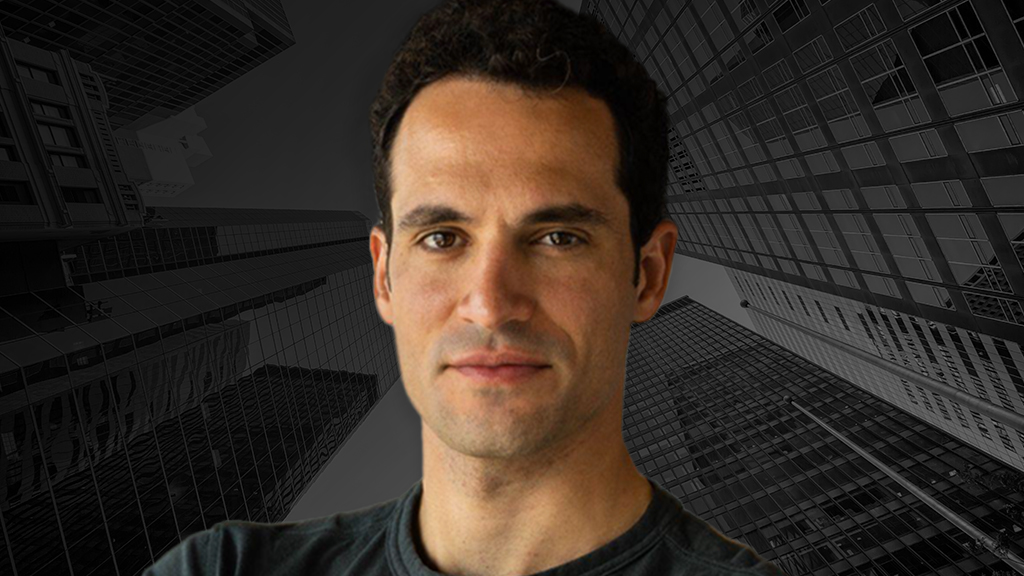
Unlocking Peak Performance with Will Ahmed, Founder and CEO of WHOOP
Willy Walker: Good afternoon, and welcome to another Walker Webcast. It is my great joy to have my friend Will Ahmed, the founder and CEO of WHOOP, joining me today. I am an avid WHOOP user. Full disclosure, I also happen to be an investor and a very happy investor in WHOOP. And I'm really excited to talk to Will about WHOOP, fitness, the way he's built the company, the data that's coming out of WHOOP Straps, personalized health, lifespan, recovery scores, HRV, and a whole bunch of other things. Will, welcome and thanks for joining me today.
Will Ahmed: Thanks for having me, Willy.
Willy Walker: I see you're in your fantastic office in Boston looking out over Fenway Park. To any of you in Boston who knows where Will's office is, you can almost hit Will's office. If a really big slugger in major league baseball hits a home run out over the left field fence, it might land on Will's deck out behind him. And to anyone who has run the Boston Marathon before, Will's office is right below the very famous Citgo sign, which many of us look for as we come around the corner to head toward the finish line in Boston. How are you, my friend?
Will Ahmed: Good. Funny story about the distance between our office and Fenway Park. You talked about hitting a baseball out of the park to our office, which I actually think would be impossible. But the flip side of it, which is hitting a golf ball from the top of our building into Fenway Park, is something that I've discussed with Rory McIlroy and with the Fenway Sports Group. So maybe that'll happen one day.
Willy Walker: You're going to put a top golf kind of the little targets on the far side, and Roy's going to plop it right in there.
Will Ahmed: Exactly, yeah.
Willy Walker: I can already see it; it's going to be a YouTube hit. As always, Will, so much to talk to you about. Just this week, I was at a dinner up in Boulder, and someone came over to me and started talking about the webcast. And then we started talking about WHOOP, and he said, “I got WHOOP, and I loved it, but the data basically told me that I was getting terrible recovery scores because I can't sleep. And after using it for like three weeks, I just kind of said, ‘I can keep getting this negative data back.’ And so we got rid of it.” I sat down with him, and I talked to him about how you can actually change your data. I want to dive into that. I've got a bunch of data for the two of us to talk about on that topic. But before I dive in, I want to give a quick summary of what I'd love to talk to you about, and then, I want to start with a photo of two mutual friends of ours. But what I want to start with is the mission of WHOOP. Then, I want to talk about physiology, strain, and recovery, which is really where you started as a squash player at Harvard, trying to figure out how to recover better. So I think that's a huge part of why the recovery scores out of the WHOOP are not only an important data point for all of us who wear the WHOOP, but also how the company started. Then talking about sort of mission creep and how you stay focused on the technology. For a moment, we'll talk about men versus women and whether you're seeing anything as it relates to fashion, as it related to exercise, commitment, use of data between men and women, and then I know you're now global, so whether there's anything around the globe that you're getting out of the data that talks about the difference between when people go to sleep, wake up, how much they drink, things of that nature, because I think that data is kind of interesting to people. I want to talk for a moment about the pro athletes that you work with and what makes them so unique and competitive landscape. And then finally, I want to talk about the future vision for WHOOP and how AI and the massive data lake, if you will, that you are building with all this data will get into personalized health and personalized fitness. I woke up with an 87% recovery score this morning. Well, I was feeling very good about myself. I was thinking about canceling the webcast. If I'd woken up with a 50% recovery, scoring was in the red. That's right. I felt good at 87%. Where were you this morning, by the way? Because you've got a young one at home. We're going to talk about groups in a moment because I've got a great group with two of my three sons, and I want to show some data on that. Before we jump in though, two of our mutual friends, Arthur Brooks and Rich Roll, and I went over to India to meet with the Dalai Lama last year, and I listened to both your interview with Arthur as well as Rich, which were both great discussions. You talked with Rich a lot about meditation, and I thought that starting this discussion off with this fun photo, Arthur is tucked in the back right, and you can see Rich down on the bottom left, and I'm in the upper left, but my son Wyatt and I went with them to visit the Dalai Lama in Dharamshala, India, a year ago, and it was really a life-changing trip. But let's pull that down. Let's start with the mission of WHOOP, Will, and talk about what you're trying to accomplish, if you will, as it relates to two big things there, unlocking human performance and healthspan. How'd you come up with unlocking human performance as the mission for WHOOP?
Will Ahmed: Well, the original mission of WHOOP, which now dates back 13 years, was to unlock human performance. In that context, we were particularly focused on athletic performance. You know, we worked with the world's best athletes. People like Michael Phelps and LeBron James were two of our first hundred members. We partnered with sports leagues and teams, and worked with Navy SEALs. We really focused initially on the most aspirational and high-performing individuals in the world, particularly from an athletic context. In that sense, unlocking human performance was winning a gold medal or an NBA championship, right? It was the pinnacle of athletic performance. I think what we observed in the years that followed was a broadening of our definition of human performance. Human performance became helping people get back in shape, helping women understand pregnancy, helping executives manage stress and travel, and helping society at large understand lifestyle decisions like alcohol consumption and diet. So human performance started to mean a much broader set of everyday performance and health as it relates to everyday performance. Then in the last three years, as the company has grown globally and as it has become quite a consumer business, a general consumer business, we got interested in longevity, and we got interested in this idea of helping our members, not just live longer, but live longer and better. This idea of performing better over a long period of time felt like such a core pursuit for our technology that we updated our mission to include it. So, today the mission is to unlock human performance and healthspan. And it really speaks to this idea that we want our members to live longer and healthier lives. We recently came out with a very public goal, which is we want to add a billion healthy years to our members' lives, to society at large. And so the way we measure that is the day you get started on WHOOP, what is your WHOOP age? And then, as of the day of the reading, what's your plus or minus from there? And this year, we expect we'll add about 400,000 healthy years. Mind you, that includes people who are going the wrong direction. So it's a net measurement. Look, I mean, it's hard to get more excited about a mission than that. I think overall, the technology that we're building is leading up to this idea of healthspan, which is helping people really understand their physiological age and how all their behaviors and lifestyle decisions affect them, and giving them the tools and the information to improve from there.
Willy Walker: What's your health span score right now?
Will Ahmed: You know, if I could have chosen one to launch it, I might have chosen a different period, seeing as that I had a newborn and surgery back to back. But I am 30.5. I'm five and a half years younger.
Willy Walker: That’s not bad. No, it's great.
Will Ahmed: But I have a feeling yours is quite good.
Willy Walker: I'm trying to get to a decade, which is, it's killing me because I'm sitting right at, I'm 58 and a half, and I'm sitting right at 50. So I'm trying to get into the 40s, and you can see it moving. I mean, I'm getting negative scores and trying to do things to get it so I can get myself back into the 40s. But it really is a super neat feature that's come out in your latest iteration, as well as other things. Healthspan's one of them, EKG, the journaling you always had, the strength training piece to it. But it really does feel that with the launch of 4.0, you took it to a much broader application base, if you will. In other words, like for an athlete like me, getting HRV, getting strain, getting recovery—these are data sets that allowed me to understand, okay, take it easy on the bike today, go hard in the gym, whatever the case might be. But it now feels like it's broadened out to a much, much wider user base, if you will. How has that been as it relates to sort of the uptake in the sense that the marketing has been, generally speaking, from my take, focused on athletes? How has it been moving, if you will, more mainstream?
Will Ahmed: Well, we recently launched the WHOOP 5.0 and the WHOOP MG, and we're seeing the most growth the company's ever experienced, the highest sales we've ever experienced, and the highest engagement we've ever experienced. So across the board, it's really looking very good. For those who are less familiar with WHOOP, it's really a membership. And so you sign up for an annual membership, and the hardware is included with that. And depending on what plan you're on, you might be on a different membership. Historically, WHOOP was just one tier, and everything was included in that. And that was 240 bucks a year. And with this new launch, we came out with actually a lower tier and a higher tier, along with the existing ones. And so the lower tier is now $180 a year, and that's, I would say, targeting a younger, sportier audience. And it's got functionality around strain and recovery and sleep, and strength training. And it's got all the AI capabilities that we're working on. And then, you know, our middle tier or default tier, if you will, we've introduced Healthspan and this WHOOP age capability. There's the health monitor and the stress monitor, along with everything I just described. And then we came out with WHOOP Life, which is now our highest tier. That's $360 a year. And so that's got some of our medical capabilities, ECG monitoring, AFib detection, those are FDA-cleared features. We came out with blood pressure insights, which is a very innovative feature, allowing you to get a daily estimate of your blood pressure, which is very accurate. So from a growth standpoint, we've grown with the newer tiers, having a younger and sportier audience now joining. And then we also have an older new demographic joining that maybe has acute health issues or medical issues that they want to pay attention to. So it's been a great TAM expansion launch alongside a bunch of new capabilities.
Willy Walker: So it's my understanding that my WHOOP strap takes down about a hundred megabytes of data on me every day. That's the equivalent of an hour and a half of music or 250 high-resolution photographs. What do you do with all that data, Will? I mean, unlike the Apple Watch, which I'm assuming doesn't take down nearly that same amount of data, you're taking that and providing to people like me such a comprehensive view of our health and how we're living. What are those algorithms doing with that 100 megabytes of data?
Will Ahmed: Well, I think there are sort of two primary functions of all the data we collect. The first is creating a great member experience for you and millions of other members. And that is one, figuring out how to summarize all this information and give you a recovery score or a strain score, or a sleep score. But if you have more time, you'll see all your zones of heart rate, or you'll see your HRV, or you'll see what stages of sleep you got. So it's essentially summarizing information in layers. I think that's an important concept. When you collect a lot of data, it doesn't necessarily assume people want to see all the data immediately. Think about the most important thing if you have three seconds, 30 seconds, three minutes, right, and look at it through that lens. So I think that's something WHOOP has done reasonably well. The second reason to collect all this data is from a research standpoint. We're really on the eve, I think everyone feels, I certainly feel, of a lot of artificial intelligence breakthroughs, particularly as it pertains to health, and if you think about what the characteristics are to build AI for health, a lot of it comes down to the LLMs and the experience and the data. From an LLM standpoint, you're seeing a lot of that get commoditized, which is to say that there's a lot of really powerful models out there that are becoming open source or becoming accessible for a fraction of what they cost to build. Where there's opportunity for differentiation is in experience and on data. Those are two areas where we're really leaning in. We believe that with all the data we've collected, which is a very unique data set, we'll be able to have real breakthroughs in terms of what this data means, in terms of being able to change people's behavior or their understanding of their health, or even save lives in the future, just sort of intuitively. If you think about how an LLM is predicting the next word in a sentence, you could imagine the WHOOP version of an LLM predicting the heartbeat. Well, does that become the path to predicting heart attacks, right? So that's a very simple way to think about it, but there's a bunch of versions of that that we're really excited about.
Willy Walker: I will tell you, when I just went and had my physical, I don't know, two months ago, and I sent my GP all my WHOOP data before I went in to meet with her, and it was fascinating how it just changed the discussion, Will. It's just, rather than going in and she looks at me and asks me a bunch of questions and says, “You look like you're in good shape”, and then we go do blood work, and then she follows up with me afterwards. Because I'd shipped her all of my WHOOP data ahead of time, she was able to sit there and say, “Well, it looks like you're getting plenty of exercise. It looks like your sleep is okay, but you could do better.” And we had this, and she also questioned alcohol consumption; she already knew the answer to how I had brought my alcohol consumption down significantly. I've got a slide that I want to jump to in a moment that shows just that and how much of an impact that can have on one's data. The gentleman I was talking to the other night, Will, was talking about the fact that he sleeps very poorly and kind of got the data out of WHOOP and just said, “I don't want to look at this.” I can't tell you the number of people that I see who are industry colleagues of mine who say, “I had a WHOOP, but I woke up every morning with these terrible recovery scores and what it basically told me was I drink too much and I didn't want to be told every single day that I drink too much, so I got rid of the WHOOP.” Have you ever thought about the data and seeing the data on a day-to-day basis, unless you are somebody who is really, really healthy, that it could almost be too negative, and that you would think about modifying the data? I know that's kind of a weird thing because you'd never actually manipulate the data. But as you said previously, Will, the way you display it, the kind of data people want. I've heard a lot of people who just say, “I tried it and it just kind of depressed me. It kind of made me wake up in the morning and tell myself, ‘Wow, I don't feel great today.’” And they therefore don't go back to it. Is there anything that you can do to make it all a little bit more palatable, if you will?
Will Ahmed: Well, I think WHOOP was a tool, and like any tool, you have to learn how to use it. And that's building a relationship with your data. I think some people are better than others at seeing numbers that may or may not be positive and learning how to react to that information and grow from it. I think that as a general principle, if you're going to tell someone something's not good, you also want to tell them how to fix it. That's something I think WHOOP is getting better at, or we try to get better at every year. Particularly, we're doing a lot of AI coaching now to essentially build, think of it as a 24/7 coach, trainer, doctor, nutritionist that sits on top of all of your data. You can just constantly be asking questions of, or it can proactively be telling you what to do with this data. So I do think it's important that if you show someone something's not good, you give them a set of information and tools to think about it. Now, having said all that, not everyone is ready for change. Not everyone wants to be healthy, believe it or not. If someone sees how destructive alcohol is to their body and thinks it's WHOOP’s fault, well, that's going to be a challenge to overcome, I think. I think that, for the most part, I hear the opposite story, which is that I didn't actually realize these things about my body. I didn't realize I spent a third of my life sleeping, and I actually had no idea whether I was good at it or not. I didn't realize how much it would positively impact my recovery and my physiology and how I handled stress if I just went to bed and woke up at the same time, or if I got morning sunlight, or if I drank more water, or if I cut out alcohol now, and so on and so forth. And so overwhelmingly, when we talk about this group that's not sure if they're healthy or not, what I generally hear from that group is they start using WHOOP, and they identify a couple of things that are like low-hanging fruit, and they're able to action those things. Now, we're not doing a good job, though, if someone sees data and they don't really know what to do about it, or they feel hopeless. That's certainly not the way we want WHOOP as a tool to be used. We want it to be a tool where the first step is awareness. You start to realize all these things about your body that you didn't know before. That alone, I think, is empowering and kind of a breakthrough in the 21st century. The next step from that is to, you know, improve on it and to build on it. And if you've been on WHOOP for long enough…I mean, I've obviously been on WHOOP forever with over a decade of continuous physiological data… you also recognize there are ebbs and flows to it, you know? I just went through a period in which my wife and I had a newborn. I got surgery for the first time in 30 years for a little injury, and we had a big product launch. Okay, that's a period of time where I'm going to be less optimal than if I'm training for some squash tournament and in different circumstances. So I think a certain awareness as well about what stage you are in life? What are you going through? And having a mindset around adapting to that stage too, helps.
Willy Walker: I want to dive into a little bit of data to expand upon what you just said there. So as you can see, I'm just going to share some of my data because I've listened to a number of your conversations, and you obviously can't share anyone else's data. So I thought I'd throw a little out there on my own. So as you can see here, my recovery score from this morning on the first slide on the left, and then obviously, step trackers, lots of people have had. That's from a Fitbit and other things of that nature. And you can see there, my average over the last month has been 14,000 steps a day. But as you can see, as I've gone from vacation to back in the office, those steps have come down quite a bit. Will, the one on the left here, is my VO2 max. I want to talk about that because my 52 on my VO2 max is begrudgingly consistent. As you can see, over the month, it's been a straight line. And I'm working hard to get my VO2 max up, and I want to put a pin in that for a second. If you go to the right one, my resting heart rate at 40 beats per minute over the last month is pretty consistent and good. So, my heart rate variability, and I want to go into both VO2 max as well as heart rate variability, because I think a lot of people listening don't quite understand what HRV is and where my 93 over the month is a pretty good HRV. And then if you go to the right one on that, that stress and that showing that yesterday in a day that was a pretty hectic day because of being able to track it and because of the way that I live my life, while it spiked up a couple of times the 0.3 stress meter during an entire day, I actually went back and looked last week when we did earnings on Thursday. And, I was actually still below one dot O on my stress meter, even on a day that had a lot of relative stress for me. This is what I want to really dive into for a moment with Will. What I did was I went back in, looked at it, because a lot of people sit there, to your point about how can you improve? And so what I did is I went and looked, and what I used to do was I would do a lot of exercise, and then I would drink alcohol and not get a lot of sleep, and I for years accepted that I was just getting bad recovery scores. And as you can see in the month of August last year, I had a 42% average recovery score, and in the month of October last year, I had an average of a 34% recovery score. In April of this year, I cut down on alcohol dramatically, and I started to focus on my sleep. So look at the left-hand side about how I raised my recovery scores. Those two previous months were all red and all yellow, and now they're all yellow and all green. And then the really cool one, and what I call the money slide here, Will, is on the right. Look at what that improvement, as it relates to my recovery score going up to 64%, did to my HRV going up from. From 51 up to 140, and this is during one week, and then check out what it did to my resting heart rate. My resting heart rate dropped dramatically during just that one week. So as I recovered, my HRV went through the roof and my resting heart rate went down, and I looked at that data, and I just sort of said to myself, “Okay, you might want to start to focus on these variables a little bit more.” I want, Will, to dive into just basically all the data set that I just showed you because I think it is really telling about how I, for two years, just sat there and exercised and thought that I was doing fine of having a lot of strain, but wasn't getting the recovery had that kind of recovery score. And then what I was shocked with was not only did it help my recovery score, which is just a number but how it impacted my heart rate variability as well as my resting heart rate.
Will Ahmed: Yeah, I mean, fascinating data that you shared there. I mean, one thing I'll just say is hard-driving individuals like you also struggle a lot with behavior change and rest. You're a CEO, you're an endurance athlete, and your mind is good at pushing your body further than it necessarily should or wants to go. That's part of how you've been successful throughout your career as an executive or as an athlete. And I think that showed up in those first data sets that you showed, right? You were essentially redlining for a month. Your recovery was a little bit over-red. It was around 34%. And yet, you were probably pretty functional. You probably were getting by at work and doing all your exercise, and there weren't necessarily, quote unquote, problems in your life, but you were just super suboptimal from where you could have been. And I don't know, absent seeing that in the data that you would have really changed anything, and again, it goes back to that sort of hard-driving persona. You're a certain persona, the way there are many different personas on WHOOP, but the hard-driving person often needs to see it to recognize, okay, wow, I can figure out certain lifestyle decisions or habits to get myself in the green more often here. I don't have to just run myself down. So when you showed that transformation, I mean, that's quite profound. What I would imagine is you also just feel so much better, and maybe in a way that you didn't fully realize was right in front of you.
Willy Walker: Very much so, very much so. I do think that the interesting thing about it, Will, is that, I mean, I've listened to you talk to the pro athletes that you have both had on your podcast, as well as just posts that you put out on social media about it. One of the most dramatic things that I see is how they recover. And when you think about things like steroids, like all the steroid use back in the days when steroids were being used in pro cycling, it wasn't to get additional wattage into the pedals. It was for recovery. EPO was used for recovery, and recovery is the key. And so you sit there, and by the way, just talking about recovery, and you WHOOP, I would say it was fun for me to see that Tadej Pogačar, who just won the Tour de France and is the greatest cyclist in the world right now and potentially of all time, actually wears WHOOP when he's training, which is great because it just shows that the data that he's getting from it, as it relates to strain and recovery, is just so incredibly useful. But one of the things I've heard you talk about is when you sat down with LeBron, and when you sit down with people like Mbappé, it's not just the fact that they're going to scores of 20 to 21 on a daily basis. It's that they're running super high recovery scores because of the way they take care of their bodies.
Will Ahmed: Yeah, I mean, athletes of that caliber are competing 24/7. You know, you see them when they're in competition for two hours or four hours or whatever it may be. But what you don't see is the other 20-22 hours of the day where they're doing everything they can to recover and optimize. I do remember, again, going back to the origins of the company, it was pretty surreal working with Phelps and LeBron in like 2014 and ’15 because if you also think about it, they were probably arguably two of the best athletes in the world at that time. And it also says something interesting about them, for what it's worth, that they were willing to try WHOOP. You could have a certain arrogance of, I'm the best in the world, why would I try this thing I've never heard of? But they actually had the opposite, which no one knows about yet, I'm trying to find that 0.1% gain or 1% gain. And so I do remember the first time that I saw their sleep data versus other people's sleep data. I remember it was just one of those reaffirming moments because you could just look at 10 graphs on a wall, and you could point to the one that was LeBron's sleep data. It was because it looked so much better than the others. And so, guys like LeBron are world-class sleepers as much as they are world-class performers. That rate of recovery was staggering, where I remember, you know, doing a marathon poorly and not training properly for it, but I had like a red recovery for a couple of days afterwards. And the strain of that was probably, I don't know, a 20.2 or something. For those unfamiliar, the strain score is out of 21. And I remember like a training week where LeBron did like, it was like 19.9, 20.2, 20.5, 20.7, boom, boom, boom, boom. And then on the fourth day or fifth day after that training, he still woke up with a green recovery. I thought, wow, that's really badass to be able to recover after that much stress that you're putting on your body. The rate of recovery is a real phenomenon in sports. In some ways, it was sort of the first big innovation that WHOOP brought to market was this idea of, hey, we're going to measure recovery. No one was talking about recovery 12 years ago.
Willy Walker: Talk about heart rate variability for a second, Will. So you all did actually a really cool study on one of the Tour de France teams, where you went and took a look at the data that was coming out of the VF team. You talked about heart rate variability, and when they did the average heart rate of the team before the Tour de France, they were at an HRV of 139 milliseconds. The average HRV for WHOOP members is about 64 milliseconds. And after the first week, the average resting heart rate, were all in the low 40s and had gone up to 51 beats per minute, and the average HRV had dropped to 73 milliseconds. So there was a significant change in their physiology in that first week. Yet when they took one day of rest during the Tour de France on stage 10, they got a rest, the average resting heart rate in HRV was actually better than when they began the race at 40 beats per minute and 152 milliseconds. So amazing how those athletes, even though they were straining so hard, you give them one day of rest and they just come ripping back to where they were. Explain heart rate variability to those who hear you and me talking about it, and why it is such an important metric.
Will Ahmed: So, heart rate variability is literally the amount of time in between successive beats of the heart. If your heart is beating at 60 beats per minute, it's not necessarily beating every second. It's a little counterintuitive, but it might be beating at 1.2 seconds and then 0.8 seconds and then point 6 seconds and then 1.4 seconds. Variability in the time between successive beats is good. The reason it's a good thing is that heart rate variability is a lens into your autonomic nervous system, and your autonomic nervous system consists of sympathetic and parasympathetic activity. You can think of sympathetic as activation. So it's like heart rate up, blood pressure up, respiration up, when you're exercising or you even have a stressful thought, ‘oh my gosh, the building's on fire’, that's going to trigger a sympathetic response. Parasympathetic are all the opposite: heart rate down, blood pressure down, respiration down. It's what helps you fall asleep. When you inhale, that's sympathetic; your heart rate goes up. When you exhale, that’s parasympathetic; heart rate goes down. And what you want is for every sympathetic instance to have a parasympathetic response. And that's what creates this variability. And therefore, a higher heart rate variability will suggest that your body is in a better state of rest or peak performance, or flow state. The context of what you're doing matters a lot because it's a very sensitive measurement, as I just described. You can use heart rate variability to understand an athlete's body on the day of a big event. You can use heart rate variability to understand stress in a given moment. You can use heart variability to understand the health of the heart. And there's really a profound body of research, I would say, that's growing around heart rate variability because it's such a valuable measurement. Frankly, only until eight years ago, 10 years ago could it even be measured accurately and non-invasively. For a long time, heart rate variability required an electrocardiogram to measure, and in a hospital setting. One of the big innovations of WHOOP was to be able to measure this really important metric 24/7.
Willy Walker: The new WHOOP, which I'm wearing here, has on it also the ability to do an EKG. How I take my EKG, I get the data, kind of look at it, doesn't really tell me that much. Where's that headed, Will? Why did you all put the EKG monitor on the latest, the 5.0?
Will Ahmed: Well, in the earliest days of the company, we wanted to take medical technology and put it in a non-invasive form factor. So the first few versions of that were looking at the capabilities for measuring heart rate variability, which, as I mentioned, previously needed an ECG. So we were putting that in a small form factor to do recovery. The PSG machine, which is the gold standard for sleep monitoring, puts that in a smaller form factor and accurately measures sleep. The chest strap, which is not a medical device but is medical-grade and measures heart rate while you exercise, and taking that capability and putting it into a small form factor to measure strain. So just like that, you had recovery, sleep, and strain from three instruments that otherwise were very hard to use, cumbersome, antiquated, et cetera. As a general rule, we're looking at every medical technology through that lens. So the electrocardiogram and the ability to really understand your heart information and to be able to detect AFib, atrial fibrillation, which is something that one to two percent of the population actually has and can lead to strokes and other real issues. To be able to detect that in, again, a non-invasive form factor, seems like a really big deal. And so we prioritize doing it. It’s the same for blood pressure, where historically, you needed a blood pressure cuff to be able to measure your blood pressure. We spent three years and tens of millions of dollars innovating around how you could measure it non-invasively from the wrist. And so we launched that as a wellness feature, Blood Pressure Insights, to give people a daily estimate. We're going to keep going down that path where virtually everything that you see in a doctor's office that's measuring you, we're going to try to do non-invasively and continuously.
Willy Walker: Is there any way to do blood glucose monitoring non-invasively? I would assume that that area, as it relates to the number of people in the United States who have Type 1 and type 2 diabetes, is an enormous market. And so that would be my assumption that getting that and being able to measure that non-invasively would be an incredible feature to the WHOOP strap.
Will Ahmed: Yeah, it's actually a fascinating space. So there are about 40 million people in the U.S. who should be wearing a CGM. Do you know how many people wear CGM?
Willy Walker: Three million. And to those who don't know what a CGM is, it's a continuous glucose monitor.
Will Ahmed: And so what that suggests to me is there's a problem with the form factor and the way that the technology is collecting information and the data is being used. I think there's probably an issue at each layer of the hardware and the software, and the analysis. And so that's something that we're looking at.
Willy Walker: It's super cool. Talk for a moment, Will, about the data and the potential use of the data in betting. I sit there and think about these star athletes who wear the WHOOP strap, and I wonder if, you know, I don't know, like, let me use an example of someone who I don't think wears the WHOOP strap, but boy, it'd be interesting to see his WHOOP data, which would be Conor McGregor, okay? So, Conor McGregor's going to do a fight. He's had a little bit too much fun the night before, and you get a hold of that data, and you're betting on how Conor McGregor's going to do in his cage fight. I can only imagine that data would be very useful to someone who was trying to place a bet on his performance that day. There's got to be implications of either, people who are scouting players and want to understand what this player's physiology is like. What are their habits like? Et cetera, et cetera. I'm assuming someone who's a college coach would love to sit there and say to you, “Hey, I've got some recruit who I'm looking at, and I want to see what he or she does on a daily basis as it relates to recovery and strain, and things of that nature.” And similarly on the betting side, I'm certain you control the data tremendously, but how do, I mean, just one other piece which people may not know is, you've also had WHOOP scores going up live on television during PGA events so that people can see the strain and stress that the players are going under as they line up to take a putt, which is fantastic data. If you were actually betting on it, you could sit there and potentially run some algorithm that would tell you that Rory McIlroy goes and gets over a put and his strain score goes to a certain level. He might have a more difficult time making that putt. What are the implications for all this stuff, Will?
Will Ahmed: I've long believed that this physiological data, particularly of athletes, is a tool that could be used to enhance the fan experience and to bolster entertainment. I love sports, I love watching sports, but I'm actually quite critical of the sports industry. I think if you look at a broadcast of, I don't know, an NBA game today versus 20 years ago, the only real thing that's changed is the picture, and there just hasn't been that much innovation around that overall entertainment experience. I don't mean to pick on the NBA. I think it's true of virtually every sports league or sporting event. I do get excited about the idea of live heart rates of players during broadcasts and potentially even over time, knowing sleep scores or recovery scores of key players. Now there's a lot to unpack in what I just said. You really have to get a lot of people to go along with it, and in many cases, that also means being compensated for it. You know, the data has a value if it's going to be made public. We recognize that. When we've done live heart rates of golfers, for example, we've had relationships with the golfers, we've had relationships with the PGA Tour, and we've had relationships with the broadcasters like NBC or others. So we've to go out and kind of make the whole thing happen. Not to mention, we built the technology from scratch to create a heart rate to go from Rory McIlroy's wrist to your television set in real time. So there's a lot there. I think the gambling piece would follow from what I just said. I wouldn't say that I'm most excited about that as the entry point. I think that has kind of even more implications that players would need to be aware of and compensated for accordingly. It starts to tear a little bit at the team-oriented nature of a sport. So, does Patrick Mahomes want the world to know how recovered he is before a playoff game? Would that potentially change how the defense approaches the game? If they knew when he had a high recovery, he runs more, and if he had a low recovery, he runs less. Again, I'm sort of making some of this up, but you get the idea where, okay, maybe that data would be valuable to Patrick in the sense that you get paid a lot to share it. It might also undermine the ultimate mission of the team, which is winning. So that's where there's an element of individual sports, maybe being easier than team sports. But look, it's exciting. I mean, this is on the cutting edge. No one else is really doing it. And we're fortunate in that we have all these relationships and the technology. And you kind of need all of that for it to happen.
Willy Walker: Is there any difference in male-female usage of WHOOP straps? Is your user base pretty much 50-50, or is it more heavily skewed toward males?
Will Ahmed: We've slightly more men than women. I think that's changing over time, where we're seeing more women join the platform over time. I think some of that is a form factor and whether people want to wear something on their wrist or not. We have some different strategies over time for how we think we'll see a lot more women on the platform. I mean, the interesting thing is the wellness space skews toward women. It's like, I think 70/30. A woman is more likely to buy a wellness product than a man.
Willy Walker: It's interesting, because I think men love wearing the WHOOP strap and kind of wear it with pride. I think women sit there and say, “I should have a watch or a bracelet or something else on.” And I know you've done a lot with your team to make the WHOOP become more of a, if you will, a fashion item with the ability to change the clasp color with the band color. And you're constantly innovating as it relates to the wearable aspect of it, and then also embedding it in clothing, which allows women to wear it, not on their wrist, but inside of their bra or inside of their waistband to be able to continue to have the sensor running even though you might not be showing it on your wrist. But that was one of the things I wanted to know about. What about the differences between sleep patterns, because you're now a global company? Well, I heard you talk about the fact that in the Middle East average sleep time is like 1 a.m. in Doha or something. What other things have you all been able to glean as far as generalities as it relates to either alcohol consumption, sleep patterns, things of that nature, between populations around the globe?
Will Ahmed: The Middle East has the latest bedtimes, so it's pretty interesting. I think it's between one and 2 a.m. in Doha, in Dubai, in Riyadh. So they certainly have a later bedtime.
Willy Walker: But do they wake up later as well? I mean, are they getting full sleep?
Will Ahmed: They're shifted. And look, they also consume a lot of caffeine. There's a little more smoking in the Middle East, but there's less alcohol. Some of those lifestyle elements might also be factors. Ireland is still winning in alcohol consumption. So congratulations to the Irish. They haven't lost the crown.
Willy Walker: That data comes out of journals, or are you deducing that out of recovery scores?
Will Ahmed: From journals. We have a pretty comprehensive set of data on alcohol. What do you think is the city in the U.S that had the most alcohol consumption in 2024?
Willy Walker: Oh, man. I'm going to throw out there: Boston,
Will Ahmed: D.C.
Willy Walker: D.C. Well, now that we have the National Guard in there, well, you know, maybe the National Guard is going to go in and do something about all the drinking in D.C.
Will Ahmed: I would have thought it would have been something like Vegas, but it actually makes sense that it's D.C. in an election year. I feel like there are a lot of cocktail parties, and people are out and about.
Willy Walker: And exacerbated strain scores, stress scores as well, I'm assuming.
Will Ahmed: Yeah, we also get interesting data on events. So like election night in the United States has very high stress scores, late bedtimes, and low recoveries the next day. When there's a big sporting event, you know, you'll see the fan bases of each city have disrupted sleep. It's super cool. The worst recovery of the year is on January 1st. So that's not that surprising, New Year's. The second-worst one in the U.S. is the Wednesday before Thanksgiving, which I thought was a funny one. And interestingly, the highest recovery is like two days after New Year's. So people get their acts together after New Year's.
Willy Walker: And they all go use their first gym membership that they've just signed up for, and that will last for like two months. One of the things, Will, that I've started to do is groups. So we have a group here at Walker & Dunlop of WHOOP wearers, and it's fun to see everyone's data. So there are two of my three sons, Wyatt on the left and Charlie on the right. They are both avid WHOOP wearers, and all their buddies from college and from high school have all become WHOOP addicts. One of the things that I found to be really fun is that you can see on the right-hand slide of this, I've got my recovery score versus the boys. And as you can see on recovery scores, we're sitting kind of on top of each other. So on the strain score, as you see on this slide, I'm handily beating my two sons, who are complete gym rats. So I feel very good that I'm at a 19.4 strain score. That's a 19.1 strain score over the last month.
Will Ahmed: Wow, that's a big number.
Willy Walker: That is on an average basis; that's a pretty big one. But as you can see, on a sleep basis, these are two guys who are on summer break, probably out partying a little bit, and my sleep and recovery scores sit right on top of my 18 and 20-year-old sons. But I will say to anyone who's listening to this, one of the things I am really excited about is that my two sons are, those two, and my third one as well, but those two are very into physical fitness. But I also have the ability to see how they're partying because of their recovery scores. As a result of it, we laugh about it when they've gone out and had a really fun night with their buddies. But as they head back to college, and if they decide to stay in this user group with me, I'll be able to see whether it was maybe a little bit too much fun Tuesday night, and they went into a bad recovery with school on Wednesday morning. Quite honestly, as a parent who has three kids in college, it's really fun to not only have that sort of competitive data between the three of us and who's straining harder or recovering better and sleeping better and talk about it as a family, but then also knowing sort of when and where they are as it relates to how much they're partying at college, which is great.
Will Ahmed: Yeah, there's a really interesting dynamic with families. I think what you described is one version of it, which is just a healthy relationship with exercise and sleep and being able to check in on one another. I can also imagine it moving in different medical directions, too, where you could get an alert if a family member has an AFib detection or some other events that WHOOP detects, whether it be some meaningful health issue. You can imagine it from a behavior standpoint where you could have groups that are working on their age, and it's like a list of who's got the most years off of their age, and everyone's competing on that dimension. I've gotten some fascinating member testimonials and emails over the years. I remember a father recently sent me an email thanking me for WHOOP, but it was really around this idea that his son is, I think, autistic and nonverbal, as his father described it. By being able to see his son's recovery score every day, it created a bridge for them to have conversations about how the son was feeling. Otherwise, there was no kind of starter conversation, so to speak, in and around health. But WHOOP, by presenting some numbers and information, created that bridge to all of a sudden bond a father and son over their health. And so anyway, that's just one example. But I thought it was kind of a beautiful and unexpected use case.
Willy Walker: It's really neat. As CEO of a company, I am faced from time to time with hard discussions about health with members of our team, either that they are going through or that family members are going though, and the ability to have predictive data to potentially avoid some of these very traumatic experiences is something that, having been brought into more conversations than I would if I were not in the seat that I'm in, what a valuable tool. I will tell you it's really interesting to see, Will, the number of people both inside of our company and then also companies that we work with who there really is this sort of, I mean, people kind of show their arm off, they're sort of saying, “I take my health and wellness seriously by wearing the WHOOP.” I send you photographs all the time when I see various people wearing a WHOOP, which surprised me that there's a politician wearing a WHOOP or there's some performer wearing a WHOOP. Athletes, I fully expect to be wearing WHOOPs. But I think this whole phase of personal wellness and personalized health is coming at us so quickly that the positioning of the company and the data that you're being able to pull—what does WHOOP look like 10 years from now, Will?
Will Ahmed: Everyone senses that the relationship they have with a doctor is going to change and that there's going to be some future version of health insurance that is going to be more consumer-facing. You kind of have to ask the question, “Well, if that's going to exist in the future, is it more likely that a health insurance company gets very consumer-facing and transparent? Or is it more likely that a consumer company that is transparent and has a stronger brand moves in the direction of looking like a health insurance company?” And my bet is it's going to be the latter. It's going to be a consumer-facing company that starts to become your doctor's office and your relationship with medicine and health. So in many ways, that's the direction that WHOOP is building toward. We have this public goal now of adding a billion healthy years to our members' lives. One huge element of that is the behavior change and the data that we talked about. But another huge element of that is, you know, alerts around things that have gone wrong and being able to prevent heart attacks and disease states and illness states and really target people who might have a problem and be quite transparent about that. My sense is that a lot of this will happen much sooner than 10 years. I think the world's changing really quickly. I think a lot of people are looking for different solutions when it comes to their overall healthcare. I think there's a general feeling that healthcare looks more like sick care. What do I actually have to do to stay healthy or be healthy or be able to play with my grandkids? And that feels like something very different than what exists in the medical space today.
Willy Walker: Very much so. Well, as somebody who has an Instagram site, not my normal one, that's called “Live to 120,” as someone who is focused on trying to live a productive life until 120, which I have no idea whether I'll get there, and given that I fell on my bike on Sunday and went straight over the handlebars and hit my head pretty hard, and I'm perfectly fine from it. But as you talk about health insurers, my mind went to, “I'm probably a pretty good bet as it relates to my overall health is great except for the fact that I do things that make it so that I get these sort of catastrophic failures every once in a while.” And so if you're trying to figure out whether Willy Walker was a good health risk, I think you'd look at my WHOOP date and say, “Yeah, he takes really good care of himself except for he goes over his handlebars every once and a while and could end up in the hospital.” But I do think that the data that's coming out of it is going to be incredibly helpful to people like myself, as well as to the overall medical industry. And I'm super appreciative of you taking the time to talk to me about the WHOOP, the data, and where you're going. I will say that as someone who has watched the company extremely closely, your journey as an entrepreneur has been fantastic. I've heard you talk extensively, Will, about the things you've learned along the road. You started this company right out of college and have just done a fantastic job of both staying focused on the space that you wanted to stay in and not allowing your mission to creep outside of it. And then second, you’ve done a fantastic job in providing the leadership to your now over 1,000 employees at WHOOP that has made the company one of the true pioneers in this space against a competitive set, which you and I didn't have time to dive into today, but is as ferocious and competitive and with unlimited capital to go up against every day. With that, I would just say kudos to you and thanks for taking the time. And I very much look forward to seeing you on my next trip to Boston.
Will Ahmed: Willy, thanks a lot for having me. I always enjoy doing this with you. Appreciate all your guidance and mentorship along the way. So thanks a lot.
Willy Walker: It's great, Will. Have a great day, everyone. Thanks for joining us. Go get a WHOOP, and Will, I'll see you soon.
Will Ahmed: All right. Thank you. Thanks, everyone.