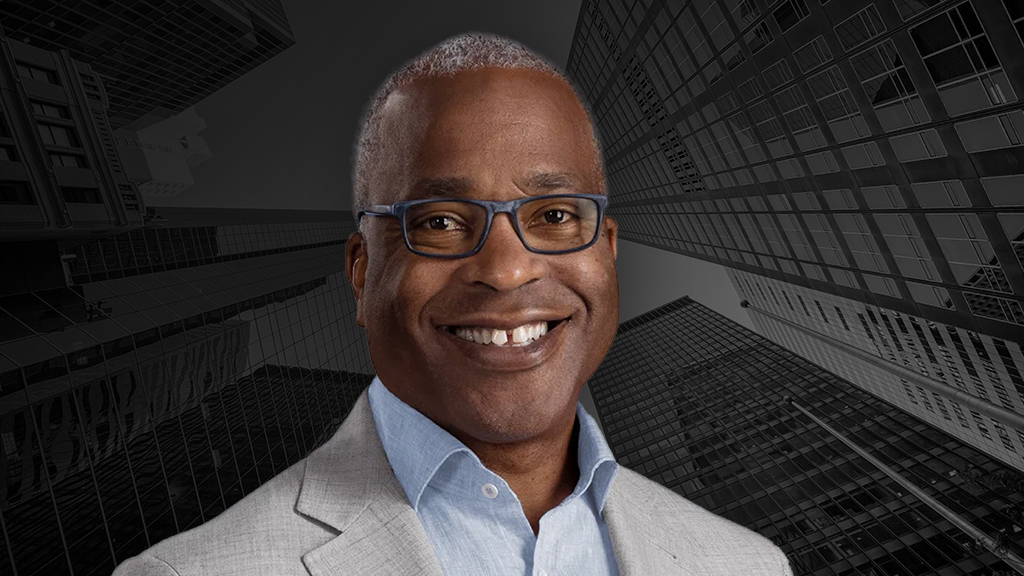
Creating a Winning Workplace with Michael C. Bush:, CEO of Great Place To Work
Willy Walker:
Good afternoon, and welcome to another Walker Webcast. It's my great joy to have Michael Bush, the CEO of the Great Place to Work Institute, join me today.
Michael, beyond running the Great Place to Work Institute and all that goes into running the institute, has a lengthy background of both working in industry as well as working in the consulting world. He both has experience as a practitioner as well as a leader of the Great Place to Work Institute of what it takes to both build and manage great places to work. It is a real special honor for me to have Michael on because for the first time in Walker & Dunlop's history, we made the list of 100 top workplaces, what I like to call the big boy and the big girl list, Michael.
We've made the best small workplaces for a number of years. We made the best medium workplaces, but the big boy and big girl list we'd never made before. To be up there with a number of the iconic brands that we see providing goods and services to people around the globe, the likes of Hilton and others who have been perennial winners of your Best Place to Work Award, is a real joy and it's an honor for us.
To be able to dive in a little bit with you today and talk about what our listeners can think about as it relates to what does it take to get on the list and then what's it take to stay on the list, I guess, is a great way for the two of us to start. I just wanted to say welcome. It's great to see you again.
It's been a couple of years since we did the last one of these, and you've obviously continued forward with great success in the Great Place to Work list and institute and all the things that you do.
Michael C. Bush:
Thank you, really, and it's good to see you as well. One of the things I really respect about you is that you never, ever talked to me about the list. You never did.
It's the first time we've talked about it right now. You never have. It's always been you were just doing what you needed to do to grow a great business, which you have done.
Really, that's the only way you're going to make the list. If you aren't thinking about this every day and how you're leading and taking care of your people, the things we're going to talk about, it's just not going to happen. I really have a lot of respect for you as a leader, what you've created for the people at Walker and Dunlop.
Really, I'm looking forward to talking about it, spreading the message, because we want every place to be a Great Place To Work for all.
Willy Walker:
With that, talk about the list. Obviously, the list is much longer than 100 companies, if you will. Every company that applies is applying to be a Great Place To Work.
They can be ranked from number 1, all the way down to number 10,000. As you look at the best of the best, Michael, what are the key determinants that make the companies that are on your list? Let's pull W&D out of it and say those companies have been on the list numerous times. I mentioned Hilton. What is it that is inside of a firm like Hilton that makes it be a perennial best place to work?
Michael C. Bush:
We could actually do a list of the 23,000, because that's how many customers we have around the world every year. The thing that separates these companies is it does start at the top, where you've got a leader at the top who's a people-first leader. What I mean by that is it's a leader who believes the way you get great business results is through your people.
It's a fundamental belief. Now, to me, how could you think of something else that your tech's going to do it and not your people? There are leaders who do think that.
That's one thing that separates companies who are certified Great Place To Work or on our list. Their leaders believe it's their people. It's all about their people.
Willy Walker:
To that, for a moment, then, if you think about someone like Hilton, where they have over 500,000 Hilton team members around the globe, and they're providing hospitality services, you'd sit there and say, great, Chris Nassetta, he gets it. But at the end of the day, they are a people-intensive business. But there are also tech firms on the list who are tech-intensive businesses, yet they also realize that the people who create their tech are equally as important to their tech.
Is there anything that's different between those two types of leadership styles?
Michael C. Bush:
I would say what they have in common is those CEOs, Mark Benioff at Salesforce, Jensen at NVIDIA, Chris Nassetta, Tony Capuato at Marriott, all fly like a million miles a year. OK, so that's one thing they have in common, that they are on the move, on the go, and touch their people way more than you could imagine. So that's a fact about those leaders.
The other thing is they have leadership teams of very impressive people who are running huge businesses that, when you add up the size of the leadership teams' businesses, you get some really big numbers. And those leaders are held accountable to the people experience. That if you're a person in those firms who's just hitting the numbers, it's not going to be enough, and you're not going to stay there long.
You've got to be at the same time creating a great experience, not just defined by Great Place To Work, because there are other ways to determine that. But hitting the numbers alone isn't going to be enough. That's true for all those companies I named, that being a great leader means you're hitting the numbers, you're developing people, you're giving caring, compassionate feedback, you have high standards, you're walking the talk, and you're not a great leader for some, you're working to be a great leader for all.
And they all lean in on developing their leaders. I know all the programs and the things that they do to help make sure their leaders are always sharpening their saw in terms of what it means to be a great leader. That's true throughout that list and beyond that list, that we collect companies who are oriented this way.
Companies who are just crushing people, we don't usually meet them, because they have another way of doing business. When somebody comes to Great Place To Work, they have a sense that their people are going to say, this is a Great Place To Work through the questions that we ask, because as you know, it's what your people say that is going to get you ranked. We can have some actual data, because we believe leading people isn't an art, it's a science.
Willy Walker:
So many of the companies on your list are wildly successful companies that have been able to invest in their employees, not just lead their employees, but invest in them. How much of being a Great Place To Work is on the benefits package versus the leadership slash culture?
Michael C. Bush:
It would be a lot easier if it was the benefit package. We've proven this time and time again, total rewards matter, but that's not going to get you there. I can tell you some incredible companies without outlandish total rewards that are not a Great Place To Work, and we have the data to prove it.
I don't publish that list, though. It wouldn't be good for our business. The data supports that perks don't do it.
Total rewards, it doesn't come up that much. It really doesn't come up that much. What comes up is, am I growing? Does this place care about me as a person, or does this place care about me as an employee? Does my people manager know me? Do I trust management? Am I working around people who are just as fired up and committed as I am, and do we all seem to be treated in an equitable way? Meaning, getting different things that we might need, not equal things, in order to be successful here. These are the things that we measure, all of these things, because we're measuring trust, because that's it as far as we're concerned. Where there's low trust, that person's going to leave and find a place where they feel really trusted in terms of as a person and that you care about their growth and you want them to do well. The difference is whether you think that the way to have happy customers is through great customer service, or do you think it's through having a great people experience, which creates that great customer service. The companies on our list, that's what I mean by putting the people part first.
They know the way to get free cash flow, increased market share, high customer retention, high CSAT scores, is by making sure their people are having a great experience, which is that they're trusted and they're growing.
Willy Walker:
You said the word trust numerous times right there. Trust, trust, trust, trust, trust. It feels like we live in a world with increasing distrust, whether it be through AI.
I think if you looked at the most recent polling for the US Congress, I think 10% of Americans think that Congress is doing a good job. I'm assuming part of that low ranking on doing a good job is a little bit of distrust that they're actually working on our behalf. As you see that in the broader world, does that make it easier or harder for companies to create that trusting environment?
Michael C. Bush:
If I think about the last couple of years, Willy, at first it made it easier, meaning when the first Edelman data came out, they measured trust through the methods that they use. We're in alignment on the importance of trust. When the first data came out, it said three years ago, I think, for the first time, companies are trusted more than government.
That was number one. That made all of us say, wow, it's really important at work because people spend so much time doing it and they can't trust government. It's really important at work. In a way, it became a little bit easier because the bar was so low. If you don't trust government and things like that in other countries, then the bar is low, so it's a little bit easier. With AI, though, and the instability we have in the world now, where we're less global and more national as you move around the world, as I'm lucky and I get to be able to do, and you feel that difference, now what you have is leaders, like you and me, leading people who are coming to work, some happy, some really not happy.
And it had to do with something outside of work that they saw on their phone. This is happening more than it was three years ago. That is making it harder because leaders, we're all super busy, and you would like to just say, leave all that at the door and come to work.
People just don't work that way. That's the problem. If you try and get them to work like a robot, they're not going to feel like you trust them. To be a real human being at work, caring about things that they see on the news and maybe on their phone that they probably spend too much time on, and those kinds of things. It has made the job of the leader more complicated because a leader has to be aware that they're dealing with people who are high level of fear. When you have high level of fear, you have less AI adoption, interest, and enthusiasm because you're dealing with a cloud that's over your head.
It's really hard.
The final point being that 40% of the people hired in the leadership roles in the last two years are in their first leadership role. That person was raised in COVID, a remote world, so they haven't picked up any of the stuff you pick up about how to lead people, how to coach people, how to guide people, how to greet people, and do those things in a way that creates connection.
Now they're leading people for the first time. We've got a group of people leading people for the first time. The data that we collect is saying that people are like, I like my leader, but I don't think he knows what he's doing.
That's because he doesn't. He absolutely doesn't. That's the reality of it.
Let's give him some time. If that leader wants to get better, we absolutely know that this isn't a nature versus nurture thing. They actually will get better, but it's hard right now is the punchline, Willy, for these leaders, particularly first time leaders in a low-trust world.
Willy Walker:
You think that, as you look at the 2025 list, are there companies that are doing a better job than others at allowing for those issues to be able to be brought into the work environment, to addressing them, to creating a forum inside of the company that allows people to talk about them? I do believe, Michael, that our world has become so polarized that if you were to allow that discussion slash debate to come within the four walls of your company, you end up potentially sort of, if you will, muddying the waters and making it very hard that people are on one side or the other side. Is it better to embrace them and create a forum internally to be able to discuss them, or is it better to just kind of say, let's leave those at the four walls, come in here, we focus on the work of doing what we need for our customers, and then you can go have those conversations somewhere else?
Michael C. Bush:
I have data on the companies that we do business with, and these are companies that they select in into this way of working, so therefore I can't empirically show that one way is better than the other, but our belief, we have a point of view that it's important to have people at work that you can talk to about some of these uncomfortable things. So Gallup has a question in their survey saying, do you have a friend at work or someone you might consider to be your best friend, and this is just a person that you can connect with and say things like, oh, we lost the game last night, I was really sad about that, or I saw this thing on the news, and I really think that's really not good for us as human beings. To have a place to say that at work really matters to a person, and employee resource groups have become, we believe, a Great Place To Work, an important vehicle for that, where you could be around people that you have something in common, you both decided you have something in common, and it might be something about your life and the choices you make and the experiences you've had that link you with some other people who have similar experiences or interests, or maybe just being an ally of a group. Hey, I really want to work more with people who are less than 25 and new in the workforce, and there's ERG around that.
We feel those are the places that are vitally important right now, where people can feel they're not risking their career when they say it's really hard for me right now at work because of the following thing, and somebody else saying, I know, hard for me too, what can we do about it, or something like that, versus don't talk about those things here. I'm sure there are other places, other people who think that's a fine way to do it. I'm not going to debate it, other than I am going to say companies that believe in people bringing more of themselves to work, I don't think anybody should bring all themselves to work, including me, okay, but bringing most of myself, you don't want me to bring my playlist to work, probably but bringing most of my stuff to work, yes. I want to, I don't want to have to put on a mask when I come, and I think most people feel better when they too don't have to put on a mask, so we highly recommend it, though, as you know, the last time we did a podcast together, I was very much about CEOs speaking out on things. I'm like, don't do it. I'm like, don't do it.
I've changed completely based on the state of the world, and I don't want a CEO that has to be around lawyers all day having social media fights when they need to be focusing on their employees and their customers, so the world has changed in that regard, but you can talk about things, when you have high trust, inside your company, and your employees won't be leaking things out that are going to hurt the company when you have high trust.
Willy Walker:
You mentioned employee resource groups (ERG), and I would just say to anyone listening, I remember as we've grown as a company, one of the big challenges for me, back to my question to you previously, Michael, as it relates to do benefits correlate to great places to work, and you've clearly dispelled that, that companies that have incredible benefits don't make the list, and companies that have mediocre benefits make the list, so I mean, it's not benefits. It's the culture. It's the people. It's the trust, but with that said, as I was thinking, as we were growing as a company, someone said to me you need x in maternity leave, and you need this and this thing, and one of the things that is a very cost-effective way to provide an additional resource, no matter what the size of the company, is employee resource groups.
Clearly, if you're if you're a law firm of 10 lawyers and you might as well just have a partner meeting and just talk about things, but as you get bigger and you have a couple hundred employees, you don't need to be a scaled tens or hundreds of thousands employee company to be able to have ERGs, have people be able to find those like interests, and I would also underscore the comment that you made, which is that the thing that I love about our ERGs are the people who, if you will, don't particularly identify with what the ERG is, but they're interested in being part of it, so men, for instance, who are in our Women of Walker and Dunlop ERG. I love seeing that, because those are men who want to help women advance in their careers and can be impactful and helpful to them doing it, even though, obviously, they're not women, and so that type of cross-pollination, if you will, inside of the ERGs is also one of the ways that I have seen those groups inside of WND be wildly, wildly impactful.
Michael C. Bush:
And you're going to find that sentiment up and down that list. That point of view up and down that list. Matt, we have a large summit coming up next week here in Las Vegas, and for those who are listening, it kind of depends on when you're listening to this, but that summit, a huge piece of it is around ERGs and how to make sure they are focused on business results, so our themes in that will be helping the ERG become a vital instrument for EBITDA, free cash flow, customer retention, AI adoption, AI enthusiasm, so these aren't groups, as you know. These are groups that are focused on things that are important, like retention, like promotion, and those kinds of things, and nobody can make it in their career alone, absolutely nobody, and at places that are a Great Place To Work, you have a lot of people that want to help other people grow, that there is something about these companies where there's a lot of that.
There's a lot of mentorship. There's a lot of guidance. There's a lot of coaching.
There's a lot of teaching. All the ERGs, just like at Walker & Dunlop, people are doing this for free. You've got people doing their job, and on top of it, they'll volunteer time to make their company better.
These are remarkable people and a real secret competitive advantage that these great companies have, and by the way, you can look at our list and look at financial performance over time, not after the SaaSocalypse or something like that. It doesn't mean there's not a period of time where there'll be this movement in stock, but I encourage anybody to look at the last 15 years, 20 years, and so on. These are durable companies that are great for a long time, and while we don't consider that in our ranking, we are very aware of it, because if they weren't, what's the point?
Willy Walker:
On that, do you get calls from asset management firms, money management firms, saying, hey, we'd love to take a deeper dive, and can you share, can we buy data with you, because we're looking at, we've talked about Hilton a bunch here, we're looking at making a position in Hilton, and one of the things I would add here before you answer the question to me, Michael, is this. I do find it to be really interesting that I meet with investors in WND, obviously on a quarterly basis, and they will want to dive into, talk to me about your mortgage servicing right calculation and the discount rate that you use for that mortgage servicing right, far more than they will want to talk about being a Great Place To Work, and yet the answer to the mortgage servicing right question is, it's a formula. What discount rate we use is something that you and I learned about in business school and something that can be applied and argued about whether we're using a 13 or a 12 or a 14 whack on discounting those, but it's very straightforward, and obviously, it has an impact on the future financials, which at the end of the day, they're building a financial model, so I understand exactly why they're asking the question, yet not a lot of curiosity about the things that make the company enduring, and I had an incredible conversation about two weeks ago with a firm, I'm wondering whether I ought to name them by name because it's, I'll say it was Rockefeller Partners, and the whole conversation, this is before the list came out that had us on it, and the entire conversation was on what makes Walker and Dunlop a special place to work, and it was one of the most engaging, and I believe beneficial for them, conversations I've had with an investor because I got to talk about all the places in which we focus on the customer, all the places we focus on our employees, all the ways that our employees differentiate themselves, which is so much more insightful about whether WND is a company to invest in for the next quarter or the next year or for the next 10 years than what discount rate are you using for your mortgage servicing rights, but I get that question on great places to work far fewer times than I do on just the financial analysis numbers, but my question to you before I went into that little riff for there for a second is, do you get investors calling you and saying, hey, we really want to take a deep dive on XYZ company, can you either sell us the data, share the data, or give us some insights into what you saw inside that company?
Michael C. Bush:
We won't sell them the data, even though I've been tempted. We don't sell them the data, but we will provide our insights because we want people to know that these companies are great investments over time. There are firms like Jeffries has a whole arm around their investment theses that's deep in our work, so they look at our rankings, they look at our lists, they look at our criteria, they look at our methodology, they happen to be a firm that is deep into this. Blackstone is another that has us throughout their portfolio, working with their companies, and they too take the survey, so they are believers in helping to get good financial return, and S&P Global and some others, and there are a couple of hedge funds that buy our list every year, and have been doing it for a long time, and I won't name them because they asked me not to, but, and they do it for a reason, including this year, they do it for a reason, and the most profitable investment in Blackstone's history is Hilton. And they've made some pretty good money.
Willy Walker:
Not without its moments of sheer panic, as John Gray and Chris Nassetta will tell you.
Michael C. Bush:
There you go, Willy, so that says it all but you look at that chart over time and everybody wishes they were in and stayed in, but these are the things, and the great thing about, John Gray will talk about it and Chris Nassetta, the CEO, will talk about it, about how, if you ask Chris to talk about how he's done what he's done, which has been one of the most successful executives in the history of America, this is what he talks about.
Now, of course, he gets the math.
Willy Walker:
He also gets the road warrior piece to it, which I will say, as somebody who is totally a road warrior, and all of my colleagues, as well as my family know it, there are plenty of times where I wonder whether I'm leveraging my time as well as I should. And one of the things that I find to be so interesting about your comment at the top is that there is nothing like meeting with your colleagues, talking to them, understanding what's going on in their world. And in this world that is so electronic, here you and I are over a Zoom call, people back to office is still an issue as far as are people remote, are they in the office, all this kind of stuff.
In this world that is so electronically enabled, we still get back to sort of the table stakes of, did you show up? Did you know the people? Do you ask them their name? Do you ask them what they do? Do you show a care and concern for who they are? That's table stakes to getting to the level where you can then drive a corporation forward.
And it does sort of fascinate me. And I'm happy to hear you start with it in the sense that at the end of the day, that's just one of the sort of prices to be paid if you want to get an organization really following where you want to go.
Michael C. Bush:
I just got back from Europe. I've probably been like four times in the last six months. I'll be going again in a couple of weeks. And I had a colleague with me. I, of course, am perked up on all the airlines like you and things like that as we move around from point A to point B.
She observed that. She observed, Michael, they come and get you for this and that. Okay. That's what a lot of miles will do. And she goes, I hope that happens to me. And I'm like, I actually hope it doesn't happen to you.
It's a high price to pay. You know what I'm talking about. And I don't have my violin out. I'm grateful for every aspect of my life. But I'm saying that that's required, I believe, if you're in the people business. And I believe everybody's in the people business. And as you go up and down that list, this story is familiar.
I've got to see two things, Willy, I get to see great leaders up and down that list move through their facilities and have to change their flight because there are so many people who want to connect with them and say something to them. And I've watched leaders have no problem making their flight because nobody wants to connect with them. Now, they aren't on the list.
But I'm just saying there are two ways to do it. And I get all of that. I believe there's one way to do it. This is the choice that I've made in terms of how to create greatness and have companies like through COVID, where people are going to work on the edge of their bed while with a sick parent for your company. I believe there's one reason that happens, and did for a lot. And it didn't happen at a lot of other places. It's this connection point. But I do know it's not for everybody. And I am totally out of the business of talking someone into it.
But I am in the business of talking to young leaders to let them know there's a way to do this. And I can name the great leaders who do it in this way. And it's your choice.
Willy Walker:
Michael, a lot of people talk about culture. And I think that they have a difficult time describing what culture is in a workplace.
What's culture?
Michael C. Bush:
I have a difficult time, too, in a way, Willy. But I really feel like it comes down to how does it feel to work here? Not what it says on the website. Not what it says in the onboarding materials. Not what it says in the interview when someone says, how does it feel to work here? When people are talking and when people aren't. And when they're greeting each other, how does it feel?
At a Great Place To Work, people say the same things. They say, I can be myself here. They say that I like the people I work with. They say, I like my leader, even if she treats everybody with equal disrespect. At least she treats us all the same way. They say these quirky things about this place.
And as you know, we have a question. Do you want to work here a long time? That tells us everything about the experience that a person is having. To me, that is what a Great Place To Work is all about. These intangibles. But we measure those things.
And then, therefore, because every place, just like your org, you're never satisfied. You always wanted to get better. This is what great places to work have in common.
When I talk to their CEOs, they're like, I made the list. Now this is what I'm working on. They celebrate for like a day. Because they don't feel like they've made it. They're always working to get better. And they use data. They don't use their feelings. Everybody thinks they're a great leader. The people are going to tell you. Use a little bit of that data at the same time. Courageous leaders will do what I don't like doing, which is getting survey results and then looking at them. Because Willy, it's depressing to me. And I run Great Place To Work. I do it on Sunday night. Because Friday night, it wrecks my weekend.
Because I only see the things. Between 22 and 27 years old, I have a communication issue. And I'm telling you a real thing right now. I don't like seeing that. Because I like to think I can communicate well with everybody. Guess what? I clearly have some work to do with that age group. And I'm trying to do the work. But what I'm talking about now is looking at things that are uncomfortable. And trying to find a way to get better. And have my team do the same thing. And not say, I'm this and that. So maybe they should find another place to work. That's one way to do it. But that's not the way that I choose to do it. You choose to do it. And a lot of great leaders around the world, every country, every industry, all moving forward in this same kind of a way is a very powerful thing.
I have some powerful stories right now. I just did a video for our business in KSA, Qatar, and the UAE, who can't have their awards event, because they're in and out of shelters. This is a real thing. They were supposed to have a big thing. I was supposed to be going.
Obviously, I can't. But they are still doing it. And they got like 500 people who will be Zooming in to honor each other. At a time like this, this is what they choose to do. Which is to come together and talk about this thing about being a Great Place To Work for all. And how important it is, especially right now.
Some of them will be Zooming in from bomb shelters. So if that's not powerful and doesn't move you, I don't know what to say. The power of work and our way of treating one another. And these companies are crushing it financially. So these aren't companies that are struggling. These are places that deliver on the promise of being a Great Place To Work.
Willy Walker:
You talked about constantly raising the bar. Sort of celebrating for a day and moving on. We actually stopped last Friday. The list came out on April 1st. And we stopped last Friday to celebrate being on the list. And I think one of the challenges there, Michael, is to take a moment to appreciate what you've accomplished.
But then, to your point, it's always time to set the next goal and keep moving forward. And particularly for public companies like us. Investors don't really care what you did yesterday. They only care about what you're going to do tomorrow. But there's that balance. And you clearly both do it inside of your own organization. As well as see other leaders do it.
Do you see great leaders siding on the, hey, let's just bask in the glory for a while. And really make sure that we're giving recognition. And feeling good about ourselves. Or is it, do you see more success in the great, glad we made the list. Turn the page. On we go. Set the goal. Let's keep going.
I'm assuming you see more of the latter than the former. But sort of wish people would do more of the former.
Michael C. Bush:
Actually, I would say, the other 100 best, they celebrate. And I love that. And we feel that's really, really important. And as we do all we can to help customers do that. Because our job is to let customers let the world know how great these companies are. 64% of the people who are looking for work, check to see if they're on our list. So we know it matters. We've got all the analytics to prove that. So we love the celebration.
But we know these CEOs. The next day, they're kind of about the future. But we encourage them all to pause. And as you also know, the people use social media to let people know they're working at a place that made the list. Which is always, I never saw that as something kind of a decade ago. Now, it's a thing where you don't have to activate people. They want people to know they're at a place that's a Great Place To Work for all. Because it gives them a good feeling and a sense of who they'd rather be at a place like that. That is a Great Place To Work for all.
Every place is a Great Place To Work for some people. That's not difficult. There are a few that are a Great Place To Work for one person. That's really not difficult. It's when you are trying to really do the for all thing that it's hard. Not just scientists, not just engineers, not just level 18 and above. But you're trying to go, everybody, that receptionist, that call center person, and so on, you're trying to do it all. Yes, it's harder. There's no doubt it's harder. There's no doubt your leadership capability has to have more breadth and depth to it than if you were just focusing on one thing. And there's no doubt that it's not for everybody. But I do know that I want my sons working at a place like that.
And I want other people that I know, I want their kids working at a place like that. I'd like them to have a little of the other time, too. Because when a person leaves a terrible place to work and goes to a Great Place To Work, they really appreciate it.
Willy Walker:
Oh, so it's so interesting you say that. Because I was down at the University of Miami speaking with my friend Peter Linneman about a month ago. And at the end of our discussion on the economy and on real estate and all this great stuff, the dean of the business school got up and just said, Peter, you ran the real estate group at Wharton and have taught for decades. Do you have any words of advice for our students? And Peter, as you can imagine, gave great wisdom to the students in the crowd. And then he said, Willy, what about you?
And I said the one thing, I guess there are two quick things. One is, don't put too much pressure on your first job out of the University of Miami. I know each one of you worked really hard to get here. So there was pressure on going to a really good school. And Miami may have been your number one school. Congratulations, you're here.
But going out and getting any job out of school is a job that you will learn in. And then the second thing on it is, if you go to a company and it's not a Great Place To Work, don't stop learning. You're still learning as you learn from that bad boss, as you learn from that bad company, as you watch how they do things poorly. And you'll be able to take that and then go to another company and either improve upon it in the other company or see how great it is in the other company. And I gave an example of a company that I worked for for a period of time that I clearly learned more from the CEO on what not to do as a CEO than what to do. But that in and of itself is a great experience.
Being able to see that firsthand taught me a tremendous amount. And it was interesting because I had a bunch of students afterwards walk up and they were like, that was so helpful. It takes a lot of pressure off of me that I've got to like pick the perfect place to go work at out of college.
I was like, look, if you can get a job at Blackstone, take it. It's a Great Place To Work, and you'll do really well. But with that said, go get an experience, and then you'll figure out whether it's the right place for you or not.
Michael C. Bush:
I love that, Willy. I love it because it says a lot about you, meaning working for somebody who probably shouldn't have been leading people, and you got good things out of it. So there it is.
So that's the thing that in that tough situation, you took away the good. You're talking about the good today, and you're not writing a blog about how terrible they were so like other people could do. But I think it's great advice for people, and they really appreciate it.
And these songs, Take This Job and Shove It, Thank God It's Friday, that's because work isn't that great for a lot of people. Living for the weekend, those are all I'm sure there's more songs, but I'm old, so those are the ones, but there's a reason that people resonate around the work shows that are terrible workplaces, that they become popular because they are familiar to far too many people. If we did a sitcom on A Great Place To Work, it would get canceled in two weeks because people are like, everybody's getting along.
People aren't backstabbing. They're working together in teams. They're celebrating one another. They're trying to get better. They have a sense of humility so it just would last like two episodes. But in fact, it's where I hope everybody can have a mix of experience, but certainly end up in one.
I do know I've done a lot of different things, and A Great Place To Work has been the greatest by far, and one thing about A Great Place To Work compared to other things I've done is when I get out of the shower, Willy, I am ready to go. I can't wait to get after it, okay, okay, and it's not easy, but I just can't wait, and I would like that for everybody, that they come out of the shower and they can't wait to get to it.
They're not like drinking five cans of Red Bull to go into the thing. They're in fact like this is kind of what they do. This is part of what they do. This is who they want to be. This is part of their personal purpose being fulfilled here at work and seeking that because it's possible to find it, and I just would love them to have it because when you are lucky enough to have that experience around other people, you see the world differently, and if you have a passport and get to travel, you'll really see the world differently, and both those things will help you be rounded out as a person, be a more inclusive person, a more accepting person, a more humble person, and a more we person.
Willy Walker:
You talking about the songs that talked about work made me think about Dolly Parton's song, 9 to 5, and I just have a random comment on that, which is that I was driving down the road in L.A. last weekend, and there was a billboard supporting a non-profit that Dolly Parton supports, and I said, wow, that's a pretty big billboard for Dolly Parton to take out an ad, and then all of a sudden I remembered that Jeff Bezos and his wife give away two $50 million awards every year to two individuals to support their philanthropic efforts, and Dolly Parton was one of the first-year winners, so that billboard that I saw supporting Dolly Parton's charity was thanks to Jeff Bezos's largesse in giving $50 million dollars away, and then I was also surprised, I just saw this year's winner, and one of them is Admiral Bill McRaven, who ran SEAL Team 6 that took out Osama bin Laden and was then the head of the UT education system. He was chancellor of the entire UT system, but an incredible veteran leader, one of the most compelling leaders I've ever heard speak, and Bill was one of the winners and now has his $50 million to go drive forward his charitable efforts, and it's just an interesting model for Bezos to sit there and say we've got some good ideas, but rather than doing like the giving pledge like Gates and Buffett did of kind of centralizing it, it seems like Bezos has sort of said, no, I'm going to take it and give it some other people who I have a lot of respect in and let them go and give it away to the things that make a lot of difference to them. Anyway, that's a total tangent on 9 to 5, but you brought up the songs, and it made me think about it.
Michael, one thing that I think is important to understand is that we've all bought a car and had the car salesman say, hey, by the way, you're going to get a survey from the dealership. Make sure you give me all fives because it's really important to my compensation. And you kind of walk out with this thing in the back of your head, sort of saying, all right if he was good, you might, or she, you might give them fives. If they were kind of less than good, you kind of take that kind of the wrong way and sort of like actually it might ding them. And if they were really good, sure, you certainly want to give them fives. The Great Place to Work survey and list is all compiled on feedback from employees. How do you make it so that a CEO like me can't say to everyone who works at WND, hey I'm going to give you incentive to give us good marks to get us back on that list.
Michael C. Bush:
So this is fascinating, Willy. I'm glad you brought this up because when you do this work, you see everything. And because we do the work, we kind of know how to do the work, which means you may not even know. We have the 60 questions in our survey, but there are randomly more questions added randomly and not nobody in at Walker and Dunlop got the same 60. They got the same 60, but in addition, they got some random questions thrown in like, is anyone pressuring you to take the survey? Do you think the survey is from your company or from Great Place To Work? Has anyone offered you ice cream or anything else to take the survey? We sprinkle those things in.
We look at how long it took to take the survey because we've had some surveys. We survey everywhere around the world. We've had like thousands of surveys done in 12 seconds. We know what that means. So because we're in the business, we know these things and are able to do these things.
Here's the other thing we've learned because we have a hotline that we drop into about 10% of the surveys. If you were being pressured in any way, call this number, and here's how you can verify it's Great Place To Work and people will call it and we'll say that we were promised bonuses if we filled out the survey in a certain way. These things happen.
The other thing is we'll flip the Likert scale for somebody who's just running down the right-hand side or whatever. So we've done it enough to know that there's ways for us through the tech to pay attention here. The other thing is that leaders have learned you can't pay people to give you good results if they're not having a great experience. People will take the money, but when they get behind the curtain, if they trust the tech, they're going to let you know. And we have tons of data through open comments of people who will, because they trust the anonymity, because we don't share raw data with anyone. Unlike competitors who will, we won't.
So you can't find out who said what. As you also know, if your team is small, we won't share certain data. So it's not possible for you to figure out who said what. It's called suppression.
So these are all things that are probably boring for a listener to say we've been in the business enough to know that there are ways to find out if people are under pressure, duress, or are being incentivized. And the thing about people is when you ask them 60 questions, and you do it the right way, you're asking them about the consistencies of experience. Sometimes they think they're asking a duplicate question. They aren't. There's a pairing in the social sciences that we're doing to really see if this person's having a great experience or not.
And we're able to get that through the analytics.
And as you look at the list and look at our trust index score, which is one metric that we use, we have a for all methodology. But we have one thing, which is the score of the 60 questions. That's one component, not the only component. And you'll see people on the list with 88. You'll see people on the list with 72. You'll see people on the list with a 66, which is 66 out of 100 people are having a great experience. And you'll see somebody else ranked below them with a 90. That's because we also compare through demographic analysis one group versus another.
And we reward companies that are having a consistent experience. So if you've got a place that's phenomenally great for a portion of the people and less for others, and you have another company that's kind of average but the same for everyone, that group gets scored higher. It's consistency of experience.
So you can't monkey around with everybody giving fives, because when you look across demographics, somebody who's been at the company six months, they're going to tell the truth, by the way. Somebody who's been there 16 years, six months, and all the other ways that people identify, once you do that comparison, you get a really good feeling of age, tenure, degree or not, scientist versus engineer versus salesperson versus marketing versus call center person. You get a really good feeling on what's going on at the place.
And yes, every place is great for some people, every single workplace. But we wait and score the comparison. And if you're great for one and horrible for another, you're not getting on the list. So good luck.
Willy Walker:
So final question for you, Michael, there are a lot of people listening to this who run companies that may not be on the list. And they're sitting here listening to our conversation. And they're sort of saying, wow, the companies they make that list, they got great leaders, they got great resources, they got great focus, they got great financial returns, all sorts of stuff that goes into it. And they may sit there and say, I'm not sure I want to go do that. What advice would you give to somebody running a company of any size to sort of say, start the journey?
Michael C. Bush:
The advice, because it's normally for me, I'm lucky I get to talk to people like you. I encourage them to talk to another CEO. That's what I do. I go, look, go talk to Chris. Go talk to Julie Sweet. Go talk to Colleen Wegmans.
I will tell them based on the industry they're in, who to go talk to, because that person sells it. Because that person can tell what it's like to be running a company that gets this acknowledgement and how it makes their employees feel. It's over now.
Because once that happens, it's like, I got Delta through Chris Locetta, through a connection there. These are two CEOs talking. And Chris is like, hey, this will do great things for your 100,000. Don't underestimate the power of having all your people getting recognized around the world for what they do every single day. They're doing it now. They aren't about to do it. They're already doing it. That's what's going to get them recognized. It doesn't make them change.
It's them getting recognized for what they do. I find an executive to another is far better than Michael Bush talking to them, because just like you're proud and should be, and you're the kind of leader, like all the rest of the leaders on that list, when I tell them congratulations, they're like, I didn't do it. This is a consistent reaction these leaders always deflect and talk about their team, talk about their middle managers, talk about their HR team. They talk about the frontline supervisors. If you're a DHL, where you're delivering every day, you didn't take a day off in COVID at DHL. There was none.
It's 24-7 every day, like the seventh-largest airline in the world. It's complicated. When you can run a place, you're just getting recognized for it.
You're getting recognized for what you've done, and then now the light's on you. you want to keep that recognition and use the data to get better. As you know, we do it too. Our scores are public. People can take a look at them. It gives you a good feeling when you're running a company that is doing two things, making great dough and taking care of their people.
Willy Walker:
I was going to say the one thing that you might think about doing is keeping Delta on the list because every time I get on one of the planes, that is the Great Place To Work sticker on the side of it. It's fantastic promotion for you and what you do.
Michael C. Bush:
I love it.
Willy Walker:
I'm sure you said to Ed, thanks for putting that up on the side there. It looks great on that triple seven, maybe a little bit bigger font.
Michael C. Bush:
That's right. We got on a few DHL planes, too. I definitely love that, and I love what it's doing for Ed's 100,000. I love what it's doing for DHL's 535,000 because we have Deutsche Post, their supply chain business, and their express business. So I just think about all those people and what happens when they make a list, and I look at their social media, and it gives them a sense of pride.
And the thing is, these are who they are already. We're just recognizing it. And then helping their leaders know where they could do some work to get better.
And for all the people like the work you do going out to the schools and talking, I want them to know there's another way to do this. You can do it like that leader that you read about, thrashing people, grinding people, berating people, eliminating people, trying to not fulfill the exit contract. That's one way to do business, and you can make tons of dough.
But there's another way. There is another way to do it. I just want young people to know that they can choose one or the other. They have a choice, and there's data to support that you can do both. This isn't a, I can make tons of dough, or I can treat people great. There's no trade-off. You can absolutely do both, and I believe you're just going to have a much better life. The people I know who have tons of dough and kind of just stood on people to get in and grind them, they just don't seem that happy to me. And I don't know, Willy, how you feel about that, but it doesn't look that great.
I think there's a lucky place, it's harder, though, because if you're thinking about your people and wanting them to have a great life, caring about their mental health, their physical health, and the emotional health of them and their families, it's additional weight. But I love the weight. I love the weight.
There's no feeling that can compare to knowing you're putting food in people's refrigerators, helping people put their kids through school, helping them take care of their sick kids, helping them buy a home. We celebrate it when one of our people buys a home. These people who are like, they never thought they'd be able to do it, and they were able to do it. You can't compare that to anything. I haven't found anything giving me the kind of sense that, I'm just really lucky to have gotten in this mix somehow. It's a totally different feeling, and I would encourage leaders who are intrigued about it to know you can do it.
Willy Walker:
No doubt. Michael, I love talking to you. I love your enthusiasm, your vibrancy as it relates to everything that you do at the Great Place to Work Institute.
Thank you for spending an hour with me, and thank you for giving our listeners some insight into both what great companies are and then also how to become one. Thank you so much.
Michael C. Bush:
Thank you, Willy, and congratulations for making the list.
Willy Walker:
Thank you, my friend. Thanks, everyone. Hope you have a great day.