Willy Walker:
Good afternoon and welcome to another Walker Webcast. It is my great pleasure to have Professor Robert Siegel join me today to talk about both his teaching, his books, his life experience, and his perspectives on leadership.
As everyone who watches the Walker Webcast knows, when people ask me what it's about, yes, we spend a lot of time talking about commercial real estate and the macro economy, but I consistently have on leaders. Leaders across industry, leaders across our world, whether it be politicians, military leaders, sports leaders, and so to be able to talk to Professor Siegel about his teaching of leadership, his studying of leadership is a real pleasure for me. I get asked often, Rob, the amount of time I spend studying for the Walker Webcast, and generally speaking, the work that I put in getting up to speed for the Walker Webcast is stuff that I can use in my role as CEO of Walker & Dunlop. And so I feel I'm constantly growing by the work that I do. And yet at the same time, there are some where it's kind of way outside of what we do on a day-to-day basis. It's just kind of a fun interaction for me to engage with somebody, and you could sit there and kind of challenge it as it relates to, is that really helping Willy be a better leader of Walker & Dunlop?
This conversation and studying you and all that you have written is sort of going back to business school for me in the sense of all that you have written and all of your insights.
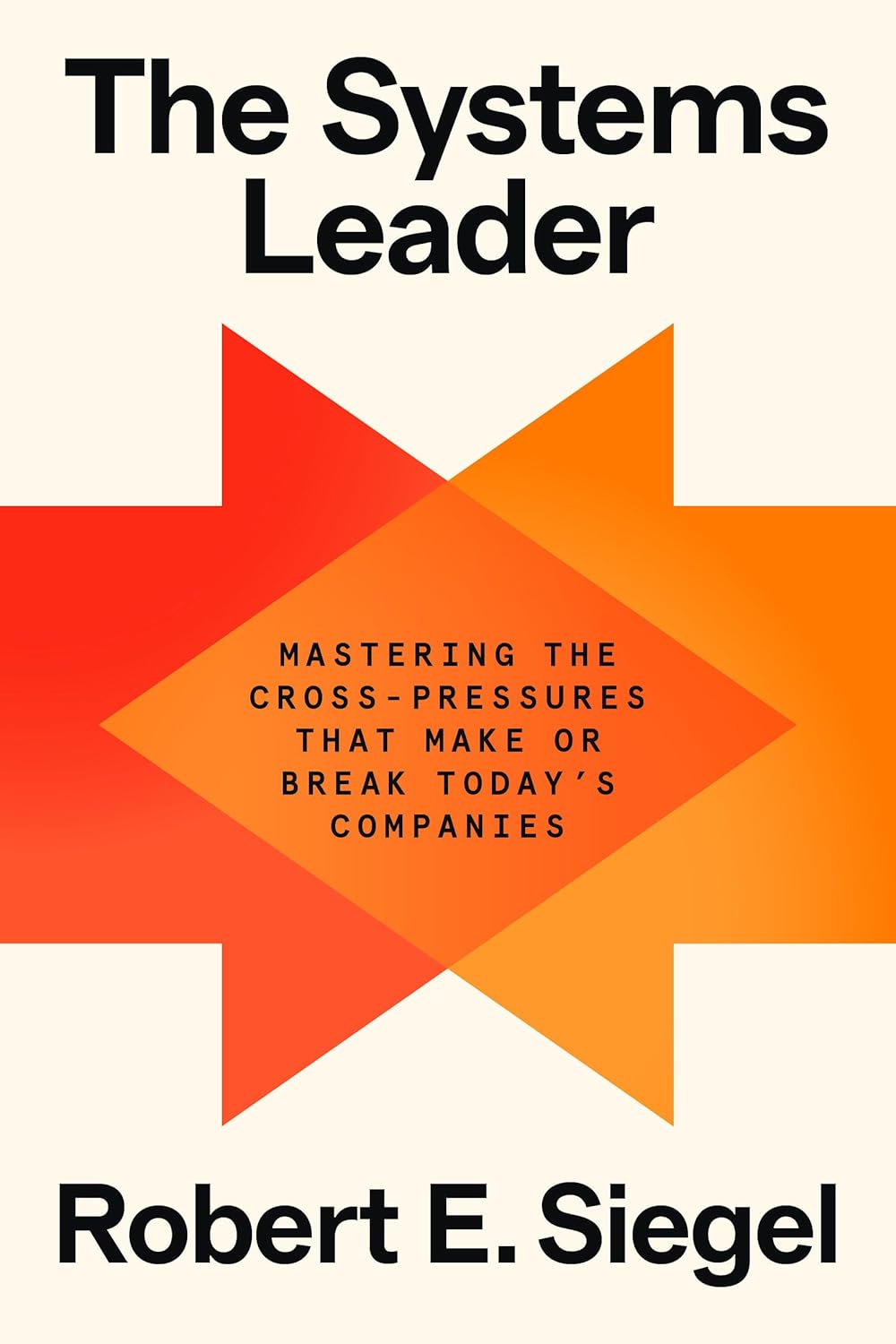
Let me do a quick bio, and then we'll dive into our conversation. Professor Robert Siegel is a lecturer in management at the Stanford Graduate School of Business, a venture partner at Piva Capital, a general partner at XSeed Capital, and a former Bain consultant and GE executive. Rob is the author of The Systems Leader: Mastering the Cross-Pressures That Make or Break Today's Companies and also The Brains and Brawn Company: How Leading Organizations Blend the Best of Digital and Physical. He has also authored over 115 case studies on a wide array of companies, including Google, Schwab, Stripe, and Target. Rob is a graduate of the University of California, Berkeley, and earned his MBA at Stanford.
There is so much, Rob, for me to talk about in your book and what's challenging leaders today. I was at the Business Council meeting in Dallas last week with 125 or 150 of the largest CEOs in the world and they got up on stage and talked about all things, everything from where people are relocating headquarters, we were in Dallas, so as you can imagine, there was a lot of talk about people moving to Dallas and David Solomon of Goldman Sachs got up and talked about why Goldman Sachs is investing so heavily in Dallas. We got to listen to leaders talk about innovation, a lot of talk about AI, a lot of talk about general leadership. If you had the opportunity to sit down with one of those CEOs before he or she went up on stage last week to present on whatever the issue was, what would you have coached them to have either done or said when they were in front of 125 of their peers as it relates to global leadership of big organizations?
Robert Siegel:
I probably would have started by asking them what they are uniquely seeing for their company, both with their customers, with their employee base, and also suppliers and the like. Everybody's dealing with some set of things that are similar, but each CEO seems to be dealing with a unique set of issues that come from legacies in their organization, cultures in their organization, and most importantly, what's happening with the men and women they work with in their ecosystem.
What I see that's consistent is we live in a world of constant crisis and increasingly rapid technological change, and that's not going to change. I think that's only going to accelerate over the next five to 10 to 15 years, and the question that I work with companies on is how do they manage what I call “cross-pressures,” these things that are pulling them in opposite directions? How do you simultaneously execute and innovate? How do you focus on internal and external, local and global, and then what are the sets of things that we can learn, maybe, from other leaders, how they have handled some of these cross-pressures?
And that was the work in my last book on the Systems Leader. What I've been seeing in particular for the last 12 months is I'm kind of revisiting the competitive advantage of nations. We have what almost feels like a reverticalization of countries, of countries trying to control their own, what I call the “new stack,” control the key components of competitive advantage in countries, from innovation to ideas to investment and independence. And where do companies and countries control and have agency over the parts of those, what we call, the four I's? Where do they not? Where do they need to develop competencies? And then finally, if they're going to have to partner with somebody, make sure that there's absolute clarity of thought about what games others are playing. And it really kind of requires a constant rethinking about where the world is and where it's going. And adaptability becomes increasingly important.
It's like we're constantly in the flow. We're constantly on a river that's running. And we've gotta make sure that we are able to be understanding the twists and turns and where there are rocks, and doing that on a constant basis and not get worn out by all of the constant bumping that comes along as we're riding the river.
Willy Walker:
Dive in, if you would, on those five cross-pressures, because in reading your book, super interested in which one of those five cross-pressures you see as being the most important today. I would assume that right now that cross-pressure of executing versus innovating is probably what you're seeing as if you sat down with one of those 125 CEOs that I was with, you'd sit there and say to them, this is what you're really getting hit on, putting up quarterly earnings to try and keep your business moving forward versus innovating and transforming your business. Am I correct that that is what you would put out as the number one challenge today?
Because in what you just talked about, this sort of competitive advantage of nations, and you're going to Mike Porter, the Five Forces in analysis as it relates to how clusters work together. Those are also pretty significant issues in today's world. How do you prioritize those?
Robert Siegel:
I'm going to actually partially agree with you. Certainly of the five cross-pressures, which I'll get to in a moment, priorities is the one that I hear the most from CEOs and leaders around the world, or C-level executives, or even vice presidents and managers. Priorities: how do I simultaneously execute and innovate?
And companies used to be able to do those things and maybe keep them separate inside of an organization. A bunch of work by Michael Tushman at Harvard, Charles O'Reilly here at Stanford about the ambidextrous organization, about how companies need to exploit and explore. The problem is things are moving so quickly now, leaders need to be able to do both.
As an individual, I need to execute and hit my monthly and quarterly numbers, but also quickly bring new technologies into what I do to deliver for customers because of the speed with which things are moving. And I need to be good at knowing how to manage large and small at the same time. I can't just have separate teams. That's the one that people feel the biggest cross-pressure on, I think, that they highlight the most.
However, there are a few others that I think are important and are often overlooked. And we'll often talk about how we manage people? How do we hold people accountable and how do we show strength, but also have empathy for the men and women who work for us? And this is acutely important when we're managing across generations. How you manage somebody like me as an OG Gen X-er is different from how you have to manage millennials and Gen Zs because everyone's had different lived experiences.
A third one: how do we manage internal and external? In the good old days, you'd have a CEO that was externally focused and a COO that was internally focused. Well, now, because everything's connected, you have to know what's going on both inside and outside of the building. If you're in finance and the numbers are changing, it's not just enough to be able to report that the numbers are changing. You've gotta be in front of the question: why? What's going on? And it might be stuff that's happening outside of the building.
The fourth major cross-pressure that we saw was geography, local and global. A lot of people will say globalization is over; we finished that chapter, we're going back to bringing manufacturing back to where we are. We talk about sovereignty around AI and stuff like this. And I'm going to argue simply that globalization is changing. And so we're in that next chapter of what globalization will be. And leaders need to understand what's happening in a geography, but also understand what's happening outside and how that impacts particular regions.
And then the fifth cross-pressure, the one that I think really is where leaders stand apart, is purpose. Bill Damon here at Stanford has this great definition of purpose where he talks about taking commitments to action that are meaningful to the self and of consequence to the world beyond the self. And I wonder and look at how leaders balance their own ambitions. It's okay to be ambitious for us as individuals, but how do we act as a steward or a statesman or a stateswoman for our organization? And oftentimes we're pulled in opposite directions on that.
If those are the five cross-pressures, I think people feel the most acute on the one you highlighted, which is priorities, execution versus innovation. But the other four are critically important. You can't execute if you don't have a good team and a good culture going on. You can't execute if you don't know what's going on inside and outside. And that's, I think, one of the key things that we're seeing is that everything is so inexorably intertwined right now. And what happens in one part of a system impacts another part of a system. And great leaders need to be able to see those connections and those interactions with functions inside of an organization or an organization and its ecosystem.
Willy Walker:
You asked the question in the book, would you hire yourself? And I think it's a great question to ask. And as you can imagine, as CEO of a publicly traded company and chairman of that company, I have to ask myself that question. And I sort of sat around this morning and said, I think I'd still hire myself, but there are certainly plenty of skill sets that I wish I had and maintain today.
One of your colleagues at Stanford, who you have co-taught a course with for quite some time, is Jeff Immelt. And I, first of all, I want to preface my comments by saying that I realized that, he is a very close friend of yours and is somebody who has had a distinguished business career, but is also, if you will, branded as the person who took the most valuable company in the world and lost somewhere around $150 billion of market cap during his 16-year tenure running the company.
And I was actually surprised that Stanford said, come teach, because typically in business schools, they want the person who had the incredible career of taking Medtronic from X to Y, and they come and tell you exactly how they did it. It did make me think, in getting ready for this, Rob, that you asked many people where they actually learned the most. And they always say, I didn't learn from my successes, I learned from my failures. And so I guess at that, I’ll just ask you one question, which is, is Jeff Immelt actually the best professor at Stanford because he does have so much to go upon as it relates to his failures at GE?
Robert Siegel:
Not qualified to judge who is the best in an organization that has amazing men and women who teach, do research, and spread our mission out through the teaching model. What I will say is when Jeff came in, he was at basically the bottom when he reached out to me, and as he was leaving GE, he went from being the best CEO in the world to the dumbest guy ever, as you said, to who destroyed an American icon and an icon that he loved dearly. I did get some kind of comment from on high: why are you bringing this guy in?
But if you're only bringing in people who have had nothing but winning or when they're at the top, because everybody has wins and losses, what you really are is you're basically Inc. Magazine talking about the great story about how awesome everything is. And that's not what life is. And I thought that our students could learn from Jeff about what also went wrong. What were the decisions that he made? And also how does time give us perspective on these things?
Jeff, it's funny, he just published a Substack post on this this week. And he wrote about how in the first year or two, he had to learn to let his guard down and not just tell stories, but be authentic as to when he got stuff wrong. What did he see and why did he make that choice? It's funny, when he started teaching with me, we would spend a lot of time talking about the Alstom acquisition, which at the time was just being vilified. And the funny thing is now that's one of the best acquisitions of GE that got split up and where profits and revenues are coming from. I think that in a moment our media wants to tell a story about how great somebody is or how dumb they are. And the truth is often much more nuanced and in between. And Jeff was able to come in and talk about things that he got wrong, but he could also bring in his peers, men and women who run companies around the world, and talk about things that they got right and they got wrong. And that was all learning experiences for our students.
One of the great things about being in a classroom is we're not journalists. We're not trying to sell ads. We're not trying to write stories. We're there to seek and learn. And I think part of Jeff's journey was watching him go from the pain and the hurt that came from what he was going through. And by the way, he stood in front of our students. He wrote about this in his book, Hot Seat, where at the worst times he stood in front of them and said, Ask me anything.
And I gotta tell you, the Stanford students did not hold back. They pulled no punches. Why did you do this? What were you thinking? And then over time, Jeff was able to kind of, not only own some of the challenges and things that he did wrong, but talk about those things, not as stories, but as teachable moments. And so is Jeff the best? Look, I worked for Andy Grove. I worked for Jeff Immelt, and I've had probably 500 CEOs in my classrooms. They all teach me stuff. And I don't know about you, Willy, I'm a work in progress. The older I get, I realize the dumber I am and how little I know.
And I think that what I appreciate about Jeff was that that was, I think, an attitude that he brought towards the classroom. I'll also say one final thing, and this is kind of my conscious bias. In all the time that Jeff and I talked together for eight years, there was not a whiff of Me Too. There was not a whiff of financial impropriety. And during unbelievably difficult times, he conducted himself with grace and dignity. He's heartbroken about what happened to GE.
He's proud of how, since the conglomerate was broken up, how well these components have done after, but it hurt.
Willy Walker:
And so on that, as I started this, I said, would you hire yourself? And just one quick thing on this, Rob, that I'd love your perspective on, which is that the GE succession plan was, here is this iconic figure in Jack Welch. We've got the best training academy of any major corporation in the world. It's renowned in the way that it goes and teaches leadership. And all of these finalists have run big major divisions across the company.
And so when they picked Jeff Immelt, the Dartmouth football player, Harvard Business School graduate, and career GE-er, you sat there and said, wow, he is just tailor-made for this job. And we know what ended up happening afterwards.
And then you look at someone like Apple, where the succession from Steve Jobs was, what I would say, to call it a truncated process — just a much shorter period of, who can replace this iconic leader due to his, at that time, illness and then his subsequent death. And you look at what happened at GE and what happened at Apple. And I sort of sit there and say, what's the lesson learned between the succession plan for a Jack Welch versus a Steve Jobs?
And one of the big things that I, as I look at it, because everybody who's in consideration for any of those jobs is wildly talented. But I sort of look at Cook and his lack of ego. And I look at many of the finalists as it relates to what had gotten GE to where it was in 2000. The greatest company on earth, the best training academy. Everyone there had been told time and time again, “You're the best, you're the best, you're the best.”
And just wondering whether, because this is one of the qualities that you focus on in your teaching, as it relates to, are you internally focused? Are you externally focused? Are you, as you talk about, there's a CEO in your book who spends every morning sitting down with his employees to have breakfast and then also have lunch with many of them a lot, and that kind of one-to-one interaction.
Do you think ego, hubris had something to do with it as it relates to being an effective leader of these enormous companies?
Robert Siegel:
Tim Cook has a humongous ego, as does Jeff, as do you and I. You don't have ambition without having a big ego. And you said a bunch of things that I think are really very actually important and quite nuanced. But let me back up for a second. The notion of if you were hiring for your job today, would you hire yourself, was taught to me by Katrina Lake, who founded Stitch Fix. That was something she would use with her team, which is basically, do you have the right skills for the jobs that exist today? And if not, what are you doing to basically make yourself better?
The more we move up in an organization, we get promoted, and we get raises for doing things a certain way. So that ability to constantly be changing ourselves and give up that which made us successful, that's hard for every human. And if we look at the context of GE versus Apple, I think there are some cultural differences that are worth highlighting. I worked at GE. And so I saw the difference working at GE, and also I worked for Intel at its height. And they were very, very different companies. I think that the challenge that GE faced was exactly kind of what you said. There was hubris and arrogance. By the way, Apple has hubris and arrogance. Most successful companies do. And I think that GE, there were certain exogenous variables that made it particularly tough.
Not only did you have the cultural issues you highlighted, but three days after Jeff took the job, 9/11 happened. And as he liked to say, an airplane that GE owned, built with aircraft engines that we built, crashed into a building that we insured. That was a really bad day and set off a set of subsequent events. And then there were a bunch of things that also had set up kind of coming in about how GE Capital was run and operated. And Jeff, as he has readily admitted, made mistakes. He thought he unwound certain things enough, and he wasn't aggressive enough.
If we look at jobs, a friend of mine used to work for Steve and would describe it as, if you're at Apple, what you have to understand is that it's Steve's company. Now, Steve Jobs is a once-in-a-century leader, or we get two or three of them a century. Steve was just that good. Steve handed a legacy set of products that, when Tim came in, we look at Apple the last 20 years, probably the best execution we've ever seen at scale in any organization in history, but not as much innovation that happened under Jobs. Cook benefited from what he was left by his predecessor. Anything we see today, you have the moment in time, but there are the things that led up to it that made it happen.
I think being aware of hubris is an important thing. In fact, if you look at the leaders that I write about in the book, I think one of the things that I found most attractive about, they're all successful, but they all are very humble in knowing what they don't know. And I think the media often portrays the person who knows everything. You look at the same people that we read about all the time online or on social media. And they kind of know the future and proclaim the future. Whereas a lot of the people will start with, well, here's what I know and here's what I don't know. And here's what I'm trying to figure out so I can get the answers to what I don't know. I know that's kind of a long-winded answer to your question. Yes, there was hubris at GE. Yes, there were things that the company did wrong, but I think that what Jeff inherited and then the things he did right and wrong are completely different from what Tim inherited and the things that Tim did right and wrong. And so I think I worry about too simple a narrative to explain how things ended up the way they did.
Willy Walker:
Look, the final thing on this and then we'll move on to the next one, which is just that to your point about the plane they leased, the engines they made, and the building they insured, there is no doubt that Jack Welch had built up basically a finance company masquerading as a manufacturing company and went right into everything with both the 9/11 dot-com bust and then into the great financial crisis. And that is a hand that Tim Cook has not dealt with at all. And to your point, the innovation that's come at Apple has basically been incredible management of their kind of beachhead that they established with the iPhone and the Apple Watch and just milking that penetration in masterful ways, but not cutting-edge as it relates to new things coming up, and we shall see where it goes from here.
Robert Siegel:
Like AI, Apple's behind in AI. The question is what's going to be Cook's legacy as he transitions the company? Did he miss that transition? Well, let's see. Are we going to take away from all the amazing things he accomplished if he misses that one?
Willy Walker:
One of the things that you talk about, and many of the people who are listening to this episode of the Walker Webcast, there may be a few who are global CEOs that have very diverse service offerings and very diverse product offerings. But most of the people listening to this are either running a division inside of a company, they're generally managing inside of a big company or they're CEO of a company that does sort of one thing. I mean, we're in the real estate finance space, and I know enough to be dangerous in pretty much everything we do. We're not doing things that I don't have any experience with.
But one of the things that you talk about, Rob, is being a product manager, taking your job every day of being a product manager. And when I read that, I thought it was really very interesting as it relates to knowing your product, knowing your customer, knowing what differentiates what you do. And yet immediately I sort of said, but where is he on micromanaging in the sense that if you act too much like a product manager, do you run the risk of dropping down in your management style of saying, watch me, I know how to sell this, I know your customers as well as you do. How do you coach CEOs or general managers to make sure that as they are acting like a product manager, they're not micromanaging either their group or their company?
Robert Siegel:
Bad product managers are micromanagers. If anybody spent time in product management, I like to joke that you're responsible for everything and you own nothing. And you have to move an organization when you don't control resources to get them from one location to another location or to get them to do what you want them to do. And so let's start first with the mindset, which is, as you highlighted, do I know what customers want? Do I know how it gets built? And do I understand the go-to-market momentum?
And I think a great product manager gets about moving across functions inside of an organization and also being accepted by those parts of the organization. You're almost acting like a network broker to allow that to happen. And then the question is, how do you move the entire organization when you can't do it through command and control?
The great systems leaders we studied were very tight in understanding their customers and getting outside of the building. They spent time with the technologists inside to understand how things got built. And they were also with the sales team to understand kind of what are the dynamics in the market and how we negotiate on price and delivery and stuff like that.
I like to joke that product manager (PM) = GM = CEO. It's the same kind of mindset, but it's only a question of scale. And so I don't think great product managers are great micromanagers. What they are is they understand and have context for multiple functions inside of a company, and they also understand what's going on outside of the company. And oftentimes in large companies, we spend all our time talking to ourselves. We create PowerPoint slides for presentations. We're in conference rooms and in meetings with people all on the same team. And that kind of coordination becomes necessary to have something operate at scale. Those are the systems we put in place.
I will often, when working with my clients, look around the room and say, “Raise your hand if you've talked to a customer in the last week.” And sheepishly, maybe I'll get 10, 15%. I'll say, “Okay, how about last month?”
Maybe I get up to 25 to 30%. And I'll look at people and say, “Okay, we know that's wrong.” I say this not to cast aspersions or to throw shade, but we're supposed to be thinking about, do we spend time with the men and women we serve?
And that can't be just a sales function or a CEO function or a C-level function. We all need to understand what's going on. And to me, the product manager's mindset is looking outside and looking inside and trying to see the whole system and how we understand how we best deliver for the men and women that we serve with our services and products.
Willy Walker:
You also talk about moving towards disruption, which I think is fantastic, of all the things for people to think about in this world that is moving so fast, to move towards disruption, not away from disruption, is just such an incredibly important piece of the moment that we sit in today. But I thought about it, Rob, when you talk about using AI, using the technology, understanding how it's used. At the Business Council last week, there was a panel discussion on AI, and there were four really big company CEOs up there. I mean, really, really big companies. I won't mention who they were, but household names. And what was interesting was they were being asked about how to implement AI. And it was really interesting how each one of them was implementing it and revolutionizing the way that they're going to market and getting customer data and being more insightful and more efficient and all this kind of stuff. And then the interviewer asked them, how much are you using it? And you could tell immediately of the four on stage, none of them were really using it. None of them actually had changed the way that they were.
It was funny because I watched the body language quickly. And by the way, I clearly don't use it as much as I should. I'm not throwing darts here at these big company CEOs and saying, hey, I'm the guy who's gone into the salt mines and really understood how to do it. But at the same time, it made me think back to when Excel came out in 1981 or ’82, and Sandy Weill at that time was selling Shearson to American Express. I just picked him out of the sky. I wonder whether at that time, because it was such innovative technology, Sandy Weill stopped and said, hey, every banker I've got at Shearson is running models on this new, really sophisticated spreadsheet called Excel.
I ought to spend the time to understand how Excel can help me run Shearson and now into American Express. And I just sort of asked myself, when I was at business school, I had a finance professor named Bill Bruns. Accounting and Financial Reporting was the name of the class at HBS. And after about, I don't know, five or six cases in, we went over, we had an accounting case, and we never got to studying T-accounts. And I'd done an accounting class beforehand and whatever, but I walked up to Bill after class, and I said to Bill, hey Bill, are we ever going to sit down? I mean, the case method's really cool, but are we ever going to sit down and just go through T-accounts and understand exactly how all this stuff comes together? And Bill Bruns looked at me with a little bit of a twinkle in his eye, a little bit of arrogance in his voice, and he looked at me, and he goes, Willy, you're going to be a graduate of the Harvard Business School. We train you here to manage companies, not do T-accounts. You will hire accountants to do T-accounts for you, okay? I found it to be the most arrogant, outrageous thing I'd ever heard, because I was a lowly first-year student; I just want to learn.
But the pedagogy at that time was so clear about what they wanted us to actually learn and what they didn't want us to learn. My question to you on AI is, should a CEO like me, should a general manager listening to this, or someone who runs a group, just drop everything and dive into understanding all that there is to know about AI to drive their business forward, or should they hire someone else to do that for them?
Robert Siegel:
All right, let's unpack what you said there, Willy, because there was so much gold in it. I'm going to start first with what your professor told you. And I want you to abstract that and our listeners to abstract that to any successful organization. And there's that old adage that came out of Harvard: when a core competency becomes a core rigidity. And so it's that point when we hold on to what we do things, and we say, okay, we're not going to change; we don't have to change. That was the story you told about Sandy. That's actually a fatal flaw. That's when companies die. Part of it has to be, almost my mentor, Andy Grove, when he taught me only the paranoid survive, constantly looking, what's out there that we need to be aware of?
And that kind of growth mindset from Carol Dweck, that mindset that we have to have is critical, especially in today's world where things are changing so quickly. Specifically towards the CEOs that you talked about. They don't need to become AI experts, but they do need to develop an AI reflex. Willy, if you're trying to get ahold of me, you have a digital reflex. You say, okay, I'm trying to get a hold of Rob. Text, WhatsApp, email, call him, whatever it is. It's an involuntary muscle; you don't even think about it. We need to start developing AI reflexes, and leaders need to be doing that in order to figure out how to get some primary use of the technology so we can understand what it's capable of doing.
Now, a CEO of a major global corporation is not going to be doing the automation and writing Claude code to be automating his or her life the way somebody junior in the organization might be. But he or she better understands what's capable of doing, the technology's capable of doing, and maybe even just kind of samples it and tries it with a few hours a day. This gets to where do we spend our time? What do we spend time doing and what do we not spend time doing? What are we doing now that we need to stop doing? And where do we need to make some time to understand how to do things?
I'm finding, for example, for me, I'm using AI in ways that I had not used it before. How I'm doing my research, how I'm able to create graphics and things for Substack, which is not that hard for me to do, but it does require me to change the way I do things. And I would argue with something like AI, I had a front row seat at the invention of the personal computer, the smartphone, the internet, social media. Willy, I've never seen anything like this before. I have clients on every continent all over the world, and the speed with which this is happening is staggering. And so it's not that a CEO's going to drop everything; you can't. You have to simultaneously keep executing and innovating, but you better start making some time and also have some natural curiosity to say, “What's happening, what's going on here?” Some of that can be hands-on, some of that is also surrounding yourself with people who can teach you.
I remember Andy Grove told us a story where there was an architectural issue in the early 90s about RISC versus CISC architecture. And these were two different architectures for microprocessors. And Intel was in some battles with IBM and Motorola about whether or not it was going to be A or B. And Andy spent some time with a junior engineer who spent three hours in a room with him, walking through, educating him to understand the trade-offs of the different architectures. And I would argue that's the single most important thing that a leader needs to do, not get trapped into the things that they're doing already, don't drop everything, but you better have a day in curiosity and try to get some primary experience and primary data and pull the trusted few in around you who can help teach you and train you and not let your ego get in the way of having to be a rookie and starting over again.
Willy Walker:
You talked about saying, I don't know, which I think is fantastic, and I think far too few people say, I don't know. I actually said to one of my sons who started a summer internship this week in New York City, I said, do not be afraid to say, I don't know. Nobody here expects you to know everything, but I clearly remember showing up at Morgan Stanley way back in the day as a lowly associate and not wanting to tell anyone that I didn't know something.
Rob, one of the things that you talk about in the book that I love is when you talk about, I don't know, and being willing to admit that you don't know either what the technology is doing or you don't know the answer to something that your company is doing on a day-to-day basis that everyone in the company probably thinks you should know and you might not know.
My son started a summer internship this week in New York City, and I said to him, bud, if you don't know something, raise your hand and say, I don't know. Nobody here expects you to have all the answers. But clearly when you're a CEO or a group head or a general manager of a group inside of a company, everyone expects you to have the kind of experience needed to be able to answer the hard questions.
One of the things you talk about is sort of humility and showing your own personality and showing vulnerability is something that's extremely hard for many leaders to do. I interviewed Katie Cook, who's the first female Blue Angel this week at a Walker & Dunlop event, and boy, oh boy, is she an impressive person. But she talked about when she was leading and admitting to her fellow, I guess, I mean, it was both pilots as well as enlisted men and women, that she suffered from depression and PTSD, and admitting that at a time when, and showing that weakness to people. And I asked her about that friction of wanting to be the leader who's kind of projecting a kind of go get it, no nonsense, hard-ass image in the military and particularly is one of the first, a real female groundbreaker, and at the same time showing her softer side and her vulnerability. And she said to me in that instance, she said, but how would I be able to live with myself if one of the young enlisted men or women who was suffering from depression didn't go and seek help? And they ended up taking their own life because I wasn't willing to step up and say it.
And you hear her say something like that and you're like, whoa, that puts a whole different kind of layer and meaning to it. But how do you work with CEOs and leaders to get them to, if you will, show their authentic selves, show their vulnerability and take the risk that showing vulnerability takes to become the next level leader?
Robert Siegel:
It's interesting that it gets to the cross-pressure of how we manage people, holding people accountable and being strong, but also being empathetic for the men and women around us. One of the great leaders I spent time with is Kathy Mazzarella, who runs Graybar, the old Western Electric. And this is a company with about $13 billion in revenue, 10,000 employees, all employee-owned.
Kathy's way strong. She's one of these leaders who walks into a room, and we all sit up a little bit straighter. But I find her to be very empathetic. She'll tell a story about how if she's got a performance problem and she's talking to somebody on her team who reports to her, two thoughts are going through her head. Do I have a skill set mismatch? Or is there something going on in this person's life that I need to know about that's preventing him or her from being effective?
She starts with this, I don't know what's happening. I need to kind of find out to get to ground truth before I can figure out how to take action. And when she was talking to my students, one of the things that she said was, leadership's about everybody but you. And as one of these lines she just dropped, it came out of her organically. She told me later it wasn't planned. And when I hear you tell the story about Katie, I think it's very similar that she's thinking not just about her, but about the men and women she leads. How do you get your entire team from point A to point B?
And so a leader who says, I don't know, and then dismisses it, that's not good. A leader who says, I don't know, but I'm going to go find out or let's solve it together, that becomes an attractive force to get a team motivated to move forward together. And I don't think in today's world, anybody expects the men and women they work for to have all the answers. No one has all the answers. What they expect is a leader who's going to help get them through these difficult times. And so I think you want to be vulnerable in the sense of saying, you don't need to be perfect. No one's expecting you to be perfect. I would also encourage people to avoid what I'll call false virtue signaling. A lot of people that get celebrated for their vulnerability, we see it on our LinkedIn feeds, and then everybody will applaud it.
Okay, you don't want it to be performative. It has to be genuine. And if it is genuine, I think people say, I can relate to this person. This human's got challenges just like I do. That's a thing that in my job, Willy, that I am surprised more than anything. One of the things that's lucky about being on the faculty at Stanford, leaders will come to my class, and because I'm not a journalist, they'll tell me anything. I kind of get to play that role of both teachers, there's a little bit, it probably crosses a line sometimes, to the therapist, and about trying to kind of help them and learn. If you're seeking to learn and get better, that's actually, I think, a very attractive thing for our teams. That doesn't mean we're not ambitious. That doesn't mean we're not holding people and ourselves accountable. But I think nobody expects you to be perfect, so don't try, and don't believe the lies and BS we see online from these very few leaders we read about over and over again who claim that they have all the answers to everything.
They don't; they're wrong a lot. They just like, once they're wrong, they ignore it. You don't have to lead that way.
Willy Walker:
Two things that you raised in your response to my question, which I love to piggyback off of. One of them is, because I'm not a reporter, because I'm not an analyst, I get to sit down with CEOs on this podcast and have conversations with them where they will share a lot more with me because they know I'm a public company CEO and I'm not out to kind of grill them or get the gotcha answer. I'm just talking about natural curiosity as it relates to leadership and growth and all sorts of other things.
And so your ability to do it inside of the classroom at Stanford is, without a doubt, one of the advantages we have on the Walker Webcast as it relates to the guests that I get on and the way that they approach the questions that I ask them. And I think that is very important for people to think about in a sales role, because when you walk in as a salesperson, whether you're a banker at Walker & Dunlop, or whether you're selling widgets at GE, whatever the case might be, that when you walk in as a salesperson, the people you're selling to immediately have their guard up as it relates to he or she is trying to kind of jam something down there. They want me to give them the order.
And to think about it in the sense of, how do you break that narrative so that they will open up and tell you about what their pain points are without being protected to sort of say, if I show them this vulnerability or this thing that's not being met right now, all of a sudden they're going to try and sell me something new rather than just talking about it. And as I think about our very best salespeople at W&D, they're not out there trying to say, you need to borrow $150 million from Walker & Dunlop on your next building. They're sitting there saying, what's the issue that I can bring capital to, bring a partner to, bring equity to, whatever the case might be, that they then become much more of a consultative salesperson.
But it's interesting when people kind of have to stop and think about what are the natural aversions to this conversation that I'm going to find and how do I, if you will, sell through it or sell around it. The one other one, which your comment previously, as it relates to leadership isn't about you. When I was interviewing Katie, it was just fascinating. She said that when she was interviewing to become the first female Blue Angel, she's sitting at this table, she's got the six existing fighter jet pilots sitting around the table. She's at the end; she's halfway through the interview. And one of the questions from one of the existing Blue Angel pilots was, so how do you feel about potentially being the first female Blue Angel ever? And she didn't know that fact. She didn't know that she was going to be, if she was accepted, the first. And she said to me flat out, Rob, if I had said at that point, I feel like it's my duty to represent women and be the breaker of all these past things. She said, I don't think they would have accepted me. It was because I was there to lead. I was there to just do what I thought I needed to do. They saw the genuineness of my desire to be a Blue Angel, not to sort of be this historic figure.
And she said, there's no way they would have picked me to be the first female had my response not been, I didn't even know I was up for this as the first female, which I thought was just a fantastic way of being, if you will, authentic and genuine in her leadership.
Robert Siegel:
It's a very interesting story because actually there are two parts to that. Her mindset of I need to be great at my job, and that's the only thing that matters. And then there's the thing of if she does get chosen and she does, she is also going to be a beacon of light for the next generation to show what's possible.
And that's not necessarily why you do it; you do it to be great, but we also have to understand, I see this with my students. If I put a protagonist in front of the room who's not… Teaching at Stanford's is like teaching at the UN, Willy. My students come from everywhere. And if I've got maybe a guest speaker who's from a part of the world where we don't get a lot of guests from there, my students from there, they light up. And they get such fire and such inspiration.
Katie got the job because she was great at what she does, kind of full stop. And she gets to hopefully also be a beacon of light for others. That's that notion of leadership's about everybody but you, but she's there first and foremost because she earned it and because she's great.
Willy Walker:
You talk in the book also about luck, and I've heard in some previous interviews you've had that you'd rather be lucky than skillful. And I love that. But I was listening to Tim Ferriss's podcast about six or eight weeks ago with Jim Collins. And Jim Collins, in his new book, talks a lot about return on luck and the people that he profiles in his book who've had these long, long, very, very successful careers, and actually gain momentum in not only their relevance but their life's work as they get older and older. And he talks about return on luck.
And as the two of them were poking around on return on luck, one of the things that I thought was not spoken about, and I'd love your thoughts on it, is that the return on luck really comes to having a network of people and a career of experiences that when things get challenging, you know who to turn to or how to make a decision that others who don't have that experience don't know how to make or might make the wrong decision.
And so rather than a return on luck in the sense that there's no skill set that you have refined that makes it so that in that moment, that really critical moment, you make the right call, not the wrong call, that seemed to be, in what Jim Collins was saying, was sort of like, those people just have this sort of sixth sense to do it. And I'm sort of like, no, that's all part of the training you get as being a leader of you getting these difficult positions. And I can think of three in my career, which were like these fundamental decisions for us where I took big risks, did things that many people would say, whoa, I look at that on paper and in hindsight, and I say, why would you ever have done that?
But you just at the moment where you can go all in on something, just because the person to call, the decision to make, how to mitigate the risks that you're taking. Does what I'm saying make sense to you, Rob, or am I off thinking that there's some skill set that I may have developed that I actually don't have?
Robert Siegel:
I'm going to say yes, and I think it's a bit of both. In venture capital, which I did for 18 years, luck begets luck. And if you have some early wins, especially if it's an early-stage investor, you just happen to give the right entrepreneur money, and you have some successes early, it will build on itself, and good entrepreneurs will come to you. You'll get put into good networks where good deals get traded around. There's luck and skill in that. Knowing who to call. There's a skill in that, that I'm in a tough moment, who can help me? I find those people who do that are also what I call truth seekers. They have a fierce desire to get it right and not to be right. And they figure out who could help me, who could help me think through this, who can help guide me on this.
None of us do it alone. I've had amazing mentors in my career. I'm sure you have as well. Sometimes, by the way, my mentors have been older than me. Sometimes my mentors have been my peers, and sometimes my mentors have been my students. And I think it's that ability to learn. And by the way, you and I, we're two pretty lucky people. Look at the country we were born in, at the time we were born in it, where we went to school, our friends, we have our health. You're on a bike ride, I mean, that's pretty awesome what you're doing right now. And 8 billion people in the world, not everyone has had all the luck that we've had. And so I think that having that gratitude and humbleness kind of appreciates it.
But then again, those moments in time, you were able to take advantage of luck. How much of that was luck and how much of that was skill, I don't think it's kind of one and zero. It's going to be some combination of both. And what are the coefficients of those variables? I'm not wise enough to know.
Willy Walker:
I think your comments are spot on. The question I'd ask you is this, if you're trying to teach your students a skill, something to do between where they are at Stanford and if you will, where I am, and not that they aspire to be me, but I'm a 59-year-old CEO, okay? Some of them might sit there and say, hey, that'd be something I'd like to do.
What's the skill that they ought to keep in mind, practice? When you talk about Jeff in your book, you talk about the fact that Jeff has an incredible network of friends who even to this day support him fully because he's just an incredible person. And so of all the kind of identifiable skill sets that come into that luck equation, what's the one that you would have your students over-index on?
Robert Siegel:
Probably lead or know thyself. We all have strengths and development needs and being aware of that. There are 8 billion people in the world and 8 billion journeys, and I don't know how many people graduated from HBS; it's actually 29,000 from the Stanford GSB. And one of the things I like to say to my students is there are 29,000 different journeys, and everybody's kind of going through their own things and their own career and their own personal life, and all of that builds on where we get to. And part of the thing I would say is some people get there more quickly, some people get there later. I was a late bloomer. All of my friends are more successful than I was, they all made a lot more money, and my life is fine. Eventually, we got there.
My wife and I built a family and a home, and it took us a while, but we got there. And so one of the things that I would say is I have strengths and development needs as do you. The ability to be aware of that so that we can be the best version of ourselves, I think that that's key. Being grateful for the men and women who help us. Be kind to others, and being kind, you can be ambitious and kind, Willy. That's a false choice. And so my counsel to people is kind of be, what are you trying to accomplish and why? When somebody grows up they want to be you, the question I'd be asking is, what skills do we need to build over time that would allow us to be a great leader like you are that has built what you've built? What's going to be within your control and what's not going to be within your control?
And by the way, when you have some setbacks, okay, it hurts, it sucks, dust yourself off and get up and do it again. All there is is the journey. We never get there. We never arrive. Whatever it is, we're always going to be doing the next set of things. And so I think that's kind of what I would say is try to figure out what game you're playing for. What do you want to accomplish? Why do you want to accomplish it? Figure out what skills you need and then give it a go and hope the universe is with you.
Willy Walker:
In that same conversation that Jim Collins had with Tim Ferriss, they also got into a little bit of a debate as it relates to old versus young. And given that you both are a partner at venture capital firms making bets on young companies as well as teaching students in the classroom at Stanford who are all a lot younger than I am, let's just put it that way. I loved listening to Collins and Ferriss kind of debate the old versus the new, if you will, because Ferriss is all about startups and young people with young ideas and young ambition and all that comes out of startup companies. And Collins is really upon, there's so much to be learned and done when you get into your 60s and your 70s and your 80s. And obviously, as someone who's on the precipice of turning 60, I'm like, go Jim Collins. Where are you as it relates to the world is changing so much. Go back to the question you asked him. Would you replace yourself with yourself? Or would you go somewhere else?
If you sat there and I said to you, well, hang on a second, I'm going to put you on this. If I said to you, we gotta go replace Willy as running Walker & Dunlop, are we going and trying to find somebody who is AI literate, really cutting edge? And you say, we want someone who's going to really shake things up. Or are we going to go out and find a more traditional talent who has been in the mortgage finance, real estate finance space for their career? And we're going to say, yeah, they can hire around that, but they got to understand, they got to be the product manager, going back to what you've talked about. They're the product manager or they're the innovative leader?
Robert Siegel:
I think what Tim said is stupid, pardon my language. And I don't know if I'm allowed to swear on the podcast. You are, go ahead. I just think it's just, it's a dumb-ass comment. The idea and notion that youth is going to be the differentiator and old age is going to be like, basically what he's saying is you and I should hurry up and go and die already. I mean, and it's just such a stupid comment.
There's a guy who used to run Intuit, Brad Smith, now he's the president of Marshall University, talks a lot about the importance of blending fresh eyes and wise eyes. You and I are two old guys. People, men of a certain age. We are going to be constrained by what we have learned. And it's our ability sometimes to shed what we have learned so that we can see things that we might not have seen otherwise. And I think it's that ability to learn, no, don't touch the stove, it's hot. By the way, here's the burn. I know I'm not going to make that mistake again, but also that willingness and desire to try new things and not to be risk-averse.
I believe it's much more about a mindset than chronological age. And also the mindset's going to be shaped by where we are in our lives? How much risk do we want to take or not? But these are choices we make. Willy, I'm a big believer in free will. And I'm a big believer that we can be the exact leaders that we want to be. And so I think there are young people who are wise beyond their years, and they see things that no one else sees, and they're awesome. I see a lot of young people who are incredibly arrogant. I see old people who think they're the smartest person in the room. And then I see a lot of old people who are like, wow, I can't wait to learn new things.
Really, I think it's much more about us as individuals. I do not believe that age is the ultimate determiner of this. I do believe age can give us an inability to have wisdom, a lived experience when we're young. And I do believe age can constrain us, but those are choices we make as individuals. And so this notion that it's going to be tied to a specific chronological notion is just kind of stupid.
Willy Walker:
I love that. Again, gives me some hope, Rob. As you think about all of the various, if you will, managing, moving towards the disruption, learning new things, putting the ego aside and being the true leader, your book is fantastic at talking about various CEOs who've really sort of embodied the various skill sets that you raised at the top of the discussion. And as I read your book, I sort of sat there and said, wow, the challenge with today's world is that there is so much that's happening all at the same time that it's very challenging to figure out the nuance. I mean, everything is so nuanced today. And as you say in the book, there's a very limited sort of tolerance for nuance. Everybody sees something, and they react to it, and they move in the other direction, if you will. And that the real challenge today is to not only find the nuance, but lead on the nuance. And that feels like it's a razor's edge for many people because you can flip from one side of an issue to the other side of the issue. And if you're on the wrong side of that, I mean, good luck.
The way in which information and, I guess, the way in which people make judgments today happens so quickly and so forcefully that if you are leading and you're on the wrong side of one of those issues, that's it. And that's a very precarious place to be for many leaders. What's your counsel to them as it relates to how do you manage both your personal life and your professional life sort of living on that knife's edge?
Robert Siegel:
All right. By the way, this is, I think, not just a business leader's question. This is about one of the fundamental issues of life. I believe that leaders today lead in, as you said, lead on nuanced issues in a world that has very little time for nuance. And for a senior leader in an organization, every decision that comes to you is 51-49. The easier decisions get made lower down in the organization.
When something's going to come to you, there's not enough data. And oftentimes it's kind of on that hairy edge. And the first thing is kind of being comfortable with that ambiguity because that's what sitting in the chair means. And that's what the job is. And if you don't like it, don't sit in the chair.
I think the second thing is when you get those hard decisions, and you understand kind of the volatility of it, I think if you can use multiple lenses to look at a situation and understand it from all sides, you will be better with whatever choice you make. The great statesmen and stateswomen that I studied in the book, what I found is that they had the ability to understand things from multiple perspectives, still make a decision, but lead in a way that leads everybody forward. I don't think that we can assume that everybody's going to agree on every topic. You have to lead men and women who agree with you and disagree with you. And you have to lead men and women with whom you agree and disagree. We don't get to choose who we lead. We have to lead everybody.
And so I think a great leader needs to understand, okay, there are going to be people; you're never going to make everyone happy. In a world where we can all hide behind our computers and our keyboards, it's very easy to throw dirt at people from behind a keyboard as opposed to talking something through.
I think the best leaders that I was able to spend time with understand the complexity, understand that that's their job, and they try to bring everyone forward when they've made a decision. Jim Fish, I told a couple of stories in the book about how he dealt with things at Waste Management, which I just thought were very, very insightful and very, very human. How he dealt with things around a school shooting by their headquarters, how he dealt with vaccination during COVID.
Aaron Levie from Box, same sort of thing about how he was dealing with issues of knowing who he wanted Box to be. And if certain employees had different things that they were optimizing for, not judging them and saying, that's okay, this isn't a good fit for you. Maybe I can help you find a job somewhere else. And inevitably, when there's some blowback, say eventually you have to say, thank you very much. I appreciate it. I heard your decision, I made my choice.
Andy Grove taught us this at Intel. We got to this point of what we call disagree and commit. He always wanted to hear a lot of perspectives. He was always afraid that he would miss something. Again, he was a truth seeker. And then once he got the data, he processed it; he made a decision. And then we, as the men and women who worked for him, had a choice to be on board because he made the choice we agreed with. We can disagree and commit, or we would have to go. And I think that's what leadership is: balancing that I want to bring everyone with me. I don't necessarily need to make everybody happy, but I've got to bring everybody onto a common goal. And even if someone disagrees with me or I disagree with them, I'm not going to kind of judge them if it's a business decision or something like that. I think where it gets harder, kind of where you're dancing at, is: what happens when we deal with non-business issues in a business context? How do we deal with that? How do we deal with politics? How do we deal with a world that's constantly changing and everything else and the way the world used to be and how it is?
The great leaders I saw, they understood it. They thought about it. They looked at it from multiple sides, made a choice, and then kind of carried themselves and comforted themselves with grace and dignity to get through it.
And they never said it was easy. They never tried to pretend that they knew all the answers.
Willy Walker:
Professor Robert Siegel, I have loved everything that you said. Your book is fantastic. It's fun for me to go back into the classroom for an hour with you. And I'm super appreciative of your time and all the work you do both at Stanford, as well as all that you've written. I really appreciate you spending an hour with me.
Robert Siegel:
Thank you, Willy. I appreciate you. And thank you for the time, the last hour.
Willy Walker:
It's great. Thanks everyone. We'll see you next week.