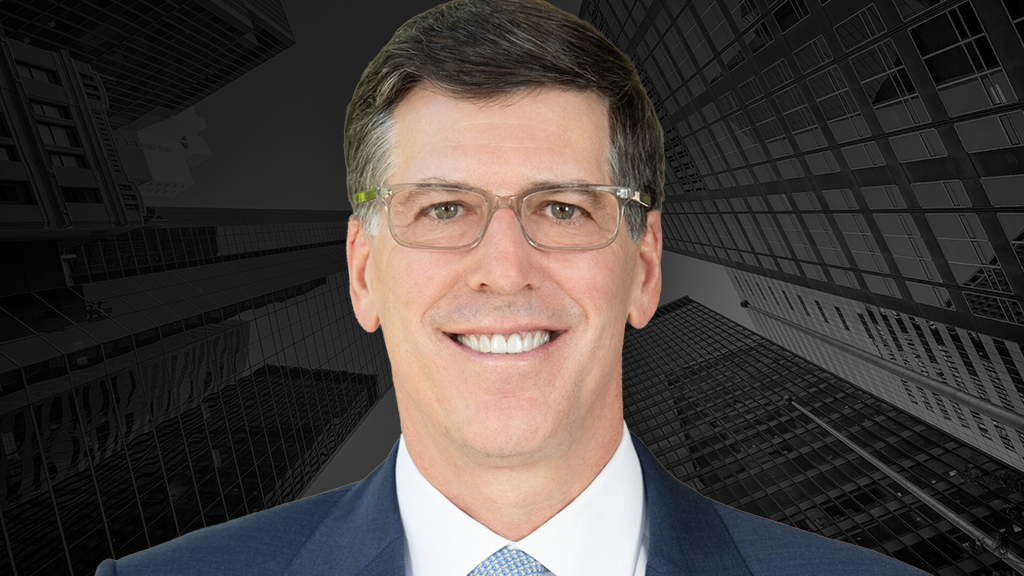
Roadmap for CRE Investment with Michael Levy, CEO of Crow Holdings
Willy Walker: Good afternoon, and welcome to another Walker Webcast. It is my great pleasure to have Michael Levy, the CEO of Crow Holdings, join me today. Michael, nice to see you, and thank you for joining me.
Michael Levy: Thanks for having me, Willy. Great to see you too.
Willy Walker: I'm going to do a quick intro, Michael, not that you really need one, but to those listeners who might not know about your background as intimately as I do now, as well as what you are up to at Crow Holdings. I think it's helpful to give people a little bit of background before you and I dive into our conversation. Michael Levy is the Chief Executive Officer of Crow Holdings, a privately held real estate firm founded in 1948 in Dallas, Texas. The company's business activities include a leading real estate development and investment platform, an expanding traditional and renewable energy business, and broader private equity investment capabilities. With 18 offices across the U.S., Crow Holdings' local, on-the-ground presence amplifies its hands-on capabilities across a broad range of investment strategies and ventures in partnership with leading institutional and individual investors. The firm manages $33 billion in assets and investments across a diversified business and investment portfolio, rooted in its founding principles of partnership, collaboration, and alignment of interests. Prior to joining Crow Holdings in 2016, Michael had a long-standing career in real estate finance and investment management at Morgan Stanley. He was a member of the firm's management committee and held a number of leadership positions, including COO and head of distribution for the investment management division, head of traditional asset management, COO, and CFO for real estate investment management, and co-head for real estate investment banking. Michael is a member of the Real Estate Roundtable and Urban Land Institute Foundation Governor, a member of the Middle East Institute's Board of Governors, an executive committee member of the Dallas Regional Chamber of Commerce, and a member of the CEO Advisory Council for the United Way of Metropolitan Dallas. He's a graduate of NYU Stern School of Business and has a law degree from Brooklyn Law School. Michael, let me start here, Brooklyn Law School. I saw a post about Professor Aaron Twerski, and you wrote that he was the most impactful professor you had. Talk for a moment about why Aaron Twerski was the most impactful professor you had at Brooklyn Law School.
Michael Levy: Boy, you bring a smile to my face. Professor Twerski, first of all, is just a brilliant human being. He taught me conflicts of laws. And for those people who haven't been to law school, I'm not going to go through it. But the mental gymnastics that he could go through and help you understand a very complex situation, coupled with just his exuberance for life, just a man who is happy to be on this side of the grass, and his just general brilliance. He was a Talmudic scholar and had spent his whole life learning and educating. He brought that enthusiasm. There was a second favorite professor, a guy named Jerry Leitner, who taught me torts. What I remember about my professors is not only the brilliance, but it is the passion that they bring and the energy they bring to help you as a student. So they had a big an impact on me. This is just a footnote, but my daughter starts at Brooklyn Law in three weeks, I think, or two weeks.
Willy Walker: Congratulations. That's great. It's interesting that you talk not only about Professor Twerski’s knowledge, but also the way he taught and his attitude about teaching. As I look through your LinkedIn posts, rarely anything to do with either you or even Crow Holdings. Yes, there was a deal here or there where you said congratulations to the team. But the majority of your posts on LinkedIn are to congratulate either former Morgan Stanley colleagues, Crow Holdings colleagues, or someone that you've known through your career who is announcing either a new job, a new venture, what have you. I found that to be particularly insightful as it relates to your personality, Michael.
Michael Levy: I think you've cued in accurately. First of all, by its very nature, we're doing this together and Willy, you understand this as a business person. I think it's very important in terms of marketing, PR communications, that your company is out there and communicating in the world that we live in today. I'm a strong supporter of that. At a more personal level, I see all the time on LinkedIn in particular, the self-aggrandizing behavior. It doesn't appeal to me. I will see a lot of it, a lot of people patting themselves on their backs and how wonderful they are and how great they are. It turns me in the other direction when I see that. It’s the last thing I want to do. It would make me incredibly uncomfortable to do that. Not uncomfortable to talk, and as we're talking, but as the self-aggrandizing part is just something I'm uncomfortable with.
Willy Walker: Talk about that for a moment as it relates to your transition from a very successful career in investment banking and being on Wall Street, and you are a product of New York. You grew up there. You went to school there. You worked for firms based there. Then you go to Dallas in 2016 for what sounded like a very unusual and very accommodating conversation with Harlan Crow as it relates to why you might be interested in joining Crow and why he might be interested in having you be CEO of his family company. Talk for a moment about, I guess, that transition because you clearly lived in that more transactional world, that more deal-oriented, sharp-elbowed world; yet you appear to be so thoroughly at home in Dallas and at Crow Holdings.
Michael Levy: Thanks for the question. I spent a few days in New York City living in that transactional world, spending time with those folks. And I was just shaking my head. I spent almost my entire life there, and I can't believe that I did that. I think the process by which this all happened didn't occur in just one meeting. It was really over almost a year and a half from when I first met Harlan to when I made the decision to join. During that period of time, I was lucky enough at Morgan Stanley to continue to move up the ladder, for lack of a better word. During that period, I had two new very large responsibilities. I was put on the firm's management company. I got closer to the wick of the flame. You spend your whole career working in these large organizations, first trying to get up the ladder, get a certain title, get to this, get to that. I got closer to the wick of the flame. What I saw just became a lot less appealing than what I thought it was going to be. I won't go into details; there was nothing particularly untoward with respect to Morgan Stanley. I don't want to give that impression, but all large bureaucracies operate a certain way. That component of the business just didn't appeal to me. There's obviously a major political element in all large organizations. Watching people come and go in the darkness of night, and then all of their lieutenants get trashed, and the next guy comes in—all of that doesn't appeal to me, never did. I was below all of that. I worked for some wonderful people at Morgan Stanley who weren't transactional in nature, who were good, honorable, terrific leaders of humans, and so I was sheltered from some of that. While all that was going on, I was also getting to know this organization, not every day, not every week, but our conversations were off and on. I got to know Harlan. And then there was this intersection where it was just clear to me that, after all my experiences in life, my heart called me and said, “I want to go do this.” Now there was a pragmatic business element, which was that you had a company whose brand, alumni, history, the scale of it is tremendous, but coming out of the S&L crisis and rebuilding the company the way that Harlan did, the company's scale was much smaller than its footprint in America and the world. As a business person looking at that opportunity, you think to yourself, “Huh. Maybe I could do something with that.” That doesn't come along all that often. There was a commercial pecuniary, you know, business building component to it. Then there were just the personal life experiences that attracted me. I've had nothing but positive surprises. Dallas has been fabulous, fabulous to me, and the crew, the organization, fit like a glove. I think it's nine years.
Willy Walker: It's nine years. Yeah, nine years, 16, we're right there. It's interesting. Talk for a moment if you would, clearly without sharing confidences, but that first meeting, one of the things I've seen you say, Michael, is, “I don't sit around with Harlan and talk about profitability and returns; we talk about doing the right thing.” There was something in that first interaction that said, “This is different from other interviews.” I've heard you talk about, when you're on Wall Street, you're constantly having headhunters call and say, “Hey, Michael, we've got a great job for you over at Goldman.” You stayed focused on Morgan Stanley. You love, just as you just described, the opportunity to continue to grow at a firm that has a phenomenal culture to it. As someone who worked at Morgan Stanley, I fully concur in that. But talk for a moment about what it was? First of all, you're coming into a family company, where he has five siblings and three kids, and it is a family company. So you know I'm a third-generation Walker running Walker& Dunlop—not that I ever had any trajectory to come to Walker &Dunlop. As a matter of fact, I didn't have any real interest in it until 2003 when, in a conversation with my dad, I said, “I think I can help you,” and my dad said, “I've always known you can help me. I just didn't think you had any interest,” to which I said, “I really haven't, but let's see whether I can develop it.” It turned out to be a wonderful experience and partnership and growth for me. But going into such an established, large, scaled family business as the first non-family member to run it, Harlan had to have said something to you that said, “This will be different.”
Michael Levy: The first thing is we're a family-owned company, but there are no Crow family members who work in the business. That is a decision that has nothing to do with me. That is a discussion Harlan had quite some time ago. It's not impossible for Crow family members to work. I don't want to imprint that perspective, but he wanted to make sure that this company was a meritocracy. I think he can speak for himself. I think he's seen a lot of other family businesses where, by definition, the next gen takes over, irrespective of the merits of their capabilities. That's torn many great American companies apart. There have been successful companies as well. He took the approach of, ‘that's not going to be my approach.’ And he's encouraged his family, broadly speaking, to go out there and build lives and build careers. Your ownership in Crow Holdings is a blessing and something valuable to you, and being part of the company and the culture of the company, all of that is critical, but not working in the company. So I didn't have that concern. My last name's Levy; it's not Crow. Therefore my career is capped, or the opportunity is not going to be available to me. I didn't have those facts, which in a different set of circumstances, different company or different perspective, maybe I'd have that concern, but I have none of those concerns. Fundamentally, it was great, good, honorable people. It's a great company, a great brand, great history. Moving to Dallas, sure, it was geographically different, but the nature of what the work is here wasn't that demonstrably different. Obviously, there are huge differences. So all those facts came together, and I don't know, Willy, my whole career, I had…No one knowing me as a young person would have thought that I would have taken the path that I did. But once I started taking the path and worked on Wall Street, everything was a very analytical exercise. Every decision as to why I stayed at a firm or left a firm or a job I took or didn't take was always in this part of my body where I made the decision. In coming to grow, it was in this part of my body that I made that decision. It's been all the difference in the world. My world has blossomed in a thousand ways. Again, Morgan has a great institution, but I always felt like I operating in a box. When I left and I joined Harlan, I felt like I had a straitjacket removed from me. I could just fundamentally be myself from a creative perspective, from a language perspective. That's been liberating. I think there are probably people listening to this who've had those same experiences, who understand what I'm talking about. No matter how great your large company is, you're still operating within some serious limitations on your own capabilities in some regards. I think entrepreneurs…that's the great thing. You have friends who are entrepreneurs. I mean, I know you have a family business, but friends of mine are entrepreneurs. Whether they're successful in the eyes of the outside world or not, they certainly have this incredible freedom and creative freedom that's exhilarating.
Willy Walker: To those who are listening to this when we put it out on the podcast and not looking at it on Zoom, when Michael said he was using his head, he then tapped his heart as it relates to coming to Crow. That’s where he went to, which is so, I think, fitting, and it's also very clear, Michael, that from having listened to lots of interviews and read a lot about what you've done since you've been at Crow, it's been a fantastic match. It's been a fantastic partnership, and it's allowed you to do what you want, how you want to do it. But as we sat around the dinner table last night with my partner's two sons, one who's in college and one who is younger, and they were sort of like, ‘what should I do with my life?’ And everyone likes to listen to Steve Jobs' Stanford commencement speech which says, “Do what you love, do what you're passionate about,” but very few people actually have the option to do that. My comment was, “Find an environment in which you can be yourself and then find something that you enjoy doing so that work goes from being work to being something that you don't consider being work. I feel, to some degree, that both you and I in our professional careers in our forties into our fifties found that in the jobs that we do and that is, other than working with friends, one of life's truly great gifts.
Michael Levy: I agree with all of that. But also, you remember being in your 20s; it's hard to figure this stuff out. You know, sometimes it's like for me, it was I just kept putting one foot in front of the other. Finally clicked, but it didn't click for me until I was 28. My brain, until I was 28, was all over the place in terms of what I might do. I could never figure it out, but I kept moving my one foot forward in terms of my academic progress. I kept focused on something I knew that would continue to propel me forward. And then when I got out of law school, and I wound up in training in investment banking, it clicked, but those were anxiety-filled years of figuring out what's important from a career perspective. The advice you're giving is terrific advice.
Willy Walker: When one goes to your website, it says, ‘a legacy of looking forward.’ Yet, when you walk into your headquarters of the old Parkland campus, you think you're going backward. You think you are going back in history. What I love about the physical build-out of your space at Old Parkland is that you do walk into that facade that says, ‘I'm going back to 1763 and some beautiful colonial building.’ Yet you then walk through the reception area, which is adorned in all of that 18th century furniture and 19th century furniture, and then you walk into the bullpen, which is as eye-opening, enlightening, and modern a bullpen area as any office space I've ever been in. You sort of feel like you've gone from the 18th century into the 22nd century, walking across that hallway that intersects between the two of them. Talk for a moment about instilling in the people of Crow a legacy for looking forward, yet holding on to the past.
Michael Levy: That's an interesting observation you make. It's interesting to hear your perspective. So, for those people who've never been to our office campus but can see this webcast right now, the outside of our building looks like the inside of this room that I'm in, as Willy pointed out. It's rooted in the spirit of the campus as the American experiment. So the architecture and the art and the memorabilia relate to the American experiments democracy and free enterprise, and that's the hallmarks and foundations. Those are the values that we sit on. But as a company, from the very beginning in 1948 with Trammell, we innovated. His first deal that he ever did, which we happen to still own today, was a spec industrial building when nobody did spec industrial buildings. The way they form partnerships with people is a hallmark of architectural design of the big atriums, the market center businesses. I mean, the guy just fundamentally stayed out there in front of the industry and kept innovating, and that's the legacy of looking forward. Harlan, in the coming out of the S&L crisis, had to spend almost a decade just re-righting the ship. So it was a difficult period of time, but he got to the other side with a group of people and looked at all the things that he did in changing the footprint and the trajectory of the firm to continue to evolve and change and develop new capabilities. And then I've joined, and even in the time that I've joined, we've evolved and we've changed. So the legacy goes back to the very beginning as a company that's willing to take those risks and evolve and change its capabilities along the way. Perhaps the architecture gives you the exact opposite perspective. When Harlan built this building in 2005 in this part of town, this was not a good part of the town. This was a decrepit, old, vandalized complex. I think people have told me they thought he was crazy for the idea that he was going to create this masterpiece. Without any playbook, with every detractor, with people telling him this was not a good idea, he's created one of the most important office campuses in the country. We continue to grow. So even in this old line, the architectural style, the idea that we exist and created this incredible network of people who office here and as Sand Hill Road is to Silicon Valley, Old Parkland is to Dallas, Texas. So, even this asset is a legacy of looking forward.
Willy Walker: You just said as Sand Hill Road is to venture capital, Old Parkland is to Dallas, Texas. I would also say the Trammell Crow companies are to commercial real estate as, I don't know, Kleiner Perkins is to the VC world. In other words, there is such an amazing alumni network of talented executives who, if you will, cut their teeth working for Trammell and working for Harlan. There are a couple of things there, Michael, as it relates to the way those people were trained. First of all, can you describe to people just how people would enter to get their chops working for the Trammell Crow companies or Crow Holdings, or Crow Residential? And then the second piece to it is, do those practices continue forward under your leadership?
Michael Levy: If you wanted to be a developer or have these top jobs, you came in as a leasing agent. That was your job. You had to be successful.
Willy Walker: No matter where you went to college. I mean you could have gone to the best college and gone to Morgan Stanley to be a top analyst, but you're coming to the Crow Companies to go be a leasing agent.
Michael Levy: 100%. So Bob McLean, who runs our real estate investment management business, has been here his whole career. He graduated from Harvard Business School, and he started as a leasing agent in retail, I think in the DC market. And Valach, who runs our real estate development company today, (I think it's because he started on the multifamily side versus the commercial side) started in the property management side of things before he moved into the development side. We no longer self-manage or self-lease our entire business. Whether it's the real estate investment management business or the real estate development business, we are working with third parties who are providing those services. So that job is no longer available here. Would that be our modus operandi? I don't know, but it's been a while since we were in those property management and leasing businesses.
Willy Walker: So you mentioned that, and I was going to talk about this later, but it's an opportune time to talk about it. I've heard you talk a lot about Dallas and just the Dallas ecosystem and the relationships and how the real estate business is, at its core, a relationship business. The difference between New York and Dallas as it relates to transactions in New York, kind of a somewhat mercenary culture of ‘let's just get it done and move on,’ versus Dallas is ‘if I'm doing this with you, you're my partner; you're going to be my partner for a long period of time.’ And then we went down, actually, I don't know, two months ago to pitch to sell a portfolio of assets for someone who actually has offices in Old Parkland to those who have either been to their Crow offices or have just seen Old Parkland. It's not all just Crow Holdings. There are many, many private equity firms, venture capital firms, hedge funds, and family offices that actually are in the office buildings adjacent to the Crow Headquarters. We went down to pitch, and we were going up against CB and JLL. And after we got done with our pitch, I said to my team, “I think we did a fantastic job. I think we have a great team.” The assets aren't based in Texas. Actually, they're out there in another state. But I said, “You've got to understand that everyone in that room lives in Dallas and has people from CB and JLL at the mall, at the school, at The Country Club, everywhere. And so we're up against a very significant competitive force in the advisors to this seller as it relates to us winning.” And lo and behold, we've lost the pitch to JLL. Hopefully, we win the next one. But my question to you, Michael, is just how important is that ecosystem of relationships? Because it seems like Crow, amongst all of the firms that we work with, really just places a tremendous amount of focus on who we are working with and what they are like as people, almost more than they just sold a property or they just financed a property and did the best job out there. Not that you're not looking for excellence, but it feels like those relationships underpin everything you do.
Michael Levy: I think that's a very accurate assessment. I mean, I'm going through this right now. We're in the process of trying to decide and working with some folks. It's clear to the whole team that one firm has clearly more capability, more technical capabilities, but I don't think we're going to go with them because we trust, and these are not Dallas firms, by the way. So this isn't like some good old boys network, or I don't want to give you that impression. I'm not from here. I didn't grow up here. It isn't necessarily that you grew up; it's what you're doing as an adult to create these relationships. But I think we're more than likely not going to go with the folks that we trust more. Most of what we do as an industry, Willy, is not physics. I mean, you really look at the business and there are a lot of people who are capable, now, whether they have the most market share or the least market share. Market share doesn't really, from my perspective, matter that much. What matters a lot are the specific individuals. It isn't even the name of the firm. It isn't even JLL versus CB versus Walker. It's not even the names of your firms. Who are the specific individuals who are going to work on this? How well do I know them? Do I trust them? Do I like them? It's a very, very important skill, at least in the nature of our business. Maybe if we were doing something highly technical and more complicated, we would put more weight on those elements. But I think in our business, broadly speaking, there's a well-trodden path around everything we do. I think it's really trusting the individual. Obviously they have to have enough capabilities around them. But I think a lot of firms have enough capabilities around it. It's a very different way of selecting business partners here than my experiences prior to being here. I would just encourage those people who are interested in doing more business in Dallas that not having a physical presence, flying in, flying out…it's just a really tough way to build a business here because people want to get to know you. They want to get to know your spouse; they want to have relationships because they want to trust you, or not. If you take the opposite, the negative is if you're down here and you wind up screwing people, this is not an environment where you're going to be successful. And so it works; it really works as a diligence tool as well in terms of the relationships matter.
Willy Walker: I'm sure you saw plenty of examples in New York where someone actually could screw people, to use your example, and still live for another day, which is just the difference of the culture and the transaction nature of that market versus the Dallas market.
Michael Levy: That might be true of tons of American cities, the Midwest, small towns, it's just different cultures. I do business globally; you do business globally. So when we go to other countries, it's not about bringing what we bring from our market. It's understanding their market and the way they operate. It's incumbent on each of us as business people to understand the markets that we operate in. If you're going to operate in New York, then you generally understand the culture of New York, and you should kind of operate consistently with that if you want to be attractive to other market participants in that market. I don't think Dallas is any different than any other place in the world in that regard.
Willy Walker: You mentioned two things there that are kind of good segues to other things I wanted to talk about. One is that you sold a large industrial portfolio to Blackstone this spring, and you sold a 95% interest. So you maintained a 5% interest. I saw that, and I said to myself, “Okay, they sold it for $720 million. Why don't they just go sell the entire thing and move on, rather than holding the stub 5% piece?” What does that say about you as it relates to partnerships?
Michael Levy: There are a number of things. One, there was no material diminution in value for that minority stake. There were certainly people who said, “No. I want the whole thing. I want you out of the way.” It's great. But their price was not at such a level that you were like, ‘okay.’ There's a big delta. So that's just from a commercial perspective. We have been trying for a number of years to find opportunities with our friends at Blackstone to do something together. This wasn't the first time; this wasn't the first thing. Really good people, they actually have a terrific relationship orientation in their culture. I really like the people that we've been dealing with. And so there was an opportunity for us to have an ongoing relationship with them. I don't want to speak for them, but we continue to be fairly prolific in the industrial space. They've been a huge acquirer in that business. So that partnership allows you to continue discussions about other things in the future. Financially, it was just as attractive as selling the entire portfolio. And so those three things came together, which is why we ultimately structured that with them.
Willy Walker: We got to Blackstone, which I was going to. I asked the question specifically about the deal, but it does make me think about the Blackstone colleague who was in the real estate group that was tragically shot this week in their headquarters up in New York. Obviously, a number of people at Walker & Dunlop knew her and worked with her, and obviously, our condolences to that. I've gone back and forth with the number of the people at Blackstone that we work with, and it's been a super challenging week. The terror that must have gone through that building in midtown Manhattan is hard to comprehend. Thinking about being international, Michael, you talked about when you go to a foreign country, you've got to be mindful of the culture and the way that the people like to interact with you. I noticed that you have that trademark in Brussels, and it was actually interesting because I looked at the Dallas Market Center. When I first saw the Dallas market center I was going to ask you, “Is there any way to replicate that?”, and then, all of a sudden, I came across the trademark in Brussels. I was like, “Wow, they actually did it, but they did it very, very far away from Dallas Texas.” What is it about those types of trademarks or the market center that you all find to be such an attractive investment opportunity?
Michael Levy: I think you need to go back in history, before the internet. Where would manufacturers and retailers meet physically? So, there was this explosion and scrambles at the front end of it, built one in Shanghai and built one in Brussels and, built some here and, others built them at a point in time where you didn't have the internet to communicate or to see things. So the ability to get together…you either got together in a hotel or these specialized buildings. Primal was very successful at it at one point in time. They've turned out not to withstand the internet and notwithstanding billions of dollars of capital trying to disintermediate them to be incredibly resilient. In the United States, there are really only a handful of these buildings. It's basically us and Blackstone. Blackstone owns three of them. They own the complex in High Point. They own Atlanta. They own Las Vegas, and we own Dallas. There are not many more of these buildings left in the United States. Most of them have been torn down. So I wouldn't call it a growth industry, but it is incredibly resilient. People still want to meet in our building here in Dallas, which is 5 million square feet. Every year, hundreds of thousands of retailers come and go in those buildings. Thousands of manufacturers and distributors are leasing space. They want to physically meet. They want to socialize. They want to touch and feel the goods before they buy them, and just see them digitally. So we don't look at it, Willy, as it's the next growth industry for us. We don't look at it as if we're going to build more of these buildings, but we do look at it as a good investment made a long time ago. Business is important. It's important to America. I mean, the amount of commerce that goes through these buildings. And as others, there was a platform called Faire. There are many other platforms digitally that came out over the past decade to disrupt these buildings. Almost all of them have failed at the B2B level, not the B2C level. We just think it's a good, resilient business that will continue to be relevant and generate cash into the future.
Willy Walker: Keep running. Keep pulling on that thread if you will, Michael, as it relates to the e-commerce universe and the strategic moves by Crow Holdings as it relates to logistics and distribution. Also, if you would, sort of these specialty sectors, whether it's gas stations, whether it is infill retail that are not going to be disintermediated by the internet. Talk for a moment about that, because as I think about you all looking forward, you all have very clearly strategically positioned yourselves well to have, to develop, and own real estate that supports the e-commerce world, even though you're not investors in Amazon, if you will. Talk about that for a moment.
Michael Levy: Sometimes you have a clean sheet of paper and a business plan, and you come up with that and say, “I'm going to chase the e-commerce trade.” And sometimes you just happen to have a business that, as a matter of historical infrastructure, is aligned with some of the secular trends. I think our business is more a matter of history and being aligned with the secular trend, as we kind of woke up and said, “We're going to chase this e-commerce thing.” So, on the industrial side, we started as an industrial developer, our roots, 80 years we've been in this business. So, to think that our firm was not going to continue to be relevant in the industrial space would be an anathema to who we are. As a result of that, it is a core component of our development company, and it's a core of our real estate investment management business. I'm going to say probably a third of the activity in the real estate investment management business is going to be industrial space. And then in the development company, we basically develop apartment buildings and industrial buildings. We do develop some office buildings, so we can talk about that. So it's a big component of the business there. As it relates to e-commerce, one of the things that is clear to us, you would think in a development company, you're going to be building brand-new modern, 38-foot clear height buildings designed for the e-commerce area. But on the investment side, we're investing in the same types of buildings because it's very clear to us, those modern buildings that work for e-commerce users or e-commerce adjacent users are looking for modern buildings whose layout, design, and infrastructure are built for the current era. It definitely defines our investment strategy with an industrial focus. Said another way, we're not chasing 18-foot shallow bay, 30-year-old industrial buildings. We're pursuing brand-new, modern, state-of-the-art buildings on average 200,000 to 400,000 square feet, you know, for one to four users that can meet the needs in an e-commerce-enabled world. With respect to others, what I'll call specialty sectors, those started our firm, if you step back, it wasn't e-commerce, but 25 years ago, when we started the real estate investment management business, Crow coming America from Dallas on out focused on property types and sectors that were more prolific in, not the top five major cities in the United States. And so you wound up investing in some of the smaller buildings, like small retail properties or convenience and gas centers. What's happened over time is there's a real expertise in several of these niches. One of them, as you pointed out, happens to be the small strip retail business. Our thesis around that was, in 2015, everybody hated retail. The internet was going to displace all retail. And so it seemed to us to be an opportunity to buy what others were selling because we believe that the internet would not disrupt these small retail centers, because when you look at them, all they're selling is food and service. They weren't selling goods. It was almost the, but it wasn't, a contrarian play, but it was the opposite play, definitely driven by the internet. Others said it's going to destroy our retail. We said, “It's not going to destroy this component of retail.” Well, that was 10 years ago, and that's a big business for us today. It's growing, and there'll be more in that business in the future. So that definitely is one approach to e-commerce. Industrial, I just say to you, I could never attribute it to e-commerce, but we've obviously been following the impact of e-commerce. Now the big opportunity is on-shoring and nearshoring. I mean, when someone decides to build a $20 billion plant in Arizona, thousands of apartment units and millions of square feet of industrial space that's going to be built around that are compelling. So we're very focused on that and opportunities in the country for big campuses to develop relatively quickly around the industrial space because of the on-shoring, in addition to the e-commerce trends.
Willy Walker: The mentioning of gas stations just gets to the energy and the energy investments that you all have made. I find it to be really interesting that you were doing community-based solar and then also oil and gas in the Permian Basin. Talk about the entry into energy. Was it more on just a the private equity or the capital investing side of the business saying, “We think there's an opportunity to energy,” and then you all saying, “We have the capabilities because we do design and build in commercial real estate to be able to enter that business,” or was it, “Let's take what we do in the real estate business and leverage it into the energy business?”
Michael Levy: It's a little bit of a combination. Just to help frame it, 30 years ago, coming out of the S&L crisis or going into it, the company was 100% real estate development. Coming out of it, Harlan said, “Never again.” Part of that is, ‘I'll never be only real estate.’ And so he started in 1998 to begin to invest in some stocks and hedge funds, and other things, and diversified the investment portfolio of the firm, even though the outside world only knew us as a real estate company. On the inside, you were building up a portfolio and some acumen. And so that journey has continued. In the most recent period of time, certainly since I've been here, our thought has been instead of, or in addition to, just being a passive investor, let's develop acumen; let's develop some operating verticals at the firm separate, apart from, the real estate business that can continue to strengthen and diversify us into the future. So the first area that we started to think about was this word called infrastructure which is such a distorted word; it could be anything today. But that led to a discussion that led to energy, and then as we started to think about energy, we said, “Okay, we love the secular trends under energy. America needs more of it.” We said, “What is authentic to us? Where could we have a right to win? Where could you have a competitive advantage?” It wasn't necessarily in the ownership of transmission lines. It wasn't necessary ownership of pipelines or even the ownership of gas stations. If you think about building a solar farm, if you really step back and understand that business, it's a lot like building an apartment building, only the construction is a lot easier. If you understand real estate development and you can really stomach that cultural dynamic and you have that in your DNA, while the cash flow comes quickly in oil and gas, not in the terminal value, the nature of the culture behind it isn't demonstrably different. We're also in Dallas, Texas, which helps in both of these areas. So we believe that the right approach for the firm was to go in as a community solar developer and as an oil and gas operator. That was, again, to diversify control holdings, to have operating capabilities. It was shaped and formed by the fact that we're a real estate developer and understand that, as I've just explained to you. Therefore, it’s several elements that you highlighted that drove us to it. The one mistake that I made in the solar side was that I was convinced, you know, I think we made the decision close to four years ago. I was convinced that under any administration, under any construct, we were going to continue to subsidize the industry. That's turned out not to be true. So we have a terrific portfolio, and if anybody understands what's going on, they understand we've got safe harboring and a number of years to build projects. But that may not be a going concern depending on what happens with technology. But the oil and gas business has turned out to be a really terrific business.
Willy Walker: Oil and gas businesses. As I think about oil and gas, and I think of sustainability, it makes me think about the office building you all built in Frisco that is now fully leased to Toyota. What is it, Toyota Financial Services? But it's a seven-story all-wood timber construction. Seven stories. That's innovative. That is new. That is different.
Michael Levy: Well, the whole thing is at the Office for us. So we had been out of the office sector since 1998 with the IPO of the Trammell Crow Company. Crow Holdings had no longer any office investments, no longer had office capabilities, and we expressly stayed out of business. We made a decision in 2019, one year before COVID, that we were going to get back in the business. Part of that motivation was, by that point in time, our apartment development company, which had been at scale, had been at scale. Our industrial development company, which we had rebuilt, was now at scale. We started to think about what the other sectors are that will be large enough and we can grow in the future. We said, “Well, the office sector is; it's got its challenges as a long-term investor, but as a developer, somebody's going to need to build these office buildings in Austin and Dallas, and Nashville.” And so in 2019, we made the decision to get back into the office business. In January of 2020, we convinced a terrific man to leave Houston and move his family to Dallas, Texas. In March 2020, we said to ourselves, “Wow, that was not a good decision.” But it became clear after a number of months that we were going to get a better shot.
Willy Walker: One thing about that, Michael, if I might just jump in there, is that the replay of the tape is helpful and it clearly says, watching that business in March of 2020, when everyone was wondering what was going to happen with the pandemic, clearly had you all sort of scratching your head saying, “Did we make the right move here?” But at the same time, you also weren't sitting on 15 office buildings that nobody was going to be going into the next day. So while the question of what the future of the office holds, you clearly were sitting in a very privileged position as it relates to not having any legacy assets.
Michael Levy: I agree entirely. In 2008, when I worked for Morgan Stanley, you know, it was just a mess. I mean, we were so bogged down in defense, nobody could really think about the future. Well, in 2025, as we sit here today, there are no problems at our firm in 2020. There were no problems that affirmed. So the ability for your whole team to not only think forward, but not to be emotionally dragged down every day, I know what it's like to get beaten up every single day playing defense for years. You are kidding yourself if you don't think it saps you of some of your energy and ideas. So there's no doubt that the fact that we didn't have legacy office buildings that were broken and challenged and being foreclosed on was a great blessing and benefit for us. So we made the decision to go into business. We told ourselves two things. Well, if this is going to work anywhere, it's going to work in Frisco, Texas, right? Just the fastest-growing nominal population from a corporate relocation perspective. And then we said to ourselves, and this, Willy, was at, let's say, a peak period of time about the sustainability movement, we said, “What could we do in this building that would make it unique?” And mass timber had, from a code perspective, become a relevant property type for the United States. As you know, it's been going on in Europe for 25 years. One of the challenges is the number of companies that will supply you, the number of plants that can supply you with CLT, the mass timber. We just got in before there was a rush on some of this. So from a pricing perspective, we were able to acquire the product at a price that made it competitive with steel from a price perspective. We built the building, but I will tell you that when we built the building, which was finished on December ‘23, leasing demand was fairly tepid. We were not feeling really good at that point in time. By the summer of ‘24, we were making progress. We had some tenants that we're getting close to. It wasn't ideal for us. And then fortuitously, Toyota decided that they were going to grow. In 42 days from the first phone call to a signed lease, the entire building was leased. They're really happy and we're thrilled. So now that you've had a little bit of success, guess what we're going to do next? Another mass timber building in Frisco, Texas.
Willy Walker: You have a whole development that's going to go on around that. You're going to build another building. And then you've also got retail and multi that's going in around it as well, correct?
Michael Levy: So there was a landowner who master planned. We're not the developers of the adjacent properties. We are just the developer of one completed office building and one office building that we're starting to work on now. But mass timber, … look, we've learned a lot. We understand it certainly well enough now, and we won't use this webinar's time, but it's really interesting. I think it's beautiful. I mean, forget your comments about sustainability. It's physically a beautiful thing to work in every day and that's attractive in and of itself.
Willy Walker: No, I looked at pictures of it, and it's stunning. I can only see why whoever runs Toyota Finance Corporation was looking out the window of the office across the street at your brand new building and saying, “Ha, that'd be a really nice place for us to be.” Very kind of serendipitous that they happen to be located just across the street in their existing headquarters. As you talk about 2008 and the GFC and sort of being on defense at Morgan Stanley, as everybody in the financial services, as everybody in the real estate world was, it's not like Morgan Stanley was in any way unique. But you also mentioned previously, Michael, Harlan spending most of the ‘90s unwinding partnerships after the S&L crisis and having to work through all of those workouts and doing a bad bank, good bank structure where every single lender to the whatever entity, Crow was an investor and got back 100 cents on the dollar, which is really quite something that happened. But those two experiences for you, as well as for Harlan, had to impact you to where you all sit today in the way that you are leading the company. One of the things that came out of listening to you talk about this previously was: limited leverage. No mezzanine debt, no cross-collateralized assets, things of that nature. And you just said, you know, we sat there in 2020 going into the pandemic, and we could think forward. We're sitting here in 2025, after three years of the great tightening, where plenty of asset values have come down, and some developers and owners have gone out of business, and others have had to struggle through and recapitalize assets. You said, “We're playing offense when others are playing defense.” I'm curious how challenging it is to maintain that mindset in the sense that you're clearly asked to go and add leverage to juice a return. You're clearly given the opportunity to do something on the risk spectrum that looks like a great opportunity. What is it that you or you in talking with Harlan or just the overall culture of the firm says, “That's just not us?”
Michael Levy: I think these periods of time, depending on who you are as a person, can truly emotionally scar you for life in terms of not letting it happen again. I think in part because of the experiences I had in ‘08, the experiences Harlan had in the ‘90s, I think, in part, he was attracted to me when we first met because I had lived through those experiences, because it wasn't an analytical exercise, because it was human and raw. There's nothing like standing in front of a lender investor getting screamed at for something. Two years earlier, you pounded the table. This is the greatest thing since sliced bread. And so what I think it does to you is, it doesn't leave you. I'm not going to make that mistake. I make tons of mistakes every day, Willy, as we all do, as you do, and I'm going to make new mistakes, but I'm not going to make those mistakes ever again. It's just not going to happen. Now, the risk is that it makes you too risk-averse. The issue is that you go through these experiences, they scare you, and then you either panic or you're too conservative in what you do. But at the margin, I'd rather be too conservative, too aggressive, seeing what I've seen. But I will tell you, but this an important point, particularly for folks younger than you and me, it's something that you've got to live through. It's not something analytical. I watched in February 2022, right? We all who'd been around the block saw on February ‘22, things have changed, right? Like the inflation was there; interest rates are moving. You were like, “Something's wrong in this system. We should really put pencils down on everything right now.” Talking to the next generation of folks, really talented people who had not lived through ’08, that was a very difficult couple of months, getting these folks to see what we saw. Then finally, in June and July, “Oh, now I understand.” I think it protects you as well from emotionally having these, going through these near-death experiences.
Willy Walker: Yeah, it's interesting. First of all, you sold a lot of assets in ‘21 and ‘22 as we were heading into the great tightening, which is hindsight's 20-20 vision, but great vision, if you will. But that actually gets to a question that I have as it relates to buy versus build, and then also where you all are looking to do that. You mentioned previously, Michael, the sort of Dallas outward mindset, that you're a Dallas-based company and that you've clearly been a bigger investor in the Sun Belt than you have been in urban gateway cities. At the same time, you have offices in Seattle, Washington, San Francisco, California, Los Angeles, et cetera, et cetera. So you've got a presence in those gateway cities. I'm curious for your thoughts as it relates to where we sit today, as it relates particularly to the multifamily sector, where you all have a huge footprint, both from a development standpoint and from an investment standpoint. The thought of a lot of supply in the Sunbelt, high-growth cities of Austin and Nashville, and Charlotte, to use three, far less supply in urban gateway cities, and therefore you've been able to see rent growth in those cities. But then the job growth that we are seeing is still in those Sunbelt cities. So, as you all sit there and say, “Where are we building?” “Where are we buying?”, which one of those two strategies is sort of winning at the conference table inside Crow Holdings?
Michael Levy: I'd love to give a simple answer, but as you can imagine, the development company at Crow only develops until it's either the deals make sense in a given market or they don't, as opposed to a group of people thinking about build versus buy. To answer your question…I need to answer it. I need to put that on the side, which I'll come back to because that addresses Seattle and Boston and these other cities, which are really the development companies' offices. On the real estate investment management side, where we're not wedded to a developer, we've been trying to buy versus build in multifamily. We have been trying to do that, but it's been very difficult for us to find acquisitions in the multifamily side at the return profile that we're looking for. We've lagged back into multifamily development, as a real estate investor. On the industrial side, as an investor, we've never been able to make the math make sense on the acquisition side because we don't have core capital. And so, while we, from early ‘22 through the end of ‘23, weren't basically investing, but ever since then, we've been investing in industrial development since that period of time. In terms of the markets that we're operating, I mean, I understand, I don't know who to pick on. I'll pick on, you know, Cleveland, for lack of a better word. And I don't mean pick one, but to highlight a city. Right now, maybe…I don't know this. You might know the stats. Maybe right now the supply-demand fundamentals in Cleveland are terrific and there's rental growth of 4%. It's great. Okay. Maybe 2 to 3%, but it's great, right? Okay, over the next 10 years, how much growth are you going to have in Cleveland? How many businesses are moving there? How many people are moving? Where do you think your position is going to be in 10 years from now? So we're much more focused on the fact that, obviously, a deal has to pencil and it needs to make sense right now. As you know, multifamily development, if it doesn't pencil to a six and a half untrended yield on costs, is probably not financeable. And if you're in a market right now with massive rent declines and things going against you, it's not going to make sense. But even let's pick on Austin and Nashville, two markets with the softest current rent growth. Does anybody not think that in 10 years from now, those cities are going to grow demonstrably? Does anybody not see the data that says new starts are collapsing and therefore new deliveries in ‘27 and ‘28 are going to be the lowest level in more than a decade? Why isn't that a great market to develop it? So we remain bullish on the markets where people are moving to. It seems to us fairly clear that one can underwrite that with a good degree of certainty. I mean, something could change, and America could. I think the thing that would change it is that the places that people aren't moving to those cities pick up more pro-business, low-tax policies. I think a lot of it is because people aren't just coming down here because it's hot. Businesses are coming down because there are policies in these states that attract people to work here and to be here. I think that the biggest risk to this trend of people moving to the Southeast and the Southwest isn't that they're going to mess it up. It's actually that in some of the states that have messed it up, they're going to turn around and realize that they want to get people moving back to them. So they're going to make major changes in their policies. That is going to attract businesses and people to move back there. But I don't see that happening based on the politics in America today.
Willy Walker: Yeah, I concur on that. At our conference here in Sun Valley three weeks ago, I talked about just that, sort of the blue-red divide. I just sort of said, this isn't a political statement. These are just facts. This is where people are moving to and where jobs are being created, and where you will see growth.
Michael Levy: What do you think about San Francisco, because obviously from a political perspective, there's been a big shift there? Now, maybe it's like, “Michael, it's different in San Francisco. It's tech; it's got this unique mode to it.” But the buzz around it is that it's different and it's sustainable. And I'm not…I don't know.
Willy Walker: Two things I'd quickly say on that. First of all, I think people do have renewed hope and enthusiasm for San Francisco due to the mayor, and what the mayor is doing, and the city council backing off on some of the things it was doing, and the attorney general, et cetera, et cetera. I think the other thing, Michael, that is somewhat interesting as it relates to American politics is that the political spectrum, the continuum seems to be wildly distorted when you back up to when you and I were either coming out of college or in the 1990s. It was pretty clear what a Republican was and what a Democrat was. I challenge you to really articulate today, given our politics in our country. I have a very close friend of mine who was a Bernie Sanders voter in 2020 and a Donald Trump voter in 2024. I mean, think about that wraparound going from one end of the spectrum, and because the politics had gotten so distorted, this person wrapped all the way around to the other side. So I do think there's also something there that just says…I mean, I had Governor Wes Moore do something a couple of weeks ago, and, you know, Maryland is the bluest state in the country as it relates to just the Democratic Party. And what Wes was talking about was that we just have a responsibility to run Maryland as a great state. I don't care whether it's blue or whether it is red. We need to develop jobs; we need to bring companies here; and we need to create affordable housing. And he was talking about things that are just kind of common-sense politics, not blue or red. I do think there's enough opportunity there, but I would say at least for someone who listens a lot on this stuff, I'm not sure that many of those blue cities have quite gotten the memo as to why either companies are leaving or why companies aren't coming there, given some of the policies and some of tax structures that they have in place.
Michael Levy: Look at New York City right now. Come on. You're America. Go figure, right? Who in their right mind? But there's a group of people who have a very different agenda, and they happen to vote. I think one of the biggest issues is, the city, anybody can check the city they live in: people don't vote. The middle-of-the-pack, normal people, particularly in your local or regional elections don't vote. They don't go out to vote. So they leave the people to vote who are the angry activists, and they go to the far extremes, left to right. That's reality. If you want to do something about it, make sure you vote. Vote in primaries; vote. People don't. I mean, in the city of Dallas, for such a patriotic civic city, when it comes to the local elections, the mayor elections, the city council members, the stuff that really matters, 5% of the population votes. I bet it's the same in most American cities, and I think that's a real problem.
Willy Walker: This is a great way for us to end the conversation, which I could keep doing for another hour. My son is going to SMU in the fall, and I'm going to be down in Dallas a bunch. So I'm looking forward to seeing you when I'm spending much more time down in Dallas. But one of the things that I found so amazing about the Crow organization, about where Harlan has put his treasure of investing, if you will, is having a dialog down in your headquarters, there's that unbelievable, what I would call arena, that room that you sit there and you bring in these incredible speakers. My understanding is that this spring, you brought together 50 of the presidents of the leading American universities to sit there and say, “What are we doing from an education standpoint? And how do we save the US education system and higher education system, which is the world leader, at a time when it's under such a sort of threat and challenges?” What I find to be so interesting about it is that it doesn't seem to be left or right; it seems to be a conversation, trying to find, if you will, the truth to any degree that there is any real truth, but just having an open dialog and discourse. It seems like that, having built the headquarters the way that Harlan had it built, and then the way you all manage both the company and the physical plan, that kind of permeates everything that Crow Holdings does and thinks about.
Michael Levy: The room that you referenced, we call it the debate chamber. And again, going back to old Parkland, it's not even just an office, campus, and museum. It is a center for intellectual discourse and debate. So we try very hard to bring in multiple perspectives on an issue. I think at the margin, just because of the relationship set, it's generally center and right of center for the most part. Not that we're pursuing that; it's just a lot of the people that we know. But we work really hard to make sure that we're bringing in other perspectives. It's a critical component of what we want Old Parkland to be. We did have, I think it was 40-some-odd of the nation's most important private universities, and they spent an entire day here having this discussion. We've had Andrew Yang here when he was running for president. We're going to have some really interesting people here this fall who are going to be providing different perspectives, but it's very difficult, Willy, to get people to debate on stage. Sometimes people, if they're far left in their perspective, are intimidated about being here because they think they won't get a fair shot at things. So we do our best to bring in all perspectives. We don't want it to be a place that's just selling a specific agenda. Politics today is probably 25% of the content. Most of the contact we're now delivering is going to be, I mean, we had Bill Belichick down here. We had Jason Pitt from the Mavericks here. We have sports, we have art, we have music, we have a comic down here, so we're really trying to bring intellectual discourse and discussion and speakers that our tenancy can't get elsewhere, that they find interesting, whether it's the younger folks or the older folks. We're trying to make that the reason people want to be here. Not that the architecture is really cool, which it is. Not that the location is great. Not even that the network of other people that office here are like-minded folks, but the fact that we bring so much intellectual content, some of it fun, but most of it interesting, to foster your learning and your engagement in the world. That's why we want people to come here. I think if you polled a lot of the people who are tenants here, asking what's the coolest thing about being an old Parkland, they'll probably talk about that.
Willy Walker: Michael, it's been a real pleasure, and I'm super thankful for you giving me an hour to talk about you, Crow Holdings, and everything that makes Crow such a unique organization. I will finish this. You mentioned a couple of coaches that you've had down to Old Parkland to talk. We had Steve Kerr here in Sun Valley a couple of weeks ago speaking at our conference, and what a number of people came up to me afterward and said, “It's just so refreshing to see someone who is so accomplished like Steve Kerr, has five NBA titles as a player and four as a coach. And have such humility.” I have to say that spending this hour with you, someone who has the talents that you have with the humility you have is a real pleasure, and I can see why Harlan said in 2016, “Come across and take over this company for me.” Thanks for spending the time, Michael, and I look forward to seeing you this fall when I'm down in Dallas.
Michael Levy: Willy, thanks so much, and I wish your son a great time. SMU is a terrific school. So I'll see you soon.
Willy Walker: Right, take care. Thanks, everyone.
Michael Levy: Thanks, everyone. Have a good day. Okay, bye-bye.