Read time:
6 mins
Affordable housing developers are under pressure from every direction. Demand is high. Affordability is strained. And the cost to deliver new housing keeps climbing.
Financing innovation will remain essential, and in many cases, the right capital solution can make all the difference. But developers are also looking upstream at how housing gets built, how quickly it can be delivered, and how construction costs can become more predictable.
That is where factory-built construction is gaining new attention.
The model is not new, but its role in affordable housing may be entering a more practical, scalable phase. As the need for attainable rental housing grows more urgent, repeatable and efficient building methods are becoming harder to ignore.
The scale of the challenge is clear. According to the 2026 Joint Center for Housing Studies of Harvard University, 22.7 million renter households were cost-burdened in 2024, meaning they spent more than 30 percent of their income on housing. Nearly half of all renter households, or 49 percent, fell into that category. Another 12.1 million were severely cost-burdened, spending more than half of their income on housing.
At the same time, the supply of lower-cost rental housing is eroding. The JCHS study also found that between 2014 and 2024, the number of rental units renting for less than $1,000 per month fell by more than 30 percent, a loss of more than 7 million lower-rent units.
The challenge of building affordable housing
Developers today are working against powerful economic forces.
JCHS reports that residential construction input costs have increased 40 percent since January 2020, driven by higher material costs and broader inflationary pressures.
Labor availability remains another challenge. According to Associated Builders and Contractors, the construction industry must attract an estimated 349,000 additional workers in 2026 to meet anticipated demand despite broader macroeconomic headwinds.
For affordable housing developers operating within fixed subsidy allocations and highly competitive funding environments, those pressures can create significant barriers to project feasibility.
As a result, many organizations are exploring whether industrialized construction methods can improve efficiency without sacrificing quality.
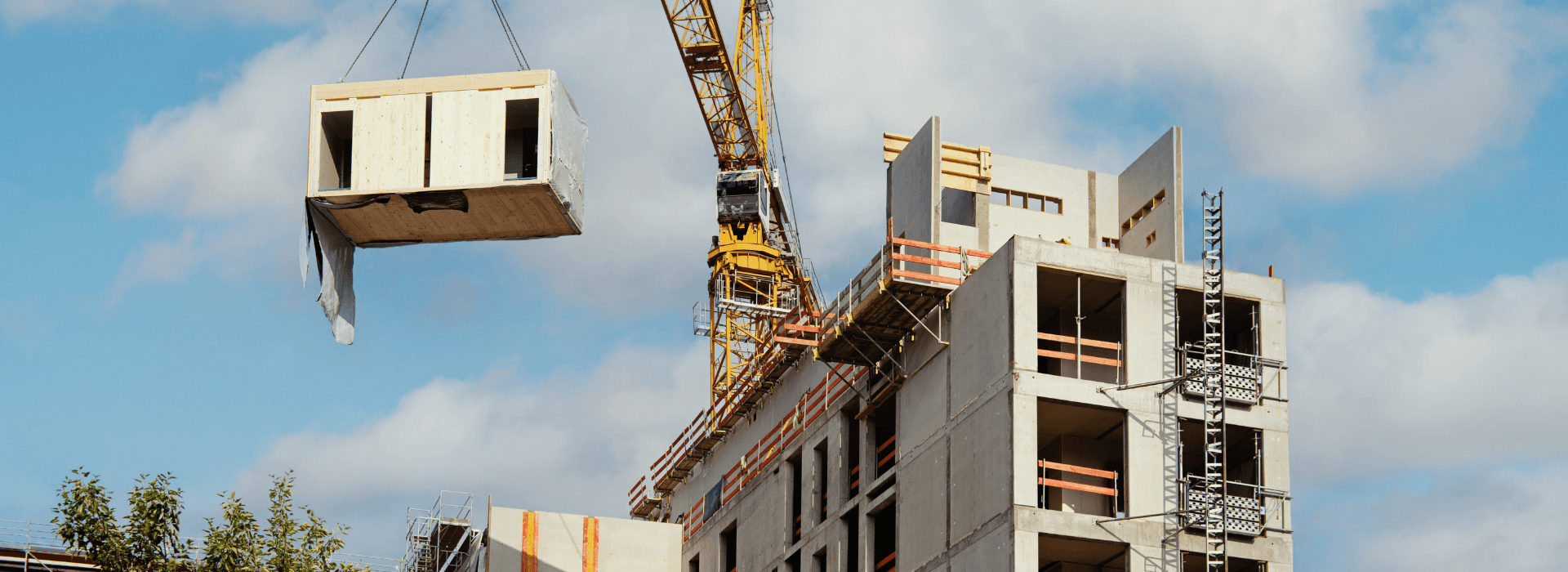
Watch: A modular multifamily community is constructed in a factory before being moved to the site.
Why factory-built construction is gaining attention
Factory-built construction allows housing modules to be manufactured in a controlled environment while site preparation occurs simultaneously.
Rather than completing every aspect of construction on-site, developers can advance multiple phases of development simultaneously. The approach has the potential to shorten construction schedules, improve quality control, reduce material waste, and create greater predictability throughout the building process.
According to the Modular Building Institute, factory-built construction can reduce project timelines by approximately 30 to 50 percent by allowing manufacturing and site work to occur in parallel.
The sustainability benefits are also notable. A 2024 study published through the American Society of Civil Engineers found that modular construction reduced construction waste by an average of 78.8 percent compared with conventional building methods.
Those efficiencies become particularly meaningful when applied across multiple developments rather than a single project.
From one project to a scalable platform
Historically, many factory-built housing developments have been viewed as isolated demonstrations of an alternative construction method. The next phase may look different.
In Northern California, Mutual Housing California is testing whether factory-built housing can serve as a repeatable delivery platform for affordable housing development.
Its Fairview Terrace community in Stockton is a 76-unit affordable Seniors Housing development serving residents age 55 and older. More importantly, it is the first project in Mutual Housing California's six-community factory-built housing pipeline, which is expected to deliver more than 600 affordable homes across Northern California. Walker & Dunlop Affordable Housing Equity partnered with Mutual Housing California on the development, helping support a financing structure designed to advance an innovative housing delivery model while creating a framework for future projects in the pipeline.
By standardizing design, manufacturing, and construction processes across multiple communities, Mutual Housing California hopes to create efficiencies that can be replicated from project to project. The organization estimates the factory-built approach could reduce development costs by approximately 10 percent while shortening construction schedules compared with traditional delivery methods.
Project stakeholders also anticipate setting the building modules onsite during an approximately two-week installation period before completing final construction activities.
For affordable housing developers, the broader opportunity is not simply building one property faster. It is creating a framework that can be scaled across an entire portfolio.
Pairing housing production with sustainability
Factory-built construction may also help developers pursue sustainability objectives alongside housing production goals.
Fairview Terrace combines factory-built construction with a solar-powered microgrid, battery storage, all-electric building systems, demand-response technology, and advanced energy management systems. The development is designed as a net-positive energy community that can help reduce energy costs while improving resiliency.
That combination is increasingly important as developers seek ways to lower both construction costs and long-term operating expenses.
For affordable housing communities, improved building performance can translate into meaningful savings for residents while supporting broader environmental goals.
Looking to the affordable future
Factory-built construction will not replace traditional development methods, nor is it a solution for every project.
Successful implementation requires manufacturing capacity, experienced development teams, supportive public policy, and financing partners that understand the nuances of the delivery model.
Yet momentum continues to build. In 2024, the U.S. modular construction market reached $20.3 billion, accounting for 5.1 percent of construction activity across key segments. Industry forecasts project the market will expand to $25.4 billion by 2029, with multifamily housing expected to be one of the primary drivers of that growth. The multifamily modular segment alone is projected to increase from $7.1 billion to $11.3 billion over the same period.
For affordable housing developers, the implications extend beyond construction methodology. Factory-built housing offers an opportunity to reduce development timelines, improve cost certainty, address labor constraints, and scale production in a market where demand continues to outpace supply. As organizations like Mutual Housing California move from individual projects to portfolio-wide implementation, the industry will gain valuable insight into how these models perform at scale.
No single innovation will solve the affordable housing shortage. Expanding supply will require a combination of policy solutions, capital investment, development expertise, and new approaches to housing delivery. But projects like Fairview Terrace demonstrate that factory-built construction may be evolving from a promising concept into a practical tool for producing more affordable housing more efficiently.
As developers evaluate future projects, now is the time to explore whether factory-built construction can support their long-term housing strategy. Walker & Dunlop works with affordable housing developers, owners, and investors across the country to identify financing solutions that support innovative development approaches and help bring much-needed housing to communities. To learn more about financing affordable housing developments, connect with our Affordable Housing Finance team.
News & Events
Find out what we’re doing by regularly visiting our news & events page.
Walker Webcast
Gain insight on leadership, business, the economy, commercial real estate, and more.