



Executive summary
Read time: 20 minutes
Student housing is moving back into focus as capital looks beyond traditional multifamily for durable income and clearer near-term visibility. The sector benefits from a combination of enrollment-driven demand, annual lease-resets, and increasingly constrained new supply dynamics that are difficult to replicate elsewhere in the living sector.
Capital is selective
Over the past 12–18 months, capital that had pulled back during peak rate volatility has started to re-engage. Cap rates may be closer to equilibrium, yet pricing continues to diverge based on campus proximity, enrollment strength, supply exposure, leasing velocity, asset quality, and capital structure. According to Apprise, a Walker & Dunlop company, capital is being deployed selectively. Markets with limited new supply and consistent enrollment growth are attracting most of the investor interest, while supply-heavy markets continue to face near-term pressure on rents and leasing.
Market matters
The rent acceleration cycle from 2022 through early 2024 has reset. Growth has normalized and, in some markets, declined. That shift is not being driven by demand—preleasing trends and enrollment data remain strong—but by new supply coming online in concentrated pockets. The result is a market increasingly defined by local fundamentals rather than broad sector trends.
Greater investment discipline
As we move forward in 2026, transaction activity is recovering, credit markets are open, and construction starts are slowing. That combination is beginning to reset the forward outlook. Investors are approaching the sector with greater discipline, focusing on basis, supply exposure, and execution rather than relying on rent growth to drive returns.
Demand fundamentals remain healthy across most major university markets, even as rent growth has normalized from post-pandemic highs. Performance is increasingly determined by local supply dynamics, with supply-constrained flagship universities continuing to outperform oversupplied markets.
We believe student housing is entering the same constructive phase we see across multifamily, in which careful underwriting and selectivity will drive outcomes. Walker & Dunlop remains committed to helping clients navigate these conditions with insight and clarity.


Student housing at a glance
Despite normalized rent growth and localized supply pressure, the structural drivers supporting student housing remain intact. Enrollment is growing, preleasing is outpacing prior years, and the sector’s annual lease-reset structure provides a defensive quality that few other asset classes can match.
ENROLLMENT
PRELEASING
AVG RENT/BED
TRANSACTION VOLUME
Key themes shaping the sector entering 2026 include:
- Demand remains healthy across most major university markets
- Supply, not demand, is driving most operational softness
- Institutional capital remains active but increasingly selective
- Supply-constrained flagship universities continue outperforming oversupplied markets
- Construction starts are slowing, helping improve the medium-term outlook
- Recapitalizations and structured liquidity solutions are becoming a larger share of market activity
What this outlook covers
Market fundamentals, including enrollment, preleasing, and rent trends
Capital markets activity, financing conditions, and transaction trends
Supply pipeline dynamics and development activity across key university markets
The growing divide between supply-constrained and oversupplied markets
Strategic opportunities emerging as the sector continues to normalize into 2026 and beyond

Market fundamentals
Demand fundamentals remain intact
Preleasing: Demand is not the problem
Academic Year 2026–2027 preleasing reached 71.6 percent in April, ahead of last year’s 45.6 percent pace. Of 178 tracked markets, 113 are trending ahead of the prior year. Markets off to a strong start include Virginia Tech (88.2 percent), Missouri (84.1 percent), Auburn (77.9 percent), and Illinois (77.5 percent).
The recent slowdown in rent growth is not a demand issue; it is almost entirely a function of supply. Preleasing is running ahead of prior years in most markets, and enrollment continues to trend upward. Where performance is soft, it consistently aligns with markets absorbing new deliveries.
Enrollment growth remains increasingly concentrated among large flagship universities and major state-supported schools, while many smaller institutions continue to face enrollment pressure.
This dynamic is creating a clear divide. Supply-constrained markets are maintaining pricing power and strong occupancy, while markets with elevated pipelines are seeing slower lease-up and near-term rent pressure. The same pattern is playing out across multifamily, but it is more visible in student housing, given the annual leasing cycle.
A behavioral shift is compounding the picture: renters are waiting later into the season, holding out for concessions before committing. This affects leasing-velocity metrics without signaling a true drop in demand.
Operators are increasingly deploying AI-driven leasing tools to monitor pricing, manage lease-up rate, optimize concession timing, and respond to prospective renters in real time.


.png)
Demand Outlook

With enrollment growing 1.8 percent year-over-year to 4.9 million students and the cost of homeownership remaining materially higher than renting, demand is expected to remain strong into 2026–2027. The annual lease-reset structure ensures repricing to market rates each cycle, providing a self-correcting mechanism that distinguishes student housing from conventional multifamily.
Source: W&D Internal Research, Yardi Matrix (February 2026)

Rent growth: A new reality
A more volatile operating environment
Average rent per bed was $915 in academic year 2026-27, down 0.2 percent year over year. The 2022–2024 rent acceleration cycle has ended. Leasing-season rent growth has averaged just 0.2 percent since October 2025, compared with 3.6 percent last year and 6.6 percent two years prior. Nearly half of Yardi’s markets reported rent declines averaging -4.6 percent; markets posting increases averaged +3.7 percent.
The outsized rent acceleration seen between 2022 and early 2024 has largely reset as new deliveries pressure pricing in select markets.
.png)
Revenue Outlook
Revenue growth tailwinds have dissipated. Underwriting should reflect 0–2 percent rent growth in most markets, with higher growth reserved for supply-constrained flagships with demonstrated pricing power. As with multifamily, returns are increasingly driven by basis protection and income durability rather than by aggressive rent-growth assumptions.
Source: W&D Internal Research, Yardi Matrix (February 2026)
Regional supply and demand
Nationally, deliveries totaled approximately 100,800 beds against demand of 146,300, yielding an absorption ratio of 1.45x. However, the story is increasingly one of regional dispersion, mirroring the market-by-market divergence playing out across conventional multifamily.
National averages are becoming less informative as local supply pipelines increasingly determine leasing performance, rent growth, and occupancy trends.


Will Baker
Regional Outlook

The South led with 53,709 beds absorbed against 36,476 delivered. The West is the only region where deliveries exceeded demand, warranting caution on new supply exposure. The Midwest posted the strongest absorption at 2.56x despite the fewest deliveries, creating opportunity in select Big Ten markets. The Northeast absorbed at 1.61x, with purpose-built housing less prevalent but attractive in high-barrier markets. As with conventional multifamily, construction pullback sets the stage for fundamental recovery. Regions with declining starts are positioned for improving occupancy and rent performance.
Source: RealPage via W&D Student Housing Data Set
EMEA perspective:
A supply-constrained global sector
Across EMEA, purpose-built student housing (PBSH) is increasingly defined by the same dynamics shaping the U.S. market: supply constraints, selective capital, and durable enrollment demand in most markets.
While the UK remains the region’s most mature market, many continental European university cities continue to face a structural shortage of modern student accommodation.

Fastest-growing university markets
Several of these markets, including Iowa, University of Cincinnati, and Ohio State University, demonstrate recovery after absorbing heavy relative supply, illustrating the sector’s self-correcting dynamics and creating entry points for patient capital.
Stay updated on market insights
Subscribe to receive the latest news, insights, and future Outlook releases from Walker & Dunlop.

Capital markets overview
Capital remains selective
Assets that continue to perform best share common characteristics. The dividing line between outperforming and underperforming markets increasingly comes down to supply discipline, enrollment durability, and basis.
Characteristics of outperforming assets (“Haves”)
SUPPLY-CONSTRAINED FLAGSHIP UNIVERSITIES
Zero or minimal beds under construction and a limited entitlement pipeline are most attractive, because they are insulated from the lease-up competition pressuring oversupplied markets.
STRONG AND GROWING ENROLLMENT
The ratio of enrollment growth to new deliveries is the defining screen. The biggest state schools are seeing continued enrollment expansion while lagging the broader market on supply additions, which directly compounds supply protection.
PRELEASING AHEAD OF PRIOR YEAR
Velocity matters. Markets trending ahead of last year signal pricing power and durable occupancy, reducing downside risk in underwriting.
POSITIVE RENT GROWTH OR CLEAR PATH TO RECOVERY
Either delivering organic rent growth today or demonstrating the supply-demand dynamics that support near-term normalization.
ATTRACTIVE VALUE RELATIVE TO REPLACEMENT COST
With construction costs elevated and development financing constrained, assets trading below replacement cost offer a durable basis advantage.
ANNUAL LEASE-RESET WITH DEFENSIVE INCOME
The 12-installment lease structure stabilizes cash flow, minimizes seasonal vacancy, and enables annual re-pricing to market.

.png)
Institutional investor interest remains active but highly selective, focused primarily on high-quality assets at flagship universities with supply protection. Private capital continues to provide liquidity across smaller transactions, particularly below $50 million, often with more flexible structures.
Institutional AUM dedicated to student housing is growing, and investors are increasingly pursuing portfolio-scale acquisitions that combine operating efficiencies with exposure to supply-constrained flagship university markets. The posture is back to basics: own, operate, and scale rather than develop and exit.
On the lending side, agencies, banks, and debt funds are all active again, allowing deals that would have stalled a year ago to clear.
Debt markets remain active but increasingly disciplined, with lenders placing greater emphasis on in-place cash flow, lease-up visibility, and supply pipeline exposure.
.png)
Market Outlook
The market’s bifurcation is set to persist well into 2026. Capital is crowding into supply-protected flagship markets, pushing pricing tighter for assets with enrollment growth and durable fundamentals. Supply-heavy markets remain more challenged until deliveries moderate and operational performance stabilizes.
Financing environment
Borrowers are favoring shorter-duration financing structures with maximum interest-only periods to preserve flexibility as transaction markets continue to normalize.
Construction financing remains selective, particularly in markets with elevated supply pipelines or weaker near-term leasing fundamentals.
Agency lenders remain active in the sector, with Freddie Mac and Fannie Mae continuing to expand their presence in student housing financing.
Lower rent growth assumptions, greater scrutiny around future supply exposure, and more conservative exit cap assumptions are all contributing to a more disciplined lending environment. However, debt capital remains available for well-located assets at flagship universities with strong operating fundamentals.
Promoting modular construction is another area of policy. By encouraging construction methods that can reduce timelines and increase cost predictability, HUD is signaling support for innovation that will help builders meet affordability goals. Faster delivery and lower construction risk directly support feasibility in today’s cost environment.
Transaction activity normalizing
2025 volume reached $8.78 billion, a 48 percent increase over the 2023 trough of
$5.93 billion, though essentially flat versus 2024. Walker & Dunlop’s investment sales team closed 21 transactions totaling approximately $980 million across roughly 7,100 beds at approximately $137K per bed.
Cap rates averaged approximately 6.1 percent through 2025, compressing from 6.35 percent in mid-2024.
Many owners continue to selectively test the market while delaying transactions until buyer and seller pricing expectations converge.
Transaction Outlook
Volumes are likely to continue rising as loan maturities, particularly for 2022–2023 vintages underwritten to higher growth assumptions, create both refinancing pressure and selective disposition opportunities.
The primary transaction bottleneck is seller expectations, not the cost of debt. Equity is defensive and disciplined; credit markets have given sellers extended time, but maturities are coming due, and some groups are beginning to cut rather than hold.
As seller psychology shifts, deal flow should follow. Expect mild cap-rate expansion as the rent-growth reset filters through valuations. Supply-heavy markets may widen 25–75 basis points relative to 2024 pricing, while supply-constrained flagships should remain comparatively stable.
The $25 million to $75 million middle market represents the majority of student housing transaction volume. The sector remains fragmented and operationally intensive, and recovery in this range will define the broader transaction cycle.
Source: W&D Internal Research, RCA
.png)
Buyer composition:
The marginal buyer has shifted
Private buyers continue to dominate sub-$50 million transactions with lower leverage and flexible structures. Institutional capital, including joint ventures and private equity funds, remains active in the $50–100 million range.
Foreign investment continues to grow from Korea, Singapore, Canada, and Europe. This composition mirrors the broader multifamily trend: institutional capital is deploying selectively and at pace, while private capital provides critical liquidity across the broader market.
Source: W&D Internal Research
Recapitalizations:
A growing path to liquidity
Developer-sponsor recapitalizations are accelerating as AUM constraints, fund life timelines, and capital-structure resets converge. For sponsors who built in the 2019–2022 window, the current environment of stabilized assets, open credit markets, and compressed exit pricing is pushing equity restructuring to the forefront as an alternative to outright disposition.
Institutional core and core-plus funds are stepping in as replacement equity, allowing developers to monetize, promote, reduce leverage, and reposition assets for longer-term holds. The result is a liquidity mechanism that keeps capital active in the sector even when sellers are unwilling to transact at prevailing market prices.
Source: W&D Internal Research

Recapitalization Outlook
Recapitalizations are likely to represent a growing share of student housing capital markets activity through 2026–2027. Sellers who will not transact at market pricing can still access liquidity through equity restructuring, while institutional buyers can deploy capital into stabilized operating assets without paying a full acquisition premium.
This dynamic is increasing demand for integrated advisory capabilities across both debt and equity capital markets as sponsors evaluate alternatives to outright disposition.

Development & supply pipeline trends
Supply discipline determines performance
Among the top Power 5 schools, the pattern is clear: markets with zero or minimal construction consistently show stronger preleasing and positive rent growth, while those with significant pipelines experience weaker performance across nearly every operating metric.
Supply-constrained outperformers (“Haves”)
Oversupplied markets (“Have-Nots”)
For opportunistic investors, oversupplied markets may represent a buying window as repricing progresses. Georgia Tech, Iowa, Ohio State, and UT-Austin have all demonstrated recovery after absorbing heavy supply in prior years, evidence that the sector’s self-correcting dynamics create entry points for patient capital.
Source: Yardi Matrix (February 2026)
.png)
Development concentration and project scale
Development activity has become increasingly concentrated among a relatively small group of scaled institutional sponsors capable of executing large-format projects across flagship university markets.
Core Spaces, Landmark, LV Collective, Subtext, Up Campus, and Cardinal Group remain among the most active developers in the institutional student housing sector.
To offset elevated land and construction costs, developers are pursuing larger, denser projects with substantially higher bed counts than in prior cycles.
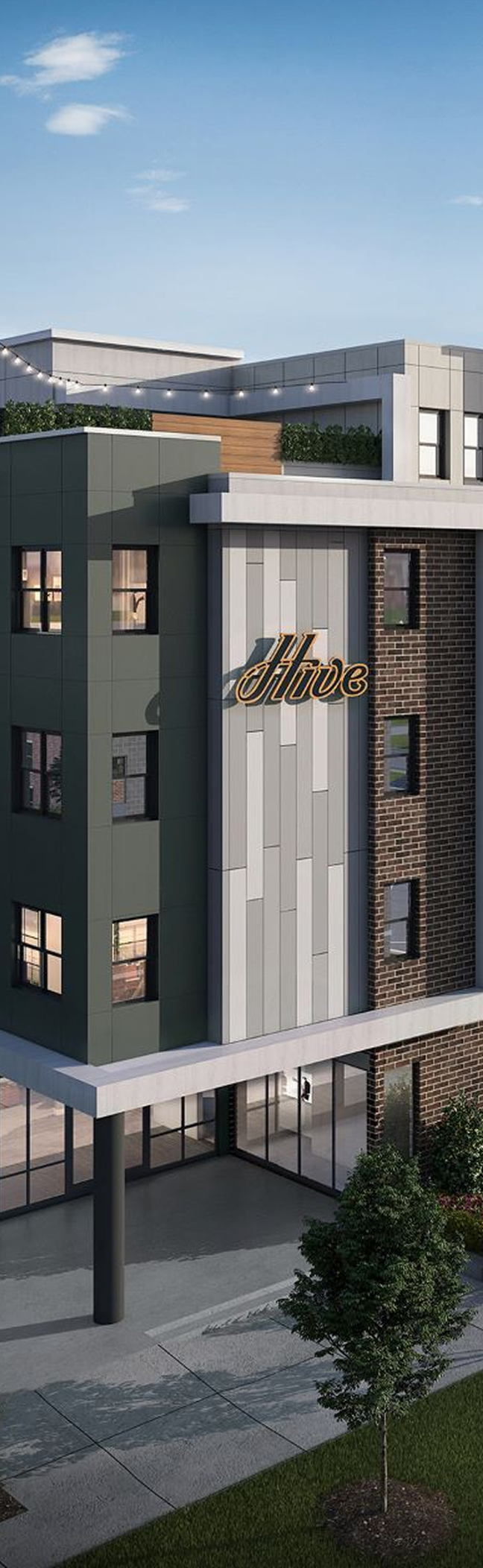
Urban infill developments featuring integrated retail, structured parking, and highly amenitized common areas continue to define much of the modern student housing pipeline.
Christopher Epp
Construction slowdown and future recovery
Supply remains active in select university markets, but construction starts have slowed meaningfully relative to the prior cycle.
As construction starts continue to slow across many university markets, the sector is gradually positioning for an improved supply-demand balance beyond 2026.
Markets that experienced heavy deliveries over the past several years are expected to normalize over time as leasing absorbs new supply and development pipelines moderate.
.png)
An evolution of student housing
Student housing has evolved from utilitarian apartments into a competitive, experience-driven asset class. While luxury amenities once defined the sector, today’s market increasingly prioritizes functionality, convenience, technology integration, walkability, and affordability.
Students and families continue to value well-designed private spaces, technology-enabled environments, proximity to campus, and communal areas that support well-being and academic success.
This evolution mirrors broader trends in residential real estate: the most successful assets are those that deliver quality of life at a reasonable price point, not necessarily those competing solely on amenity count.
For investors, differentiated product, strong location, and operational efficiency continue to command pricing power regardless of where the market sits in the cycle.
Policy, regulatory, & macro considerations
Interest rates and capital markets normalization
As interest rate volatility has moderated, capital has gradually re-entered the student housing sector with greater selectivity and underwriting discipline.
Investors and lenders are increasingly prioritizing basis protection, supply visibility, and durable operating fundamentals over aggressive growth assumptions. The sector’s annual lease-reset structure and enrollment-driven demand profile continue to position student housing favorably within the broader living sector.
Insurance, taxes, and operating costs
Property insurance costs and real estate tax assessments remain key underwriting considerations, particularly in coastal and high-growth markets, where operating expense pressures continue to influence investment decisions. These factors are contributing to more conservative underwriting assumptions and greater emphasis on in-place operating performance.

.png)
Construction financing selectivity
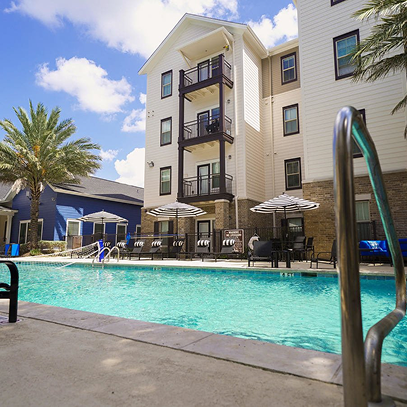
Construction financing remains available for high-conviction projects at flagship universities, though lenders have become increasingly selective in markets with elevated deliveries or uncertain lease-up conditions. This tightening in development financing is expected to contribute to slower starts and improved supply-demand balance over time.
Housing affordability backdrop
The cost of homeownership remains materially above renting in many markets, continuing to support renter demand across the broader living sector, including student housing. At the same time, students and families remain increasingly price-sensitive following several years of elevated inflation and rapid rent growth.
Local incentives and tax structures
Targeted municipal incentives and tax abatement structures continue to shape long-term operating economics in select university markets.
.png)
.png)
Strategic opportunities
How this cycle progresses
Deals are happening because basis has reset, financing is available, and timing, liquidity, and capital structures are converging.
The best assets and sponsors continue to have options; weaker assets and oversupplied markets face a narrower path to recovery.
As supply pressures ease and capital continues to work its way back into the market, normalization is expected to progress through a range of capital markets solutions and a phased equity re-entry, supported by the structural demand for purpose-built student housing.
Returns are driven by patience, basis protection, and execution rather than leverage or assumption-driven growth.
WHAT YOU CAN DO

Buyers
- Target assets at supply-constrained flagship universities with durable long-term fundamentals.
- Underwrite normalization and recovery rather than outsized rent growth.
- Prioritize basis and income durability over leverage-driven returns.
- Opportunistic investors may find attractive entry points in supply-heavy markets as repricing continues and near-term deliveries are absorbed.

Sellers
- Monetize assets where buyer underwriting supports pricing beyond third-party views.
- Consider sales where forward upside is limited despite strong current pricing support.
- Evaluate recapitalization structures as an alternative liquidity path.
- Timing remains critical as pricing dispersion widens between supply-constrained and oversupplied markets.

Owners
- Leverage current credit market liquidity to create time and flexibility.
- Evaluate recapitalization and refinancing options to preserve optionality.
- Maintain operational flexibility as fundamentals and capital markets continue normalizing into 2026–2027.
.png)
Long-term sector positioning
Student housing continues to benefit from durable enrollment-driven demand, annual lease-resets, and strong institutional interest in flagship university markets.
As supply moderates and underwriting discipline returns, the sector is positioned to enter a more stable, fundamentals-driven phase of the cycle.
The result is a market defined by local execution, disciplined capital allocation, and long-term operating fundamentals rather than broad-based rent acceleration.
Our People
Our Student Housing Experts
Walker & Dunlop’s student housing specialists bring unmatched experience, on-the-ground intelligence, and capital markets connectivity to help clients identify opportunities and execute across the full investment lifecycle.







$14.7bn
Student Housing Debt Financing Volumes since 2016
$12.3bn+
Total Student Housing Property Sales Volume
#3
Freddie Mac Student Housing Lender in 2025
.svg)
Discover expert commentary on commercial real estate, leadership, capital markets, and emerging opportunities. Explore the research, analysis, and industry conversations helping investors and operators navigate change and identify what's next.
- As student housing stabilizes, these markets are pulling ahead

- Five takeaways from NMHC: The state of student housing
- Key insights from the Interface Student Housing Conference
Subscribe to receive the latest news, insights, and future Outlook releases from Walker & Dunlop.

Hosted by Willy Walker, Chairman and CEO of Walker & Dunlop, the Walker Webcast features conversations with leaders shaping the global economy, spanning capital markets, real estate, and select asset classes influencing long-term growth.