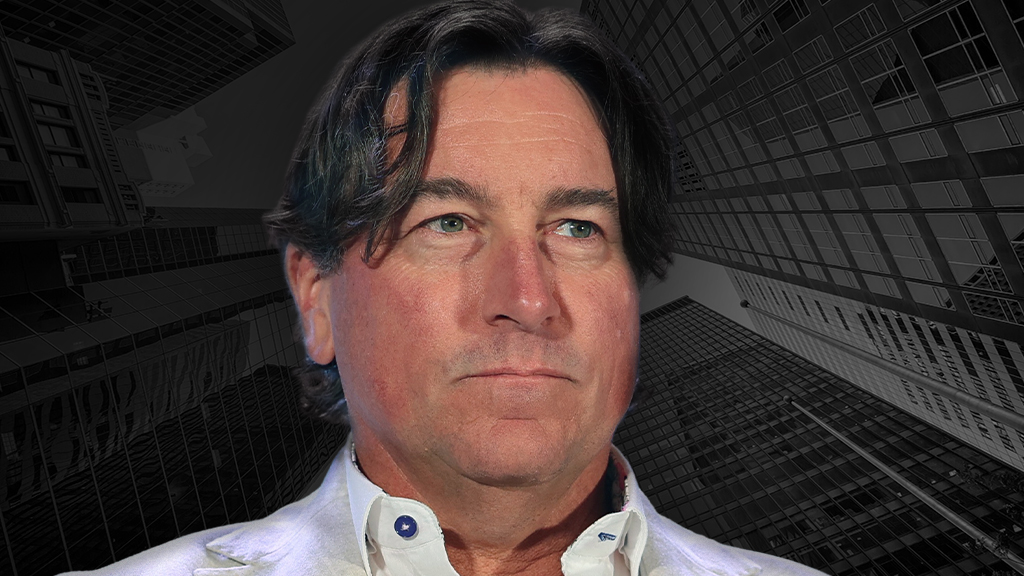
Willy Walker:
Good afternoon and welcome to another Walker Webcast. It is great to be back and be live. I've done a number of taped webcasts over the past couple of weeks, given my guest schedules, and it is nice to be both back in Denver and back live with my guest Chris Crosby, today, the Chief Executive Officer of Compass Datacenters. Chris, it's great to have you. Let me do a quick bio and then we will jump into our conversation on a topic that is about as timely as anything we can be talking about as it relates to our overall economy, the built world that you and I both live in, work in, and then also where this technology is going and what the implications to our world are and having someone like yourself who is not only so deeply involved in it today but saw all of this stuff coming a long time ago is a real privilege. Thank you for joining me.
Chris Crosby started Compass Datacenters in 2011 to take a new approach to data center development. His vision was to focus on greenfield projects and deliver customizable, scalable, sustainable, and low-cost data centers in an expedited time frame. Chris's bold vision and corporate culture centered around four core convictions from which the company has never wavered. Compass has grown from completing its first 1.2-megawatt data center in 2012 to serving the campus-level hyperscale market today with developments underway around the globe. Compass is backed by KKR, Brookfield Infrastructure, and Ontario Teachers’ Pension Plan and delivers rapid, sustainable digital infrastructure. Compass's success is the result of Chris's vision, a strong cultural foundation, and a talented team of innovative thinkers.
So, Chris, you started all of this back in 2012. I mean, most people didn't know what a data center was until like 2021 or 2022. How'd you see this wave coming? How'd you get into this space to identify an opportunity long before others had even thought that there was something to do here?
Chris Crosby:
So, I started my career in telecom with Bell-Northern Research, the "Big Nerd Ranch.” I was a member of the scientific staff as a programmer back then and lived through the telecom boom. That was the R&D arm for Northern Telecom.
So, lived through the telecom boom. And when the telecom crash occurred in 2001-2002 type of time frame, I had gotten engaged with Carlyle Group. They had some assets on the West Coast that we had put some telecom switches in, and that was the advent of really the data center space. It was the One Wilshire building in downtown LA was one of the facilities I worked in. And that turned into work there for about a year until I got fired and then started with a little group called GI Partners, which was a private equity fund with Rick Magnuson and Mike Foust. And then we started that side. That became Digital Realty Trust. We took that public back in 2004, and that was the advent of enterprise co-location. Before that, really companies had kind of built their own data centers. It was mostly financial services and government and/or IT closets at the end of the day. And we kind of created the wholesale data center model.
Then, cloud happened in the late 2000s, cloud really started to happen. And the business that I had set up had done a ton of brownfield at Digital Realty and Carlyle before that, but hadn't done a lot of greenfield, hadn't really applied my heritage, which was manufacturing principles, and that whole world into the world of real estate. And so, I'd listen to a lot of people tell me how real estate's different, real estate's different, and real estate's really inefficient. It's a negative productivity over the last 75 years. It's the only labor vertical that has had negative productivity. It's a very litigious-oriented industry. And so, trying to bring the concepts of looking at a business that needed to scale, bringing the concepts that have worked very well in other industry into this industry, but then having had the experience, the scars that are necessary in order to development, because development is not for the faint of heart or the inexperienced. It is a very difficult business in and of itself.
That was the genesis behind Compass. I would love to tell you that I predicted AI. I studied about it back at computer science at the University of Texas, but many, many generations ago, but could not have predicted the impact of what I think is the greatest enabling technology since electricity. And so yes, it looks a little smart in that we've built a very scalable business, but I'd be lying to you to tell you that I predicted that.
Willy Walker:
When was it, Chris, that what used to be sort of rack space, if you will, turned into data center? As you think about 2012, you were, and correct me if I'm wrong, but my sense of it is that you were really providing rack space and servers. And then at some point it kind of flipped from being rack space and servers to being a true data center with the new construct that is required to drive the amount of compute power that is there today.
When did that happen? Did that happen in '18 or '19, or did that not happen until like '22, '23?
Chris Crosby:
It was actually much earlier. Digital, that whole location was that adjust. It used to be the model of you buy a rack and a breaker damp and things like that. And Digital, we created the model where you bought a whole data center suite. Now, Compass, when I started, it was by the whole campus. It was by the whole entire campus. Now the scale was much smaller, but it would be by the whole building, and then have the land for the expansion for additional buildings.
It's actually been around for some time. It hasn't been that well-known, but Equinix and Digital Realty were two of the leaders on that. Equinix a little more towards the retail side and Digital towards the wholesale side. Now those lines are blurred, but yeah, that was the genesis of it was really in that mid 2000s was when that occurred to start with. And then the scale of things really started to increase in the 2007, 2008 type of timeframe. Although I'll tell you, in 2006, we did a 24-megawatt facility for Yahoo. That was one of the largest ones. The names change over the years of who the technology companies are, but it's been there. It's just been behind the scenes for so long. We haven't been in the front and center of things. And I think that's one of the reasons why we got caught so flat-footed, as things have occurred so quickly on the public side.
Willy Walker:
I want to get to kind of what goes into a data center today and how much of it is compute power versus energy versus water, et cetera. But before I do that, just one thing, given that you were in the telecom space before going into the data center space, the buildout that we're seeing today in compute, Chris has a lot of people sort of looking back to sort of ‘99, 2000, when fiber optics were what everybody was craving for. And companies like Corning that were making fiber optic cabling just had this incredible demand for their fiber optic cables. And then we all know that in 2001 and 2002, that market crashed. And if you look at Corning's stock price, it actually, from where it was in 2000, it didn't recover to its 2000 market cap until, I think, 2022 or 2023. And so, if you want to talk about a company that had kind of peak demand and then just fell through the floor, Corning is a great example.
Is there anything that you see today in the data center space that sort of makes you look back and say, got to be careful that we're not building too much compute here, that we might have a bubble going on in this space?
Chris Crosby:
For the revenue-producing, which is AI inference and cloud and the like, absolutely not. You can't get enough. I do think that on the AI learning side of things, the large training modules and things, we still can't get enough.
We're at a point right now where that analogy, and it's one I lived through, it does fall flat. I mean, you're talking about manufacturers that wanted to have electricity. Let me go back to the late 1800s. You're manufacturers that would love to have electricity and just don't have access to it, don't have it. And so, you couldn't build enough electrical infrastructure fast enough.
And when we're in that position right now, we're so far behind in terms of what can get used by real demand. This isn't that timeframe in telecom where there's no one to pick up that demand. This demand is totally in use. I mean, my knowledge based upon my last talk with the NVIDIA execs, there is yet to be a GPU retired. Like we can't get enough of what's there right now. And are there some question marks about some of the business models? Absolutely.
Without a doubt. But overall demand? No, not.
Willy Walker:
One of the things that I found to be so interesting about Compass and the way you've set up the company is that you truly did see some of the pushback that has come recently in the data center space long before it became reality, if you will, because you wouldn't have had the focus on, one of the things that I love is you talk about being a hundred year neighbor and not cutting corners.
There are plenty of data center developers and hyperscalers who have been accused of cutting a corner here or there, have not been thinking about being a neighbor for a hundred years. And you have set this company up with that very clear strategy. What kind of dividends is that paying today? I know that you had to back out of a big project up in Virginia because of the local authority basically didn't do a great job of getting through the approval process and hadn't gotten the full buy-in that they needed from the local constituents. And there were some historic landmark issues and other things that you had to back out of that one, but has it proved to be a big benefit to Compass as it relates to having taken that long-term view as it relates to being selected to build sites and being selected as a partner versus some of the other competitor firms out there?
Chris Crosby:
Yeah, absolutely. I mean, I use the analogy, it's like building a Red Roof Inn versus a Ritz-Carlton. You're going to do a lot of different things. You want your investment to be on a very long-term basis. We use a 40-year underwriting model for our modeling. We're trying to look not just for that initial term, what's the renewal, and that build-to-exit mentality versus the build-last mentality is quite different in all forms of assets.
If you're going to remodel your home, and you're going to stay versus flip it, you're going to make a lot of different decisions. And so, it's making those decisions consciously on the front end is what's very important in these scenarios. You mentioned the Virginia project; we weren't near those landmarks, that was the other group, but you get rolled into those sorts of discussions.
I do think it's very important for us to be good neighbors. I consider it to be social license. I mean, if you're going to be somewhere for a hundred years, you're going to put infrastructure in place for a very, very long period of time, you better do it well. You want that renewal, you want that long-term, you want to know what happens, not just in year 16, but in year 31, and then year 51. And if you can make those types of decisions, you can get that sort of, real estate in and of itself as an income and perpetuity model, where you better make the things the right way in order to make that perpetuity happen. Otherwise, you're going to be short-sighted, and you've got to ride the wave.
And all I know is watching other forms of real estate where people try to ride the waves and get in and get out at the right time. That looks really hard. We know a lot about what our clients want and what those communities want.
And so do those things, put that in your investing model and make sure that you're covering those things.
Willy Walker:
You've got a 40-year depreciation model on the shell, but there's a lot of talk about the actual compute power inside and what depreciation schedules those should be under. And a lot of talk about some people saying that five years was too short. Other people have now moved it out to seven to eight years, but at the end of the day, you're not seeing anything right now that would tell you that the chip's useful life is actually going to be as short as five years. It seems as if they're going to be used for longer and longer.
How hard is it, as you design these and then build them, to be managing a long-term asset that's got a 40-year depreciable life on it, on the shell and some of the other infrastructure you put in there. And yet inside of it are these assets that have a much shorter shelf life, if you will.
Chris Crosby:
Yeah, that's a great question. And I think it's one of the biggest mistakes that I see people making is that they mismatch asset classes, useful life. And so, you build a building, you build a mechanical and electrical plant infrastructure that matches a three, five, seven-year chip design. And so, how do you retool that for the next generation?
And one of the things we pride ourselves on at Compass is trying to handle all of the different types of loads with a thought towards the future, so that our mechanical and electrical plant is in that 40-year window. And how do you do that? You have to design the buildings appropriately for that. There is a very deep technical knowledge to know how to do that. And you have to have lived through a few cycles. We can do anything from a 10-kilowatt air rack to a 6-megawatt row of water-cooled inside of the same footprint. You have to design that type of flexibility in day one.
Now, that also means that we're not going to serve the bleeding edge of the industry. We're not that far on the Gaussian curve to hit the latest and greatest. We are trying to serve the bulk of things and trying to serve the revenue workloads because we want that longevity of that workload inside of our location. When you look at the amount of infrastructure that comes in, the fiber and the power and the other elements, the workforce, all of those pieces that come into play, you want to design an environment that can do, move, add, and change over a very long period of time very simply. And that's been the approach that we've taken with the modularity that we have and the type of design that we've done that allows us more prototypes that we can mass customize over time as opposed to having to continually retool it.
I use the analogy if it's Toyota building a factory, can they build a factory that is only one very specific vehicle, or do they build something that allows them to have multiple platforms within that same environment? Maybe there's some retooling, but is it fully custom for just one exact vehicle, or are you going to be able to handle multiple ones?
And these data centers need to be thought of as factories. They are very akin to factories. They're living, breathing machines that move, add, and change happens in all the time.
Willy Walker:
One of the things that I'm surprised with is some of the political pushback to the development of data centers. The city of Denver put a moratorium on data center development just recently, and I believe the mayor is going to move to try and get that moved out so there can be continued development. But I've heard you previously talk about this is the next industrial revolution. This is like the laying of rail tracks across the country back in the 1880s and 1890s.
I was doing some looking at what it costs to build a data center, and the numbers are just so incredibly large. But from a human capital standpoint, if you go to an electrician here in the state of Colorado who is working on building an office building or a multifamily building, the average electrician's salary is $68,000 to $72,000 a year to help build that tower of apartments or an office building.
If they were building a data center, that goes up to $100,000 to $150,000. Within some places around the country where there's a real data center boom, electricians can be making between $240,000 and $280,000 a year. And I'm just curious, Chris, are these political tides, if you will, missing a lot of the opportunity here? Because there's a little bit of nimbyism here of saying you're going to tax our electricity infrastructure, you're going to use our water, and they're not thinking about the human capital and the long and enduring aspect to these assets.
Chris Crosby:
Yeah, absolutely. I think one of the good analogies is in the 70s when all the international airports were getting built. And there were communities that just said, no, we don't want it. And it really hurt their community. I don't think that data centers are anywhere close to the environmental impact that an airport is in terms of noise pollution and the types of things that occur. But there's a lot of legitimacy to the questions that are coming.
And unfortunately, it hit with such a wave and so many of the people that were being asked the questions, you combined a spec boom, which is everybody and their uncle is suddenly a data center person now. I don't know how many data center deals you've seen. I would imagine it's a gazillion. If you and I went and said, hey, we'll build an oil refinery because I got some land in Beaumont, Texas, we wouldn't get a place on the grid queue because we're not qualified to do that. And yet everyone and their uncle got a grid queue place. We have a grid that has 80% to 90% of the load growth that's being claimed is false. It's not real because it's from people who have no capability to build. They don't have funding. They've never done it before. And all they're doing is getting their grid queue spots and then trying to sell it to people like us. It's pure speculation.
Unfortunately, the scale of that has created focus where now everybody's like, holy cow, we got to build all this infrastructure. What are we ever going to do? And now that's changing policy. And then when you go back to that and couple it with the fact that there are a bunch of players that are new to the marketplace and some that, as you said, cut corners here and there, and you add in a few bad stories with that amount of policy impact, because that's impacting everybody, you've got a recipe for what we're in right now.
And our job as an industry, and where it starts with us is to be transparent about what we are doing. I mean, a lot of the questions that I get asked on this stuff are akin to what's your favorite color, circle, or square? Like, I can't answer your question. We get asked all the time, well, are you going to agree to stop using water? We've never used water, ever, in the history of our company. We've never used water. How would you like me to answer your question? Are there people that use water? Yeah, it costs them less in their power bill. Well, great. Those days of being able to do that are over. You either need to pay for the water infrastructure or not. You took advantage of something, that's fine. I grew up in Texas. I know water is a precious resource. I've lived with droughts my whole life. As a decision for us to be able to build anywhere that we wanted to build, we've always made water something that we don't use. Those are conscious decisions that you can make as a Class A developer.
And there are so many of these elements that come into play. Will you pay for your power? I'd love to pay for power. Let's take Texas as an example. Every consumer is forced to pay transmission costs. I offered the Public Utility Commission $100 million to not have people have to pay for transmission costs that we would like to pay for. The answer is no, because there's a law that says we can't do that. There's a lot to this because it got so big, so quickly. And I think that's what happened. I try to temper it. Do I get frustrated with some of this stuff? Absolutely. Do I like politicians telling me this doesn't create jobs? We have over 20,000 permanent jobs that have been created because of Compass. Over 20,000 permanent jobs. Those exclude the construction jobs. Don't tell me that we don't create jobs. And please don't be elitist to tell me that these construction jobs that go on for five, six, seven, eight years aren't real jobs. I mean, you just brought up the election. I mean, these are real careers. These people are unbelievably talented.
Willy Walker:
At a premium. And in many cases, unionized labor as well. So, I mean, obviously in certain states, it's not unionized labor, but in many places it's unionized labor that's getting a premium price for their services.
Chris, talk for a moment about, you talked about both water as well as power. And I want to kind of dive deep on both those for a moment because I do think that there's a bunch of sort of misinformation out there as it relates to water usage and power usage. On the power side of things, I've heard you say that the demand on the grid is, it peaks four times a year, and we're sort of building to those peak loads and that you can get around those peak times. First of all, what are those peak load times? And then what don't people understand as it relates to not having that impact them as a consumer of electricity?
Chris Crosby:
I'll use a deregulated market as an example. So, in a deregulated market, you have these times where, let's say it's really, really cold out, or it's really, really hot out, or everybody comes home and turns on their air conditioner at the same time in a market. Well, that creates a peak load condition. And a lot of times the grid operators are sending out these notices saying, hey, try to keep your thermostats a little higher, or this or that. If data centers can come off of the grid and become a flexible resource, and this is what we've been working on with EPRI, we've been working on it with the White House on the Energy Dominance Committee or Council. We've been working on it with a bunch of these different groups. Leverage the data centers. We put our own backup power in play. Let us come off. I mean, in Storm Uri, 12 people died because there were criminal penalties if you were to run your engines in a planned outage scenario. Well, that doesn't make any sense.
Data centers could have come off the grid in Storm Uri on a planned outage perspective because ERCOT says, hey, look, you guys, and I think this should be at the grid operator's directive, not anybody else. The grid operator says, there's too much risk. You need to go off and run your engines and support your own power. I mean, that's going to save lives, and very importantly, it's going to take those peak timeframes when people were getting hosed on their power bill because all of a sudden their power bill spiked. That's going to go way down because it's going to smooth out that curve.
That's where data centers can be a good resource. They shouldn't be a negative. They should be a positive because we are creating new generation. Over 80% of renewables, that's all come from our industry, from data centers buying. If you want to transform generation, you're going to want us to do it. If you want cleaner power, you want us to do it. We're the ones paying for it. We're paying. We need the new transmission. That can has been kicked by every public utility commission across the country of not paying for deferred maintenance and what needs to get done and upgraded on the transmission. Why not do a public-private partnership? Why not have us who have capital be able to help upgrade these things in a positive manner as opposed to being in a negative manner? It shouldn't be, oh, we can't have this because our power bill is going to go up. If the policymakers have to be honest as well and say, listen, we've deferred this maintenance on this grid for 40 years. We've done nothing with it, and it needs to be upgraded. Well, it has to get paid for by people. We can help to do that.
Willy Walker:
You have on your website a posting of, I would call it a white paper, by a company called E3 that the Data Center Coalition asked them to do, which was to study electricity costs in a number of states across the country to see whether data centers were actually impacting consumer electricity costs. That study came back and said there was no evidence that data centers drive higher residential electricity costs. Is that message getting out there?
It certainly feels like there is a pretty significant percentage of the US population that thinks that this energy consumption is driving their cost of electricity up.
Chris Crosby:
Yeah, it's not. There's other folks that are saying on the data centers that oil has driven costs down, which there's some regions that that's occurred because you're using capacity that wasn't being used. Therefore, it reduced down overall cost.
The fact of the matter is natural disasters and maintenance of this stuff are the things that drive the cost. That's what it boils down to at the end of the day. Those are what those causes of those spikes are. If we're looking at a grid that hasn't had infrastructure investment in a very, very long time, 30 years of no growth for load on the grid means 30 years of no transmission investment. That's a long time. You're running into equipment that's old, and it needs to be upgraded. Where is it going to come from? I posit that our social license as data centers, why not turn that into our winning story? For us to invest along, if I'm doing a $5 billion project, for me to spend $100 million on transmission upgrades makes a lot of sense to me from a real estate perspective. We proffer all the time. We do things all the time for social license. I might have to build an exit off a highway or a fire station or a school in order to get the development that we want to get. I think that makes a lot of sense and is something that policymakers should be looking at.
Willy Walker:
While we're on energy for a moment, to try and scale the amount of energy usage, I asked one of the LLMs how much energy it requires to run a 1-gigawatt data center. It came back with an electricity cost of somewhere between $600 and $900 million a year, which sounds like a pretty big number as it relates to paying for $600 to $900 million of energy. Then the other piece to the equation is that I believe that, for instance, with a data center that Musk is renting out right now, that he just built that was a 1-gigawatt data center, he's renting out right now for $1.2 billion a month to Anthropic. That's $12 to $13 billion of revenue on a fixed cost basis of about a billion dollars a year of $600 to $900 million of energy cost. Then all the water and other things that go into the cost. The margins on that, Chris, are just jaw-dropping right now.
Are those types of margins, first of all, is my back-of-the-envelope math, and what are you going to grok to get my data? Is that about right as it relates to the cost of energy to run a 1-gigawatt center? Then, if you're looking at $12 billion of revenue and $1 billion of operating cost, the margins on these things today are off the charts, but is that sustainable as it relates to that type of margin?
Chris Crosby:
I think the challenge is it's not margin. It's a return on enough capital. The question mark is, can you survive the window? If I charge 10% on that capital that I deploy and that becomes my rent number for everything, am I really going to get back 10 years' worth of that rent, and then am I going to make my return? I think the confusing thing for people is it's not just a return on capital. You have to get your capital back, too. This is one of those areas where I think people look at the numbers. The numbers are gobsmacked. They're hard to get your head around, but it doesn't matter. If Elon doesn't make his money back, he doesn't make his basis back. He's made no money. Now, he may be looking at subsidizing his costs. This is the eating your own dog food, as some of these guys are able to do, where they sell some of their stuff, offset it for a period of time, and then reuse it for their own usage or things like that. That may be how they're doing it. I don't know what his cost basis is for all of those GPUs and all of that infrastructure.
Willy Walker:
The back of the envelope of looking at a number of different projects, I think that it's about, for 1 gigawatt of compute, it's about $50 billion. The range is somewhere between $40 billion and $60 billion to build out 1 gigawatt of compute power. If that's the case, to exactly your point, that $10 billion of margin that I'm pointing out of making $12 billion a year on rents and having to pay $1 billion to $2 billion on your infrastructure, that all sounds great and very high margin at the beginning, but to exactly your point, you've got $50 billion invested in that center that you've got to get a return on and you're amortizing out. I guess that would be the big question right now is there a return on that $50 billion investment?
Chris Crosby:
That's the question. That's the great question with the GPU as a service business model is, can you get renewals, and can you get enough to get back everything? I know for our model, we follow the traditional real estate approach with a longer-term lease, where mechanical, electrical is over that time period.
But once again, we're not making windfalls on that initial term. If you're not getting renewals, I'm not saying you're in trouble, but you're not in a great spot from a real estate perspective. I think we all know that about real estate. Real estate is heavily based upon how well you do to provide a product that your client wants to stay in.
Willy Walker:
Right. As you design these and are building them for a 40-year useful life, and you've been very focused on sustainability, you've been very focused on modular and trying to get as much, I think using your term, trying to get as much on the truck as you can so that everything gets to the site and is ready to go rather than actually being put together at the site. I believe, Chris, that you're at about 70% to 75% modular on the data centers that you're building right now.
Why have you been able to do modular and data centers, and we haven't been able to do modular in any other form of commercial real estate?
Chris Crosby:
I think it's two sides to crazy. One is crazy discipline, because if you have to stay so disciplined to do it, you can't have, oh, it's just a little change. It's just this, it's just that, or you make these little modifications. You have to have a crazy amount of discipline. That crazy amount of discipline can nearly kill a company. I know it did mine a couple times.
The other side to the crazy is you have to be crazy enough to think that you can build that modular product as something that the clients will actually buy. You have to be so all-in committed on it. I think it takes people with a screw loose. Luckily, you're talking to one in order to make that happen.
Willy Walker:
You've done modular on the actual buildout of the infrastructure. Talk through for a moment, if you're building a data center that's going to, I don't care what the cost is, it's $5 billion, it's $20 billion, that doesn't matter. What percentage of the data center is on, if you will, the four walls on the, well, let's go this, land and entitlement, then the four walls, and then the guts of the building?
Chris Crosby:
You're probably 35% land, entitlement, and shell, and power, that sort of stuff. Then 65% is the mechanical, electrical plant, and the other elements that are there. It can vary. I would say we're very efficient at that. I think for some, it's probably more 80-20, but we're probably in that 65-35 range.
Willy Walker:
And it feels like, and correct me if I'm wrong on this, Chris, that the users of the compute today are wildly price insensitive, but very time sensitive, so that as you're building a project, you can say to them, it's going to be cost plus whatever, and that whatever can be, in terms of most other parts of the economy, a pretty healthy margin. Yet, if you say to them, they say to you, it needs to be delivered on July 1st, 2026, you better deliver it on July 1st, 2026, and not on July 2nd, because there are going to be massive penalties there. Is that what's driving the build right now? Am I correct on that?
Chris Crosby:
Yeah. Look, I think a lot of people are taking advantage of that. I think a lot of hot money is taking advantage of that. I don't think that's a long-term winner for you. I think when you try to price the market with the tenants that are out there, and you take advantage of those scenarios, you can do a deal or two, absolutely. But I think you're pretty short-term, and you're thinking if you sign that deal, and you're immediately on the move-out list, because you gouged them on a rate. But there's some of that that goes on. I think there's definitely a lot of short-sightedness that's on that front.
Willy Walker:
As it relates to the bottlenecks today, I've been very surprised, generally speaking, in the commercial real estate industry, that A) tariffs really haven't seemed to impact pricing across the spectrum as it relates to most construction costs have gone down over the last year in commercial real estate writ large. The second is that the immigration policy of both closing the border, as well as the deportation of people from the United States, many people thought that that was going to bring down access to labor and push up the cost of labor. To this point, that is not what has ended up happening at job sites across the country, and that there is still an ample supply of labor and that the cost of labor hasn't gone up.
Are those two comments consistent in what you're seeing in your business and in the data center space?
Chris Crosby:
Yeah. I think, look, if you go back to the first administration, the rehoming from China and the global supply chain crisis, that was the big timeframe for things to change on the cost of the goods. Our making it through that window, that was a much more disruptive window in the early 2020s, 2020, '21, '22 type of timeframe. The rehoming of that or moving things, Mexico, Canada, just how the supply chain got rejiggered, that was the big change. That's why I don't think you see the tariff impact.
The second thing was, I think it was way overblown in terms of thinking where the level of professionalism and things were at commercial construction just in general. Residential construction is quite different than commercial construction. That broad swath that was done because of immigration policy, it's been above board forever. It's never been in that category.
Willy Walker:
Interesting. On water, Chris, you talked about the fact that you all have been building these data centers without using water. Explain that because water is one of those things that I think a lot of people are now very concerned about, particularly in the Western states, where water is such a precious commodity.
I certainly know here in Denver, Colorado, with the wildfires going on in the Mountain West, that water and water usage is a big concern. I'll bring a little bit of data into this as it relates to the backdrop on water usage because I kind of went down a rabbit hole as it relates to how much water we use in all sorts of parts of the economy. Before I get to that, how is it that Compass isn't using water from a cooling standpoint inside the data centers you're building?
Chris Crosby:
I don't think you have an open cooling tower for your house. You use this amazing thing called a refrigerant. We have other technology. We have plenty of other technologies. There are dry-cooled chillers. There's refrigerant. We happen to use a refrigerant-based system at Compass, a pump refrigerant system that we've used for quite some time. It's using technology to cool. There are ways to cool. The cheapest way to cool is to use water and let it evaporate. That's the cheapest way to cool. If you were going to do something at scale, that's a very cheap way to do things. I don't know that it's always the right way how to do things, but it is the cheapest, and it happens to be the most efficient from using electricity perspective. You don't need electricity for evaporation to work. The combination of that being cheap and not using electricity led to a lot of evaporative systems.
I would say most of the class A developers, my peers and things, nobody's using evaporative cooling. Now there's some of the new guys in the space are doing it and some of the large hyperscalers are still doing that, but it's not the norm.
Willy Walker:
Super interesting. And what's the cost premium, if you will, or 10%?
Chris Crosby:
It costs you 10%. It's anywhere from, depending upon the climate that you're in, 5% to 10%. You're doing it as a cost decision. But when you factor in the total thing of water, the fun thing about water, Bob Bowcock's our water guy. He was the Erin Brockovich trial person. And the amazing thing about water is it costs you nothing to make impact on watersheds. We can treat stormwater better. Our investment on these sorts of things is so small. We're working on a water tower at one of our locations for a community that didn't have a water tower. These are great investments that we can make. And I think this is an area where we're just falling flat on our face because these are easy investments. We can upgrade water infrastructure anywhere. I've mentioned the electricity of bringing $100 million to the table. Well, $5 million in water infrastructure goes a really long way. It's a really easy thing for us to work on for our social license.
Willy Walker:
It's really interesting. I want to throw out a couple of stats that I got while I was looking at this because when I saw that you all were waterless in your cooling, I was like, well, what about those who are using water? The data I got back was that on a data center of 10 to 20 megawatts can use up to about 110 million gallons per year for cooling if it was just using a normal cooling system like you are.
You have a Dallas data center, a data center just outside of Dallas that has about 360 megawatts. That would, if you were not doing what you all do, would use somewhere between 500 million and 2 billion gallons of water a year. And I was like, how do you size 500 million or 2 billion gallons of water per year?
And so, Boulder, Colorado, right up the street from here, a town of 100,000 people, a small city, uses about 3 billion gallons of water a year. And so, you kind of look at that and you're like, wow, that's a significant amount of water if your data center was being water cooled rather than using the cooling systems that you're using. And so, I do think that, I mean, to your point, the 10% premium and those who are trying to develop without it, obviously that message isn't getting out there because there are many, many people who sit there and say they're going to push up our electricity bills, which isn't, that's a false narrative. And they're going to use all of our water and push up our water bills. And that's another false narrative, particularly for someone like you.
Chris Crosby:
Yeah. And those are some of those questions that are hard to answer. It's like if people come in with assumptions instead of looking to learn, it's hard. I think the biggest shift that communities need to make, and what we're trying to educate around, is communities should be asking for things. Like, there are a lot of things that we can do for your community. And I think asking for those bars and eliminating those developers that simply aren't qualified. You should be eliminating people. If you want a Ritz-Carlton, don't allow a Red Roof Inn into your community, and hopefully, a Red Roof Inn CEO is not listening to me.
But it's just one of those things. It's like you're in an opportunity to ask, yes, our industry is driving GDP, period. Like it is driving GDP. That's the opportunity. This is the time frame. We're in a growth mode. And so take advantage of it. Public-private partnership. If you look at electricity and what happened with manufacturers and things, that's how that was built out.
The British Empire did public-private partnerships with manufacturers and became a dominant powerhouse, like for manufacturing, which is crazy out of this little tiny island. And the Sultan of the Ottoman Empire said, no, electricity bad. How'd that work out? The Turks are, that's not a that the Ottoman Empire died and the British thrived. We have that opportunity here. I think the communities need to ask, are there going to be challenges? Sure. Do data centers look like the Taj Mahal? No, they don't.
But get the right setbacks. Ask for the right setbacks, ask for what are the things that we're doing in those community? What are those extra things that that community needs? We just did an animal shelter in Ellis County. The SPCA closed down. They needed an animal shelter. We have an allocation of funds as part of our development that if the community really needs something, it's there. That wasn't strings attached. That wasn't just being a neighbor.
I think it's things other great real estate developers have done throughout time. I mean, infrastructure is never going to, the Eiffel Tower, people hated looking at it. Like nobody wanted the Eiffel Tower. Nobody wanted the Golden Gate Bridge. Nobody wanted the Hoover Dam. Now people pay money to go visit them. Great infrastructure, if it's done well, it's done well.
Willy Walker:
I love your historical context to British manufacturing. One data point on that, I was in the UK last week when they lost their, what is it? Seventh prime minister in the last eight years, maybe it's their sixth prime minister in the last seven years. I think that's it, sixth in the last seven years. And per capita GDP in the UK in 2025 fell below the lowest US state, which is Mississippi, on a per capita GDP basis. If the UK were part of the United States, it would be the 51st state as it relates to per capita GDP. And it's just quite something. That's the world's sixth-largest economy that has now fallen down on a per capita basis. They haven't grown per capita GDP in the UK since 2007.
You were talking about the growth of their industrial complex back in the day, and it's just amazing what's happened with the UK. The one other thing that I was going to just put out there as it relates to our investment in infrastructure, I believe in 2025, the investment in data centers is about 1% to 1.2% of GDP. And I've heard you talk previously about the railroads and about this is the next industrial revolution for the United States. Back in the heyday of the buildout of the railroads, they were responsible for somewhere between 4% and 6% of GDP. The order of magnitude of the investment back then was dramatically larger as a percentage of GDP than where we are with data centers today. And the one other piece to it, Chris, that I thought was interesting was when they built out the railroads, they used eminent domain in many instances to just take over land and take it away from agricultural usage to lay the tracks down.
And to your point that you've made a number of times is that our governments, whether it's federal, state, or local, are not taking advantage of the offers that the data center industry is providing them with to upgrade the grid, to make investments, to do things. And it's the complete opposite of what happened during the industrial revolution, where there was actually a taking by both federal as well as local governments, as well as by private enterprise, to build out the railroads, where this is now an offer of capital from industry like yourself that seems to be turned down consistently by local and state authorities.
Chris Crosby:
Yeah, it's a great point. And it's one of the things when we left Prince William County in Virginia, I said, look, if they don't want us, we're not going there. We'll take our capital elsewhere. And we'll go to communities like Meridian, Mississippi, that are thrilled to have us. And we are investing in that community, or Red Oak, Texas, or Hoffman Estates, a suburb of Chicago, where there was an old Sears headquarters that had been there. And we want to be part of the communities that we're in. We want to be long-term job creators. We want to be places where there's continued investment and growth that comes as a result of us. And I think that is what's being missed by the politicians, is that just ask, like ask for things, raise the bar for the industry.
At some point, the industry always says no. It always goes too far. But right now, to say no to it and say moratorium is crazy to me. It's not serving your people.
If you're truly trying to serve your communities, serve them. Put conditions around it. Don't let them build right out to the property line. Make sure that your noise is down low or tell them that they can't use water. I mean, there are basic things that can get done that seems so common sense. And for whatever reason, whether it's the right or the left right now, common sense just isn't that common. And we, as an industry, have the ability to make so much impact and transform the economies, the job markets. We just opened a vocational school with Texas State Technical College yesterday that we donated a $12.6 million building for teaching trades. And nobody asks us to do that. But like, we're replicating that program in other markets. Like, let's do more.
Let's make an impact.
We're blessed to be in an industry that's growing. And the opportunity set in front of us for continued social licenses, we need to be alongside these communities. And that's my call up to my peers. And most of them are doing a lot of great things. It's getting drowned out by a lot of new folks, a lot of speculators. And some folks that frankly aren't doing the right thing. We agree, you should hold those people accountable. They shouldn't be allowed in the queues. They shouldn't be allowed to get their sites permitted. They're doing lousy things. They should be held accountable for it.
Willy Walker:
One of the things, Chris, that I've been so impressed with is the way you've built Compass and the culture you have instilled there. I'm sort of big on leadership, and I'm fortunate to have a ton of great leaders like yourself on the Walker Webcast. Some of the slogans that you have as it relates to building to be a hundred-year neighbor, built to last, humility in pride out.
I can tell that you're, you're very good at being very consistent upon. There are certain things that your company stands for in the way that you lead your company. One of the things that I was most impressed with is that you still welcome and do your cultural training for every new class of employees that comes to you. And that's actually something that you and I share. I do the same thing here at Walker & Dunlop.
What else do you do that's somewhat unique from a leadership standpoint that keeps your company growing and keeps you kind of centered on the core principles that you built the company around?
Chris Crosby:
Yeah. We have a chief culture officer and we have a lot of formal training. I would say we hire and fire for culture. We don't hire and fire for performance. If somebody's high culture and low performance, we have them in the wrong job. It's our job to fix that. But high performance, low culture, they're not going to be here.
And I think that that discipline and genuineness around it, it's got to be held on to a 100% that that's what sets us apart at the end of the day. It's what makes us different is that we hold firm to that independent of anything, whether it's customers, external pressures, or investors, this is our most important thing. This is the thing that we want to do day in and day out. And I think that genuineness to hold onto that and really make that real is what's helped us to grow and continue to grow at the level that we have, with the consistency that we've been able to grow.
Willy Walker:
And is being private, given the amount of capital that is needed in the industry right now, is being private an advantage or a disadvantage? I mentioned the top, some of your big investor base. You clearly have access to capital, but there are moments where you say, I wish I were in a public format to be able to raise capital in a, in a more sort of efficient manner.
Chris Crosby:
Talking about being public and having done that before as an officer at Digital, living by the queue is not something I would look forward to. I don't want to live by the quarter. I think we have a very long-term view and I think as a company developer owner, development is always sort of frowned upon by the public markets. I think for a stabilized vehicle, is that a potential option at some point in time? Absolutely. But the capital itself, it's a part of our supply chain. It's a key part of our supply chain, but it is part of our supply chain.
Willy Walker:
I was with Jeff Blau of Related a couple of weeks ago and we were talking about, they'd gone out to raise capital for a multifamily development that was 450 million bucks, something like that. And it was getting a bank syndicate and everyone was saying, I'm going to take a hundred million, but I want to lay off this piece of it. And it was just a kind of a typical syndication. And it took a couple of weeks to get it all put together. They got it all put together. And then they went out to raise $14 billion for a data center, and they raised it overnight.
And it was just like, really, it's just unbelievable. The orders of magnitude and the amount of capital that's moving here with that as the backdrop, I would assume that capital isn't an issue for you today, just given the amount of capital that's moving into the space. And so, you don't really have that con, if you don't really have that tension point of public versus private right now, the question would be: do those capital markets stay in place so you can access that capital as readily as you can today?
Chris Crosby:
Yeah. I think the hard part for us was really setting up the conveyor belt, the version where there's different debt costs or debt elements and then equity elements as things move through that pipeline from speculative land all the way through to stabilized assets. And so, for us, it was setting up the platforms for it. That was hard. We finalized the last platform last year with KKR on things on the equity side. And, it was really getting this to be an engine that's a perpetual engine versus project level capital, and then JV capital on each individual asset.
The key, the thing for us, was to really have it be underneath the Compass umbrella. That was definitely difficult to try to get that to go. I think the project-level capital is very easy in this world, but how do you really create a long-lasting enterprise? Once again, in that built to last version, if I've just sleeved off every single piece, how do I represent back to my client that I'm one owner when everybody's got different priorities. That was the hard part for us. I think we were very successful in doing that. Brookfield and Ontario Teachers have been great partners for me at the top level. And we've got a really good mousetrap now. That's a fun board meeting. We have great alignment. And I can definitely tell you that throughout my career, that has not always been the case.
Willy Walker:
So, Chris, final question for you, which is that, as you look out right now, it feels like there are no sort of flashing red lights right now, as you look at your business and what you're doing, that the demand curve is as sort of far as the eye can see. You're building into a very healthy demand side of the business. We talked a little bit about labor and the fact that labor is still showing up at job sites. We didn't talk a lot about supply chains, but you've done a lot to use Kaizen and model it off of Toyota, and try to use real-time delivery of your supply chain. And then I did mention that you're putting about 75% of the actual fabrication on the truck rather than at the site. And so, you've done a really great job of putting all that into the factory and not out on the job site.
It seems like that everything right now is kind of humming along. What's the, what's the concern? What's the thing that keeps you up at night right now, as it relates to, well, if this happened, that would sort of send a curveball to the industry.
Chris Crosby:
A year ago, I spent none of my time on policy and politics and it is our tail risk. Our social license is at risk, and we have to figure that out as an industry. And I'm spending 80% of my time on it. We have an obligation for transparency. We have an obligation to communicate things and we have an obligation to share the positive sides as well as just the negative sides. Our industry's on the secrecy history, but it doesn't mean we could be secret anymore. And we need to break out of that mold and do the right things in order to have the social license to continue to deliver. Otherwise, we run a risk in which we have something that hits us out of left field that we didn't even wait, what do you mean? Where all the growth, where all these positive things, where did this come from? And so, that's where I'm spending most of my time.
Willy Walker:
Chris Crosby, it's been a real pleasure. Congratulations on all that you've built. Thank you for sharing your insights on the industry and how you built what you have built. And I really appreciate you joining me today.
Chris Crosby:
Thanks, Willy. Appreciate it.