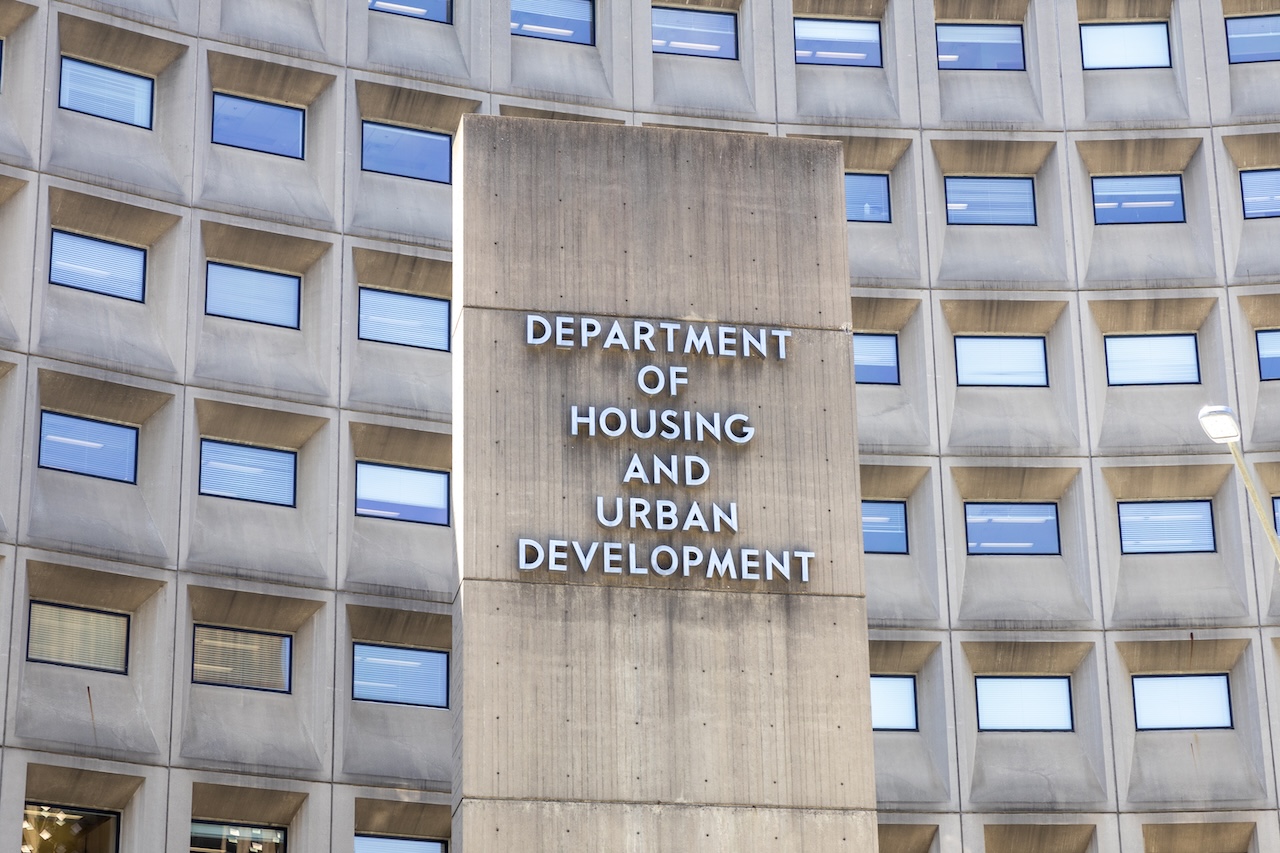
In a major policy shift, the U.S. Department of Housing and Urban Development (HUD) has announced that all Mortgage Insurance Premiums (MIPs) for its multifamily programs will now be set at 25 basis points, the lowest statutory level. This across-the-board reduction streamlines HUD’s pricing model, eliminates programmatic inefficiencies, and enhances access to long-term, fixed-rate capital for borrowers nationwide.
For both existing and prospective HUD clients, the change brings significant benefits. Walker & Dunlop’s HUD team is here to help you capitalize on this opportunity.
A simplified MIP structure
Prior to this change, MIP rates varied depending on the characteristics of the transaction:
- 65 bps for standard market-rate deals
- 35 bps for affordable housing transactions
- 25 bps only for projects that qualified for the Green MIP incentive
While the Green MIP offered the most attractive pricing, qualification required expensive third-party reports, extensive documentation, including utility data not always available in many markets. This created barriers for borrowers and slowed the time to close.
With the new policy, HUD has adopted a single-tier structure: 25 basis points for all multifamily programs. This means:
- No more burdensome utility data collection or ongoing compliance requirements
- No differentiation between affordable, green, or market-rate projects for pricing
- A more efficient and equitable process for borrowers
Financial implications: increased proceeds and long-term savings
The reduction in MIP has immediate financial implications for borrowers. Lower insurance premiums reduce the debt service burden, which in turn can increase loan proceeds. For example:
- On a $40 million HUD 223(f) loan, lowering MIP from 60 bps to 25 bps results in $1.88 million in additional loan proceeds
- On a $40 million HUD 221(d)(4) loan, reducing MIP from 65 bps to 25 bps can generate $2.2 million in additional proceeds
In percentage terms, loan proceeds on 223(f) transactions may increase by roughly 4.7%, while 221(d)(4) deals can see increases of 5.5%.
This MIP reduction is equivalent to an interest rate drop of approximately 43 to 47 basis points, for market rate transactions without altering the interest rate itself. This delivers a substantial improvement in overall financing economics.
Streamlined processing and broader access
Another key benefit of the 25 bps rate is improved processing timelines. Previously, projects seeking Green MIP pricing needed to engage third party energy reports that could cost upwards of $40,000. They also had to submit detailed documentation, including whole-building utility data from providers, and oftentimes, additional costly repairs were necessary to option certification. In many states, including Texas, Florida, and Louisiana, obtaining this data was either difficult or impossible. As a result, borrowers were frequently discouraged from pursuing HUD-insured financing, despite its long-term value.
HUD attempted to address this issue in early 2024 by encouraging utilities to provide more accessible data. However, the lack of consistency and availability remained a persistent challenge.
By eliminating the need for Green MIP qualification altogether, HUD has reduced friction in the underwriting process, thereby accelerating deal execution and expanding HUD financing to a wider range of properties that would not have previously pursued it.
Portfolio performance supported the change
HUD’s decision to lower MIPs across the board is grounded in strong performance metrics from its multifamily portfolio:
- From 2012 to 2024, HUD insured $170 billion in multifamily loans, incurred only $27 million in losses, and collected $3 billion in insurance premiums.
- That translates to a claims payout of just 0.90% of collected MIPs, an exceptionally strong loss ratio.
- As of November 2024, the 60+ day delinquency rate for FHA-insured multifamily loans was a low 0.21%, according to HUD’s own Commercial Mortgage Portfolio report.
These data points underscore the program’s strength and help justify reducing premiums while maintaining sound risk management.
Significant economic impact
The impact of this policy change is far-reaching. According to internal estimates:
- Projects that were not able to qualify for the Green MIP due to cost or cumbersome requirements would now qualify for the low 25 basis point MIP, which should increase overall HUD production volumes.
- Approximately 95% of HUD-insured multifamily transactions were already qualifying for the 25 bps Green MIP, meaning the remaining 5% now gain access to the same pricing without additional requirements.
- Borrowers are expected to save $36 million annually in cash flow, with an estimated net present value of $800 million over a 35-year term.
Walker & Dunlop’s role and next steps
Walker & Dunlop has long advocated for greater clarity and efficiency in HUD multifamily programs. Our HUD team collaborated closely with industry stakeholders and policymakers to support reforms that deliver tangible benefits to borrowers.
We also bring an unmatched track record to execution: as of mid-2025, Walker & Dunlop has achieved a 100 percent success rate on HUD loan executions this year. Additionally, in the past five years, 99% of all deals we submitted to HUD received firm commitments. This consistency reflects the strength of our team, the rigor of our underwriting, and our close alignment with HUD’s evolving requirements.
This new MIP structure is expected to be finalized later in 2025, following a 30-day public comment period.
Talk to our HUD experts today
Navigating the HUD landscape is easier and more rewarding than ever before. With MIP costs lowered, documentation requirements streamlined, and access expanded, now is the time to revisit your HUD financing strategy.
Whether you're evaluating a refinance, exploring development, or simply curious how these changes impact your portfolio, Walker & Dunlop’s HUD specialists are here to guide you. Our team combines deep expertise, national scale, and an unwavering commitment to helping you succeed.
Connect with our HUD experts today to learn how to leverage HUD’s new 25 bps MIP and maximize value on your next deal.
We extend our special thanks to Charley Conkling for his valuable insights and contributions to this article and to our broader understanding of the policy implications.
News & Events
Find out what we’re doing by regularly visiting our news & events page.
Walker Webcast
Gain insight on leadership, business, the economy, commercial real estate, and more.