Willy Walker:
Good afternoon, and welcome to another Walker Webcast. It's my great pleasure to have Dr. Chris Palmer join me today to talk about the brain, mental health, and some of his extremely cutting-edge research on why we may be looking at the issue of mental health, not necessarily through the wrong prism, but looking for solutions to it in the wrong place. We'll dive into that.
Dr. Palmer, let me do a quick background on you, and then we'll dive into our discussion. Dr. Chris Palmer is a Harvard psychiatrist and researcher working at the interface of metabolism and mental health. He is the founder and director of the Metabolic and Mental Health Program at McLean Hospital and an assistant professor of psychiatry at Harvard Medical School.
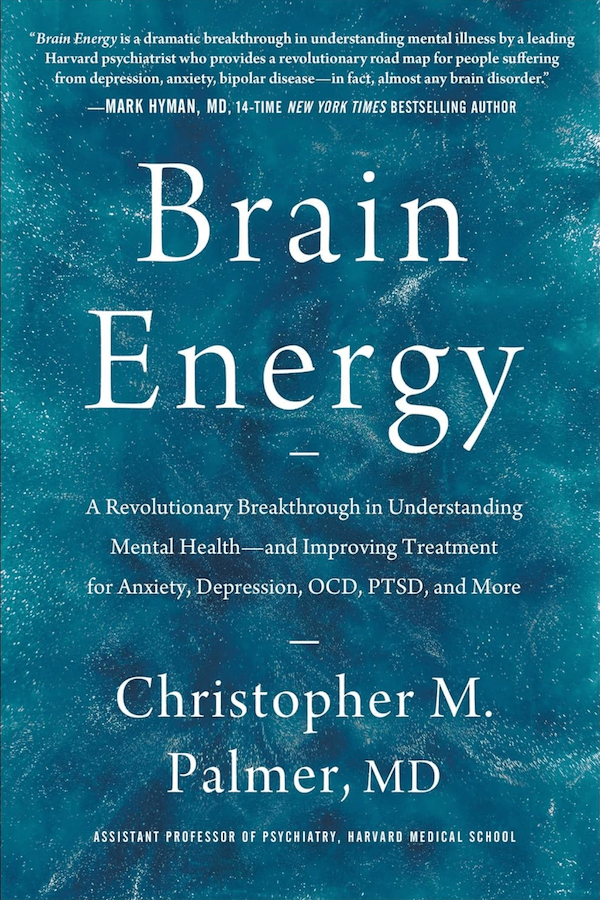
For 30 years, he has held administrative, educational, research, and clinical roles in psychiatry. He has been pioneering the use of the medical ketogenic diet in the treatment of psychiatric disorders. In his book, Brain Energy, Dr. Palmer proposes that mental disorders can be understood as metabolic disorders affecting the brain. Dr. Palmer got his BS from Purdue, his MD from Wash University, and did his residency at Harvard Medical School. He has successfully treated patients with severe treatment-resistant mental illness using metabolic interventions, including ketogenic diets.
Dr. Palmer, I fell off my bike, I had a bike accident a month ago, and I have been suffering from pretty bad headaches afterwards and have taken all sorts of different supplements and tried to slow down and close my eyes and recover. Fortunately, the headaches have subsided quite a bit, and I feel a lot better today than I did a month ago. I will say in the month, it's been very interesting to me to watch my recovery scores that I get from my Whoop, which have shown that even though I was eating well, not drinking, doing the same amount of exercise and sleeping the same, I was still getting recovery scores that were in the red, which was showing me that my body was still trying to deal with the concussion, even though I didn't have a broken arm to say, oh I've got to let it sit for six weeks before it's ready to be used again. That piece of it was fantastic.
But after doing my research on you, I said, gosh, if I knew Dr. Palmer, I would have just gone on the keto diet and I would have started to feel better immediately given all the research you've done as it relates to mental health.
I want to start with this. Mental health has been in your family and is one of the main reasons you went into this field of study. Can we back up a little bit to your childhood and your own experience with it and what then got you to focus on this as you went to Purdue and then went to med school at Wash U?
Because I think that your own personal story gives great insight into why you have been such a breakthrough and cutting-edge researcher in the area of mental health.
Dr. Chris Palmer:
Sure. Cut me off if I get too long, which is a long, long story.
I grew up in Indiana, a large Catholic family. We had eight kids. My father was a pharmacist, and started a pharmacy. For the most part we were living a relatively straightforward, simple middle-class life. My mom had no significant psychiatric problems or issues. Then around the time that I was 12, there were a series of family events, pretty dramatic, almost like a soap opera kind of thing. Nothing that my mother did, but people in our family did that caused overwhelming amounts of stress on her and burden on her. She ended up having what she called initially a nervous breakdown and it started out with what today would probably just be diagnosed as severe depression, quickly included suicidal thinking, and then very shortly thereafter began including delusions where she believed that she was Mary Magdalene reincarnated. The world was ending. The priest that she was going to for counseling was Jesus Christ, who's come back. It's the next coming, Armageddon's coming. The world is ending. Jesus has come back.
In that process, she was clearly diagnosed with a mental illness. She got a lot of help. She was hospitalized against her will. She was put on medication. She took the medication. She was going to psychotherapy. She was doing everything she was asked to do and the mental health field failed to help her.
Fast forward, she never really got better. She lived a very different life for the second part of her life. It led to my parents getting divorced. Through the divorce, she lost everything. She lost custody of all eight kids. She lost almost all of the money and finances and ownership of the business and everything. Then at one point, I went to live with her as a 12-year-old boy. We started out in a rooming house, ran out of money pretty quickly, ended up living in hotels until the credit card maxed out, and then we were homeless. I was living out of the van, living in a Catholic homeless shelter. I went to my first day of high school from a homeless shelter.
I could go on and on with that story, but again, the bottom line is she never got better. I think that, in particular, I ended up having my own mental health struggles, as you might imagine, a 12-year-old being homeless with a psychotic mother, losing my seven siblings. That wasn't fun for me.
At the end of the day, I ended up hating the mental health field. I hated every psychiatrist that had seen her. I hated all the psychotherapists. They all seemed like aloof snobs to me. They were incompetent. It was clear that they were incompetent. They weren't helping her. They weren't doing anything useful. It started with just my frustration, anger, and infuriation at this mental health field that could not help my mother, recognizing how much it devastated her life, how it devastated our entire family, and why aren't these doctors able to do more.
I ended up going on. Again, I had my own tragic history with mental health conditions, suicidality, chronic depression, all sorts of things. Somehow, I find my way into college, do really well in college, dust myself off, get into medical school, do great in medical school, like getting awards for being one of the top students in medical school, and end up finding my way into psychiatry, wanting to change this field.
Willy Walker:
When you went to medical school, was the thought that you would focus on psychiatry, or was there another field that you were headed there thinking you were going to do it, and then you took a hard left turn?
Dr. Chris Palmer:
By the time I went into medical school, I was very convinced I wanted nothing to do with psychiatry. I hated it, hated the field, just saw the whole field as incompetent. I was actually thinking about medicine, pediatrics. Those were the big things. Because I had done really well in medical school, I had different professors mentoring me, kind of coaching me, what are you going to do?
Chris Palmer, what are you going to do? You're one of our top students. What field are you going to go into? How are we going to use this talent?
I remember talking to one of them about psychiatry. I did my psychiatry rotation, and I was equally disillusioned and frustrated at what we were doing to the patients in the clinic. I was horrified at what we were doing to the patients in the clinic. They weren't getting better. I remember talking to one of the professors. I said, I'll probably do medicine or pediatrics, but I don't know, there's something about psychiatry. He quickly corrected me and said, no way, don't go into psychiatry. It's a bunch of quackery. They don't do anything useful. At that point, something in my head clicked. Is that why the field of psychiatry is so awful? Is it because none of the smart doctors go into psychiatry, and it's just filled with all of the people at the bottom of the class? Maybe I can make a difference. I'm defiant. Sometimes, people tell me not to do something and I'm going to even embolden myself and go do it. Realistically, that's where my passion was, even though it was coupled with a lot of frustration. I was passionate about these people with mental illness. They haven't done anything wrong. They don't deserve these lives that they're living. They deserve to get better. And this field is completely incompetent. Why can't they do something? Why aren't they doing better? So I went in with that goal and ambition. Maybe somehow or another, I might be able to make a difference.
Willy Walker:
Always with the thought of using it from a research standpoint to try and improve the field, or potentially from a clinical standpoint of actually becoming a clinical psychologist?
Dr. Chris Palmer:
I've actually had the privilege of doing everything in academic medicine. I've been at McLean and Harvard for over 30 years now. I have always had clinical practice. I worked on inpatient units. I worked in emergency rooms. I worked in nursing homes. I've always been involved in research since residency, in one way or another. I'm also an educator. I'm the director of the Department of Postgraduate and Continuing Education. And I educate other mental health professionals. It's actually been a phenomenal mix for my career. Not everybody gets so lucky to be able to carve that out and have a lot of variety, but it's been amazing.
Interestingly, all three aspects of that inform the other aspects of that. I don't think I would be as good of an educator if I weren't also a clinician. I don't think I would be as good of a clinician if I weren't also a researcher, and I'm not. I think all of those fields really inform the others very well.
Willy Walker:
What was the breakthrough point, if you will, as it relates to looking at these issues through a different lens, focusing on the mitochondria, thinking that there was something other than just, if you will, drugs that can help treat things such as schizophrenia and bipolar and other mental illnesses that you have had such eye-popping success and responses in the clinical trials to treating in what is a very innovative and breakthrough way of both focusing on it and then treating it?
Dr. Chris Palmer:
Essentially, I spent the first 15 years of my career using medication, psychotherapy, hospitalizations, electroconvulsive therapy, all sorts of treatments, and no doubt, for some of the patients that I was treating, they were benefiting dramatically. They were getting wildly better with medications, psychotherapy, or other things. By no means am I here to bash the standard existing treatments, but when it comes to psychotic disorders, like my mother had and like so many of my patients had, the outcomes were usually abysmal.
Even when patients were getting the best of the best care at one of the top-ranked psychiatric hospitals in the world, and they weren't just getting care from me, they were getting consultations from leading psychiatrists and in and out of hospitals, residential programs, everything, and we were giving them medications and all sorts of other things. They were still crazy, if you will. They were still delusional. They were still having hallucinations. They were severely impaired. They often gained tremendous amounts of weight.
They hated the medications. They complained about fatigue. They complained about being a zombie. They complained that it dulled their cognition, and we just encouraged them to stay on those medicines anyway. That was my baseline.
Then in 2016, a patient that I had had for eight years, schizoaffective disorder, he had tried 17 different medications. None of them stopped his symptoms. They made him gain a massive amount of weight. He weighs 340 pounds, and he asks for my help to lose weight. For a variety of reasons, we decided to try the ketogenic diet. At that point, I'd been using ketogenic diets as a treatment for depression and some other conditions prior to that, but I had no hope or expectation that it would do anything for this man's symptoms because he had schizophrenia, essentially. I saw that as almost like a permanent brain condition. The likelihood of recovery and remission is almost nil. He's going to be this way until the day he dies. That's just the way it is. There's something severely wrong with his brain. We don't know what it is. It's just the poor guy.
He asked for my help to lose weight. I put him on a ketogenic diet. Within two weeks, I started noticing this dramatic antidepressant effect. He's making eye contact. He's talking a lot more. He's smiling more than I've ever seen in the eight years I've been treating him. Then the thing that really just changed the trajectory of my career is that about two months in, he spontaneously started reporting that his hallucinations were going away. His longstanding paranoid delusions are going away. He's recognizing that maybe those things aren't true and maybe never were true, and that he's been ill all along, and that his illness is getting better.
Initially, I was in disbelief. I really was. I questioned my own sanity. Fortunately, his father was very much involved in his daily care. He lived with his father. I had another Harvard psychologist doing psychotherapy with him.
I had to go to both of them and say, are you guys seeing what I'm seeing? I'm having trouble believing this. It seems like his schizophrenia is completely going away. What the hell is this? They're like, no, we're seeing it too. You're the doctor. You figure it out. We don't know what this is, but it's happening. We're here to tell you it's really happening. You figure this out.
That really sent me on a journey. I ended up trying it with another patient similar, and she too had equally impressive results. Her hallucinations and delusions were just evaporating.
Willy Walker:
As quickly as it happened in patient one?
Dr. Chris Palmer:
Within a couple of months, yes. I really was just dumbfounded, but I recognized at that point, I can't sit on this. I can't ignore it. For me, it almost felt like an ethical obligation. I have to report this to the world. Initially, I was a little daunted by that because I'm like, well, first of all, nobody's even going to believe me. They're all going to laugh at me. I might lose my job. They're probably going to fire me. Chris Palmer, what kind of a quack are you? A diet treating schizophrenia? That sounds crazy.
Willy Walker:
I know you've been on the keto diet. Had you done it yourself at that point or you just prescribed it and then later did it?
Dr. Chris Palmer:
hyNo, I had done it myself long before. When I was still in my residency, so really almost 20 years prior to this occurrence, I had done it and had noticed significant antidepressant effects for me. That's what clued me in to start using it as a treatment for depression, but I assumed it's a treatment for depression and anxiety, not for schizophrenia.
When I was even using it as a treatment for depression and anxiety, again, I was just so reluctant and hesitant to tell the world about what I was doing because I really did think I might lose my license. I might get fired. The world's not ready to hear this.
But over the ensuing 20 years, we got more and more clinical evidence of its safety and effectiveness. Through that process, when I saw it work for psychosis, I really then did a deep dive into the science. Unbeknownst to me at the time, I had not realized that the ketogenic diet is a 100-year-old evidence-based treatment for epilepsy. It can stop seizures even when medications don't work. That was the first really powerful clue to me because I recognized, wait, we use epilepsy medications all the time in tens of millions of people with mental illness. Wait, if this diet can actually stop seizures, maybe there's something really there.
Then I did a deep dive into the science of the ketogenic diet. How the hell does a diet stop seizures? The more I learned about that, then I'm asking, does this have anything to do with a mental illness like schizophrenia? I dive into that literature, and I realize it has everything to do with schizophrenia. Wow, who knew? The dots are really connecting. These puzzle pieces are really coming together beautifully. Who knew?
That really launched the next phase of my career. By doing extensive scientific research analyses, I was able to put together a lot of existing science to make a really compelling case for why people should take this seriously, and why the academic community should take this seriously. To my pleasant surprise, they did. I actually never really got significant pushback from the academic community.
I put the science together, presented it in research papers, and most of the editors and reviewers immediately saw the logic and the clarity of why we should consider this. This field has really, in the last 10 years, absolutely exploded.
Willy Walker:
If you will, talk for a moment about, first, what is the ketogenic diet? What are you eating? What are you not eating? Then walk that through of what it does to your metabolism and to your physiology that has the impact on the brain that you have now both not only researched but are watching in clinical trials that actually do what it's doing.
Dr. Chris Palmer:
The ketogenic diet, for most people who don't know, is very low in carbohydrates, moderate in protein, and high in fat. The ratios can be different for different people. If it's somebody who is really overweight or obese, usually all they have to do is restrict their carbohydrates, and they will be in therapeutic ketosis.
By ketosis, I just mean burning fat and turning fat into ketones, which can be an energy source for lots of cells and organs and tissues, including the brain. Exactly how the ketogenic diet impacts the brain is actually extraordinarily well-studied and researched, shockingly, to most people. Why is that? It's because it's a 100-year-old evidence-based treatment for epilepsy.
Neuroscientists, neurologists, and biotech companies have been studying this diet and its impact on the brain for decades, trying to understand how in the hell does this diet stop seizures. They've usually been looking for new medication targets and other things. They're hoping to develop new treatments based on this. Some of the mechanisms of action that we know are that the ketogenic diet can change neurotransmitter activity. It can reduce brain inflammation. It can improve insulin signaling or reduce insulin resistance. It can change the gut microbiome in beneficial ways that impact the brain. Central to my overarching thesis is that it improves mitochondrial function. It stimulates a process in the body called autophagy, in which old or defective cells or cell parts get recycled, and then the body makes new ones. And part of that process involves mitochondria. Defective mitochondria get recycled, and new mitochondria get made.
And I actually think, based on a tremendous amount of human biology, physiology, there's a strong reason to believe that that may be a central mechanism that's really important that connects this dietary intervention with things like severe mental illness.
Willy Walker:
Two things, if you will, on both sides of that. Do you get the same impact from the diet that you would get from fasting? Then you talked about the mitochondria. Does exercise do the, if you will, transition to the mitochondria that could act as either a supplement or a replacement for the diet?
Dr. Chris Palmer:
Both are really good questions. I'll answer the second question because I'm forgetting this first one.
Willy Walker:
The first one is just fasting versus being on a diet.
Dr. Chris Palmer:
Fasting actually does produce ketosis. The huge difference is that you can only fast for so long, and then you starve to death, and then that's bad. That's actually why the ketogenic diet was initially developed 100 years ago by a neurologist. They knew that fasting could stop seizures, but usually when people started eating again, the seizures would come right back. The ketogenic diet is a fasting mimicking diet. In other words, it mimics the fasting state, but you can definitely get some of the benefits from simply fasting. And you can absolutely incorporate intermittent fasting or even multi-day fasts into the therapeutic ketogenic diet. At the end of the day, especially for patients with something like schizophrenia, it's a longer-term treatment. It's going to be at least a couple of years on the diet. You can't just do it for a few days or a month and be cured of your schizophrenia. It's going to be a treatment for at least a few years. So we need to come up with a strategy to produce the state of ketosis and still provide appropriate calories, nutrients, protein, and other things to help a person remain healthy.
Your second question about exercise: Can exercise be good for mitochondrial health? Yes, 100%. No doubt about it. Could exercise replace the ketogenic diet for some people with some conditions? Absolutely. For somebody who is mildly overweight or has the beginning of insulin resistance or prediabetes or has mild depression or even moderate depression, maybe has brain fog, exercise for some of them can be a monotherapy, meaning that's all they need to do. If they just add vigorous exercise to their routine, that may be enough to correct their condition. I think for people with schizophrenia and bipolar disorder, their illnesses are much, much more severe. We have strong, strong reasons to believe exercise is helpful. It can improve overall health. It can slightly reduce some of the symptoms, but by no means is it at all a competitor to ketogenic therapy for the central hallucinations and delusions and other symptoms.
Willy Walker:
You mentioned that with schizophrenia, you need to be on the diet for quite some time to start to see the improvement. But in the book, you talk about a woman named Doris, she'd been diagnosed as schizophrenic for, I believe, 53 years.
Dr. Chris Palmer:
That's right.
Willy Walker:
In a matter of two weeks, I started to see significant improvements. Is she a complete outlier? Sounds like you don't see that type of responsiveness usually.
Dr. Chris Palmer:
I actually don't. I think she was a unique hyper-responder and was lucky that she responded so quickly, not necessarily so robustly.
Willy Walker:
Was there anything in her physiology that would make it so that it would impact her quicker? You mentioned previously, the first patient that you worked on this with was wildly obese. You would think that it took some while for his physiology to get into the shape where it could start to work there. Was she, from a physiological standpoint, more susceptible to the keto diet?
Dr. Chris Palmer:
Honestly, she too was obese. She was very obese. That's actually why she started the diet at a weight loss clinic at Duke University where they happened to be using the ketogenic diet as a treatment.
Willy Walker:
Just one quick thing on that, Chris. A lot of these drugs that are prescribed to deal with schizophrenia and bipolar actually end up making it so that you do gain a tremendous amount of weight because they're basically trying to slow your metabolism down. Is that in layman's terms? Give it to me in real terms. From my reading on it, that is typically a byproduct of the medicine that is prescribed that ends up having that derivative effect to those people taking it.
Dr. Chris Palmer:
I mean, tragically, the medications have significant side effects. The side effects fall largely into two categories: metabolic, so massive weight gain for some people. For some, it's just mild weight gain, but weight gain is very, very common. Type 2 diabetes, increased risk for cardiovascular disease, meaning your lipids are getting worse, your cholesterol is getting worse, your blood pressure is going up, all sorts of bad things are happening. Those are the metabolic side effects. They also, antipsychotics in particular, often also include neurological side effects, including tremors, tics, Parkinson's symptoms, and other things. Some of those can actually become permanent even if the patients trying to get off the medicines, those neurological side effects can be permanent.
Now, most psychiatrists in our field believe that those are just side effects. I actually would make the argument that, yes, they are side effects, but they are also potentially primary effects on brain metabolism, and that that may actually be how they exert their antipsychotic effect, that when they do work for psychosis, and they really do work for psychosis for some patients, that it is probably through inhibition of brain metabolism. Yes, it involves dopamine and neurotransmitters and other things, but then one needs to ask, well, what happens when you block dopamine receptors? What happens when you alter neurotransmitters in these ways? You almost always are led to changes in brain metabolism.
Back to your question, I think Doris was a rapid responder. Her story was absolutely true. In case we don't share the end story of hers, she had suffered from schizophrenia for 53 years. She ended up being in remission from schizophrenia within six months of starting the diet. She was able to get off of all of her medications, including all of her antipsychotic medications, and she remained well and healthy for another 15 years. She was 70 years old when she started the diet. She passed away at age 85.
It's not that the ketogenic diet stopped working. We had a COVID pandemic. She got COVID. She ended up dying of COVID pneumonia. She did successfully lose about 150 pounds and kept it off until the time of her death. Much more importantly, 150 pounds of weight loss, that's great, but much more importantly, she put her schizophrenia into remission. She didn't have schizophrenia anymore, or at least the symptoms of it. She wasn't having hallucinations or delusions anymore. She was able to function independently in the world. She stayed out of the hospital. She stayed off psychiatric medications. I want to be clear, not everybody gets that kind of a response and a dramatic, almost miraculous response. Not everybody does. I wish they did, but many others do, and I am seeing them. Some of them are actively sharing their stories. One of them went on the Today Show with me. Some of them are going on NPR.
These people are passionate about sharing their story because their stories are hope-filled. They're telling people, don't give up. If the field of psychiatry tells you there's nothing more that they can do, don't give up. Don't accept that as your final answer. Look into these metabolic treatment strategies. Look into ketogenic therapy because it could be a life-changing, life-saving intervention.
Willy Walker:
Just sticking on the weight issue for a moment, Chris, has the development, the advent of Ozempic and other weight loss drugs, been a big help to the psychiatry field in the sense that previously you prescribed it, and one of the side effects would be significant weight loss? Are doctors like yourself prescribing both simultaneously so you don't have the weight loss side effect, which then allows for better general health and fitness?
Dr. Chris Palmer:
It's a great question and an important one. Yes, there is increasing interest in research on using GLP-1s like Ozempic and others to prevent massive weight gain. Unfortunately, most insurance companies won't cover that right now because they say you have to gain massive amounts of weight first, and then we'll cover it.
Interestingly, those weight loss medicines are a great testament to my overarching hypothesis that metabolic health and mental health go together. Those weight loss medicines were actually initially developed as type 2 diabetes medicines. They're actually diabetes medicines that we're now using massively for weight loss. And there are now clinical trials of those medicines for the treatment of Alzheimer's disease, bipolar disorder, schizophrenia, depression, alcoholism, opioid addiction, cocaine addiction, all of these mental illnesses. The trials are not just whether we can mitigate the side effects of the medications. The trials are whether these medicines actually reduce the symptoms of these severe brain conditions. Do these medicines stop the cognitive decline of Alzheimer's disease or slow it? Can these medicines prevent Alzheimer's disease in people who are at high risk for it? Those are the trials right now. That whole field speaks very strongly to this intersection between what we call metabolism and mental health.
Willy Walker:
You mentioned a moment ago, insulin resistance. I heard you talking in a previous discussion about a clinical trial of 5,000 kids between zero and 24 and what you saw when heightened insulin resistance appeared in the kids by age nine. Talk about that for a moment.
My understanding is when someone gets diagnosed with schizophrenia or bipolar, typically it happens by the time they get into their 20s. The diagnosis age average is somewhere in there. You've gotten through adolescence, and you're into your 20s, when all of a sudden it's like this person has some significant issues, and their diagnosis is schizophrenia or bipolar. But you're winding the clock back to an early indicator in this study as it relates to insulin resistance. Talk about that for a moment.
Dr. Chris Palmer:
The researchers followed kids, like you said, from essentially birth to age 24. And they found that the kids with the highest levels of insulin resistance beginning at age nine were 500% more likely to develop a psychosis at risk mental state. They were three times more likely to already be diagnosed with bipolar disorder or schizophrenia by the time they turned 24.
That is a really important study because those kids weren't diagnosed with mental illness at age nine. Something was happening in their physiology that was causing insulin resistance. The way that I think about it is the same things that were causing the insulin resistance were also changing these kids' brains that put them at much higher risk for developing schizophrenia and bipolar disorder.
I just want to point out, a lot of times people talk about genetics, and genetics are a risk. Yes, genetics are a risk. There are almost no genes, very, very few, like a really tiny handful. They are extraordinarily rare genes that confirm more risk for schizophrenia than a five-fold increased risk. This insulin resistance, which is largely thought to be driven by the environment. What do I mean by environment? Lots of things can drive it, food, ultra-processed food, junk food, a lot of sugar, sedentary behavior, high levels of stress and trauma, all of those, poor sleep because you're on a screen all night. All of those things can contribute to insulin resistance when you look around the world today. It's not necessarily baffling why we have an epidemic of obesity and diabetes, and increasingly of mental illness. Mental illnesses, bipolar disorder, in the last 20 years, the rates of severe bipolar disorder in youth and children and young adults have doubled. That's not a genetic problem, that's an environmental problem.
Willy Walker:
When you say insulin resistance, you just mentioned five or six things that play into it. But if I'm a parent of a nine-year-old, what's my marker in the sense of, my kid's not in the study, and I need to be observant of are they sleeping enough, are they eating healthy food, are they getting too much screen time? Does all this come out of, generally speaking, just body mass? Is that where, I mean, could, can you look at it and say from a body mass index standpoint, if a child is over X, you can look at it and say that they are, they have a high imbalance as it relates to insulin? Or is it more detailed than that?
Dr. Chris Palmer:
The real answer, the scientific answer, is it is more detailed than that because you can be thin and still have insulin resistance. It's not a 100% screening tool or 100% accurate screening tool. However, with that said, the overwhelming majority of children and adolescents who are overweight or obese do have insulin resistance. And most thin, otherwise healthy kids who have enough energy to run around and play sports and do other things and do not have overt signs or symptoms of mental illness, most of those kids do not have significant insulin resistance. Again, there can be some outliers and exceptions to the rule, but that is the rule of thumb. Again, tragically, when you look at the data, the rates of childhood obesity are skyrocketing exponentially.
I just want to ask the question, what does that mean for the future of our country? What does that mean for the future of the world? That these people are not only going to be metabolically unhealthy, but more and more of them are going to be mentally unhealthy. And when you are both metabolically and mentally unhealthy, some people can hold a job and pay taxes and do everything they need to, but some of them can't. What does this mean for our society? We're allowing this chronic disease epidemic that we're allowing so many people to become so profoundly ill.
Willy Walker:
I'm assuming that the School of Public Health at Harvard is wildly interested in what you're studying in your research.
Dr. Chris Palmer:
They are, along with, lots of other people. I actually hear from people from the federal government, the state government, advocacy organizations, non-profit organizations. I think there's a tremendous amount of interest in this topic.
And in case it sounds like new or cutting edge to anybody, I just want to reassure you, we have decades and decades of evidence to support what we're talking about. We've long known that physical health and mental health have bi-directional relationships, meaning if you have poor physical health, you're more likely to have poor mental health. If you have poor mental health, you're more likely to have poor physical health. Even though we put them into different categories and we have different types of professionals treating them and insurance companies, sometimes they kind of give different levels of benefit for mental versus physical health. The reality is they are inseparable. And that's really what this research is trying to do. It's trying to integrate it really at the, in a scientific rigorous way, like how exactly are they related, and more importantly, based on that information, what can we do? What can we do to help people restore their health and restore their lives?
Willy Walker:
You mentioned that it's gotten a lot of attention. Secretary Kennedy mentioned your research a couple of weeks ago. Has that been good because it's put a lot of eyes on you and therefore promulgated the research and made it so that lots of people are coming and saying, let me fund your research. Isn't this great? Or has it been the other side of the coin, which has been a lot of naysayers saying, what's going on? This isn't the end-all, be-all of mental health.
Dr. Chris Palmer:
It's interesting because after Secretary Kennedy made those remarks, the New York Times ran a piece within 24 hours, essentially bashing him and bashing all of this. This is nonsense. How dare somebody suggest that a diet can treat schizophrenia? They referenced me in that article. They said they had reached out to me. They reached out to an obscure email that I don't really check. So that gave me the opportunity to reach out to them and say, hello, would you like to interview me? I'd be happy to speak on this. I ended up in the New York Times, not once, but four times over the ensuing two weeks, and lots of other press.
I think when he makes those comments and when people make comments that aren't fully nuanced, which happens every day in our media, like mainstream media, social media, nobody's got time for nuance. Nobody's got time for the details and the caveats and the exceptions to the rule. They want soundbites. So he delivered a soundbite, and people reacted very passionately against it. But the reality is it opened many doors for me that probably would have never, ever been opened before, to the New York Times, to USA Today, to New Scientist, to lots of leading mainstream media outlets. I think that after they had their initial reaction, they initially kind of sought out, is there any credibility to anything you just said? And then they found me in my work, and they're like, wait, this guy's legit. He's a Harvard psychiatrist. Wait, he has published on this in leading psychiatric journals. What? What the hell's going on? I think that opened doors for them to then be curious and interested and to share just to share with people. I shared some anecdotes or some case reports with people, but at this point, we now have over 25 controlled trials recently completed or underway of the ketogenic diet as a treatment for severe mental illness. Two randomized controlled trials of the ketogenic diet as a treatment for schizophrenia just wrapped up. Those publications are going to be coming out in the next six months. And I'm a consultant on one of them, and I'm very excited and eager to see those results released because they are very positive. They are just overwhelmingly positive and even to me in a shocking, heartwarming, surprising way.
But we have randomized controlled trials of the ketogenic diet for the treatment of depression just published in JAMA Psychiatry, one of the leading psychiatric journals in the world, systematic reviews, and meta-analyses. The Wellcome Trust in the UK just funded a $10 million study of the ketogenic diet as treatment for bipolar disorder. It will be the largest dietary intervention ever studied for bipolar disorder. So this field is exploding, and I think among clinicians and scientists, there is wild excitement and enthusiasm because this represents a completely novel new way to think about treating severe mental illness when all else has failed.
Willy Walker:
Any pushback from the drug companies as they see this coming as a potential threat to their revenue streams?
Dr. Chris Palmer:
Not yet, honestly, surprisingly. Some of the drug companies, I think, have almost embraced it as a way to mitigate the side effects of their medications. But for the most part, I won't name names, but I was actually invited by a pharmaceutical company to give a presentation to their internal team on all of this research, and so they're very interested in it, and I was very supportive of that. There is a tremendous amount of science and physiology here, and they can develop new drugs and new targets for treatment, and we can develop better treatments, and I'm all for that because adhering to a ketogenic diet is not easy, and some patients just can't do it despite our best efforts to get them to do it.
Willy Walker:
Is that just from a discipline standpoint? Dr. Palmer, is that a cost standpoint? Is it an access standpoint? As you sit there, and first of all, if you think about fast food in America, one of the big issues here is that to go to Whole Foods and buy a well-balanced meal, it's very, very expensive. To go to McDonald's and buy a Happy Meal for $3.50, maybe it's gone up a little bit from that, is cheap. You get a lot of bang for your buck, if you will, but it's the wrong bang for your buck. Is it the discipline of sticking with it? Is it cost, or is it access, or is it a combination of all three?
Dr. Chris Palmer:
I think it's all three. Unfortunately right now, insurance companies, including Medicare and Medicaid, will not pay for people with mental illness to see a dietitian. The only real indications to see a dietitian, it's not even obesity, believe it or not. If you have Medicare and you are obese, it will not pay for you to see a dietitian. It will pay for your GLP-1; it'll pay a thousand or more a month for that, but it won't pay for a dietitian. The two primary indications to see a dietitian are diabetes and renal disease. If you have diabetes or renal disease, then you can get insurance to cover it, but otherwise, good luck.
Willy Walker:
A lot of those nine-year-old kids with insulin resistance are going to end up getting type 2 diabetes, correct?
Dr. Chris Palmer:
Yes, but insurance won't cover the dietitian to prevent diabetes.
Willy Walker:
Right, it won't cover the 10-year-old.
Dr. Chris Palmer:
They'll pay for it once it sets in, and then it's often much more challenging to address it because the illness has now festered for 20 years, and it's become quite severe.
That's part of it. Patients with severe mental illness or even just mild mental illness, just mild depression. Part of mild depression is just being brain fogged, low motivation, low energy levels, losing your drive, losing your passion, losing your purpose. So feeling like, why would I try to improve my health? That's hard. I don't have the energy, motivation. Even mild mental illness can impair people's ability. I want to be the first to say that with adequate support, a lot of patients can do it. I can't say all of them can do it, but a lot of them can.
They do need help. They do need encouragement, motivation, education, and coaching. And they're not perfect. That's okay. They'll fall off the wagon a month or two in, and that's okay. We pick them right up, dust them off, and get them back on the wagon. That's how you do this treatment.
But a lot of people don't have access to that kind of mental health care, those kinds of services. They are impaired in motivation, discipline, and other things. So it's challenging. We are working, I and many others are working tirelessly to change that, to try to get insurance companies to reimburse for these services, to try to get more clinicians on board to offer these services.
Because, again, in 2026, for a lot of patients with schizophrenia, bipolar disorder, chronic depression, and other severe mental illnesses, the alternative is to live the rest of your life severely ill and impaired and disabled and miserable and suffering. That is the alternative. That's what we, the mental health field, are telling millions of people. Sorry, we don't know what we're doing. Sorry, we can't offer better. This is all we have to offer.
Although what I just said may sound like a monumental uphill battle to get that kind of wraparound service and work on people's motivation, energy, and discipline, yes, it's a lot of work. Let me be the first to say it is worth every penny. It is worth every ounce of effort because these are people's lives, and they deserve a better life. They deserve to not suffer. They deserve to be able to go out and get a job and live an independent life.
The great news is I'm seeing patients right and left who are actually doing precisely that. They were diagnosed with bipolar disorder, untreatable, treatment-resistant, and they are now working jobs. They have girlfriends and boyfriends, and they're living their best lives. Let's not stand in the way of that.
Willy Walker:
Homelessness is a huge issue. At Walker & Dunlop, we invest a lot of money. All we do on an annual basis at W&D is invest in nonprofits that work on the issue of homelessness. We sponsor three of them and try to get people off the street, try to get people back into the mainstream economy, and establish their lives. One of the key issues that all programs trying to help with homelessness face is in many instances, the people who are on the street suffer from mental illness.
Have you seen or done anything as it relates to trying to put the keto diet into homeless shelters or interim or longer-term housing to see the benefits of a control group that would be in that type of environment?
Dr. Chris Palmer:
I am working on it. I put together a proposal to try to work with underserved mental health clinics, providing patients with free food, free ketogenic food through a medically tailored meals program. We have one of the largest medically tailored meal programs in the United States, here in Boston, called Community Servings.
There are lots of opportunities. Right now, Community Servings actually has never really worked with people with mental illness, and they've never offered a ketogenic diet, so this would be new territory for them. I'm working on it.
Anecdotally, I know of a few people who have been homeless with schizophrenia. One person in the UK, homeless, schizophrenic, living in a tent. He worked with a clinician in a shelter to figure out how to do a ketogenic diet.
Cans of tuna, we're talking. That's what he's eating. Some type of oil, olive oil, or something else to get some fats in. He experienced remission of his longstanding hallucinations and delusions. We talked about that, that he's in a tent. I don't want to take away from his grit, his strength, his perseverance.
He is a remarkable human being. Not everybody else who's homeless can do what he did. If he can do it, maybe others can too. And God forbid, what if we offered them more support? What if we offered them free food? What if we offered them housing that included ketogenic meals? What if we offered them a dietitian and a psychiatrist to boot? Imagine what might happen.
I'm actually really excited because I think in those types of cases, if you can help somebody get better. Some people push back against this. They're like, oh, that's socialism. You're going to take care of these people forever. I'm like, no, we don't need to take care of them forever. How about we take care of them long enough to get them back on their feet, to get their brains working properly, so that they can then become self-sufficient, so that they can go out and get jobs and be taxpaying citizens, so that they can contribute to society.
Because I can tell you as a psychiatrist, working with patients for 30 years, the overwhelming majority of patients that I work with, almost across the board, all of them, they desperately want to be independent. They desperately want to be able to look at themselves in the mirror and respect themselves. They want to be contributing citizens, and more often than not, it's their illness that prevents them from doing it. If we can help them conquer their illness, maybe we can help them become taxpaying, independent citizens, living their best lives.
Willy Walker:
It's such a hopeful way to end our conversation. I'm in Los Angeles today at one of our offices. I went to have a coffee with a client, and there was no table at the coffee shop, so the two of us went out for a walk, right near the UCLA campus. We didn't go a block without coming across numerous homeless people. I looked it up, and there are 71,000 homeless people in LA County right now, and that fits SoFi Stadium. That massive, huge bowl that is filled on Sundays with lots of football fans and people who go to concerts, that's the homeless population in LA County right now.
I just sit there, and there's all this talk about, we need to do this, we need to do that, and I just wonder if we could get your diet implemented, how many of those people wouldn't need to be on the medication or get to the medications that many people say are either too expensive, change their physiology, et cetera, et cetera. I want to pick this up with you, because you and I might want to try and fund some side projects here with one of the nonprofits that W&D underwrites every single year.
Dr. Chris Palmer, your book is fantastic. Your research is cutting edge, and yes, I get your point about saying that this has been out there for decades, if not centuries, and at the same time, it's the research you're doing and the outcomes that you are bringing to life that is making a difference. To that, I'm just super appreciative of all you do, and thank you for joining me for this hour on the Walker Webcast.
Dr. Chris Palmer:
Willy, thank you so much for inviting me and for an amazing conversation. I really just want to appreciate and applaud all of your efforts to help people with mental illness and homelessness. That's truly incredible. Thank you.
Willy Walker:
Well, thank you very much. Thanks, everyone, for joining us today. Appreciate it, and we'll be back next week with another Walker Webcast. Thanks.