Hidden Cost of High Performance with Dr. Judith Joseph
Willy Walker:
Good afternoon, and welcome to another Walker Webcast. It is my great pleasure to have Dr. Judith Joseph join me today to have a discussion about mental health, to have a discussion about high performance and mental health associated with high performance, and a number of other areas, topics as it relates to mental health that Dr. Joseph is one of the great experts on. Dr. Joseph, many of our listeners to the Walker Webcast are highly functioning individuals. And while I don't know, we get somewhere between 200 and 350,000 people listening every week. And so I obviously don't know exactly the entire demographic of people who listen, but I do know many, many, many Walker and Dunlop clients who are in the business community, commercial real estate industry, who appear to be extremely highly functioning and clearly driven. And a number of areas that your research dives into focus on that desire to keep reaching for new goals and going on and on and on and getting to one goal and then resetting and going to another one.
My guest last week was James Lawrence, who is known as the Iron Cowboy. He has done 197 full-length triathlons, did 50 triathlons in 50 states in 50 days, and then turned around and went and did 101 consecutive triathlons on 101 consecutive days. And one of the interesting things that he said in the webcast last week was, he said if I could do it all over again, I would tell myself to enjoy the journey and not necessarily be so focused on the destination.
Before I dive in, let me do a quick bio on you so people understand your background, and then I want to pick up on that question where I was going. Dr. Judith Joseph, MD, MBA, is a board-certified psychiatrist and researcher specializing in mental health and trauma. She's the founder and chief investigator at New York City's premier clinical research base, Manhattan Behavioral Medicine, assistant professor in child and adolescent psychiatry at NYU, and chair of the Women in Medicine Board at Columbia University.
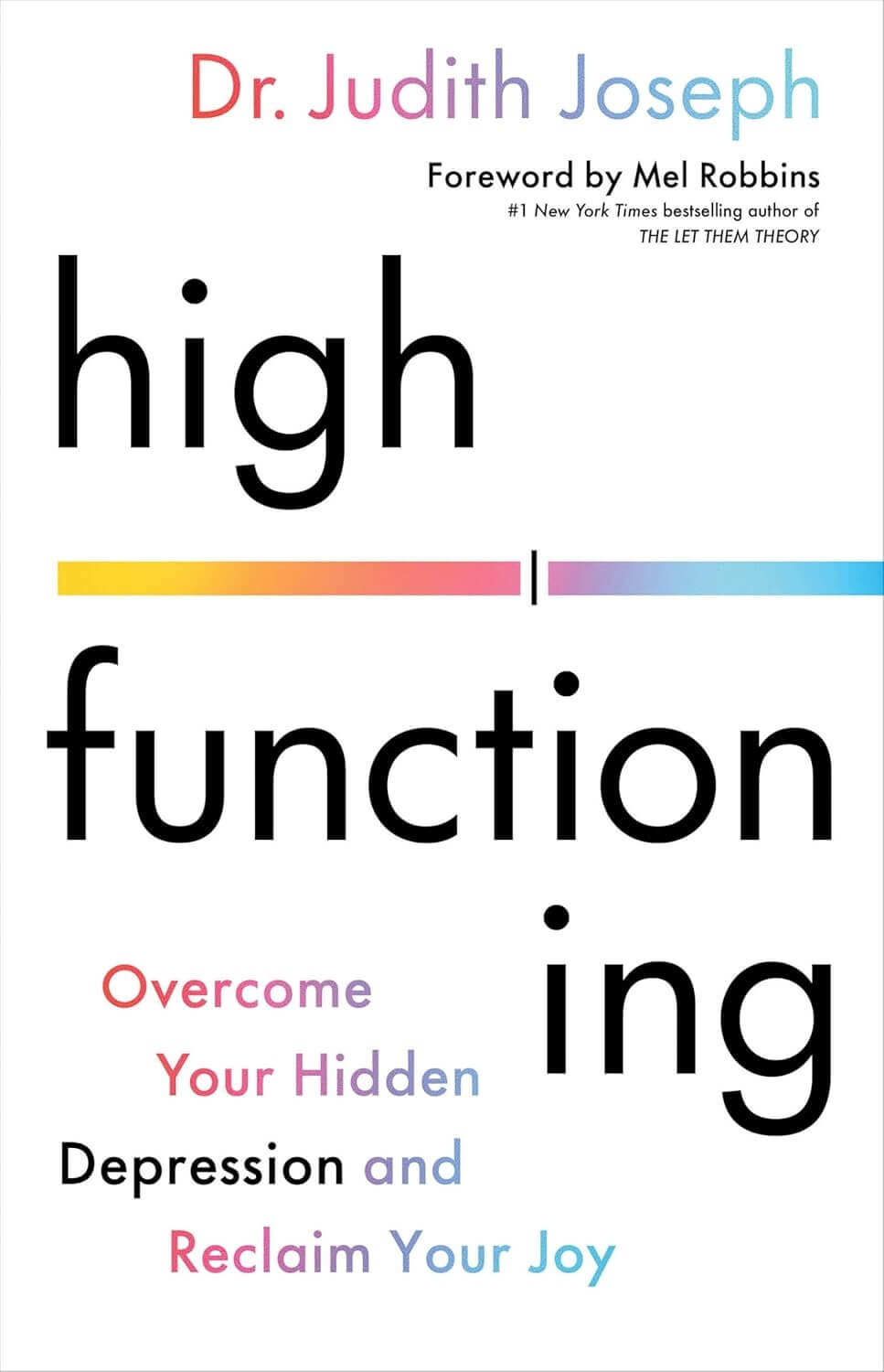
She is a graduate of Duke University and has an MBA and an MD from Columbia University. Her book, “High-Functioning, Overcome Your Hidden Depression and Reclaim Your Joy,” was published in 2025, and she has a very popular weekly podcast called The Vault. Let me jump back, Dr. Joseph, to that question, which is, as you identify what high-functioning depression is, how do I know that I don't have high-functioning depression as someone who's a reasonably high-functioning person?
Dr. Judith Joseph:
Well, it's great to be here, and I think a lot of people on this call will really relate to what high-functioning depression is. I think most people know what burnout is, and I have this brain here because I'm in my office. I just saw patients, but I use this to demonstrate a lot of these principles.
But imagine that this is the brain in the workplace, and you're burnt out. Now, burnout, by definition, is an occupational phenomenon, and what that means is that, by definition, it's the workplace stress causing the pressure, and then the symptoms of exhaustion, irritability, low motivation, anhedonia, a lack of joy, interest, and pleasure in things, what most people say is meh or blah. Those symptoms are due to the occupational pressure.
Now, when that person is removed from the workplace, over time, they get better. Why? Because it's the occupational pressure causing the symptoms.
Now, high-functioning depression, on the other hand, is the brain of the high-functioning folk in the workplace. The pressure is still there. The pressure is there, causing stress, causing the same type of symptoms, anhedonia, low motivation, poor concentration.
You remove that person from the workplace. They don't get better. Unlike the burnt-out person, they continue to have those symptoms where they feel restless.
When they sit still, they feel empty. When they're not working, they feel unsettled. They're humans doing, not human beings.
And the reason that it's different than burnout is because it's not the outside pressure from the workplace that's the root cause. There's something inside that individual that is not resolved. No matter where they go, even when they leave the workplace, they still had the same symptoms.
And that's a key differentiator because people often say, well, how is this different than burnout? And let's talk about the difference between high-functioning depression and clinical depression, which most people think about as someone laying in bed, not getting out of their house, looking sulky, crying, very different. With clinical depression, people often think, oh, you have all this sadness, you look sad, you're not doing well.
And I do clinical research. When we use the diagnostic criteria, there are these symptoms of depression. Like I said, low motivation, low concentration, low mood, all these symptoms, low energy.
But at the very bottom of that checklist, you have to either lose functioning or you're in distress. What about people whom I see every day in Manhattan who are coming in with all those symptoms, but they're not losing functioning?
In fact, they're overworking. They are the humans doing. They're not the human beings.
They're lacking joy. Something feels off, but they just don't know what it is. They never seek help because their whole personality is tied to their role of being a doer.
And these are people who are, I call pathologically productive, because on the outside, because they're doing, because they're showing up, because they're the rock, because they're the entrepreneur, because they're the leader, because they're the working mom, no one will ever say, well, something's happening because you're productive. And this is what I mean by high-functioning depression. You have all these symptoms of clinical depression, but you haven't met those final two boxes, but you cope with your depression by over-functioning.
And I did the first peer-reviewed clinical research study in my lab, where I'm sitting right now, on high-functioning depression. And what we found is there's a high correlation between past unresolved pain and this need to busy yourself, to distract from the pain. The problem is that if you keep coping that way, if you keep pushing down the pain and you don't deal with it or process it, you also push down the ability to feel joy.
That's why many of these people have anhedonia, this lack of interest, this lack of pleasure, this lack of joy. But we're all built with the DNA for joy. It is our birthright as human beings.
So if you're not feeling it, then something's wrong. It's okay if you're productive and you're doing your job and you love it, but many of us are just doing, and we just stopped really enjoying it. And we don't know why, we don't know how to slow down.
We just know something's off, and no one knows we're struggling because we're struggling in silence.
Willy Walker:
What does that end up doing to somebody? As I hear you talking about the way that people who have high-functioning depression deal with it is to do more from an employer standpoint. Boy, he or she, they're in the office working 14 hours when they should be working eight hours, because that's the way they cope with it.
Does it get to a point where it either, I mean, we talked about burnout. Do they famously burn out because they haven't dealt with this? What's the end result, other than, if you will, obviously, there's the issue of them having joy in their everyday life, and you would want them to do that.
But if their coping mechanism for not having that joy is to continue to work. What's the downside to it?
Dr. Judith Joseph:
I recently posted a video about burnout and high-functioning depression. It's so interesting because what I usually create content around is what I see in clinical practice and what I teach the doctors at NYU, because I teach a course on medical media. But patients will come in, and they will oscillate between high-functioning and burnout.
They will. And the video that I posted got over a million views, and people were saying, that's me. Sometimes I'm burnt out.
Sometimes I'm high-functioning. Sometimes I'm actually low-functioning. Sometimes I do hit a clinical depression.
And the reason that I'm doing this research is not just to create another category, but this thing about mental health is that, I think we're in the dark ages. When we look at what is happening in physical health. We're seeing this Renaissance.
We're seeing people saying, “Well, don't wait for the cancer. Let's prevent it.” If a cancer doctor told you, “Let's wait till you're stage four,” you'd say, “Where did you go to medical school?”
If a cardiologist told you, “We'll come back when you're in full cardiac arrest,” you'd be like, “Are you even credentialed?” In other fields of medicine, we are preventing the catastrophic outcome.
In psychiatry, we still wait for the box to be ticked. And then we put the coding in, and then we start the medicine, and then we do the therapy. But in the state that we are in now, post 2020, we are seeing this boom of mental health crises in everyone, including the pathologically productive, the people showing up to work, the people showing up for their families.
We cannot wait. We cannot wait for people to break down. We have to show them what are the signs, educate them about the risk factors, and prevent the breakdown, or else we're going to see billions of dollars lost in the workplace like we've seen already, or else we're going to see people physically breaking down.
A lot of times, my high-functioning folks, they don't necessarily validate or in tune with their emotions because their coping is to push down. What happens? They end up in the ER, and they have all these odd neurological symptoms.
They have these autoimmune issues. We do see the breakdown physically in many of these folks. We see the breakdown mentally in those who then dip into burnout or dip into clinical depression.
But we also see something like coping in unhealthy, maladaptive ways like excessive drinking, excessive spending money, and excessive tech use. Because you're trying to cope with something you don't fully understand. There's internal that you haven't resolved.
When we educate people about these outcomes, then they can actually do something about it before they break down.
Willy Walker:
You mentioned 2020 and the pandemic. Before we dive into what brought you to this specific field of research and all that you've done subsequently on it, let's rewind the tape a little bit to your upbringing, your family coming to the United States from the Caribbean, your childhood, and going to Duke and then to Columbia. Talk a little bit about your path to being a biology undergrad at Duke, and then wanting to go to get an MBA first, and then an MD.
I was very curious. You started out going for business, and then you shifted and went over towards your MD. What was it in your background that made you A) want to study biology at Duke and then second, go on to get an MBA first and then to get an MD?
Dr. Judith Joseph:
Well, isn't it obvious? I'm high-functioning.
Willy Walker:
That's for sure. But most of us who might look in the mirror and say, well, there's something in there for me.
Don't go right at it. Stay away from it.
Dr. Judith Joseph:
Well, I tell you, I have so many degrees, I can't even hang them. And for many years, I just kept them under my bed because I didn't know what to do with them.
Willy Walker:
Was there a little chip on the shoulder of saying, I got to show everyone that I can get the most degrees of anyone, either in my family or in my community.
Dr. Judith Joseph:
Well, it's a bit more to that. I talked about the correlation between unprocessed trauma and high-functioning depression. There's something that I study, and that I updated my trauma inventory to include.
Now, when I say trauma inventory, it's research talk, but usually in the studies that I do that are regulated by the FDA, we use a CAPS-5, and maybe people have heard of a CAPS-5 during the whole Johnny Depp v. Amber Heard kind of legal thing because they had doctors doing that. But the CAPS-5 is the gold standard for measuring PTSD. It's developed by the Veterans Association Veterans Hospital, it's a government scale, but we have taken the CAPS-5 and we apply it to everyday traumas. And everyday traumas, according to the DSM-5, which is the Diagnostic and Statistical Manual, or the Bible of psychiatry, according to the Bible of psychiatry, trauma is either something serious, like a life-threatening, or combat or assault. But there are so many traumas in the world that don't meet that criteria. And oftentimes in my office, I'll see patients, and they'll say, I went through a terrible divorce.
I lost everything. I don't have any money. And I'll say, well, I'm so sorry.
That doesn't meet the criteria for trauma. Imagine how invalidating that is, or someone comes in and they say, I was in this job, and people didn't treat me well because of how I looked and I said, Oh, sorry, that's not trauma, but they're having all of the symptoms of trauma. They're having the fight or flight.
They can't sit still. They can't stop working. They're restless, but according to the textbook, they don't meet the criteria.
So I had to develop a new trauma inventory that included all of the traumas that I see as a clinician. I define trauma as things that have shaped you, who have shaped the way that you see yourself in the world, shaped the way that you interact in the world, shaped the way that you interact with others that are significant. Some of us have traumas that happen to us, and they don't shape us.
We're just like, okay, onto the next. But others of us, were different. We're all different human beings.
There's no one like you. There'd never be anyone else like you in the future of the universe of the history of the universe. Some people have traumas that impact them, and they don't meet criteria according to the textbooks.
So in my trauma inventory, I included things like growing up with very little resources, generational trauma, where maybe your grandparents or your parents didn't have much. They passed these types of pains onto you. Personally, I experienced a scarcity trauma growing up.
I didn't come to this country with very much. I didn't have much. There were times where we didn't have food.
So that unprocessed trauma for me, in many ways, I didn't even understand it. Even as I was going through my medical school, I didn't understand that, there was this deep fear of running out of resources. What do I have to do?
I've got to collect the degrees. Why stop at the MD? Why don't I just apply for the MD, MBA, and do a dual degree at Columbia?
I mean, imagine that doing medical and business school together. And I thought that was okay. But on the outside, it looked pathologically productive.
People were like, you're winning. And I'm like, I'm winning, but I feel no joy. Why can't I sit still?
So as someone who has a deep fear of scarcity trauma, I always have to challenge my overworking because, and it's not like I'm fully healed. Oftentimes, I'll be doing studies, and I'm like, oh, I could take on a 20th study. And it's like, wait, do I really need that?
Just slow down and grasp the joy. And I often explain in my lab that happiness is different than joy. Happiness is this idea.
It's always like when I get the next study, when I get the next degree, when I get the perfect family, when I get the next job, I'll be happy. It's an idea. It's a situation that has to happen for you to feel it.
Joy is different. Joy is internal. It's not depending on the outside.
It's dependent on something inside. Joy looks like when I'm hungry, and I eat my meal, am I savoring it? When I'm tired, and I take a rest, do I feel refreshed?
When I'm lonely, and I reach out to a loved one, do I feel connected? When I'm doing my work, do I feel purposeful. Versus when I do my work, am I finishing a goal?
It's very nuanced, but one is extrinsic, and one is intrinsic. And when we reframe, and we try to hold onto these points of joy that are internal experiences that we can harness, that we all have built into our DNA, it's encoded in our DNA, then that's how we actually become happier over time. In fact, that's how we measure happiness in the research, by adding up the points of joy.
And so that's something I had to learn personally, even though I've been taught it in the books and I'm at the fancy schools, it really took me processing my own personal traumas, like my scarcity traumas, to really understand how to slow down so I don't miss out on my daily points of joy by chasing the idea of happiness. Because many of us are chasing happiness, but what we're doing is trying to outrun unprocessed pain from the past and unprocessed trauma from the past. But we think that we're chasing happiness, but we're really trying to outrun something we have not processed.
Willy Walker:
Two things that I want to get into, and I don't want to forget them, so I'm going to list both of them now and then let you take whichever one you want, but I don't want to forget either one of them. One of them is epigenetics, and how do you get those genes expressing themselves to create that joy? And so I want to dive into that.
But the other one that you talked about was naming emotions and making sure that you can understand the difference between happiness and joy. Dr. Mark Brackett at Yale has come to and spoken to us several times, and his book is all on making sure that you're effectively naming your emotions because if you don't understand what the actual emotion is, you can't really do anything with it. And Mark's work to be able to, if you will, just as you just did, differentiate between happiness and joy and be able to differentiate between anxiety and stress is so important to be able to bring the proper resources to whatever that emotion that is hitting you is driving you to do or how you can not feel it in the future.
Dive in either on epigenetics or the naming of emotions.
Dr. Judith Joseph:
Yes. I'm so glad you brought up epigenetics because my new research now focuses on unlocking joy, and I love the term. I was a bio geek in college.
I studied chemistry and biology. And genetics always fascinated me. I used to run the gels and the little gels that you see with the DNA codes because it's so interesting that, depending on what's happening in your situation, you could either unlock a gene or not express it.
And that's why identical twins are fascinating, because even though you have the identical DNA, you are completely different people. I have nieces who are twins. And depending on the stressors, you can express genes or not express it.
That's why I want people to know that they have the ability to unlock their joy. But the point of validation is actually the first V in my five V's method to thriving and reclaiming your joy. I've been around the world to over 30 countries looking at psychiatry and mental health in different countries, and the number five keeps popping up no matter where.
And I think it's because most of us have five fingers, but I want people to be able to look at their hand and say, I'm built with the DNA for joy. I'm going to reclaim it by either tapping into one of these five V's to unlock my joy. Validation is the first one.
The way that I describe validation is imagine you're in a really dark room, and you can't see anything, and you hear a loud crash. Some of us would start screaming, some of us start running, some would start swinging, depending on your defense mechanism. But if you turn the light on and you saw, oh, that was just a bookshelf that fell, then you're like, okay, I'm safe.
It doesn't change that the problem is still there. You still got to pick up the books and fix the shelf, but you now know what you're dealing with. You know how to deal with it appropriately.
When you learn how to validate, which is to accept and acknowledge your emotions without judgment, it's like turning the light on. You see what you're working with. And in my practice, I see a lot of people, especially a lot of men coming in and saying, I have anger issues, I'm angry.
But then, when we actually turn the light on, we realize that's not anger, that's anxiety. You're worried about being a provider. You're worried about being a failure.
You're worried about being rejected. And when you're dealing with anger versus anxiety, totally different animals. But if you didn't turn the light on, you wouldn't even know what it was.
You'd just be afraid. And the human brain is afraid of uncertainty. The first step in validation is to acknowledge, name, and accept what you're going through without judgment, no matter what.
And often I'll have people come into my office, and I'll say, just close your eyes and imagine, think about something that happened that was so painful to you. You barely talk about it. You never told anyone.
I want you to say to yourself in your head, it happened to me. It is not my fault. I'm worthy of love, care, and acceptance.
I tell you, people cry. They'll say, wow, first time I've ever validated myself. That's one form of validation.
That's one single type. I have other forms of validation. I have a psychometric rating scales where people take scales, and they're filling it out, especially those high-powered people in Manhattan.
They'll say, I feel off. And then I say, well, take this anhedonia scale. And they're like, oh my gosh, I'm lacking joy in so many areas.
That's what's off. We use a scale to validate what they're experiencing. They see a number, and they're like, that's what's happening.
There are many days to validate. The second V is venting. Venting is learning how to express your emotions in healthy, authentic ways.
Venting, I often have people come to my lab, and we'll take a big red balloon, and we take turns trying to dunk this balloon into a tank of water. And 100% of the time, that balloon will pop up and make a splash everywhere. I have a video on social media where there's literally water all over my office because I'm trying to demonstrate it.
And then we take turns trying to deflate this red balloon. And it's easy to push down in that tank of water. And I often say, imagine that this big red balloon is your feelings.
If you don't learn how to express it, if you don't learn how to get it out, it's going to pop up and make a mess in your health. Like those people that end up in the ER, it's going to pop up, and you're going to snap at somebody at work. It's going to pop up at home in ways where it's creating problems with your family.
So we all have to learn how to healthily express our emotions by the second V, which is venting.
Willy Walker:
Can we pause on that before we go to the values and the others? Venting is clearly important, but how you do it is also important. I think one of the questions that I had as I heard you talk about the, if you will, the balloon, not experiment, but the exercise of dunking it in, it was fantastic.
It was sort of like, okay, before you let this big emotion out, try and shrink it down, try and take a deep breath, try and process it so that you and your partner, you and your work colleague, you and your child can deal with that emotion where it's not this huge thing that you can't control and you kind of mess things up. But as I think about relationships, and at least in my relationships, where I'm a doer, and when I see a problem, I want to fix it. And my ex-wife and my now partner will say something, and immediately my reaction is I've got to go do something about it.
And in many instances, all they want to be doing is venting, is releasing the emotion that they have. Yet I, as a doer, sit there and say, oh, they're making some comment about a hotel room that we stayed in that isn't as nice as they would have liked it to be. But I take that personally because I'm the one who booked the hotel room and who's going to pass across the credit card when we check out.
So it's sort of this, I take that personally. How do you deal with that mismatch, if you will, of the need to be able to vent and at the same time not make it so that your partner is misinterpreting or, if you will, misreceiving that venting that you need to do to be able to get it sort of off your chest?
Dr. Judith Joseph:
There are do's and don'ts to venting. And with my clients, what I'll say is you're on the other end of the venting.
But what I tell my clients is start with self-venting first. And there's this recent research that shows that people who actually talk to themselves, not in the psychotic delusional way, but in the way of like, I'm going to talk openly to myself and figure this out first before I move on. They actually come to a conclusion and feel better compared to just going straight to the person.
So what I say is start with self-venting. And the person on the other end of the receiving can do this too. Talk it out openly like this is what happened, and what's the likelihood that this is the outcome, and how is it making me feel, and how is it leading to my behavior, and how is it impacting me?
And if people don't like talking to themselves, write it in a journal. A lot of my neurodivergent folks prefer to write anyway. What you're doing is you're unpacking, and you're taking a pause, and there's the front of the brain, the frontal lobe that's used for making decisions.
But there are these tiny little troublemakers down here, little tiny things. You can't even see them on this model, called the amygdala. And when we are led with emotions, that thing gets fired up, and it can bully the front part of the brain.
And then we do things we're not proud of, we regret. But when you take a pause. And you self-vent by either writing or talking about it loudly to yourself, that pause is powerful because it allows that amygdala to self-regulate, to calm down.
It allows the front of the brain to actually make a decision, not just solely on emotions, but also taking logic into consideration. And that's what we called wise mind. When you use a bit of the emotion and a bit of the logic, it's called wise mind, but you need that pause.
We don't want to be too logical because then your partner says, you're always about the facts. You don't understand me. You don't want to be too emotional because then the logical partner shuts down because they're not accustomed to that.
Wise mind is the sweet spot for all of us. That pause is really important. And I suggest to my patients, you take the pause by writing in a log or self-venting to yourself.
Now, when it comes to venting with someone, you want to pick one or two people whom you trust. You don't want to be a sprinkler. I talk about this in my book.
Some of us, we vent to everyone. This happened, and before you know it, 20 people know it.
So you'd want to be a sprinkler. You want to be careful, and who you pour into. Think about a picture pouring into one or two glasses.
And there should always be an understanding. I come to you, you come to me, no one else is involved. We don't gossip.
We're confidential. And we're not just doing this to trauma dump. We're not just doing it to feel better.
We're doing this to come up with a resolution. Even if I don't like what you have to say, I know that our goal is the same. We're trying to find a resolution.
And if I have a problem, I'm going to go to you. And if you have a problem, you're going to come to me. There's a reciprocity, and there's emotional consent.
Is this a good time? Are you free? I have something to talk to you about, but I don't want to do it if you're not available.
When you do that, over time, when I work with couples, there's an understanding. It just becomes so normal. But if you're not practicing that because emotional skills are things that we need to develop and work on, just like our work skills.
If you don't get into that rhythm, then the communication breaks down, and communication is the number one problem in relationships. When you're venting, you want to have this in place. If you're someone who's more logical, you want to make sure you're getting into wise mind by tapping into the emotion.
If you're someone who's more emotional, you want to wait, take that pause, and try to get into wise mind by tapping more into logical.
Willy Walker:
You talked about calming down the amygdala, if you will, when those emotions start to get going. Are there any physical things that you suggest to your patients to do that allows you to sort of break that cycle as it starts to crank up? And then the flip side to that question is, is there anything that exacerbates it, like alcohol?
Dr. Judith Joseph:
Yeah. I usually do a lot of grounding techniques with my patients because many of them find it really difficult to slow down. And when I say slow down, they interpret it as stop.
I can't stop. People depend on me. Never said stop.
I said, slow down. Because a lot of them have all-or-nothing thinking.
And I'll use this iced coffee, I usually use like a glass or a beverage to demonstrate this tool I call the 5, 4, 3, 2, 1 method. You want to use a beverage, preferably one that has flavor, but you want to name five things you can see. I asked my patients to do this when they're feeling dysregulated, stuck or empty.
Five things I can see. I see the color of the brown coffee.
I see the glistening light off of the ice cube. I see the striped straw. I see my fingertips.
I see the glass. Four things you can feel. Well, I feel the temperature.
I feel the rhythm of the ice. I feel the cozy rug beneath me. I feel the soft chair, three things you can hear.
I hear the sound of the ice. I hear the coffee's swishing around. I hear my fingertips, two things you can smell.
I smell the vanilla flavor. I smell the coffee flavor. One thing you can taste.
I taste the coffee. It's delicious. And it's yummy.
So 5, 4, 3, 2, 1. When my patients do that, they're not thinking about the fight they had last night. They're not thinking about the meeting they have in an hour.
They're staying present in the moment. And what that does is it teaches you to slow down, that it is possible for you to ground yourself, that it is possible to not be overwhelmed by fight or flight. And usually when we do this 5, 4, 3, 2, 1 grounding technique, we build up.
So I say try to do this for five minutes. Try to do this for 10 next week, 20 next week. You're building up to a form of mindfulness and meditation that is doable because you're using a real sensory object.
And my patients will say that really does work, especially when they're feeling overwhelmed.
Willy Walker:
Fantastic. And on the alcohol one, does alcohol exacerbate the activation of the amygdala?
Dr. Judith Joseph:
Well, alcohol is a natural depressant. Initially, it feels good, and it calms you down. But eventually it backfires, and it creates more anxiety.
I used to be an anesthesiologist, and we'd have to put an IVs in a lot of people with withdrawal. And what we'd see is that people would come in, and maybe they weren't going through stress, and they were drinking, and it felt good initially, but then the next day they're like this, shaking. Because initially, it can suppress your brain.
It's a natural depressant, but then the outcome, the longer-term effects actually make your anxiety worse. Then what happens is over time, you need more and more of it to get the same effect. And then, before you know it, you may develop a dependence issue.
So I often say, listen, depending on your age and stage in life, I'm never one to say, stay away from substances completely, unless you have a substance issue, then I say stay away from it. But I will say, look, think about your age. If you have a younger, physically healthy brain, know that you're going to be able to crash after high amounts.
So don't get to that high amount. A lot of the young folks, they just binge drink, and then they crash physiologically because you're healthy. You're not going to feel off until you're literally face-planting on the ground.
I usually teach a lot about your physiology, depending on your age. If you're in midlife, your brain can't handle the same amount of alcohol as it did when you were younger. And your brain cells are so precious, so really consider whether or not you want to cope that way.
If you're drinking more than one glass a night, I would say, really reconsider that because it can actually make you feel worse the next day. And especially if you're in midlife and you have hormonal fluctuations, if you're in perimenopause and menopause, it worsens your state of inflammation. There's no healthy amount of alcohol; not everyone lives the same way, but I would just say, think about your physiology and your state and your developmental age when you're consuming, know the risks versus the benefits.
Willy Walker:
So let's dive back to the other three, these values, vitals, and vision, jump into values.
Dr. Judith Joseph:
Yes. And back to venting, by the way, don't vent to your kids. Think about the hierarchy.
Because your child would never say no. They don't want to reject you because they don't want to be rejected. Children are hardwired to attach.
So if you come to them with a problem, they're going to be all ears, but they're going to worry about you. Don't vent to your employees. Those who are below you in terms of hierarchy at work, because again, they're not going to say boss, stay quiet.
They're going to listen, but then they're going to go home and trauma dump on their family members. Really think about the hierarchy in terms of your venting, but values.
It was the third V, these are things that bring your life, meaning and purpose. These are when people say, well, I don't know what I value. I have this chart in my book where there's a hierarchy of values, and we have the upper-level values, and we have the lower-level values.
Oftentimes, we're chasing the accolades, chasing the degrees, chasing all these things. But I tell you, when I'm on my deathbed, I'm not going to say, I wish I went and got a JD. I'm going to say, wish I had five minutes with my daughter.
I wish I could spend more time in Trinidad, where I was born, because it's so beautiful, and see that beach in Tobago where the water was so crystal clear, where my dad grew up. These are real values that bring your life, meaning, and purpose.
Everyone, we have to focus on the superficial ones. Eventually, the ones that are not deeper meaning. We need to pay the bills, but don't forget about the deeper-rooted values, the ones that really give your life meaning and purpose, and try to tap into those.
And with my clients, I'll give them value stones, and I'll ask them to write a value on it. It could be family, it could be faith, whatever it is that they truly value, nature. And I tell them to keep that in their purse or in their briefcase or their desk so that when they're feeling lost, pick up that stone and remember what's really important.
And the reason I use these physical objects is because in psychiatry, there's something called the transitional object. When people go into the hospital, when they go into crisis, we get back to our guttural, our root cells, and we need something to hold on to. Like when we were born, and we were babies, and the doctor put their finger in our hand, and we grabbed it, we just knew how to hold on to it.
Sometimes we need these physical objects to remind us. When I give these workplace talks, I'll literally bring a desk in and show people how to set their workplace up to put their true values around. It could be a picture of a leader that they admire.
It could be a picture of them on a retreat where they really connected with people. It could be their family. If you love nature, put plants around.
I have plants everywhere in my office. I love nature. Try to set your workplace up with these values because they remind you about what's really important.
And then the fourth V is vitals. Vitals are things that really encourage, and nourish and support the mind-body connection. And so doctors will tell you about the traditional vitals, like getting good sleep, eating the foods that don't cause inflammation, that actually feed your brain and support it with nutrients, getting movement.
But I talk about three non-traditional vital signs. Number one is our relationship with technology. And there's a recent study out of the University of Texas last year where they took these adults away from their smartphones.
And after four weeks, they saw their happiness scores go up as if they were being given an antidepressant. And they thought, wow, what is happening here? They went back, and they interviewed the people.
What they found out was that they were getting these points of joy that they weren't getting when they were on their phones. They gave them flip phones. You couldn't be immersed in social media.
You couldn't be online all the time. They found people were eating more and tasting their food. They found they were socializing more.
They found they were sleeping better. They found that they were out in nature. They were getting more movement.
All of these points of joy that were built into our DNA, they were leaving them on the table because they were on their phones. Really think about how digital exposure impacts your joy. Is it causing your genes to lock up the joy or to release the joy?
Willy Walker:
Can I jump in on that one real quick? Just two quick examples of that. I went to a concert last summer at Red Rocks.
And it was a musician that I'd never heard of. A friend of mine said, “Come.” And as we were heading to Red Rocks, my friend said, this musician doesn't allow for cell phones inside of their concerts.
So when we get there, they're going to put your cell phone in a pouch, and you can't use it during the concert. I was like, wow, that's kind of wild. That's the first concert I've ever gone to where they've confiscated your cell phones.
Go to the concert. This is a musician. I went through their iPhones and filming it and looking at it almost as if you're watching it on television.
They were there. They were present. They were diving in.
And it was really quite something to see the difference of people using social media during the concert versus actually participating. And I'll just give you one other one, which is that I'm in Augusta, Georgia, right now. And I went over to the Prastics rounds of the Masters this morning.
And as you know, you can't take cell phones into the Masters. Just sitting there at breakfast with my hosts, and I looked at everyone around, and I was actually looking at people. There was a moment where I was sitting there with my coffee, waiting for them to come to the table.
And instead of being on my iPhone, checking emails and texting out, I looked, and I actually saw the people around me. And I sort of said, oh, that's an interesting-looking person there or whatever else. And it was just so sensory to actually be there.
And you know what? I reached for my phone. The moment I was sitting there alone, I was like, oh, I got to do something.
I got to check an email. I got to check a text. And they said, you can't do that.
And it was just so wonderful to be removed from what we have gotten ourselves into. When you said four weeks though, I was like, wow, four weeks without a phone, that's quite something.
Dr. Judith Joseph:
Without a smartphone, they still had their flip phones. They still had the ability to call, but not to be immersed. And 30 years ago, we were fine.
We actually were okay. There's something called anemoia. And it's where a lot of these Gen Z people are starting to want to be like they're in the 90s again.
Y2K? Because why? It's a nostalgia for a time they never knew because it was simpler.
It was when you could be present. It's when you didn't leave your points of joy on the table. And it's not just the phone.
There's an entire center at Stanford called the Stanford Zoom Fatigue Center, where they study the effects of being on Zooms all day long. And what they found was that people tend to self-scrutinize when they're on Zoom. It's unnatural for me to see a picture of me while talking to you.
Our brains weren't designed that way. We were designed to look at each other. We were designed to see, oh, are you understanding me?
Are you safe? Are we vibing? But instead of doing that, instead of looking at others and pick up on cues and connecting, we're looking at ourselves.
And it's creating something called the autoscopic phenomenon, where we're getting anxious because we're like, how do I look? How do I feel? And if you ever wondered if you experienced that, think about it.
When you're on a Zoom, do you ever feel tense? Do you feel like you have to prepare? Do you have to perform?
Very different than being around a round table where you're moving, and you're looking at other people. And it's way more organic. Our brains were just not designed to see ourselves and to see so many people at once, and then to perform at all times.
So it's emotionally exhausting. It's psychologically taxing. What I advise in the workplace is to take calls without the camera when you can.
Try to do walking calls, get a standing desk, because again, we're not getting the movement. Even those little increments of moving from here to here, they're different than being on a Zoom implanted. Just really be mindful of that.
And then the other two non-traditional vital signs are our relationships with people. There's a longitudinal study at Harvard where it shows that your relationships with others really impact your longevity and your happiness. When you're around people, you may think that they don't impact you, but not everyone can cut people off, but we can set boundaries around people who are not healthy for us.
And we can try to pour into those relationships that are healthier for us because they're literally shortening our lifespans. And then the other non-traditional vital sign is leaving our work at work and having a home life. That work-life boundary is really important.
And then the final V is vision. How do you plan joy in the future so you don't get stuck in the past? And how do you celebrate your wins?
And this is something that's very difficult for those with high-functioning because they're often onto the next. But even in my lab, when we finish up a big study, we celebrate. Either we go out for lunch, or we have a little party in our lab, but it's a way to say, okay, we're celebrating that we did it together.
That's the point of joy of connection versus the idea of happiness. Oh, we finished a goal. Very nuanced, but very different because we could just say, okay, onto the next study, check box, but we're missing out on that point of joy of connection.
And it doesn't have to be a big one. When I get my daughter to school on time and her hair is combed, she doesn't look like who shot John. I sit in my living room and I enjoy my cup of coffee.
I have this Caribbean coffee that I got in St. Martin, and it's like cream flavor. It's delicious. It's rum cream, no rum in it, no alcohol, but delicious.
Everybody in my family knows after she drops the kid, I sit alone, and that's my time. I look forward to that time every day. And it sets the pace for my day.
Five years ago, it was drop the kid into the lab, see a bunch of patients, drop back home, rush, rush, rush. Now I literally look forward to these small breaks that I give myself. I don't say, oh, I'm supposed to do that.
I'm a working mom. I say, I did that in spite of working. And so I think the reframe, protecting the joy, the small points, celebrating the small wins over time, they really do matter in terms of how you perceive happiness.
Willy Walker:
You spoke about celebrating those small joys. And you mentioned previously, anhedonia. If somebody isn't finding joy in the accomplishments and is getting somewhere, and immediately moving on to the next thing.
I talked at the beginning about James Lawrence, the Iron Cowboy of doing one race and then immediately resetting for the next. How do you counsel people? How do you work with people to make it so that they can reset?
They can enjoy the small things. Your tips as it relates to how do you vent without having the red balloon be too big, and how do you get it down was fantastic. If you're someone who constantly gets there and doesn't enjoy the journey to the destination, and then gets to the destination and then is immediately resetting to the next, that is exhausting.
And as someone who's done that plenty of times in my own life of sitting there and saying, oh, let's, Bill Walker, no up to this size. Oh, we got there. Let's go to the next size.
Oh, we did this. Let's do that. I mean, I'm constantly in that.
How do you counsel people to sort of say beyond just kind of slowing down and smelling the roses, if you will, as you're on this journey, what's a trick, what's some kind of a hack to say to people, write down what the destination is, add that next goal within a week or a month or a year, or whatever the case might be.
Dr. Judith Joseph:
As someone who used to be that person and it is in recovery, I've personally done this exercise, but I've also done this many times in my office with my client. Usually, what we do is we do a bit of mental time traveling. Sometimes people don't remember the past because it's so painful, and their brain has suppressed the past that pushed it down so that they could actually function.
And other times, people can remember it. But for those who can't remember it, I asked them to sometimes bring in old pictures or old items from their past. And I want them to think about a time in their lives where they were actually feeling joyful, where they were actually feeling a sense of purpose and pleasure, and not having anhedonia.
And what we'll do is we'll try to see, okay, who are you around? What were you doing? We're literally being the archeologists dusting off the past, figuring out what was the past for you.
And I'll give an example is when I put in my book, I had this patient who could not remember. We had to bring in all the old memorabilia and all that stuff. And what they ended up finding was that, they're very successful, very successful present day, but just lacking joy.
They found that in the past, there was a time when they used to spend a lot of time outdoors, and now they're in this busy city with concrete and not seeing a lot of nature. And we try to understand what was happening during that time. Well, that was before their parents got divorced.
And before their parents got divorced, they were living in the same house. And when they were living together, they go out for hikes every weekend, they go camping. But this person stopped doing that.
That divorce was traumatizing to them in ways they didn't understand. And they carried it with them, and they really lost touch with nature. Little by little, what we did was we'd say, okay, first, I want you to start bringing plants into your office.
And then I want you to take a walk close to Central Park, but not there. Then, the next week, I want you to actually walk through Central Park. The next week, I want you to look up hikes online.
It was building up to steps. And now this person spends so much more time in nature. And they're not perfect.
All the problems aren't gone away. But they're feeling that joy. But they have forgotten about it.
And there are other people I've worked with, and I talk about this in the book, where they're very successful, but they're working alone. We had to do the mental time travel and dig back. We found that one of these individuals, they were actually a team captain on a sports team.
They used to think it was the winning that made them happy. But they were winning at their work. They were the best at their work, but they weren't happy.
But it was the team element that they were missing. They loved working in teams. They loved doing it together. They loved the camaraderie.
That person ended up starting to work with a nonprofit, where they were all busy professionals, but they were doing something together, and they were winning together. But many times, if we don't take the time to slow down and process the pain and figure out, well, what was happening when we gave up on these things, or we took them for granted, then we don't know how to grasp the joy.
We chase the idea of happiness, but we're not happy. When we get this, we're happy. When we get that, we'll be happy.
But they're still not happy, because they forgot how to tap into the joy. They don't even know what their joy is. But there's only one you.
There will only ever be one you. Take the time to understand the science of your happiness, so that you can reclaim your joy.
Willy Walker:
When you talk about that joy, it makes me think about, on Sunday, went to the women's Final Four Women's Basketball Championship, because one of my board members' daughters was the point guard for UCLA. And one of the interesting things about the UCLA team that won the national championship is that their coach sort of defied odds in recruiting a team where she got very close to her players and wasn't the sort of quintessential taskmaster, but brought together a group of women who all gelled as friends and used this model of joy and teamwork to create a team versus in many other instances without names, but the other top teams where there are these coaches who sort of are seemingly taskmasters and constantly driving and pushing and driving and pushing and getting the most out of these athletes.
And it was really quite something that UCLA won their first NCAA championship on Sunday with this collection of women who had all come in some instances from other universities and had transferred through the portal to UCLA to create this wonderful team that not only won the championship, but then also had joy in winning the championship. And I'm sure that had South Carolina won on Sunday or UConn won on Sunday, they'd be plenty joyous at the time about winning. But the journey there certainly seemed to be a different model at UCLA than it was at many of the other top schools.
Dr. Judith Joseph:
I love that you say the journey versus the destination because it's a great thing that I use. It's like, what was happening on that journey? What were the points of joy on that journey?
Because many times we focus on the endpoint, which is the idea of happiness when I get this, but we're missing out on the actual experiences. And you know how we measure the happiness and research is those points of joy. When you were doing what you were doing, were you feeling connected?
Do you feel seen? Did you feel loved? Did you feel valued?
All of those things are not the endpoint. They're the experience, that internal experience, which is joy, very different than the end goal, the idea of happiness.
Willy Walker:
And you mentioned the top being a human being rather than a human doing. I love that framing that you use, just dive into human being versus human doing. Because I think in many instances, we go through life kind of being human doings and not human beings.
Dr. Judith Joseph:
Yes. Many of us, when we sit still, we feel empty. When we are not working, we feel restless.
And if that's you, then I think this relates to you. We're actually so busy that we don't understand what we're trying to distract from. With classic PTSD or classic trauma, people break down by avoiding dealing with the places that triggered them, the people that triggered them, the situations that triggered them.
People who are functioning avoid the actual processing of the pain by busying themselves. It looks different than the classic trauma because it looks pathologically productive. I think that if that's something that you relate to, when I sit still, I feel empty.
When I am not working, I feel restless. That could be a clue that you need to learn how to slow down, process the pain. Don't try to distract from it.
Try to feel it. And it's okay. You may cry. You may shut down. Only when you start feeling that pain and processing it, can you start to feel that joy rather than numbing it, rather than pushing it down, rather than avoiding it, rather than overworking it, rather than outrunning it. And it's very difficult for those with high-functioning to do because they are humans doing, not human beings.
Willy Walker:
Yeah. Talk about the biopsychosocial Venn diagram that you have your patients do, because I thought that was a fantastic tool in how you can sort of see where the intersections of you as Dr. Joseph or Willie Walker and where you are from a biopsycho and social standpoint.
Dr. Judith Joseph:
Yeah. The biopsychosocial model is taught to all medical students. And it's something that I often thought, why are we the only ones doing it?
Why are we the only ones who know this? And why don't we democratize this for everyone? Essentially, it sounds really complex, but it's not. Biopsychosocial is an interlocking three circles, like a Venn diagram, that I have my patients do in my office.
And I want you to think biologically, what are your medical problems? I often use myself as an example. I have a low thyroid.
So if my thyroid isn't squared away, I may feel anxious or depressed, but other people may have other medical conditions. They may have an autoimmune condition where their bodies are in a high inflammatory state. They may have chronic pain.
They may have a family history of medical issues. They may be in perimenopause or menopause, and their hormonal fluctuations are causing a lot of symptoms. That's biological.
And the reason that I have people do this is because many of us, we try to figure out how to be happy, but we don't even realize where we're losing our joy. The biopsychosocial helps you to understand where are you losing your joy? Is it biological because of these medical issues?
Is it psychological because of maybe past trauma, maybe you're neurodivergent, you have ADHD, and it takes extra effort to get things done. You're losing your joy there because you're so wiped out from masking all day. Maybe you have attachment issues because you learned at an early age, you can't depend on others, or maybe you're worried that people are going to abandon you.
That's a psychological aspect. That's where you're losing your joy. Socially, that's the third part of the biopsychosocial.
Where are you losing your joy in your day-to-day? Is it your environment? Is it an unhealthy environment because it's a toxic work environment, or is a toxic home environment?
Are you doing toxic things like smoking? Are you drinking excessively? Are you not getting good movement?
Are you eating unhealthy foods? Are you not getting sleep? These are the social elements.
So when people draw out their biopsychosocial, they understand where they're losing joy. And sometimes I'll say, where are you losing the most joy? Maybe that's where we need to focus.
For example, if you're someone who has an autoimmune condition and that's where you're losing most of your joy, maybe you need to focus on getting the doctors to help you lower that inflammatory state. Or if you're someone who's hormonally dysregulated, maybe you need hormone replacement. But then, let's say everything biologically is fine, but it's a psychological issue.
Maybe you're constantly in fight or flight because of some past trauma. That's where you need to address. Or your attachment styles are chaotic.
That's where you need to address. Or maybe biologically and psychologically you're okay, but socially the environment is unhealthy. Like maybe that's where you need to focus.
And maybe it's the people who you're around or just the work environment. Really try to understand strategically what your biopsychosocial is. It's a fingerprint.
It's a fingerprint for your joy, where you're losing your joy. And fingerprints are not identical between people. Again, like I said, there's only one you, and there's only ever one you.
So, really take the time to understand where you're losing your joy. And then you can be strategic about where to add it back.
Willy Walker:
Do you ever find, you talk there about your friends, and do you ever have patients who might have a spouse that you see is pulling them down as the one who is actually causing it and have to sort of counsel somebody to say, you may think about your partner as not being someone that you want to be with. As I listened to you talk about that, I was sort of like, and I've heard you talk about it previously about, kind of not necessarily pick your friends carefully, but the people that you hang out with are going to either drive you into being psychologically more engaged or disengaged, do good things or bad things physiologically, all sorts of different things. Your friend group is a very important thing that you get a lot from, but from a spousal standpoint, I'm assuming you have a patient or two that comes in where you sit there and go, it's their spouse that's causing this recurring problem.
Can you ever counsel them on that?
Dr. Judith Joseph:
In psychiatry, it's very different than coaching. I went to Columbia for medical school and then for psychiatry residency, and it's a very psychoanalytic, psychodynamic type of program. I was trained to never tell people what to do.
I have this demonstration that I'm going to post this week, it shows you how you learn based on, I have these scientific beakers, and I have sand. And when someone tells you what to do, I'll pour a little bit of sand. That's how much you get from that.
When you experience it, you get more sand in the beaker. When you fail, the sand overflows. When you try to tell people what to do, they're not really learning.
A lot of times in mental health, what happens in the session with the therapist is a reenactment of what's happening or has happened in the person's life. If they're in a relationship where the person is dictating how they feel and their mood and so forth, they're going to attach to you that way as a therapist. And they're going to be like, you tell me what to do.
So I'm not doing this personal service because we're just reenacting this maladaptive pattern. Typically in therapy, a really seasoned therapist will not tell you what to do, but what they will do is they'll help you along on that journey to figure out what's happening in your life so that you can make that decision.
And of course, there've been many times where, I knew sometimes very early in the treatment who was the issue, but it doesn't help my patient to then say, do this, do that. This is the issue. Again, you learn the most when you're experiencing it and when you're failing and learning from your failures and then you grow.
And that's the same for our kids. We often want to rescue our kids. We don't want them to fail.
We want to protect them, but we're actually hurting our kids when we do that because your kid failing an exam and learning, Oh, I can't just like not study the night before. They're going to learn more from that than you staying up and doing the work for them.
They're going to learn how next time I better study, and I better put some effort into it. You can't rescue others. You're not doing them a service.
So yes, of course, there are many times when there are toxic individuals, and I'm like, Oh, your life would be so much better. And in that case, the biopsychosocial, the social element is focused on the relationship. And maybe it overlaps with the psychological.
What's your attachment style? Because, I'm not going to focus on diet there. I'm not going to say eat kale because you could eat a hundred buckets of kale a day, but that toxic person is still there, and they're still ruining your life.
But that's something you're going to have to come up with.
Willy Walker:
It's also great. We've run out of time. I could keep on talking to you for a couple more hours.
I'm so appreciative of your time and your insights and your thoughts on all of this and the research that you're doing. As I heard you talk about that, I was just thinking about letting kids fail. As someone who went to Duke and to Columbia for two degrees, something tells me you didn't do a lot of failing growing up.
And so I was actually going to, where'd the light go off in your brain as it relates to, Oh, you learn a lot from failure because I think it was rather late in life for you when you finally realized what failure was all about.
Dr. Judith Joseph:
Well, actually, I have an interesting, quick story about that. When I was at Duke, when I was in high school, I was the valedictorian. I didn't know what failure was because I was the top, but going from an urban high school from a low-income family to Duke, where everyone had a tutor, everyone had like the state-of-the-art computer, and all that stuff.
My first semester felt like a failure to me. I didn't fail, but I wasn't getting straight A's. And for me, it was like a rock bottom because I was like, what am I doing?
Something's wrong with me. I internalized that shame, but luckily I had a wonderful roommate who was brilliant, and she came from a very high resources. And she helped me, and we studied, we stayed best friends, and we studied the whole time.
And then I graduated with honors, but I remember my pre-med Dean, she said, wow, she was looking at my scores, and she was like, wow, your first year, your first semester wasn't great, but look at you now, you're like killing it. And she was like, you're the type of student I know is going to do well because you hit rock bottom early on and you thrived. Had I been rescued, I wouldn't have learned how to study.
I didn't go to a lot of parties, but I did get honors. I needed that failure. I couldn't just be like valedictorian top getting up all the awards.
I needed that failure for me. And the same in my personal life, even when I was thriving on the outside, and all these accolades, I hit rock bottom because I didn't have joy. And had I not hit rock bottom internally, I wouldn't have developed the first study in the world for high-functioning depression.
Wouldn't have written the first peer-reviewed study on it in the world. Wouldn't have written the national bestselling book. That's in over 20 countries and over 17 languages.
So failure for each of us looks different, but it's how we learn personally from that failure and not being rescued by others. We do need support. I do lean on others, but I still need to learn for myself.
Willy Walker:
And on that, we will close out this fantastic hour. Dr. Joseph, thank you so much. It's been a real pleasure.
And I appreciate everyone who's dialed in today and who will listen to this on replay. Dr. Judith Joseph, thank you so much.
Dr. Judith Joseph:
Thank you, Willy Walker. Nice to meet you.
Willy Walker:
Really great.
Dr. Judith Joseph:
Take care. Bye-bye.