Willy Walker:
Welcome, everyone. Thank you to those investors and team members who are here today for the Walker & Dunlop Investment Partners LP meeting. Greatly appreciate that. And to you, Phil, thank you for coming in. It's an honor to have you here.
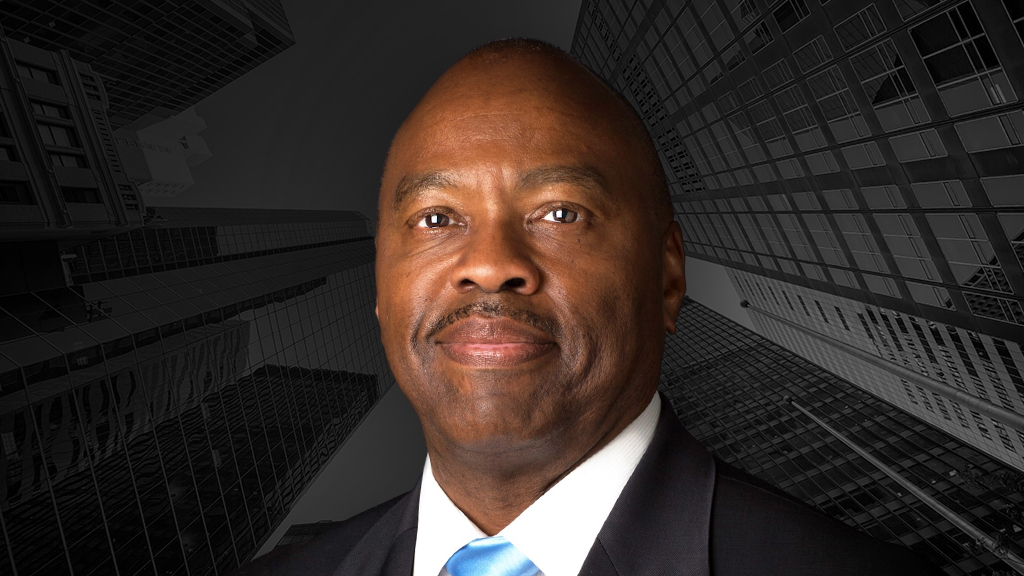
I guess I ought to do an official welcoming to Phil Washington, who runs the Denver Airport Authority after having run the Los Angeles Metro system for many years, and prior to that running Denver RTD. Phil was in Denver, then went to L.A., was extremely successful down in L.A., and then came back to Denver. And we are the great beneficiaries of Phil running a couple of things that are just really noteworthy.
First of all, it is the largest employer in the state of Colorado. 10% of Colorado's GDP is at DEN. 10%. By far the largest contributor to the state of Colorado's annual GDP is the Denver Airport. It is the 3rd largest airport in the United States of America. It is quickly growing to become the number one with 84 million passengers in 2025. Correct on that?
Phillip A. Washington:
82.4.
Willy Walker:
82.4. There we go. I want you to correct me on my stats here, Phil. 83 million passengers last year, very focused on 100 million, and going well beyond 100 million. 100 million by 2030?
Phillip A. Washington:
If not sooner.
Willy Walker:
If not sooner. Takes getting to 105 million annual passengers to surpass Atlanta as the busiest airport in the world?
Phillip A. Washington:
Correct.
Willy Walker:
That's a growth trajectory that most airports, most companies would love to have in front of it. What's the biggest challenge right now as it relates to expanding DIA from 84 million annual passengers to 100 and then on to 125?
Phillip A. Washington:
Well, first of all, thank you for having me.
Willy Walker:
It's great to have you here.
Phillip A. Washington:
It's wonderful to be here with all of you. I think our biggest challenge is making sure the facilities match the growth. We're talking about an airport at DEN that was designed and built for 50 million annual passengers. Having to make sure that we can accommodate this tremendous growth is probably the number one thing. And also doing it safely. Safety, obviously, is our number one priority.
But this growth that we're seeing, not just at DEN. I mean, DEN is the fastest growing airport, I think, in the country. But also making sure that we're multimodal and making sure that it's not just about passengers. Obviously, that's our number one priority. But we want to branch out into other sectors. And hopefully we can talk a little bit about that. But the biggest thing is the modernization and keeping up with that growth, I would say.
Willy Walker:
A couple of things that you've done recently. First of all, you have a competitive advantage because of the land you have.
Phillip A. Washington:
Yes.
Willy Walker:
The airport itself is as large as the city of Miami or the city of San Francisco, or two reference points as relates to how much land you have. You have 6 runways, one of which is 16,000 feet long.
Phillip A. Washington:
The longest in North America.
Willy Walker:
The longest in North America, which allows any size jet to land and land comfortably. They're also wider than most landing strips, correct?
Phillip A. Washington:
Yes.
Willy Walker:
All that comes into being an advantage in what way?
Phillip A. Washington:
Well, as you said, I mean, we can land any aircraft in the world right here. The land, 53 square miles, gives us an incredible advantage in terms of development, in terms of things that we can do and what we can accommodate with regard to development as well. It also allows us to expand our cargo operation, which is, I think, one of the huge, huge potential avenues to bring more cargo into DEN.
This land thing is incredible. It really is. And there are some challenges with that as well, having all that land. I mean, you would be shocked to know that we've got a lot of wildlife out there.
Willy Walker:
We've got people who jump the fence.
Phillip A. Washington:
Yes, we do. We do.
Willy Walker:
Can you talk about that at all, or is that something because of what happened? I mean, I don't want to ask you a question you can't. If you say I can't talk about it, that's fine.
Phillip A. Washington:
No, I can talk about it. I can talk about what we've said in public.
Willy Walker:
To anyone who doesn't know, an individual jumped the fence at DIA two weeks ago, ran out onto the runway, and got hit by a Frontier flight that was taking off for Los Angeles, was killed. It has been deemed to be a suicide. It's deemed that he did it on his own fruition, and was there purposefully, if you will.
Phillip A. Washington:
It bears mentioning that we have about 36 miles of perimeter fence. When we talk about the land that we have, it's a lot of it. Unfortunate incident. We are assessing our security right now. We always do that anyway.
National Transportation Safety Board (NTSB) has an active investigation on it. But it was unfortunate. I'm very, very concerned. I was very concerned about the passengers on that flight and concerned about our operations and maintenance people who had to clean all of that up. And we had that runway back open the next morning at 10 a.m. After working all night to make sure that we clean that runway up. Safety obviously is number one.
We're still working on this. We're talking to Frontier Airlines, which is our hometown airline here in Denver. We have a very, very close relationship with all the airlines, but especially the hometown airline here. But very unfortunate incident.
Willy Walker:
Does that engine, can it be repaired? Does it have to be replaced?
Phillip A. Washington:
I am actually talking with the CEO of Frontier next week. I hesitate to say it can be repaired. I mean, it's a tough thing. But these engines are very resilient, and there's a lot of repair that goes on with the engines and the aircraft. Our hope is that it can be salvaged.
Willy Walker:
6 runways, very wide, very long, gets you to a flight cancellation rate that is way lower than any other major airport. You're at 0.85% of flights canceled on an annual basis last year. To give people a reference point to that, Atlanta was at about 1.5% of flights were canceled last year. And ORD or Chicago was at 1.85%, so almost 2% of their flights were canceled last year. What does that give you, as well as the airlines that fly in and out of DEN as it relates to consistency, cheaper to operate? There seems to be a lot of derivative effects from having that low a flight cancellation rate. And it's not like the weather here is any better than it is in Atlanta or in Chicago. Is that all based off of the length and the width of the landing strips?
Phillip A. Washington:
I think it's some of that. And it's our people, too, who keep runways open, who maintain runways. We close a runway in the summer every year just to do runway maintenance.
When we talk about just maintenance in general, that is a huge part of it. And you mentioned the winter. We know snow here at this airport. And it's amazing that our snow crews can actually plow a runway in about 15 to 20 minutes with the equipment that we have. All of that plays into it.
You've got runway maintenance. You've got our ability to increase non-aeronautical revenue that keeps costs low for airlines. There's something called cost per enplanement. We are very low or sort of middle of the road with the large airports around the country. That means a lot because we keep airline costs low in terms of how we handle our business and handle maintenance and financial management as well. Last year, from all three credit rating agencies, we got the highest rating in the history of Denver International Airport. All of those things kind of play into how we are attractive to airlines to come in and out of Denver International Airport.
All of that plays into it.
Willy Walker:
That's got to help you with your borrowing cost and your $7 billion of debt.
Phillip A. Washington:
That's right.
Willy Walker:
We talked a little bit about the ability to grow the airport. You also talked about passengers. TSA wait times at DIA are shorter than they are at any of the other major airports by quite some bit. Your average wait time right now is 6 to 10 minutes on your TSA lines. That stacks up to 15 to 20 minutes at all the other majors, and some even 20 to 25 on the TSA. How do you pull that off?
Phillip A. Washington:
Well, a couple of things. And great on the stats.
Willy Walker:
I happen to know one or two things about aviation. I also love it. And I also happen to live at DIA. I mean, I'm in and out of that airport all the time. All this stuff is a big interest of mine.
Phillip A. Washington:
I point to a couple of things. One, we invested heavily in the new security equipment. And we wanted to get it in as quickly as we possibly could.
The biometrics that we have there, the four stations, if you will, that we have, the three or four stations that we have in one lane, have taken us from about 140 passengers per hour per lane to over 200 per hour per lane. And that is a big deal. I point to the technology that we have brought in on the security side.
And we want to do more of this. We think we can do more in terms of AI with security and different things to move folks through much, much faster. We were very, very proud of the fact that during the shutdown that we did not have these issues in Denver that you saw in Houston and some of the other places.
But it's the investment that we have made in security technology that has gotten us there. And we're going to do more of that when you look at the east and west security checkpoints. We are going to have 12 additional lanes on level five, as well, as we build out that entire terminal or great hall, if you will. But I point to the technology that has helped us keep those wait times low.
Willy Walker:
People get through the security, and then they go down the escalator, and they get to the trams?
Phillip A. Washington:
Yes.
Willy Walker:
The trams went down, over your last fiscal year, 130 times. Now, when I first read that, Phil, I was like, whoa, that's a lot. And then I read a little bit further.
They went down 130 times, but for an average time of four minutes, which gave you a redundancy rate or the network being up 99.903% of the last fiscal year. Everyone in the telecom industry used to always say five nines that you needed your network to be 99.99999% reliable for it to actually be a network that you would be able to go and actually sell. You're at one nine. Yeah, but that's still damn good.
Phillip A. Washington:
It is. But I want 100%. And we need redundancy at Denver International Airport for the trains. Now, my operations folks tell me that all the time. Hey, Phil, we got 99.86% uptime for the train. When that train is down is chaos at the airport.
Willy Walker:
We've got 160,000 people a day using it.
Phillip A. Washington:
That's right. It's incredible. The airport when the train goes down, the airport is eerily quiet. You've been in a quiet airport. It's scary, actually. So we need that redundancy. And I was talking to Mayor Federico Peña, Secretary Peña, not long ago. I was joking with him and with others that we must atone for what I consider the original sin of DEN. The original sin was not having redundancy for that train. And we want to atone for that by having redundancy.
Willy Walker:
Redundancy in another tram or redundancy in walkways?
Phillip A. Washington:
We're looking at either or both, or actually the train itself. How can we have redundancy from A to B, B to C? We have been working on that.
Willy Walker:
And are you going to go from C to D? Because as someone who spends a lot of time in that airport, when I'm at gate 92.
And I don't mind walking long distances. It's a long way. How further can you go east-west before you go north-south?
Phillip A. Washington:
Well, a couple of things. We don't want to do a concourse D. And the reason we don't want to do a concourse D is that it is more strain on the train. For us to get to 100 million, there is an expansion that we're doing on concourse C West. That is the last expansion that we can do on the existing concourse infrastructure. We've already expanded all of the other concourses.
In the last five years, we have built and opened 39 new gates. That's like another airport. That's like Kansas City. Anybody from Kansas City? Yeah, that's like Kansas City.
Willy Walker:
We're in Denver. We don't like people from Kansas. They got a good football team.
Phillip A. Washington:
I know they got it. Well, they got good barbecue ribs, too. So the last expansion we can do is concourse C West, which we have already started. That is 11 additional gates. That gets us to 100 million.
Beyond that, we actually have a forecast for 120 million by 2045. What we want to do is expand the terminal itself. Think about the terminal. The south end of the terminal is where the hotel is. We want to expand to the north end, there's space there to expand that with a new, what I call, a processing facility, and then have walkable concourses off that area.
You can walk to the concourses that we will build off that new facility that will have airline counters, security, and all of that. It's a walkable concourse with 25 gates each. We have already started sort of the preconstruction utility relocation work on the facility that we have to build first to lead to four additional concourses, two on the north and two on the south end by the hotel.
Willy Walker:
Will you charge more for those gates? Is there any difference in cost between gate C82 and A10?
Phillip A. Washington:
We have use and lease agreements for the airlines, and so there's not much difference. I mean, closer to the center core, they may be a little bit more expensive.
Willy Walker:
But that's typically for bigger jets, too.
Phillip A. Washington:
Correct. And we have international gates as well on A that might cost a little bit more as well.
Willy Walker:
Someone brings in, and well, A380 is different because it's a double-decker. Let's just stick with one-level airplanes. But someone brings in a Dreamliner versus a 737.
The 737 is out on one of the far gates. The Dreamliner is on one of the close gates just because of the number of passengers. But does that airline pay more for having a bigger jet come and use that gate?
Phillip A. Washington:
There's a difference. Yes, there is. Yes, absolutely.
Willy Walker:
As talking about the cost of operating and why airlines like flying out of DEN, jet fuel is another one. Right now, the WTI crude is trading at $100 a barrel today. A barrel of Jet A-1 is trading for $165 a barrel. To give everyone a sense of how much more refined jet fuel is than just normal crude, that shows you the price differential of a 65% premium on jet fuel. All the airlines today are trying to come to the cheapest. I pulled up you, Atlanta, and Dallas. And it didn't surprise me that Dallas was the cheapest, you're in the middle, and Atlanta is significantly more expensive on a gallon of Jet A. How do you keep your costs so low, and how do you get the fuel?
Phillip A. Washington:
Well, we have pipelines. We have fuel that's trucked in as well.
Willy Walker:
But it's predominantly from the pipeline that goes straight to the refinery, correct?
Phillip A. Washington:
Yes, that's right. Well, on the cost, I think the first thing is increasing non-aeronautical revenue as best we can. That's parking. That's a number of other concession revenue, things like that, where we can keep airline costs down. And I mentioned that cost per enplanement piece, that CPE piece, where we are sort of in the middle of the pack. And that's actually a good thing. What airports are really, really struggling with right now is how to increase non-aeronautical revenue.
I was at a conference not long ago. And we have this forum of the 100 top airports, the CEOs from 100 top airports. And you go around the room, and they mention their challenges or whatever. And you come up with this word salad thing. Everyone, the predominant thing was growth, modernization, keeping costs down, and increasing non-aeronautical revenue. What we have done in a big way is the parking is our biggest revenue generator.
Willy Walker:
You got 51,000 parking spaces at DIA today.
Phillip A. Washington:
Correct. Correct. About 51,000 or so.
Willy Walker:
You're going to grow that 70,000?
Phillip A. Washington:
At some point, we likely will grow that. But we are also looking at what public transit can do as well, namely the A Line, which I'm happy to say I had a part in when I was running RTD. But, as these numbers grow, we may have to look at additional parking, but we'll look at that. We haven't decided on that just yet. We want to increase transit usage.
Willy Walker:
Will there be new parking space in the new rental car facility?
Phillip A. Washington:
We're looking at that. We are building a new consolidated rental car facility. We are well on our way with that. We have a professional team that's helping us with that. We're going to start design and construction. We're looking at perhaps employee parking likely on the top level of that. We're looking at about 16,000 to 18,000 spaces in that consolidated rental car facility. Quick story, though. When you look at all of that rental car space, when you're driving along Peña, I was talking to one of the pioneers of building the airport. And he said, Phil, that space was temporary. And I thought, well, temporary for 31 years? One of our big priorities is to build out that space or build out that consolidated rental car facility. And really, EV chargers and all of that on our way to a zero-emission airport.
Willy Walker:
It would be a great spot for a data center, except for the fact that the city council just passed a law that says you can't put a data center in Denver County.
Phillip A. Washington:
I know. It also, and I should mention, ties to our efforts around energy resiliency and being energy independent.
Willy Walker:
You had a blackout. You had an energy loss in March. Which was at Xcel's substation. When that happened, what happens? Do you have just massive generators that kick in? I know you've got solar out there, but can you run without connection to Xcel?
Phillip A. Washington:
We do have some redundancy, but we depend on Xcel. We've got generators and all of that. But it's not optimal. When that outage happened, and we have quite a few of them, as you mentioned, all the escalators and the elevators and all of that stopped at an airport. It was, again, very, very eerie. What we've done we've put out a request for information to the private sector on how we can be energy independent eventually.
And I stand by that. I mean, we cannot be down. We cannot afford to be down.
No airport can afford to be down. We saw the outage in Madrid last year, another in Heathrow last year as well. In Atlanta in 2017. They were down like 10 hours. I mean, can you imagine that? We've had these outages. We went out to the private sector and said we want alternative energy options for this airport. It's like a problem statement. In college, we put out our problem statement, our challenge statement, and said how can we eventually be energy independent, and let's put a pathway or roadmap together to energy independence.
We put out that RFI, a request for information. We got 31 proposals from all over the world on how we can do this. We would be the first airport in the world to be energy independent. We're on our way to doing that, which will bring in a whole new industry to the Rocky Mountain region. That is that multimodalism and multi-industry focus that we have, a whole energy industry we could do here at Denver.
Willy Walker:
As you think about other revenue sources, first of all, revenues of DIA now are $1.2 billion, $1.3 billion?
Phillip A. Washington:
Yeah, neighborhood, yeah.
Willy Walker:
And by law, you don't return any, if you will, they're not profits that come out of DIA that go to the city of Denver. It all stays at DIA, and then you continue to reinvest.
Phillip A. Washington:
Correct.
Willy Walker:
We, as a community, benefit from about $40 billion of economic activity that happens around DEN. But it's not as if the city of Denver sits there and says, whoa, we got a windfall. You sent us a check for $300 million last year, and so we don't have to go and do X. Okay, and that doesn't change. That's by federal law.
You take this cash flow and just pour it back into it with the thought of being the best airport in the world, potentially the largest airport in the world, but then also bringing other economic development to the city of Denver and the state of Colorado?
Phillip A. Washington:
Yes, that's correct. And let me just put a finer point on it. We use no sales tax dollars. We are an enterprise. We actually live on what we make, to your point, through those revenue-generating mechanisms that I mentioned. What we generate must stay at the airport. If it leaves the airport for any reason, that is called diversion of revenue. And that diversion of revenue is a violation of federal law, as you mentioned.
The revenue we generate, we plow back into the airport. And we need to do that. We absolutely need to do that, primarily because of the growth that we're seeing. And it's not just us. We're probably the fastest-growing. But when you think about the 20 largest airports in this country and in the world, all of them have what's called a capital improvement program. This capital improvement program, or CIP, when you hear that term, that CIP is in the billions of dollars.
Willy Walker:
Yours is 12?
Phillip A. Washington:
Ours is about $12 billion over a 10-year period. I spent a lot of time in Los Angeles. LAX, theirs is something like $20-some billion.
Willy Walker:
But they don't have any space to grow.
Phillip A. Washington:
No, they don't. They don't.
Willy Walker:
They're going to continue to go into the existing infrastructure and just upgrade the infrastructure. But they've got no ability to say, let's move from X number of passengers to Y, because they can't put another runway down.
Phillip A. Washington:
That's exactly right. We have this incredible benefit, this incredible resource of land here where we can spread and we can develop. And maybe we'll talk about that development piece in a minute as well.
Willy Walker:
What's a runway 7 cost? If you just said tomorrow, I want to go build runway 7, what's a runway cost?
Phillip A. Washington:
Between $700 million and $1 billion.
Willy Walker:
That's pretty cool. That's a lot of money. And that's just grading and paving.
Phillip A. Washington:
Yeah, yeah. But I mean, this thing is very deep. It's not like paving your driveway.
Willy Walker:
No, I got it. And on that, what about putting radiant heat underneath?
Could you do that?
Phillip A. Washington:
We could. I mean, there's technology out there.
Willy Walker:
Are there airports that have radiant heat underneath the generation?
Phillip A. Washington:
I can't think of one right now. I think there are some. But 6 runways. We are doing the pre-environmental work on a 7th runway right now. There's a lot of discussion about that.
Willy Walker:
What's the environmental work cost you? And I'm asking this because you know my next question is going to be about the Peña Boulevard. But what's the environmental cost? And by the way, we're talking about farmland between here and Kansas.
Phillip A. Washington:
Yes, yes. That's right.
Willy Walker:
That's right. I'm a Denver resident. I like to have clean water. I like to make sure we don't have chemicals running off and into the rivers, all that kind of stuff. But you're going to spend millions on an environmental impact study to try to build Runway 7 when it's farmland.
Phillip A. Washington:
Yeah, yeah. Well, I mean, I've been in this role for almost five years. And the environmental contracts for the 7th runway was let before I got here. That pre-environmental was awarded about five and a half years ago, 6 years ago.
Willy Walker:
To do a pre-environmental study?
Phillip A. Washington:
Environmental overall. We're still in the pre-environmental stage. But that contract was let for all of the environmental for a 7th runway. That's being done.
Now, the issue is, and what we've run into from various stakeholders is, namely the airlines, is are you fully optimizing the 6 runways you have? Therefore, do you need a 7th runway? Now, what I've said and what we've said is that once we go over 100 million, in order to sustain or even go beyond 100 million, we need a 7th runway. Because of the rate of departures and takeoffs and all of that. We know, at some point, with forecasts for 2045 of 120 million, we're going to need a 7th runway.
Willy Walker:
Talk that through for a second, as it relates to everyone in this room has flown in and out of DIA. My understanding is that the slope that your jets come in is the exact same slope at every single 3%, which is the same at every major airport. You can only have two coming in simultaneously and two taking off simultaneously. Is that correct? Or if you added a 7th, you could actually add a third inbound or a third takeoff?
Phillip A. Washington:
I believe we could. Yes. We could do that.
Willy Walker:
Is there any other airport that's done that where they got three jets taking off simultaneously?
Phillip A. Washington:
I don't know of any. I don't know of any right now. But keep in mind that geographically we have wind conditions and all that. We change runways like all the time based on wind conditions and all of that.
Willy Walker:
But you don't have to worry about any buildings and you don't have to worry about any noise ordinances. And as a result of that, you have a massive advantage.
Phillip A. Washington:
I wouldn't say we don't have to worry about noise. We have a 1988 intergovernmental agreement with Adams County that talks a lot about noise and measuring noise and all of that. We're always concerned about noise. It's inevitable at an airport, though. But I wouldn't say we don't worry about that.
We're very concerned about that in many ways.
Willy Walker:
Wow, that's surprising. You've got, I think, 350 miles of roads out there. If you add it all together, that's from D.C. To Boston of continuous roads that you've got to maintain. You've also got more snowfall than another major airport. You and I have talked about this before. What do you do with all that snow?
Phillip A. Washington:
Well, hopefully it melts.
Willy Walker:
But you've got a melter.
Phillip A. Washington:
Yes, we've got a melter. We've done very, very well with snow management, if you will.
Willy Walker:
That has big environmental issues to it, right? It all gets melted. And then what happens to the water? Does it get recycled? Does it go to the rivers?
Phillip A. Washington:
Yes. We look to retain and capture all of the water. We look to retain and reuse the de-icing fluid and all of those things. That's the sustainability piece that we have. But we look to capture and recycle as much water as we possibly can. And I think we do a pretty good job of it.
Willy Walker:
And is there anything that doesn't meet the eye that goes on at DIA? So, for instance, you've got like one of the things that I looked up, first of all, you've got a jail there. Hopefully, nobody in this room knows what the jail at DIA looks like. You've got a morgue there, too. How many passengers a year die on an airplane and end up at DIA to be taken care of? Back of the envelope.
Phillip A. Washington:
Oh, man. A year? I don't know. Probably 10 or below. I mean, it's not as rare as you think. We have a lot of emergencies on aircraft. We have a lot of emergencies and not deaths, fortunately. But we take care in the concourses, in the terminal. We have a lot of medical emergencies.
Willy Walker:
You have the largest service dog training facility in the state of Colorado. Why is that?
Phillip A. Washington:
Well, the CATS program, the K9 program, is really a fantastic program. It keeps people calm. This whole idea of neurodiverse and all of that. And people get nervous when they fly. The K9 program, the CATS program, really, I mean, you would be amazed. When we bring all those dogs, those K9 in, it really calms a lot of people down, especially kids and seniors as well. That is one of our great programs. People that own these K9s, that bring them in, I'm forever grateful to them, that bring in their dogs. And they've got to pass a test. We don't have any Rottweilers or anything in that K9 program.
Willy Walker:
And as it relates, I mean, all of us look at Instagram, and we see all these very sad kind of road rage that happens inside of the cabin of airplanes. I just last night happened to see one of the Southwest Airlines fight between two women. It just kind of came up, and I was like, I don't need to see that. But that happens. How often do your either EMTs or law enforcement get called out to a plane to take care of sort of what I would call road rage would be what I'd call it, even though it's plane rage.
Phillip A. Washington:
Yeah, plane rage, air rage. It happens I won't say frequently, but, you know.
Willy Walker:
That's reassuring. I thought you were going to say it happens more than I thought.
Phillip A. Washington:
No, it happens occasionally, I will say, where we have a disturbance on an aircraft. We have a fair number of planes that are sent to DEN for various reasons, or it might be a disturbance in the air, it might be a medical emergency, and they are diverted to DEN.
I think a lot of that happens when they are sent to us is because they know that our teams are very, very proficient, both our medical teams, both our fire department there, and we pay for those services from downtown as well, police and fire, and all of that. We pay the city for that, by the way. But I think many of these are sort of referred to DEN because they know we have the personnel to handle pretty much any situation.
Willy Walker:
When you have police, you have paramedics, you have gate agents, you have pilots, you have passengers, you have caterers, you have fuel, 40,000 people working in this ecosystem. They're not all your employees. How do you manage the access/safety component when they all have access to your facility and are all participating there, but if some, let's just say, Southwest Airlines gate agent decides that he or she doesn't want to act the way that they're supposed to act in going to the gate, in being engaged with a flyer who may be or not be flying with Southwest, how do you deal with that?
Phillip A. Washington:
Well, I think the first thing is creating a culture within the entire ecosystem. Even though we don't handle everyone, we're not responsible for everyone, I think that we can really lay out a vision of safety and excellence and all of those things and create that culture ecosystem-wide. We've done that.
We meet with the airlines once or twice a month as sort of a consortium of all the airlines, and so we talk about this culture thing. We talk about safety. We talk about all these things. And the airlines, they handle their business as well. Airline employees, the example that you gave. All of the vendors, the concessions, and all of these folks out there, I want to think that they understand what the culture is and what the vision is of the airport itself, and I think they adhere to it. That's not to say we don't have issues. We do. But I think for the most part, everyone understands that we need to run a good ship, and we have done that.
Willy Walker:
United has 90 gates at DIA. Southwest has, like, 40. Is there a person at United who sort of is the station manager of everything that goes on at DIA? You call him or her and say, hey, we've got an issue, or they call you and say, hey, we were on gate A20, and something's not happening?
Phillip A. Washington:
Absolutely. We talk to those station managers on a daily basis. You mentioned United. They have a wonderful lady who is a station manager, great professional, and we talk to her frequently, again, probably almost every day. The same thing with all of the other airlines. And then we meet as a group at least once a month, and I'm in that meeting. Several other folks from our team are in that meeting. We work through these issues. If we have an incident, we talk about the lesson learned. We talk about the after-action review that we do. It works. I mean, it's a big ecosystem, and people find it hard to imagine how we can control all that. But we've got good people there at the airport that help us do that.
Willy Walker:
I was looking at what your biggest city pairs are. I was surprised that Phoenix is your largest city pair. And then it goes Phoenix, Vegas, I believe, then Dallas, and then L.A.
Phillip A. Washington:
Yes.
Willy Walker:
But I was surprised about those. I think about this being a regional hub and people coming in here and then going off to places like Boise that don't have a whole lot of direct access. But all four of those airports are major international airports. They've got lots of international flights coming into them. That surprised me that those were your biggest city pairs. And I guess the question would be, how much are you working on getting flights from Asia to fly over San Francisco, fly over L.A., and come to Denver to then allow passengers to spread out into the United States? Because your number one international destination is Cancun, which is just Denverites going to Cancun or someone from Boise who comes through here to go to Cancun. That's not necessarily someone in Tokyo saying, I'm going to New York, and I'm not going to go direct to New York. I'm going to go to Denver and transfer across. What's the opportunity there?
Phillip A. Washington:
I think what we build ourselves, what we've been saying over the last five years, is that we are the gateway to the West. In my mind, it's not just about Denver. The gateway to the West is coming into Denver, catch that connecting flight to Phoenix or wherever. We have been sort of promoting ourselves that way internationally.
We have been very, very aggressive over the last 5 to 6 years on international. We believe that with the rise of the middle class in Asia, in Africa, we're already seeing the growth. We have taken delegations to the continent of Africa. We are really targeting the continent of Africa. We actually went to Addis Ababa in Ethiopia, and took a delegation there and met with the government, because Ethiopian Airlines is owned and managed by the government of Ethiopia, and met with the prime minister there about a flight from Addis to Denver.
There are some challenges with that. Addis is actually a higher elevation than Denver. We would have to take off from here with a less-than-full tank because of the weight that is involved with that. But I see tremendous growth on the continent of Africa, and Asia as well.
Quick story, I was in Istanbul about a year ago, and we're in a setting like this. We had a delegation that went there because we got a direct flight on Turkish Airlines. And the gentleman from the Chamber of Commerce came in and said we don't aspire necessarily to a big house like Americans do, and the picket fence and all of that. We aspire to travel. We're not so much concerned with maybe how Americans think about a house and all of that, because what he said was we can't afford it. But we want to travel, and our children want to travel. And I thought, you know what? That's pretty incredible to me.
And we need to put Denver on the map, if you will, and not just have it as a flyover city. That is why this whole idea of economic development and us being a generator of $47 billion a year, whatever it is, it really boils down to what's happening here in Denver that people want to come to and the West. All of these things, the city government is doing, the mayor is doing, and all of that really ties into the potential that we have for folks to come here from all over.
Willy Walker:
Are you talking about flights from Africa, or from the Middle East?
Phillip A. Washington:
You won't make it from the Middle East. That's too far right now. But from Asia and from Europe.
Willy Walker:
What about space? Could DIA ever be a landing pad for people who go up to space and come back to space, given you got long runways, you got runways that have very, very sturdy runways below them, and you're pouring concrete down? How deep is that concrete? Is it 6 feet?
Phillip A. Washington:
Yeah, it's at least 6 feet.
Willy Walker:
Really? Have you guys thought about space?
Phillip A. Washington:
We have. We actually have. Listen, we got a spaceport within five miles of the airport. All right. And we meet with the folks from spaceport all the time.
I absolutely believe that we are in the best position of any airport in this country to have space travel from. Now, we've got to build the infrastructure and all that. But I think that we're so well suited. We talked about the land that we have, and we talked about the space that we have to build. We haven't talked too much about the opportunities for development that we're doing right now. But I absolutely believe when I think about 20, 30, 40 years from now, DEN is the launching pad. It's the launching pad.
Willy Walker:
You think about that in the context of SpaceX and Tesla, and how Elon Musk is the S3 or S1 on SpaceX came out yesterday. That gives lots of insight into what the SpaceX IPO is going to look like. And in it, one of the things that I thought was so interesting was the fact that Elon has these two ecosystems between Tesla and everything that's in Tesla, and SpaceX and everything that's SpaceX. And it's all commingled. You've got SpaceX buying the Tesla SUVs.
You've got all of these different companies are interacting with each other. You're sitting here saying we're positioned as potentially the best airport to try and attract space activity. And yet the Denver City Council yesterday banned the development of data centers. You think Elon Musk comes to Denver?
Phillip A. Washington:
What I will say from an infrastructure standpoint, what I feel our team's job is, is to prepare the way. I am not, of course, an elected official.
Willy Walker:
No, but I'm trying to push you on this one.
Phillip A. Washington:
I'm an infrastructure guy. I was an infrastructure guy since I was a kid. I was just like when my mother worked 14 hours a day and wondered when the next bus would come, as we lived in public housing. My mom was a single mother. I was enamored with infrastructure for the good of humanity. And I'm talking about infrastructure. I'm talking sidewalks, water, transit, and all of that.
We want to do what we can in our foxhole, if you will, to show that we can prepare the way in terms of infrastructure for anything that we can dream of. And when I think about space, I think about what do we need to do at Denver International Airport to prepare that facility with the hope that the politics will follow.
Willy Walker:
And too much to ask for the politics to lead.
Phillip A. Washington:
I think so.
Willy Walker:
Fair answer.
Phillip A. Washington:
I think so. And I'm not talking about just here. I'm talking about just nationally. I think that if I think about how I can prepare the way and I think about all these things I think about that we've talked about, I think about energy independence pave the way for that, whether that is geothermal, whether that is small modular reactors that I got beat up on. But I stand by it, though. Absolutely.
Willy Walker:
How much would a small-scale reactor to be able to give you enough energy cost?
Phillip A. Washington:
I think right now I think about the need to run or have energy and electricity 24, seven, seven days a week, or whatever. And it's not just SMRs. It's a combination of all these things.
Willy Walker:
Could you do it on just SMRs?
Phillip A. Washington:
I think eventually we will be able to.
Willy Walker:
And any idea what that would cost?
Phillip A. Washington:
I don't know. Right now, it costs too much to do that right now. But I'm looking down the road.
Willy Walker:
Even with you having a 12 billion dollar capital campaign right now. It's bigger than that.
Phillip A. Washington:
Yes, I think so. I think so. But I mean, these things are expensive now. SMRs there's no real.
Willy Walker:
Could you pull it off on solar or the storage doesn't allow you to?
Phillip A. Washington:
I think solar. I don't think we have enough solar to do that, even though we have more solar arrays and we have the probably the largest solar farm of any airport in this country. We can't do it just on solar. I think we're going to need a little bit more. I'm not just stuck on SMRs. I think we can do this across the board. I think we could do a combination of various alternative energy options to get us where we want to go, which is energy independence.
Willy Walker:
Final couple of questions. I talked earlier about the environmental impact study on Runway 7. You've got an environmental impact study going on on the widening of Peña Boulevard, of all the bottlenecks you've gone in.
You have changed the TSA lines and brought it down to the best in the country. You've got your canceled flights down at the best in the country. You've got more growth than any other airport in the country. And yet Peña Boulevard is still two lanes out and two lanes back. And to anyone who goes out there all the time, sits there and says, why am I waiting longer to get in my car out there than I am to get through security into my gate?
Phillip A. Washington:
Exactly.
Willy Walker:
We're going to get some relief here.
Phillip A. Washington:
Absolutely. And listen, we are talking about improving Peña.
Willy Walker:
Well, that's just widening it, isn't it?
Phillip A. Washington:
Well, we cannot predetermine the outcome during the environmental period. Actually, that's against the law. I have my ideas, but this is why we're going through that environmental process.
Willy Walker:
This is a 12-million-dollar environmental impact study.
Phillip A. Washington:
I forgot how much it is.
Willy Walker:
I believe it's 12 million dollars. But to figure out whether a swallow is going to have its migratory pattern changed by us adding two more lanes to Peña Boulevard.
Phillip A. Washington:
We are looking to accelerate that environmental process as best we can. But we've got to go through it.
Willy Walker:
Do you want to make a bet with me that you've got a fix to your duality on the trams before Peña gets widened?
Phillip A. Washington:
No, I'm not going to bet. But I will tell you this. We are scheduled to get to what's called a preferred alternative by the end of this year. Now, the preferred alternative says this is what we want and plan to do. Now, you've got to go through this community thing and all of that, which we're nearing the end of. And at the end of this year, we're going to come out with that preferred alternative. Widening is one of the alternatives that we are out there shopping.
Willy Walker:
Sorry, what would be something else?
Phillip A. Washington:
I can't remember all the alternatives.
Willy Walker:
Double-decker?
Phillip A. Washington:
No, no, no.
Willy Walker:
I'm trying to figure out what's the alternative beyond just widening it. Isn't it just widening it?
Phillip A. Washington:
Well, there's a couple. There's the widening. I'll come back to you with the other ones. But there's a transit element that we're doing, too. We've got 20 recommendations for what's called transit demand management, 20 recommendations that we can improve the transit side.
But people don't realize that we own Peña. The airport does. And we're responsible for maintaining it. But to your point, the fact that Peña has not changed in 31 years, it's about time that we do something about it, and we are. We're at the end of that environmental period. And here's a bet I'll make with you.
Willy Walker:
Great. I'm not sure I'll take it, but you put it out there.
Phillip A. Washington:
I bet that there will be a lot of consternation with whatever preferred alternative we come up with. Or people might just say, hey, that's great, Phil. But listen, it's something that we need to do. I mean, we've had to explain to people that we cannot go from 50 million annual passengers, airport designed for 50 to 100, and not do something about Peña. I mean, just like we're doing with all this other stuff. We're doing the consolidated rental car facility. We are looking at a 7th runway. We're building the North Terminal expansion to get us to 120. We are expanding Concourse C to the west to get us to 100 million. We're doing all these sustainability things, alternative energy options, all of this. We've got to focus on the road that gets us to the airport. And I'm happy to say over the last 4 or 5 years, we have done that. And we're nearing the end of it, towards the end of this year where we are going to announce that preferred alternative.
Willy Walker:
As I was getting myself ready for all this and looking at all the stats, I looked at what an impact what you manage has on this state. And I said it at the top. It's got tens of thousands of employees, the largest employer in the state of Colorado. It's got 10% of the state's GDP. There's no other company or government service that has that much of a contribution to our state's GDP. It's innovating and it's growing faster than almost anything else. And you run it. I was sitting there saying, is Phil the most important person in the state of Colorado? And I will tell you, you're damn close to it.
The governor may have more sway over an overall GDP growth and where he puts his finger on the scale to say that needs to grow or that doesn't, or we're going to invest there. But barring the governor, I don't know someone else who I could have had to this conversation who has a bigger impact on growth and the GDP of the state of Colorado. Thank you for all you do. Thanks for answering all of my very detailed questions. I love what you do. I love flying in and out of your airport. And I really appreciate you joining us today.
Phillip A. Washington:
Thank you so much for having me. Thank everyone that's here or online or whatever. And thank you for being just such a supporter of Denver International Airport in aviation and transportation.
Willy Walker:
Phil has the one drawback of knowing me as well as I know Phil is that he gets these texts from me at random times and say, like, I've been waiting for 32 minutes for my bag, and it hasn't shown up on carousel five. And he's like, it's coming, Willy. I've got the team on, and it's all good.
Phillip A. Washington:
I remember that.
Willy Walker:
Well, that was actually, I hope everyone in the room who's watching this knows I don't do that. What I did do once was I was coming back to the international terminal literally, the baggage carousel exploded. Literally exploded in front of me. I texted Phil. I said, I'm at baggage carousel one in the international terminal. And the thing literally just exploded. He's like, thank you very much we're on it. I'm not quite as bad as my bags have taken me a long time. The whole thing had blown up.
Phillip A. Washington:
Well, what's funny about that? What you didn't know was that I was on an international flight right behind you.
Willy Walker:
Was it fixed by the time you got there?
Phillip A. Washington:
No, no. But I had just landed, and I was behind you on another flight. And I walked in and saw that. And our folks texted. Our folks were working on it when I got to the international carousels.
Willy Walker:
Great. So, Phil, thank you so much. It's been a great conversation. Thank you all. Thank you.