Willy Walker:
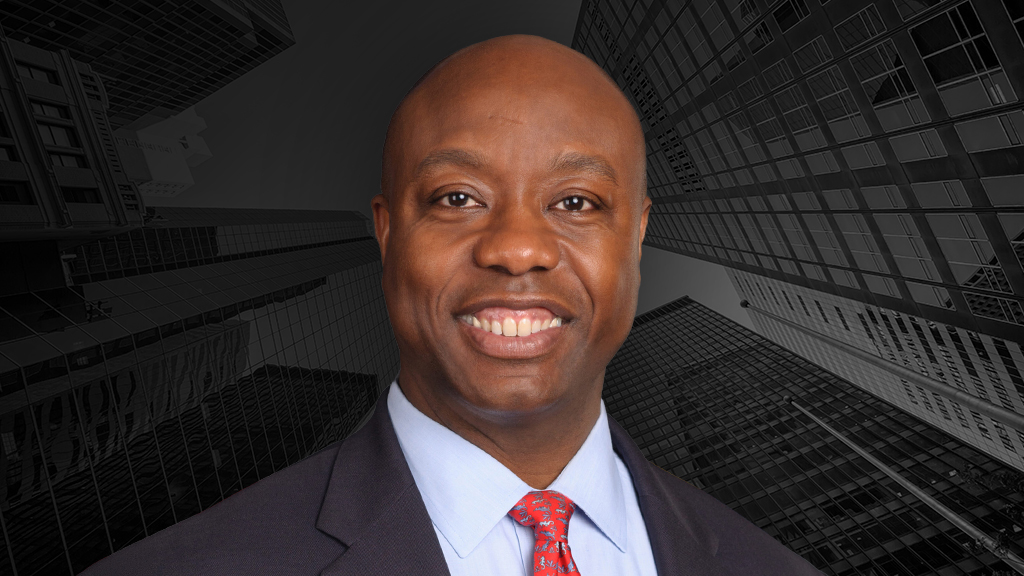
Welcome to another Walker Webcast. It is my honor and great pleasure to have Senator Tim Scott join me today. Senator, if I can, let me just do a quick bio on you for those people who have been living under a rock for the last 20 years, and then we'll dive into our discussion.
Senator Tim Scott is a Republican U.S. Senator from South Carolina and one of the most prominent voices in national politics. Raised in a working-class, single-parent household in North Charleston, Scott often credits his mother's perseverance, faith, and work ethic as major influences on his worldview. After attending Presbyterian College on a football scholarship, he transferred to Charleston Southern University, earning a degree in political science before building a career in insurance and real estate.
Senator Scott began his political career on the Charleston City Council before serving in the South Carolina Senate and later the U.S. House of Representatives. In 2013, Governor Nikki Haley appointed him to the U.S. Senate seat vacated by Jim DeMint, and he has since won elections in 2014, 2016, and 2022.
Senator Scott is known for an optimistic, conservative message focused on faith, economic opportunity, entrepreneurship, and upward mobility. Senator Scott is the chairman of the very important Senate Banking Committee and also sits on the Finance Committee, the Health, Education, Labor, and Pensions Committee, as well as the Committee on Small Business and Entrepreneurship.
Senator, it is a real joy to have you here. I would be remiss if I didn't thank my colleague Jeff Burns for having connected the two of us and made it so that you were open to joining me today on the Walker Webcast. So thank you to Jeff and thank you to you, Senator, for joining me.
Senator Tim Scott:
Thanks for having me. I like the tie, by the way. I should have worn a tie now that I see how sharp it looks. But one day when I grow up, I'll have a tie like that. It's really good to be with you. I'll say without any question, Jeff's a good man. I'm glad that he bridged the gap and got us together. Frankly, congratulations on the success of this webcast. It's remarkable. Hundreds of thousands of people tuning in. Good news for America, because I think you provide an avenue for people to hear and learn a lot about the issues that matter to them.
Willy Walker:
I greatly appreciate that, Senator. I would say one of the nice parts about doing this is the fact that, being the CEO of a publicly traded company, I'm not a reporter. I'm not a political commentator. I'm somebody who really just wants to talk about what's out there and really talk to facts.
I went up to Portland, Oregon, a couple of years ago, and we just had a young man join Walker & Dunlop who went to Portland State University. He said, I remember hearing you speak at Portland State. It was an amazing presentation. I wrote him back, and I said, I don't think the crowd really liked what I was saying because I was kind of throwing darts at Portland and the state of Oregon as it relates to their economic policy. And unfortunately for both the state and the city, what I said was correct. Someone jumped in there and said your message really didn't resonate with the people in the Chamber of Commerce. I said, I'm sorry. It was all facts. That's all it was. It was just facts.
And if you don't like the facts, then I'm sorry. I might not be the right person to talk to.
Senator Tim Scott:
Thank you. I'll say this based on what you just said. Think about it this way.
You may have been foreshadowing the future, because I'm not sure how long ago that was that you spoke in Oregon.
Willy Walker:
Two years ago.
Senator Tim Scott:
Two years ago. Two years is a long time ago. Unfortunately, when you look at some of the challenges and travesties happening in places like California, Washington State, Oregon, and beyond, the truth of the matter is that economic reality is just that. There are facts you can build a compelling case on, or you can deny the facts and destroy your community.
I'd rather know what the facts are and then build the truth on top of the facts. As we do so, we can help set more economic captives free, or states like California can create a mass exodus to states like Florida, Texas or, thank God Almighty, South Carolina.
Willy Walker:
Senator, one of the themes when you looked at running for president was faith in America. Whether it's on the left, on the right, or even in between, there seems to be a sense that people are losing faith in that vision, losing faith in America, whether it's the political divide or whatever. How do you, because you're dealing with people every single day, both in Washington and then back in South Carolina, how do you get people to buy into faith in America today?
Senator Tim Scott:
I think sometimes, what I learned from the Gospel and my definition of faith in America is not necessarily my faith in Jesus Christ. Faith in America goes beyond just simply my belief system. I believe that if we incorporate all of our belief systems, even when they're different, into this understanding that we have a Judeo-Christian foundation upon which we build an objective standard, on that we create laws that apply to everyone so that even the weak get to keep their stuff, that is a blessing from the good Lord, but it's also a blessing from our founding fathers who understood the power of working together beyond racial lines, beyond religious lines, beyond even economic lines, and as a result we have the greatest system of economic opportunity and progress the world's ever known.
Therefore, when I traveled around the country in 2023 trying to share faith in America, I wanted to help people understand that my story is not possible in any other place on the planet save America. One of my mentors, a Chick-fil-A operator, got him down on his knees, taught me that having a job is a good thing, but creating jobs would be better. He taught me that making an income could improve my lifestyle, but making a profit could actually improve my community. That's not religious or irreligious. Those are just the facts.
So if you love the law of the harvest, and I do, one of the things you learn is if you plant apple seeds, you get apples. If you plant orange seeds, you get oranges. If you plant watermelon seeds, you're not going to get oranges.
You're going to get watermelon. So what we need to understand is that in this nation, we are afforded the opportunity to be a blessing to others because others blessed us first. Faith in America is this understanding that people who look like you and those who don't, people who agree with you and those who don't, can actually sharpen the sword and make it better for everyone.
As long as we have civility, fairness as a goal, and a place to discuss, to debate, and to vehemently disagree on the next generation's challenges, why not have that public forum where we actually debate some really important issues? But in order to do so, I've got to respect people who disagree with me. And faith in America suggests it's okay for us to disagree. We can learn to disagree without being disagreeable. I love the country.
Willy Walker:
Senator, I mean, look, I know a bunch of your colleagues in the U.S. Senate. Everyone that I call a friend is an incredibly engaged, caring person. What needs to happen to sort of change just the general culture that is there that allows you all to get your work done?
Because I know you, to a person, are somebody who lives what you just said. First of all, I commend you for the way that you perform your business, if you will. But from outsiders looking in, Senator, it really feels like we've lost that sense of collaboration and humility. How do you get that back in there?
Senator Tim Scott:
Willy, I think you said the key word. The key word really is humility. The truth of the matter is, one of the smartest guys on the planet that I know personally, I know a lot of smart people, but I don't know them all personally.
A guy named Larry Ellison once told me that you might just be wrong. When you start off with the premise that you might just be wrong, and for those who don't know Larry, Larry founded Oracle. He's helped us in every facet of the world. When I say us, I mean the United States of America.
The truth of the matter is that one thought from a guy who is brilliant without any question, in order to be engaging and helpful and constructive, if you start with the premise you might just be wrong, that in and of itself is the beginning of humility, especially in the public forum where you're actually, the benefits come to you when you don't listen. When you just spew venom on the other side, there will be a segment of your own side that celebrates that. In order for us to get back to making progress, humility is so important. I start off every day by recognizing I might just be wrong, and therefore I should listen before I actually contribute to the conversation. Unfortunately, Willy, to be honest with you, sometimes I'm the guy that is waiting for my turn to speak, which means you're not listening at all. You're just waiting for yourself to jump into the conversation. If we're going to be successful as a nation, probably two ears, one mouth, an old-fashioned saying, the ratio matters.
So my wife would not tell you this is true. I would tell you this is completely true. I listen a lot more at home than I talk, and therefore, I need to do the same thing in the public forum. For those of you listening, please don't tell my wife I just said that.
Willy Walker:
Senator, on that, given your extremely prominent role and being chair of the committee and clearly right there as it relates to Senate leadership and national leadership, you have a lot of inbound, if you will. How do you study new ideas? How do you take time to stop? I mean, the world of AI and everything that we're looking at, I mean, you mentioned Larry Ellison. How do you determine what areas to dive into, given what I would think is just this unrelenting flow of the here and the now? Hey, Senator, we need you to opine on this. We need you to vote on this. We need you to move this way.
Those are all what we see today. How do you look around the corner? How do you take time to try and learn new things where you may be 100% right, and you actually might be 100% wrong, but at least you honestly have said, I might be wrong on this one?
Senator Tim Scott:
Absolutely. One of the things I try to do, to be honest with you, Willy, is I try to start every day with what I consider the absolute truth, which is the gospel. I spend some time reading through the Word of God.
As a result of that, I find myself being challenged to do a couple things on a daily basis. One of the things that I'm challenged to do is to actually love people who are not like me. That's a challenge for me sometimes, especially in politics.
As I said before, the rewards go to the person who doesn't actually love the other side. You just spew venom on them. One of the ways that I'm able to get there, though, is by starting every day curious. Curious about what I can learn.
On the artificial intelligence front, one of the things I've done over the last several months now, about a year into it, is that I'm taking a deep dive in every article that I can read, magazines that are focusing on it. Then, the blessing of the good Lord and the people of South Carolina, my bosses, have allowed me to have a chairmanship where I call in Jensen from NVIDIA and talk one-on-one with the CEO of NVIDIA about his worldview on export controls. Very informative, very educational for me. I call in someone who has the exact opposite view that he has, the Anthropic CEO, Dario. I sit there and listen to and talk with them back and forth for an hour or so.
One of the things I try to do is objective research on my own. Then what I consider a subjective approach to it, by listening to people, brilliant people, a lot smarter than I am on AI, which is not saying much, by the way. But if I can get Jensen on one side, Dario on the other side, they may agree on a lot of things as it relates to AI, but they completely disagree on export controls.
What an opportunity for me to learn. Then I can bring them in front of my entire committee so that we get healthy tension in the public forum that may direct us towards real answers for the average person. Because today, artificial intelligence, just gonna stick with that topic for a minute, actually presents real problems for my bosses because they're focused on electricity prices going up, and they're focused on job losses or jobs going down.
And the one thing I'm able to say is whether you agree or disagree on export controls, what I'm gonna do as a policymaker, I'm gonna focus not on my election cycle, but America at 2034, 2040, and work my way to a place where I'm going to force these companies to absorb the cost themselves on the grid, which will help my consumers relax a little bit and maybe spend a little more time on the benefits if the electricity prices are not gonna go up. Let's say we create transitional funding and transitional opportunities for those folks who could be displaced in this workforce because of artificial intelligence. Maybe we bring the temperature down enough because policymakers are thinking five and 10 years in advance so that we solve the problems that could have been created using artificial intelligence as opposed to eliminating solutions called artificial intelligence because of the immediacy of some of the crises that we see coming our way.
I do the same thing, frankly, as it relates to Iran. I think about the fact that gas prices are a major part of conversations. When I go to the gym or when I'm leaving church, people are talking about it's $4.52 a gallon on average countrywide. If you live in California, God bless your soul. If I can actually sit back and say having a non-nuclear Iran pays dividends for a long time, that's good for me to communicate that to people.
But unless I have a solution to the immediate issue of gas prices, it's hard to get through. I do a lot of homework on what gas prices look like. I do some homework on, for example, Brian Kemp, Governor of Georgia, I believe, has either thought about or implemented a gas tax holiday. Chris Wright, the Secretary of Energy, has suggested, well, 18.4 cents is the price of taxes on a gallon of gas. If we took that down and had a holiday until this mess is over, well, what if we did that in concert with other states and brought gas prices down by 40 or 50 cents until the crisis is over? That's the way you start putting energy into a conversation. But it's not ready for prime time. But man, the more homework I do, when the challenge shows up, I'm ready for it.
I have committed myself to being a lifelong learner, which means that my goal isn't just to think through my next election cycle. My goal is to think through serious issues that could create headwinds for the greatest nation on the planet in 10-year increments.
So every year I update it. I got a 10-year increment, I got a 5-year increment, I got a 3-year increment, I got a one-year increment, and I got daily objectives. Why? Because, as an entrepreneur, and I was running my Allstate franchise, I had no choice but to have a plan. Proverbs 29:18 says, without a vision, a plan, people perish, or they get lost along the way.
Willy Walker:
On the AI issue, real quick, and then I want to jump to another different issue, Senator. I'm certain, in the last four weeks, I've spoken at Chapman University, Arizona State University, MIT, and Georgetown. In each one of those talks, the moment we go to Q&A, the first question I get is, what do I need to be doing or learning about AI to be hireable by Walker & Dunlop?
Whether it's a specific curriculum or outside of it or whatever else, all these kids are saying to me, like, AI, AI, AI. I'm certain that when you are both in your office in Washington as well as down in South Carolina, there is both a lot of opportunity when you sit around and talk to someone like Jensen or someone like Larry Ellison of, man, this is going to change the world and it's going to change the economy and look at the amount of money that's being invested into our country to grow this capability.
At the same time, I'm certain you travel around and meet with a lot of graduates of the University of South Carolina and others who say, wow, am I going to have a job? What's this going to mean to my business, etc. As you think about just the balance of regulation to make sure this thing doesn't do something that none of us want it to do, versus sort of free market to harness it and to take the highest advantage of it we possibly can. How do you balance those two things? Sort of like a clutch and a brake or a brake and an accelerator in a car. Where are you as it relates to, we got to make sure we get this right from a regulatory standpoint, or let's just let this thing run, and if we need to react to where it's going, we will then put regulation in place.
Senator Tim Scott:
I think for us to be the economic superpower of the world, we have to get AI right. To get AI right means that the first regulatory question we should wrestle with is not what is it and what will it do? I would personally, and this is where I've started, is wrestling with the question, who's our competition and what would they do with it?
For me, China's our primary competitor because, unfortunately or fortunately, however you look at it, Europe has become such a utility that it has really regulated itself out of the next big thing, in my opinion. I hope my European friends are listening to me and that when they hear this, they're going to say, he's dead wrong, and then prove me wrong. But at this point, what we're learning is that too often our friends on the other side of the pond have not been as engaged with entrepreneurship and taking the calculated risk that the real big player on the planet besides us on AI would be China.
So the regulatory environment that is foremost on my mind, particularly as the chairman of the banking committee, is setting rules of the road on what they can have and what they can't have, which is consistent with what the White House is doing as well. So the regulatory environment that you'll first see come into clarity on the horizon will be how we treat China on export controls as relates to chips. Big issue.
The second issue is, in my opinion, the issue of job disruption. One of the things I hear from young college graduates is that they are scared to death as it relates to the actual impact, or frankly, as they would say it, the elimination of what they just spent four years and $150,000 to $200,000 getting, which is a college degree, and fill in the blank. For me, the answer is to make sure that we calm people down.
I was sitting with the CEO of one of the largest, I think the largest retail company in probably in the world, but certainly in America. One of the things that he posited was that over the next 10 years, the number of jobs you will need around thousands of locations won't be less, but each person will be more productive and contribute more to the economy, and not actually have fewer jobs. That was actually a positive comment.
So if I were talking to a 23-year-old, I'd tell him a couple of things. Number one, let's make sure we win the competition so that you have more jobs in America than you do in China or anyplace else. We can all shake our heads at that one.
Number two, I would tell him or her, my daughter just graduated from college recently, and another daughter going to Clemson, although I'm a Gamecock fan, so just pray for me, please, going to Clemson here in August. One of the things I can tell you is simply this, that I want her to be more entrepreneurial in her studies because the one thing that will become clearer is the role that entrepreneurs will play in the future of America.
Then number three, I would tell her that critical thinking skills in a liberal arts environment is actually going to be very helpful so that you maximize what you can do with AI, no matter what it is. If you have critical thinking skills and you're intellectually curious, AI will help you create more jobs, in my opinion, long-term, than it will destroy.
So I'm optimistic about where we can go in the next three to five years, which will be important for us, A, to beat China, and B, to make sure that recent college graduates are actually optimistic and not pessimistic about the job market, though there will be some volatility in that market. Nothing we can't handle if we prepare for the future.
Stephen Covey got it right, by the way, in The 7 Habits of Highly Effective People, begin with the end in mind and work your way back.
Willy Walker:
Two quick data points on that, Senator. One, your point about Europe and the lack of growth. UK GDP per capita hasn't grown since 2007. And Germany's GDP per capita hasn't grown since 2014. Just to underscore your points as it relates to they're caught in regulatory sort of —
Senator Tim Scott:
Hades.
Willy Walker:
Yeah. Those two points just, it's unbelievable because our GDP per capita continues to grow at an incredible pace. The other one, which I do think is kind of interesting, as I said to you, I travel a lot, and I get faced with this question all the time.
I was back at Harvard Business School a week before last for a board meeting there, and they put up that in 2020, 16% of the graduating HBS class went off to start up their own firm. In 2026, right now, the estimation is somewhere closer to 35%.
Senator Tim Scott:
Oh my goodness. Twofold.
Willy Walker:
What you're seeing right now is we're in this transition phase right now, where you're not seeing the product of AI create a whole lot of new jobs. So right now, it's just the fear factor of the jobs going away that you're not coming out and going to work for Goldman Sachs or McKinsey out of Harvard Business School. Yet at the same time, there are all these young men and women who are taking the technology and saying, I don't need Salesforce to be able to start up my company. I don't need this to start up my company. I can go do it on my own.
I just think that's a really important one. We're in kind of this transition phase of our economy.
Senator Tim Scott:
Willy, I'll say this, to your point, Willy, my nephew, I raised him as if he were my own son for a number of years, is smarter, better looking, and obviously a lot younger than I am. But all three are, I'm sure, obvious if you saw him.
Anyways, one of the things that he's done is he went to Georgia Tech for his undergraduate in Biomedical Engineering, and then he went to Duke for his master's and went into the consulting world, PricewaterhouseCoopers or something like that. Then he got bored and went back to medical school and got his medical degree. Now he's a doctor. But what he's doing on this, he's just…
Willy Walker:
Just wow.
Senator Tim Scott:
For Thanksgiving, by the way, Willy, they make me sit at the kiddies' table now. The senators are not very important in my family, just the doctors and the command sergeant majors, as his dad is. I get the kiddies' table.
But one of the things he's doing is actually sitting. After he gets off work, he'll sit around and use AI to code for him to create payment systems to CMS and beyond.
He's telling me, because he's much smarter than I, he tells me that it would have cost him X thousands of dollars per FTE to have two or three people work on this for several months, but he can now do it in several weeks himself. Now that's maybe bad news for a coder, or a coder needs to figure out how to do more than just present code, which is where the entrepreneur opportunity comes in for people across the board. Because the more entrepreneurial we are, the more critical our thinking skills, the more intellectually curious we are, the next big thing is coming. Why don't you help us create it?
The other thing he's been teaching me, that even in healthcare, this notion of concierge services is going to explode, but not just in healthcare, in fitness. And in every major area, Americans have an insatiable desire. I think it's a human condition, by the way, an insatiable desire for more.
So as we lean into these opportunities, there are industries we haven't even seen yet. I'm going to get this wrong, Willy, so you'll correct it for me. I really am going to get this wrong. But I was listening to a podcast, and one of the investors said that half of the investment in his firm is today going into areas that 20 years ago didn't even exist. I don't know exactly how to say that better, but literally he said areas of the economy that were not available 20 years ago are half of the areas where he's investing now. I think that's going to happen again and again and again and again.
And we as humans will become more necessary, not less necessary, if we have the right skill set.
Willy Walker:
Final thing, Senator. I was just in your home state and your home city visiting with our mutual friend Bob Faith, and I will say that, A, South Carolina and Charleston have a lot of momentum right now, but the other thing that I'm always fascinated by is going by the Boeing factory out at the airport and the amount of Dreamliner production, everything going on there, and I have to say, I know you had a role in all that. It has been such a huge boost to the South Carolina economy, and having just been in Phoenix, where Taiwan Semiconductor is putting a plant there that has this massive ecosystem investment going on around it, I sit there and look at that, and I say, those two examples, Boeing going to South Carolina and Taiwan Semiconductor going to Phoenix, you want to talk about economic growth, economic prosperity that builds communities. Those are the types of investments we need to continue to drive into your state and other states across the country.
Senator Tim Scott:
In 2009, the largest economic development announcement in all of America, Boeing decided to move more operations in South Carolina. Why? Our taxes are low. They should be lower, but they're low. Number one.
Number two, our environment is incredibly friendly. The number one tourist destination, according to Condé Nast, for like 9 out of 10 years globally, and probably 10 out of 10 or something like that nationally.
People are incredibly friendly. Our workforce is hungry and competent, and so you put all those pieces together, you find that one of the greatest economic drivers of our export, probably the largest exporter in all of America, Boeing, makes lots of cool planes right here at home. Number two, Google just made a decision to bring a data center, a $9 billion data center into the Charleston metropolitan area and Dorchester County as well. We continue to see EVs coming our way as well, or actually, the battery companies for the EVs are making homes in South Carolina as well.
We still see tremendous growth, and I will say this, that there is a divide in our country for those who want businesses to descend upon the community and create the multiplier effect, typically 2.3 to 3.1, in addition to the large businesses that come with their employees. To those places who feel businesses are a problem, think about Connecticut and GE, a billion-dollar tax that made them run away. Think about Elon Musk moving operations.
Willy Walker:
New York and Amazon.
Senator Tim Scott:
Exactly. So we have all these examples, and what I would just say to people living all across this great country, listening to your voice more than mine, tax matter.
Taxes matter. Environment matters. If you're in a bad environment, South Carolina is open for business. Feel free to stop by and visit Bob Faith, Ben Navarro, and many of our other major players in South Carolina. We can make room for you, too. We like red cards better than blue cards, but that's just me politicking.
Willy Walker:
That's all great. Senator, I know your time is very tight. I'm going to let you go.
I'm super appreciative of you spending the time. Safe travels. I look forward to seeing you in Washington sometime soon, and thank you so much for sharing your time with me and sharing your thoughts.
Senator Tim Scott:
We'll see you soon. Thank you.
Willy Walker:
Take care, Senator. Bye-bye.