

Our advantage
Execution backed by experience
With a HUD firm application success rate over 99%, our experts bring near certainty of execution to FHA affordable & market rate multifamily loans, HUD healthcare financing (LEAN), construction loans, and refinances.

Unmatched expertise
Our experts include multifamily and seniors housing specialists with decades of FHA experience, including former HUD underwriters. Backed by an integrated platform and a near-perfect approval track record, we deliver disciplined, efficient execution from underwriting through closing.

Strong agency relationships
Through deep relationships with HUD leadership and active participation in key industry councils, we help shape program evolution and stay ahead of policy changes—leveraging that insight to guide clients and deliver optimal outcomes.
.svg)
Certainty of execution
As an approved HUD MAP and Section 232 LEAN lender, we combine deep experience across all HUD programs with a proven track record of approvals. Our team structures complex transactions including market rate multifamily, adaptive reuse, seniors housing, LIHTC, RAD, and Opportunity Zone financing—ensuring efficient approvals and reliable execution.
Term Sheets
FHA Multifamily Program Summary

FHA 223(f) Purchase or Refinance of Apartments
232-223(f) LEAN Healthcare Facility Mortgages
HUD-Recently-Constructed
HUD 223(a)7 & HUD 232_223(a)7 Streamline Refinance of Existing HUD Loans
HUD Interest Rate Reduction (IRR)
FHA Section 223(f) Tax Credit Pilot Program
FHA 221(d)4 and FHA 220 Age Restricted
Our Experience
Our experts understand the complexity of HUD financing and bring that knowledge to every deal.
99%
HUD Application Success Rate
#2
#3
HUD Multifamily Lender in 2025
$3.7bn
Total FHA & HUD Originations 2022 - 2025
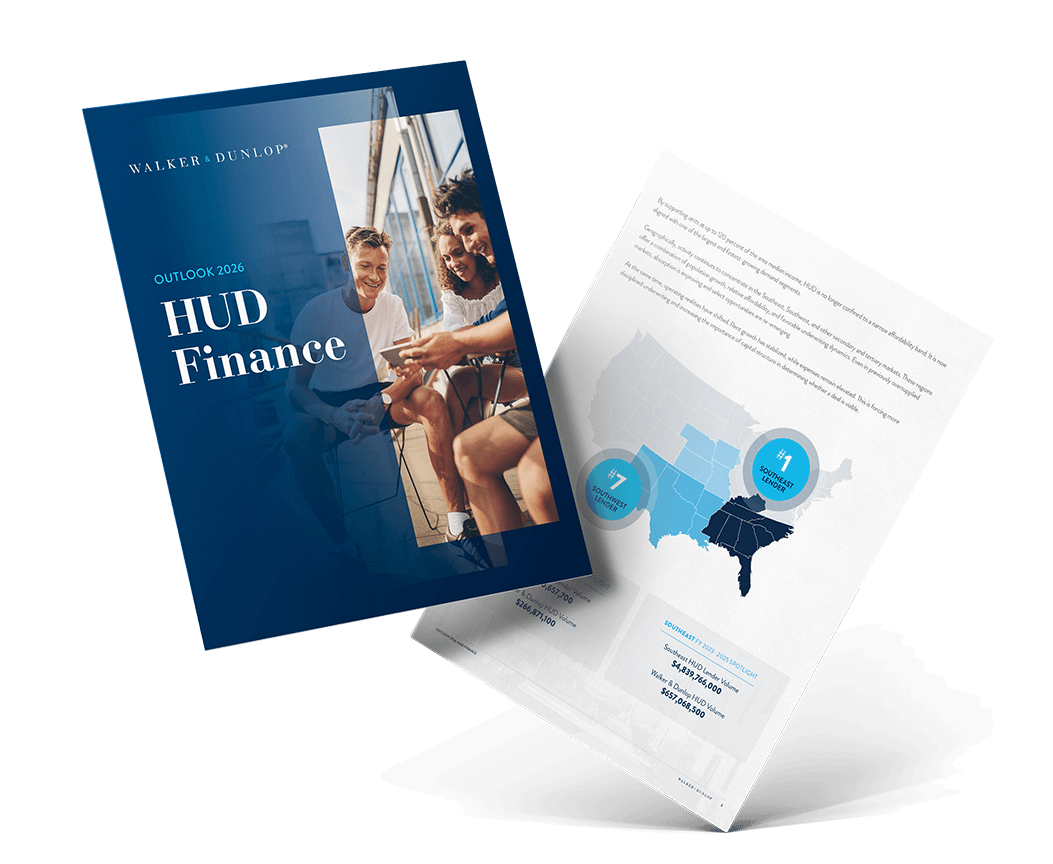
2026 HUD Outlook
Navigate the evolving HUD financing landscape with trusted insights and execution guidance. Discover how our 2026 HUD Outlook highlights key trends shaping opportunities in the year ahead.
What We Do
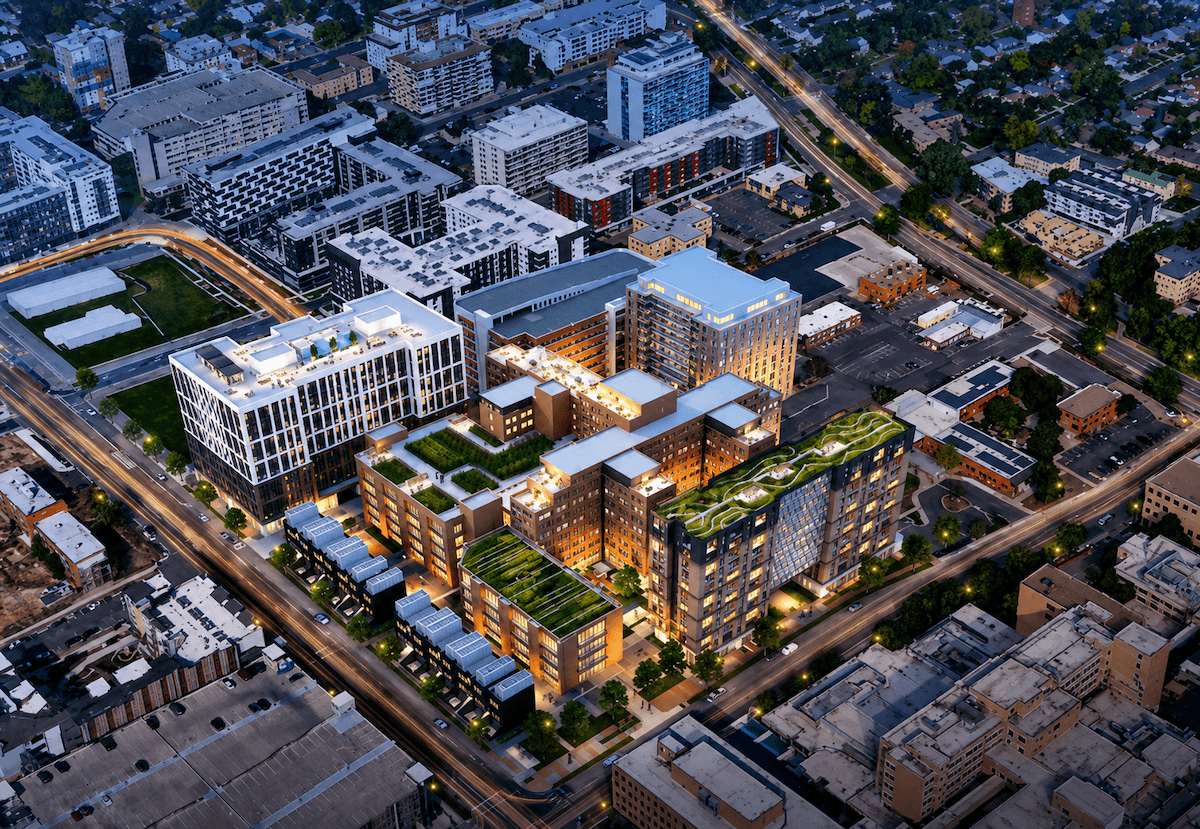
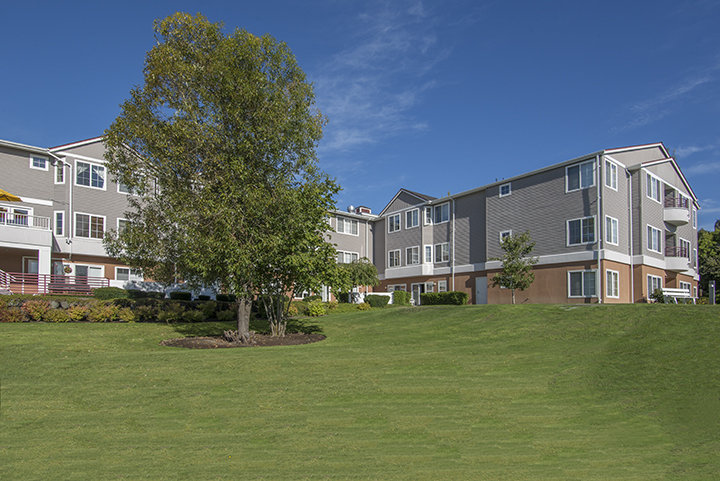
Case Studies

Areas we cover
A wide variety of specialties & sectors


.svg)
.svg)
















Frequently Asked Questions
1. How does HUD financing compare to Fannie Mae and Freddie Mac financing?
HUD financing generally offers longer loan terms, higher leverage, fixed interest rates, and fully amortizing structures compared to many conventional financing options. Fannie Mae and Freddie Mac loans may provide faster execution and greater flexibility for certain property types and business plans. The right financing solution depends on factors such as property characteristics, ownership objectives, timing considerations, and capital needs.
2. What are the underwriting requirements for an FHA 223(f) loan?
FHA 223(f) loans are typically used to acquire or refinance stabilized multifamily properties. Underwriting considerations generally include property occupancy, operating performance, physical condition, market fundamentals, and borrower qualifications.
3. How long does HUD underwriting take?
HUD underwriting timelines vary based on the loan program, transaction complexity, property type, and required third-party reports. Working with an experienced HUD MAP lender can help streamline the process by identifying potential issues early, coordinating required documentation, and managing communication throughout the approval process.
4. What is a RAD conversion, and how does HUD financing support it?
Rental Assistance Demonstration (RAD) is a U.S. Department of Housing and Urban Development program that allows public housing agencies to convert public housing assistance into long-term Section 8 contracts. RAD conversions can help unlock capital for property rehabilitation, modernization, and long-term preservation while maintaining affordability for residents.
5. What is an FHA 223(f) loan?
FHA 223(f) is one of HUD's most widely used multifamily loan programs and is commonly used to acquire or refinance stabilized apartment properties. The program offers long-term, fixed-rate financing with high leverage and non-recourse terms, making it an attractive option for multifamily owners seeking stability and predictable debt service.
6. What is an FHA 221(d)(4) loan?
FHA 221(d)(4) financing is designed for the construction and substantial rehabilitation of multifamily properties. The program combines construction and permanent financing into a single execution and offers long-term, fixed-rate financing upon project completion.
7. What is a HUD 232 loan?
HUD 232 financing is designed for healthcare and seniors housing properties, including skilled nursing facilities, assisted living communities, memory care facilities, and board-and-care properties. The program provides long-term, fixed-rate financing and is commonly utilized by owners seeking stable financing solutions for healthcare-related assets.
8. Can FHA and HUD loans be assumed by a future buyer?
Many FHA-insured loans are assumable, subject to HUD approval and applicable underwriting requirements. Assumability can provide additional flexibility and may be an attractive feature for future buyers, particularly in changing interest-rate environments.
9. Are FHA and HUD loans non-recourse?
Most FHA-insured multifamily and healthcare loans are non-recourse, meaning the borrower's liability is generally limited to the collateral securing the loan, subject to standard carve-outs and exceptions. This structure can provide borrowers with additional risk protection compared to certain recourse financing alternatives.
10. What types of borrowers use FHA and HUD financing?
FHA and HUD financing is utilized by a wide range of commercial real estate owners and developers, including multifamily investors, affordable housing developers, healthcare operators, nonprofit organizations, and institutional sponsors. The programs are designed to support both experienced borrowers and long-term owners seeking stable financing solutions.
Frequently Asked Questions
1. What is an FHA loan for multifamily properties?
An FHA multifamily loan is a government-backed mortgage insured by the Federal Housing Administration (FHA) that provides long-term, fixed-rate financing for multifamily properties. These loans are designed to offer high leverage, competitive interest rates, and non-recourse terms for stabilized, new construction, and substantially rehabilitated assets.
2. What is HUD financing and how does it work?
HUD financing refers to loan programs administered by the U.S. Department of Housing and Urban Development (HUD), including FHA-insured loans. Approved lenders underwrite and process the loan through HUD programs such as MAP or LEAN, providing borrowers with stable, government-backed capital and a structured approval process.
3. What is a HUD MAP lender?
A HUD MAP (Multifamily Accelerated Processing) lender is an approved institution authorized to underwrite and submit FHA loan applications directly to HUD. MAP lenders streamline the approval process by performing delegated underwriting, which helps accelerate timelines and improve execution certainty.
4. What types of properties qualify for FHA/HUD loans?
FHA and HUD financing is available for a range of property types, including market-rate multifamily, affordable housing, seniors housing & Healthcare facilities, and BTR/SFR. Programs are available for acquisitions, refinances, new construction, and substantial rehabilitation.
5. What are the benefits of FHA and HUD financing?
FHA and HUD loans offer several advantages, including long-term fixed interest rates, high leverage, non-recourse structures, and assumability. These features provide stability and flexibility, making them particularly attractive in volatile market environments.
6. What is HUD LEAN financing?
HUD LEAN is a specialized FHA program designed for healthcare and seniors housing properties, including skilled nursing, assisted living, and memory care facilities. It streamlines the underwriting process for healthcare transactions while maintaining the benefits of FHA-insured financing.
7. How long does it take to close an FHA or HUD loan?
Closing timelines for FHA and HUD loans can vary depending on the program and complexity of the transaction but typically range from 60 to 120 days. Working with an experienced HUD MAP or LEAN lender can help streamline the process and reduce delays.
8. Can FHA loans be used for new construction or rehabilitation?
Yes, FHA offers financing options for both ground-up construction and substantial rehabilitation through programs such as FHA 221(d)(4). These loans provide long-term, fixed-rate financing that converts from construction to permanent debt upon completion.
9. What is the difference between FHA and conventional multifamily loans?
FHA loans are government-backed and typically offer higher leverage, longer terms, and fixed interest rates compared to conventional loans. While conventional financing may provide faster execution in some cases, FHA loans are often preferred for their stability and favorable terms over the long term.
10. Why work with an experienced FHA/HUD lender?
FHA and HUD financing involves detailed regulatory requirements and a structured approval process. An experienced lender with strong HUD relationships and a proven track record can help navigate complexities, anticipate challenges, and deliver more efficient, reliable execution.
11. Where can I find details on specific FHA and HUD loan programs like 223(f), 221(d)(4), or 232?
FHA and HUD offer a range of loan programs designed for different property types and business plans. For example, FHA 223(f) loans are commonly used for the acquisition or refinancing of stabilized multifamily properties, while FHA 221(d)(4) loans support ground-up construction and substantial rehabilitation. For healthcare and seniors housing, HUD 232 LEAN financing provides a streamlined process tailored to those asset classes. Each program has distinct requirements, timelines, and benefits. To better understand how these options compare—including leverage, terms, and eligibility—explore our FHA and HUD term sheets for detailed program-specific guidance.
Services
Our comprehensive CRE platform offers you both entity-level and property-level finance and advisory services.
Specialties & Sectors
Affordable, multifamily, industrial, and more…you name it and we have the skills and expertise to handle it.